
5 Essential Tips for What to Wear in 20 Degree Weather
In 20-degree weather, dressing appropriately is essential to stay warm and comfortable. The right outfit can make all the difference, allowing you to enjoy the outdoors without the chill getting to you.
Start with moisture-wicking base layers to keep you dry. These layers are crucial because they help manage sweat, ensuring you feel warm without getting damp.
Next, add insulating mid-layers like fleece that trap heat effectively.
Finally, top it all off with a waterproof, wind-resistant outer jacket to shield yourself from the elements.
Don’t forget about your feet! Insulated, slip-resistant boots are a must to keep your toes warm and provide stability on slippery surfaces.
To protect your head, hands, and face, wear a snug hat, gloves, and a neck gaiter.
Choose breathable fabrics that trap warmth without overheating, and accessorize with cozy scarves for extra comfort and style.
Keep these tips in mind to dress smartly and stay warm!
Layer Effectively With Base, Mid, and Outer Layers

When dressing for 20-degree weather, start by layering effectively with a moisture-wicking base layer to keep your skin dry and warm.
Choose base layers made from synthetic fabrics or merino wool, as they pull moisture away and retain heat.
Opt for synthetic or merino wool base layers to wick moisture and keep warmth close to your skin.
Next, add mid-layers like fleece or wool sweaters that provide insulation by trapping warm air close to your body.
Instead of one bulky piece, opt for several thin layers to enhance flexibility and easily adjust your temperature.
Finish with a lightweight, breathable outer layer to shield you from wind and rain without overheating.
Make sure each layer fits well, allowing air to circulate and your movements to stay unrestricted.
This approach to layering ensures you stay comfortable, warm, and dry throughout chilly days.
Choose Weather-Appropriate Outerwear and Footwear
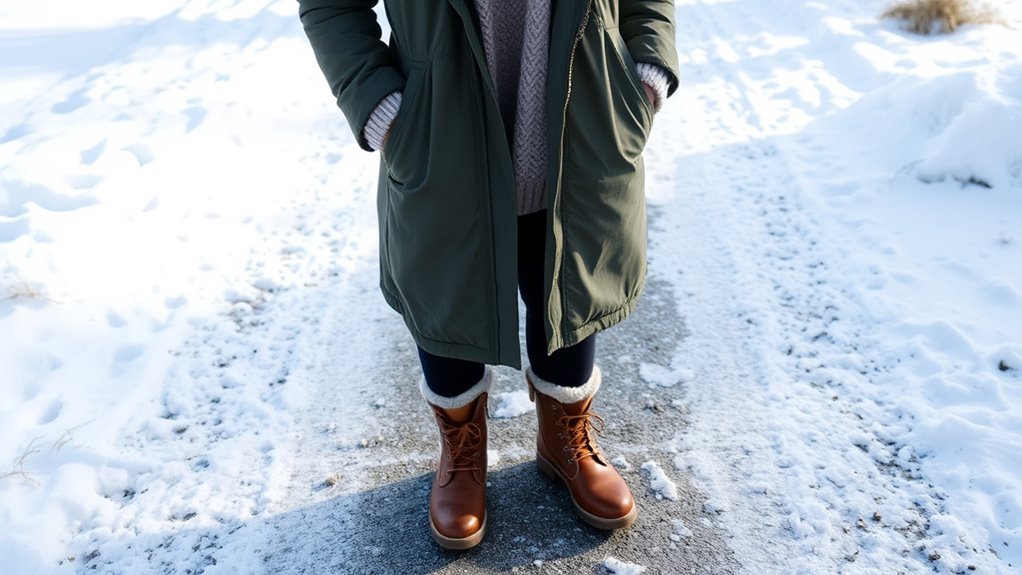
Since 20-degree weather demands both warmth and protection, you’ll want to choose outerwear that’s insulated yet breathable, like puffer jackets or lightweight down coats.
Opt for waterproof outerwear or windproof jackets to shield yourself from rain, snow, and chilly winds.
For your feet, insulated footwear with thermal lining and good traction is essential to keep you warm and stable on slippery surfaces.
Consider these key items:
- A puffer coat with breathable insulation
- Waterproof outerwear to stay dry
- Windproof jackets blocking cold gusts
- Insulated footwear with thermal lining
- Slip-resistant soles for safe walking
Selecting these ensures you stay comfortable and protected throughout the day in 20-degree weather.
Prioritize Head, Hand, and Face Protection

Beyond choosing the right outerwear and footwear, protecting your head, hands, and face plays a big role in staying warm in 20-degree weather.
Start with a warm hat that covers your ears, like a wool beanie or lined cap, to prevent heat loss from your head. Did you know that your head can account for up to 30% of your body heat?
For hands, insulated gloves made from wool or synthetic materials keep you warm while maintaining dexterity.
And don’t forget a face mask or neck gaiter to shield your face from cold wind and retain heat, especially on breezy days.
If hats aren’t your style, earmuffs offer targeted ear warmth without messing up your hairstyle or glasses.
Make sure your headgear fits snugly to maximize protection and reduce frostbite risk.
Select Materials That Balance Warmth and Breathability
Although staying warm is essential, you shouldn’t overlook the importance of choosing materials that balance warmth with breathability.
Selecting moisture-wicking fabrics like merino wool helps keep sweat off your skin, maintaining dryness and comfort.
Choose moisture-wicking merino wool to stay dry and comfortable by keeping sweat off your skin.
Focus on breathable fabrics that allow air to circulate, preventing overheating during activity.
Effective layering with lightweight base layers traps warmth while letting moisture escape, so you stay cozy without feeling clammy.
Avoid cotton, as it holds moisture and chills you.
Instead, pick wind-resistant materials to block cold air but keep breathability intact, especially if it’s breezy.
- Merino wool for natural warmth and moisture-wicking
- Synthetic blends designed for breathability
- Lightweight, moisture-absorbing base layers for layering
- Technical polyester or mesh panels for air circulation
- Wind-resistant fabrics to block cold air without trapping heat
Accessorize to Enhance Warmth and Style
When you add accessories like wool scarves, hats, and gloves, you boost both your warmth and your outfit’s style.
Choose scarves made of wool or cashmere for excellent insulation, and drape thick blanket scarves over your coat for extra coziness.
These accessories not only protect your neck and face from cold wind but also add texture and color, making your look pop.
Opt for insulated, waterproof gloves with touchscreen fingertips to keep your hands warm and functional in 20-degree weather.
Hats like beanies or wool caps provide essential insulation for your head, preventing heat loss.
Incorporate bright or patterned scarves and hats to elevate simple winter outfits, ensuring you stay warm without sacrificing style.
Smart accessory choices enhance both insulation and visual appeal effectively.
Frequently Asked Questions
How to Dress for 20 Degrees Weather?
You should layer lightweight clothes, like a breathable base layer and a long-sleeve top.
Add a light jacket, wear jeans or chinos with a sweater, and finish with comfortable shoes.
Plus, don’t forget to include accessories like a scarf and sunglasses.
They can really elevate your outfit and keep you cozy!
What Is the 3 3 3 Rule for Outfits?
Think of your outfit as a balanced meal.
The 3-3-3 rule means you’ll wear three main pieces,
add three accessories or layers, and mix three textures or colors to keep your look stylish and harmonious.
This approach helps you create a well-rounded outfit that’s visually appealing.
Plus, it keeps your style fresh and interesting!
What Are the 5 P’s for Cold Weather?
The 5 P’s for cold weather are Proper Planning, Proper Packing, Proper Layering, Proper Protection, and Proper Positioning.
By following these principles when dressing for cold conditions, you’ll stay warm and comfortable.
Proper Planning involves considering the weather and your activities ahead of time.
Make sure to check forecasts and prepare accordingly!
Proper Packing means bringing the right gear for your adventure.
Don’t forget essentials like gloves, hats, and thermal wear!
Proper Layering is all about wearing multiple layers to trap heat.
Start with a moisture-wicking base layer, add insulation, and finish with a waterproof outer layer.
Proper Protection includes safeguarding vulnerable areas, like your head and hands, with warm accessories.
Lastly, Proper Positioning involves adjusting your clothing as your body temperature changes.
Stay active and shift your layers as needed to maintain comfort!
What Is the 5 5 5 Rule for Clothing?
When it comes to dressing, the 5-5-5 rule has you covered from head to toe.
You wear five layers on top, five on the bottom, and five accessories.
This keeps you warm as toast in cold weather.
Conclusion
When dressing for 20-degree weather, layering isn’t just smart—it’s essential.
Did you know that nearly 60% of heat loss comes from your head and hands?
That’s why protecting these areas with the right accessories can make a huge difference.
By choosing breathable materials and weather-appropriate outerwear, you’ll stay warm without overheating.
So, layer up thoughtfully, protect key areas, and you’ll not only survive but thrive in the cold with both comfort and style.
In conclusion, when facing 20-degree weather, prioritize layering to retain body heat effectively.
Focus on keeping your head and hands warm with appropriate accessories.
Choosing breathable fabrics and suitable outerwear will help you balance warmth and comfort.
With these tips, you’ll be well-prepared to enjoy the chilly season without sacrificing your style.