Do Fleas Like Cold Weather and How to Manage Them
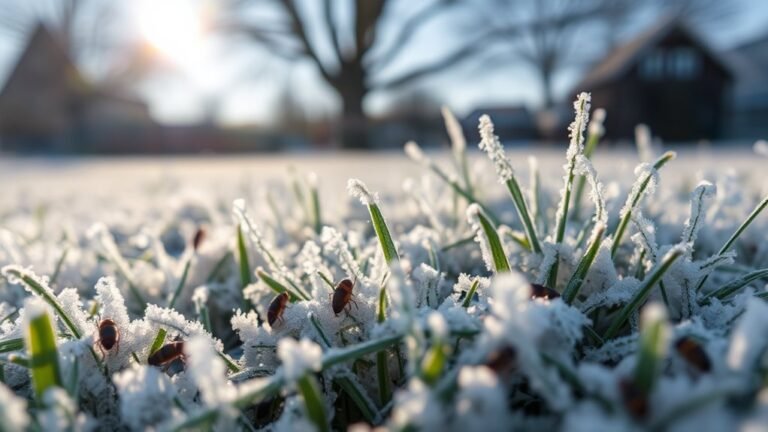
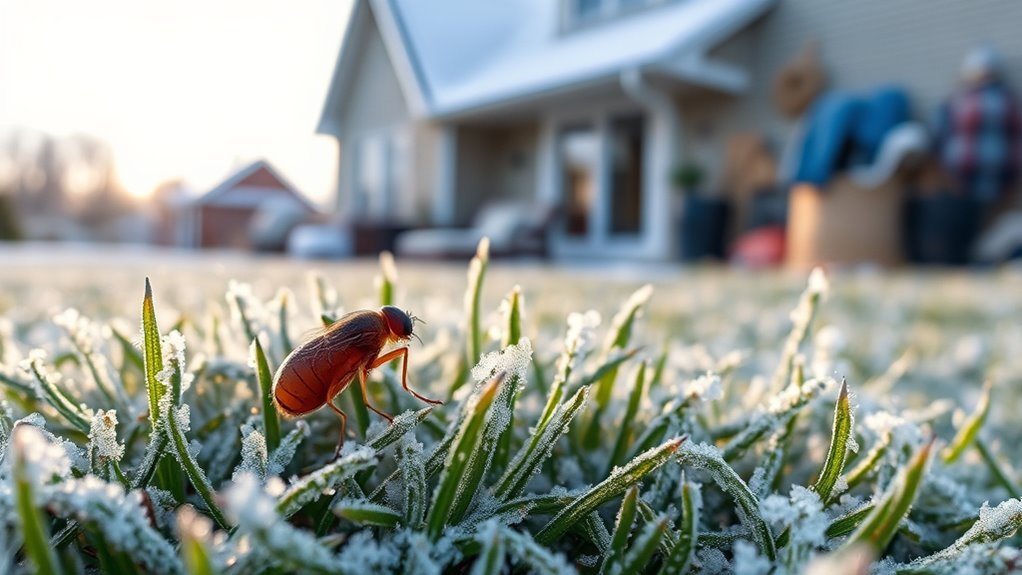
Fleas don’t like cold weather, but they manage to survive winter by hiding indoors where it’s warm.
You can’t rely on freezing temperatures alone to get rid of them. Fleas thrive around 70-85°F and can remain dormant in carpets or pet bedding.
To effectively manage fleas, keep vacuuming often and wash pet bedding regularly.
Additionally, using year-round flea treatments on your pets is crucial.
If you want to protect your home and pets all year, there are effective strategies to keep fleas at bay.
Taking proactive steps will help ensure that you don’t have to deal with a flea infestation when the weather warms up.
What Temperatures Are Ideal for Fleas?
Although fleas can survive in various conditions, they thrive best at temperatures around 75°F (24°C), where they complete their life cycle quickly.
Fleas thrive best near 75°F, accelerating their life cycle and increasing infestation risks.
You’ll find that the ideal flea environment is warm and humid, typically between 70-85°F (21-29°C).
These flea temperatures speed up the kid flea life cycle, making infestations grow fast.
Freezing temperatures usually kill adult fleas and eggs, but indoor warmth lets them survive year-round.
To prevent fleas, regularly wash your pet bedding in hot water to kill any eggs or larvae hiding there.
Keeping your home cool and dry can also help, as fleas don’t thrive in less humid conditions.
Understanding these conditions is key to preventing fleas and protecting your pets effectively.
How Cold Weather Affects Flea Survival
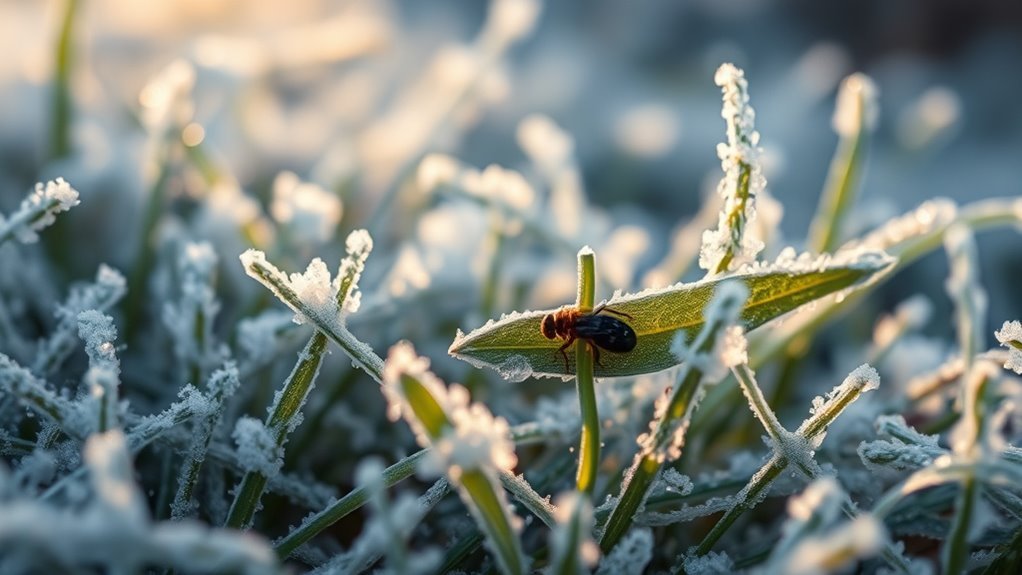
You might think cold weather wipes out fleas completely, but they’re surprisingly tough in some conditions.
While freezing temps outside can kill many fleas and their eggs, those hiding indoors often survive and keep reproducing.
Understanding how fleas tolerate cold helps you manage their presence both inside and out.
Flea Cold Tolerance
When temperatures drop below freezing for several days, fleas struggle to survive. Adult fleas typically die within a week or so of consistent cold exposure.
Their flea cold tolerance is limited; adult fleas can’t endure prolonged freezing, usually perishing within 5-10 days.
However, flea eggs survive cold better—they can remain dormant through winter, waiting for warmer conditions to hatch.
While freezing can kill some flea eggs, many pupae have higher cold survival rates as they stay protected in cocoons for weeks, even months, at mild temperatures around 52°F.
This pause in the flea life cycle during cold conditions delays development but doesn’t eliminate the population.
Understanding these limits helps you plan effective winter flea control, especially since indoor flea survival is possible despite outdoor cold.
Indoor Flea Survival
Since indoor temperatures stay warm year-round, fleas can survive and reproduce inside your home despite cold weather outside.
Indoor fleas thrive because your home environment maintains consistent warmth, typically around 20-25°C. This supports flea survival through all life stages.
Flea eggs, flea larvae, and pupae can hide in carpets, bedding, and upholstery, making winter no barrier to their development.
Cold weather outside doesn’t affect fleas indoors; heating systems keep conditions ideal for continuous reproduction.
That means flea populations can grow unchecked unless you take action.
To manage fleas effectively during winter, regular flea prevention treatments are essential.
Ignoring indoor flea survival risks infestations year-round, so keep up with prevention to protect your pets and home environment from persistent flea problems.
Flea Life Cycle Stages and Winter Adaptations
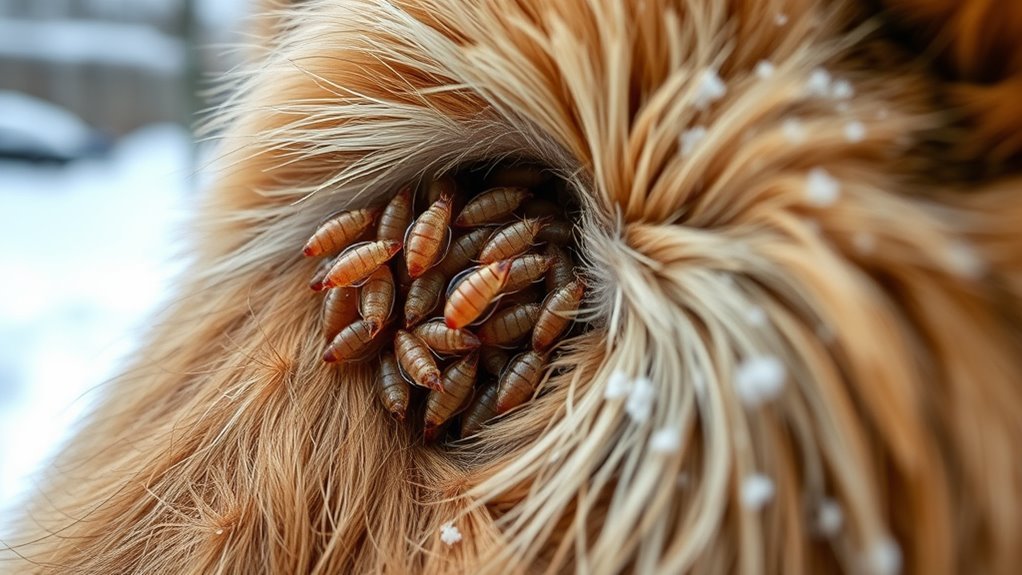
Although flea development slows in cold weather, these pests persist through all life stages by adapting to their environment.
You’ll find flea eggs hatching indoors year-round, especially where warmth shelters them from harsh outdoor cold temperatures.
Flea larvae thrive in these protected spots, continuing the flea life cycle despite winter’s chill.
Flea pupae demonstrate remarkable winter survival by entering flea dormancy inside their cocoons, sometimes lasting up to 30 weeks until conditions improve.
Adult fleas, while living only a few weeks, can survive longer if they keep feeding on a host.
This adaptability means fleas can maintain their population indoors throughout winter.
Indoor Environments as Flea Havens During Winter
Because indoor environments stay warm and humid throughout winter, fleas find perfect conditions to survive and reproduce.
Indoor warmth and humidity create ideal conditions for fleas to survive and multiply during winter.
In your home, the steady temperature and humidity levels allow flea eggs and larvae to thrive year-round.
Soft spots like pet bedding, carpets, and upholstery become ideal hiding places where fleas can remain active, even when outdoor temperatures drop.
During the winter months, fleas may slow down but don’t die, making indoor environments their safe haven.
This means your home and yard can harbor fleas continuously if you don’t take action.
Maintaining effective flea control involves regular vacuuming carpets and cleaning pet areas to disrupt the flea life cycle.
Staying vigilant indoors during colder months is vital since fleas exploit these warm spaces to multiply unnoticed.
Preventing Flea Infestations in Cooler Months
To keep fleas from taking hold during the cooler months, you’ll need to maintain consistent pest control and keep your home warm and clean.
Fleas thrive in warm temperatures indoors, so preventing flea infestations means regularly washing pet bedding and vacuuming to remove flea eggs.
Year-round treatment on pets is *vital* since fleas reproduce indoors despite cold outdoor weather.
Here’s a quick guide to help you prevent fleas in the indoor environment during winter:
| Action | Purpose | Frequency |
|---|---|---|
| Wash pet bedding | Remove flea eggs and larvae | Weekly |
| Vacuum carpets | Eliminate eggs and larvae | 2-3 times per week |
| Maintain warmth | Discourage flea survival | Daily |
| Use year-round treatment | Prevent flea reproduction | Monthly |
| Monitor pets | Early detection | Weekly |
Follow these steps to effectively prevent flea infestations in cooler months.
Effective Flea Treatments for Winter Care
When winter sets in, you still need to apply veterinarian-recommended flea preventatives regularly to keep your pets protected.
These flea treatments kill fleas at various life stages, preventing infestations from growing indoors.
To break the flea life cycle, clean pet bedding often by washing it in hot water to eliminate flea eggs and larvae.
Treat your indoor environment with sprays containing insect growth regulators to stop adult fleas from reproducing.
Regular vacuuming helps remove flea eggs and adult fleas hiding in carpets and furniture.
Don’t forget outdoor care: maintaining yard hygiene reduces flea habitats.
If a severe infestation occurs, consider professional pest control treatments to thoroughly kill fleas and prevent re-infestation during winter.
Consistent care keeps your home flea-free all season.
Monitoring and Managing Fleas Year-Round
Although fleas tend to thrive in warmer months, they can survive indoors throughout the year.
So, you need to monitor your pets and living spaces regularly to catch infestations early.
Year-round monitoring involves inspecting pets for flea eggs and dirt, maintaining flea prevention treatments, and managing indoor fleas even during winter.
Don’t skip winter flea control—fleas can remain dormant and reactivate when temperatures rise.
Regularly vacuum and wash pet bedding to remove eggs and larvae.
Outdoors, trim grass and clear debris to reduce flea habitats.
| Task | Action |
|---|---|
| Inspect Pets | Check for flea eggs and dirt regularly |
| Flea Prevention | Apply flea treatment year-round |
| Clean Bedding | Wash weekly to remove eggs and larvae |
| Vacuum Indoors | Remove flea eggs and pupae frequently |
| Outdoor Maintenance | Trim grass and treat shaded areas |
Frequently Asked Questions
How to Get Rid of Fleas in Cold Weather?
You can get rid of fleas in cold weather by vacuuming regularly.
Washing pet bedding in hot water is also crucial.
Using indoor flea treatments and maintaining year-round prevention on your pets helps keep fleas from thriving indoors.
It’s all about being proactive and consistent!
What Temperature Is Too Cold for Fleas?
You’ll find fleas can’t survive temperatures below 0°C (32°F) for long.
In fact, adults die under 5°C (41°F) within just a few days.
Keeping your home cool helps control them, but freezing outdoor temps are most effective.
What Will 100% Get Rid of Fleas?
You’ll get rid of fleas 100% by combining vet-approved treatments,
thorough vacuuming, washing pet bedding in hot water,
using insect growth regulators, and possibly hiring professionals for severe infestations.
Keep up prevention to avoid return.
Does Keeping Your House Cold Keep Fleas Away?
You might think chilling your home stops fleas, but it doesn’t.
Fleas thrive indoors where it’s warm.
Keeping your house cold won’t keep them away; you’ll need targeted treatments to truly tackle those pests.
Conclusion
As winter’s chill wraps around your home, fleas retreat indoors, seeking warmth like shadows slipping into cozy corners.
You can’t let these tiny invaders take hold, so stay vigilant.
By understanding their cold-weather tricks and treating your pets regularly, you’ll keep your space flea-free all year.
Picture a warm, peaceful home where fleas don’t thrive—because you’ve taken control, turning the tide against these persistent pests no matter the season.
Fleas may prefer warmer temperatures, but that doesn’t mean they disappear in the cold.
Instead, they find refuge in your home, making it crucial to stay proactive about prevention and treatment.
Regularly inspecting your pets and using effective flea control methods can help keep these nuisances at bay.
In conclusion, managing fleas during cold weather requires vigilance and action.
By understanding their behavior and maintaining a consistent treatment plan, you can ensure your home remains a cozy, flea-free haven throughout the year.