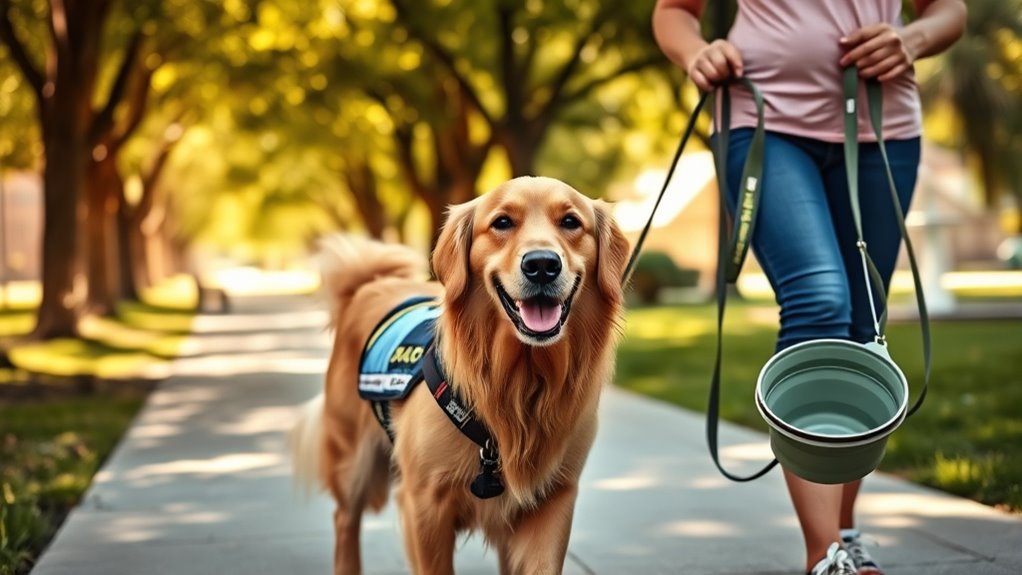
7 Tips to Walk My Dog Safely in 90 Degree Weather
To walk your dog safely in 90-degree weather, it’s crucial to plan your outings wisely.
Stick to early mornings or late evenings when the temperatures are cooler. This can make a huge difference in keeping your furry friend comfortable.
Always carry water with you and offer frequent sips to keep your dog well-hydrated.
Remember, hydration is key during those hot summer days!
Protect your dog’s paws by avoiding hot pavement.
Aim for shaded, grassy routes whenever possible.
Keeping walks short and taking breaks often is a smart strategy to avoid overheating.
Stay vigilant for signs of overheating, such as heavy panting or weakness.
If you notice any of these symptoms, it’s time to take a break and cool down.
Finally, don’t forget to adjust your plan based on your dog’s breed and size to ensure they remain safe and comfortable.
For more helpful tips, stay tuned!
Walk During Cooler Times of the Day
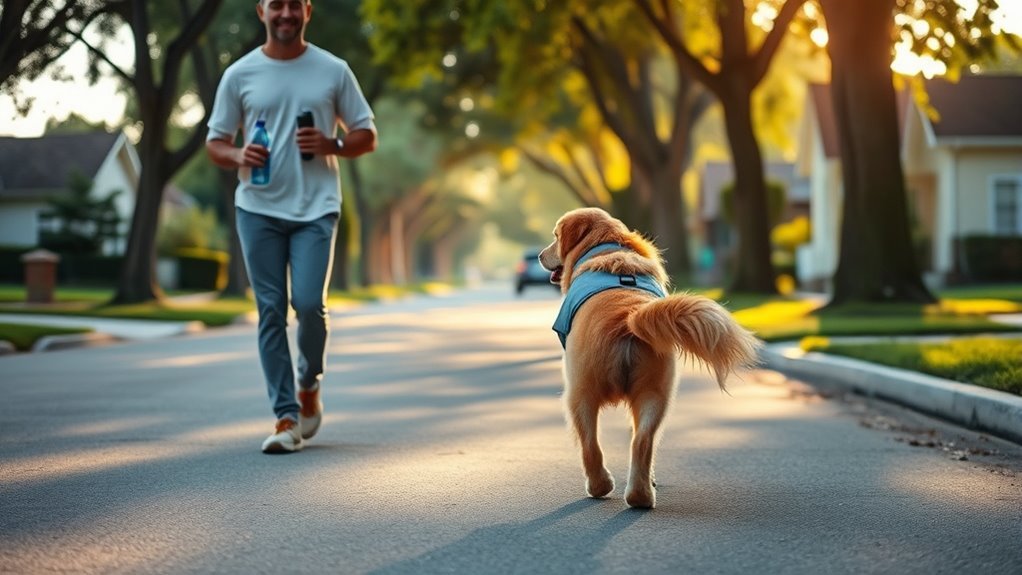
Although it might be tempting to walk your dog during the day, you should stick to early mornings or late evenings when temperatures are cooler.
During hot weather, pavement can become dangerously hot, risking paw burns and discomfort.
You want to avoid walking between 10 a.m. and 4 p.m., as temperatures peak and increase heatstroke risks.
By choosing cooler times, like early in the morning or late in the evening, you help keep your dog safe and comfortable.
Pavement stays more tolerable, and your dog won’t overheat.
Planning walks during these times reduces exposure to extreme heat, making exercise safer.
Carry Water and Offer Frequent Hydration
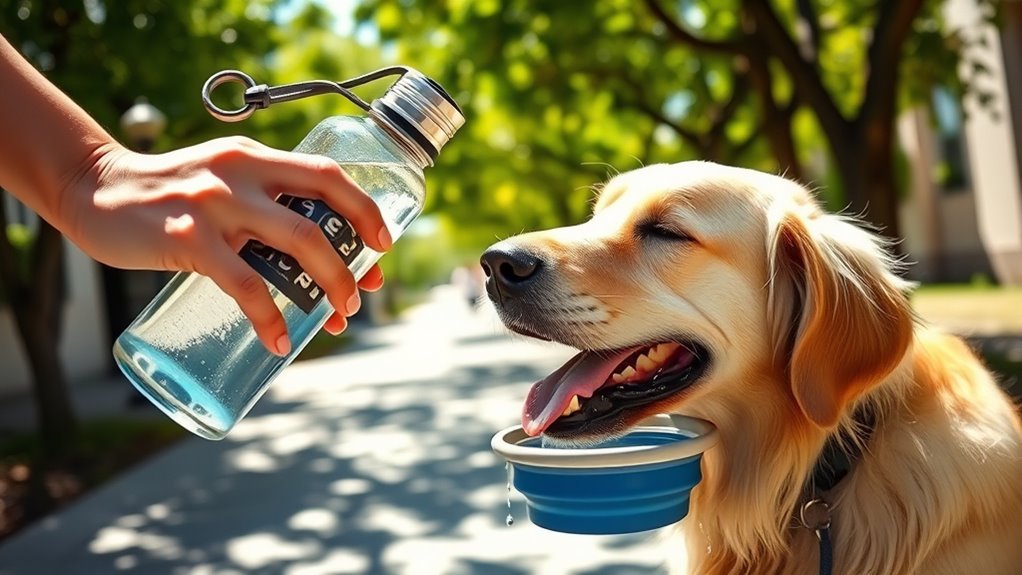
Choosing cooler times for your walks helps prevent overheating, but you still need to keep your dog hydrated throughout the outing.
Carry a portable, leak-proof water bottle and a collapsible bowl so you can offer water every 15-20 minutes.
Always provide cool water before, during, and after walks to maintain hydration in hot weather.
Watch for signs of thirst or dehydration and offer water immediately if needed.
| Time of Walk | Water Supply Needed | Frequency to Offer Water |
|---|---|---|
| Morning | 500 ml | Every 15 minutes |
| Midday | 700 ml | Every 10-15 minutes |
| Afternoon | 500 ml | Every 15 minutes |
| Evening | 400 ml | Every 20 minutes |
| Night | 300 ml | Every 20 minutes |
Keep your dog safe and hydrated!
Protect Your Dog’s Paws From Hot Surfaces
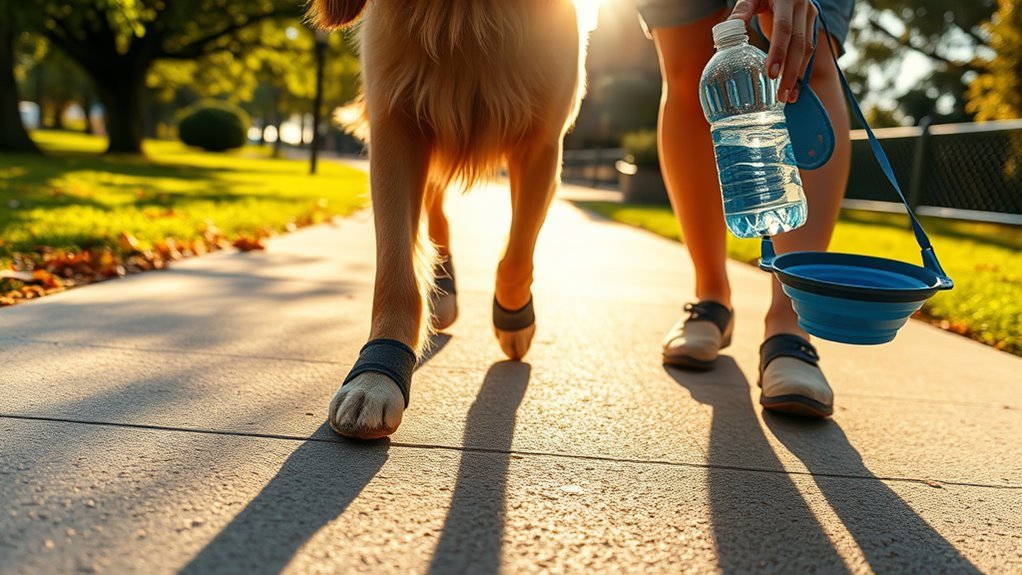
Before you head out, test the pavement by placing the back of your hand on it.
If it’s too hot for you, it’s too hot for your dog’s paws.
Consider using protective paw booties or paw balm to shield their feet from burns.
Whenever possible, stick to grassy or shaded paths to keep their paws safe and comfortable.
Pavement Temperature Check
When you step outside on a hot day, check the pavement temperature to keep your dog’s paws safe.
Hot pavement can reach temperatures 40°-60°F higher than the air, making it easy for your dog to suffer paw burns.
To do a quick temperature check, press the back of your hand or an ice cube against the pavement for about 10 seconds.
If it feels too hot or uncomfortable for you, it’s definitely unsafe for your dog’s paws.
Walking on hot surfaces without verifying can lead to blisters and heat stress.
Always test pavement temperature before your walk to protect paws and ensure walk safety.
Taking this simple step helps prevent injury and keeps your dog comfortable on warm days.
Protective Paw Gear
Although it might seem cumbersome at first, using protective paw gear like dog booties or applying paw balm can make a big difference in shielding your dog’s paws from scorching pavement.
When pavement temperatures exceed 125°F, your dog’s paw pads risk burns in just 60 seconds.
Paw protectors or booties offer essential paw protection against hot pavement, enhancing walk safety.
If booties aren’t an option, apply paw balm to create a barrier that insulates and prevents cracking or burns.
Always test pavement heat with your hand before walks.
And remember to opt for grassy, shaded paths to reduce heat exposure.
After walks, be sure to inspect your dog’s paws for redness or injuries.
Treat any damage promptly to keep your furry friend comfortable and safe.
Choose Shaded and Cooler Walking Routes
Choose walking routes with plenty of tree cover to keep your dog out of direct sunlight.
Plan your path along shaded sidewalks or trails to help keep the ground cooler for their paws.
This way, you can enjoy your walks while protecting your dog from overheating.
Find Tree-Covered Paths
A tree-covered path offers much-needed shade that can lower ground temperatures by up to 20°F, protecting your dog’s paws from heat damage.
When you pick shaded routes lined with trees, you reduce the heat your dog faces on the ground surface. The leaf cover blocks the sun’s rays, keeping the ground cooler and preventing burns.
Trees also cool the air through transpiration, making the walk more comfortable for both of you. Choosing these paths helps avoid overheating and heatstroke risks during hot days.
Make it a habit to find trails with ample shade so your dog can enjoy safer, cooler walks. Staying on tree-covered ground keeps your dog’s paws safe and their body temperature regulated in the summer heat.
Avoid Direct Sunlight
When you walk your dog in shaded areas, like tree-lined streets or parks, you reduce their exposure to direct sunlight.
This helps lower the risk of overheating.
To keep your walks comfortable despite the hot temperature, always choose routes that offer plenty of shade.
Avoid open areas with asphalt or concrete, as they reflect heat and can cause paw burns.
Sticking to covered trails helps manage the heat and keeps your dog safe.
| Best Route Features | Why It Helps |
|---|---|
| Shade | Lowers direct sunlight exposure |
| Covered Trails | Keeps temperature cooler |
| Avoid Open Surfaces | Prevents paw burns and heat |
Plan Routes With Shade
To keep your dog comfortable and safe, plan walking routes that offer plenty of shade and cooler surfaces.
Choose paths with ample tree cover or shaded areas to reduce hot pavement exposure and help prevent heat exhaustion.
Opt for parks or neighborhoods featuring shaded sidewalks, covered trails, or benches where your dog can take rest breaks out of direct sunlight.
Whenever possible, pick grassy or dirt paths instead of asphalt or concrete since these cool surfaces are gentler on your dog’s paws.
Schedule walks during early mornings or late evenings when the sun’s intensity is lower and shade is more abundant.
Limit Walk Duration and Take Breaks
Although you want to enjoy time outside with your dog, you should limit walks to no more than five minutes during extreme heat to prevent overheating.
When temperatures soar, limit outdoor walks and opt for shorter walks to keep your dog safe.
Take frequent breaks in shaded spots to help your dog cool down.
If the pavement feels too hot for your hand, it’s definitely too hot for their paws.
During walks, offer water regularly to stay hydrated.
Keep an eye out for signs of heat exhaustion like excessive panting or drooling, and pause immediately if you notice these.
Monitor for Signs of Overheating and Heatstroke
Keeping a close eye on your dog during hot weather walks helps you spot early signs of overheating before they become serious.
Watch for signs of overheating like rapid panting and excessive drooling.
If you notice red gums, weakness, or vomiting, your dog may have heatstroke.
Always move your dog to a shade and cool area immediately and offer small amounts of water.
A body temperature above 103°F means urgent veterinary care is needed.
| Signs to Watch For | What to Do |
|---|---|
| Rapid, heavy panting | Move your dog to shade |
| Excessive drooling | Offer cool water in small sips |
| Red or bright gums | Seek urgent veterinary care |
| Weakness, vomiting | Keep dog cool, monitor closely |
| Collapse, seizures | Call vet immediately |
Adjust Walks for Breed and Individual Needs
Since every dog has unique needs, you should adjust walks based on your dog’s breed, age, and health.
Tailor your walks to fit your dog’s breed, age, and health for their safety and comfort.
Some breeds, like Bulldogs and Pugs, have restricted airways, making hot weather especially risky. Shorter walk durations during cooler parts of the day keep them safe.
Thick-coated breeds such as Huskies need extra care to avoid overheating, so reduce walk length accordingly.
Older dogs or those with heart or respiratory issues require gentler activity and shorter walks in the heat.
Puppies and small breeds also struggle to cool down, so limit their exposure.
Always tailor your walk length and intensity to your own dog’s needs, prioritizing safety.
Frequently Asked Questions
How Long Should You Walk Your Dog in 90 Degree Weather?
You should walk your dog for no more than 5 to 10 minutes in 90-degree weather.
If you want longer exercise, break it into short sessions during cooler early mornings or late evenings to keep your dog safe.
What Is the 3-3-3 Rule With Dogs?
The 3-3-3 rule means you shouldn’t keep your dog outside for more than 3 minutes per pound of their weight in hot weather.
You’ll want to give them shade, water, and breaks to stay safe.
It’s really important to keep an eye on them and ensure they’re comfortable.
If it’s too hot, it’s best to stay indoors!
What Is the 90 10 Rule for Dogs?
The 90/10 rule means you walk your dog when it’s under 90°F.
And you should limit outdoor time to 10% of their day during hot weather.
This helps keep your dog safe from heat exhaustion and heatstroke.
What Is the 5 Second Rule for Walking Dogs?
The 5 Second Rule means you test the pavement by placing your hand on it.
If you can’t hold it for 5 seconds, it’s too hot for your dog’s paws.
Always check before walking!
Conclusion
Walking your dog in 90-degree weather is like steering a blazing sunlit path—each step requires care.
By choosing cooler times, carrying water, and protecting paws, you’re shielding your furry friend from the scorching heat.
Think of your walks as gentle rivers, flowing with shade and rest, keeping both of you refreshed.
Listen closely to your dog’s signals, and adjust your pace like a wise traveler.
Together, you’ll turn hot days into safe, joyful journeys.
In conclusion, keeping your dog safe in the heat is all about preparation and awareness.
Choose early mornings or late evenings for walks, bring water for hydration, and protect those paws from hot surfaces.
By being mindful of your dog’s needs, you can enjoy sunny days while ensuring their comfort and safety.
So, go ahead and make those summer walks enjoyable, safe, and refreshing for both of you!