Why Do My Ears Hurt in Cold Weather?
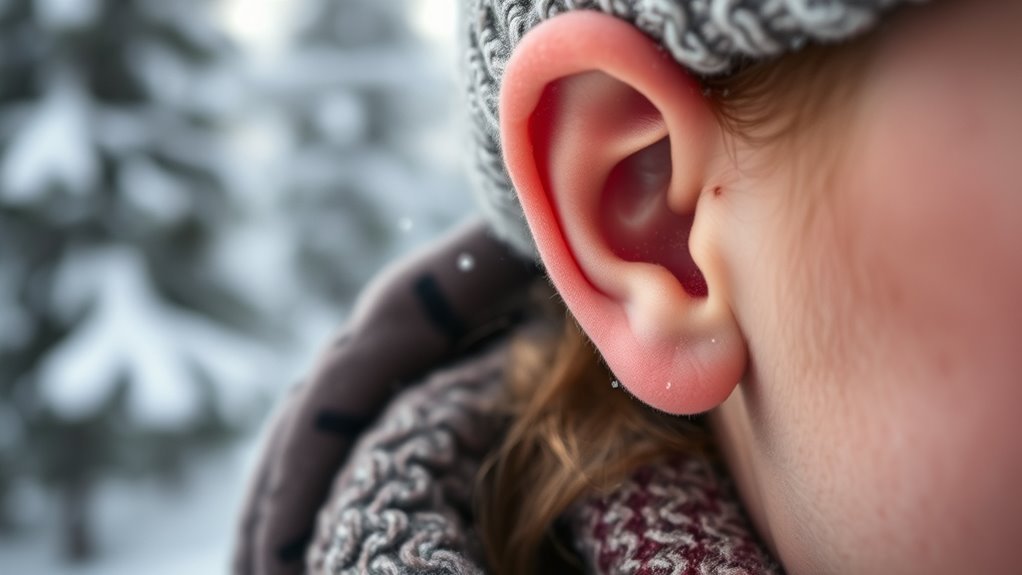
Your ears hurt in cold weather because low temperatures and wind cause your blood vessels to tighten, reducing circulation and making the skin and tissues more sensitive.
This constriction, combined with dry air, can irritate the ear canal and surrounding skin, leading to pain or discomfort.
Additionally, colds and sinus issues common in winter can cause pressure buildup inside your ears.
If you want to understand how to protect your ears and ease the pain, there’s more to explore.
Causes of Ear Pain During Cold Weather
Although cold weather might seem harmless, it can cause your ears to hurt in several ways.
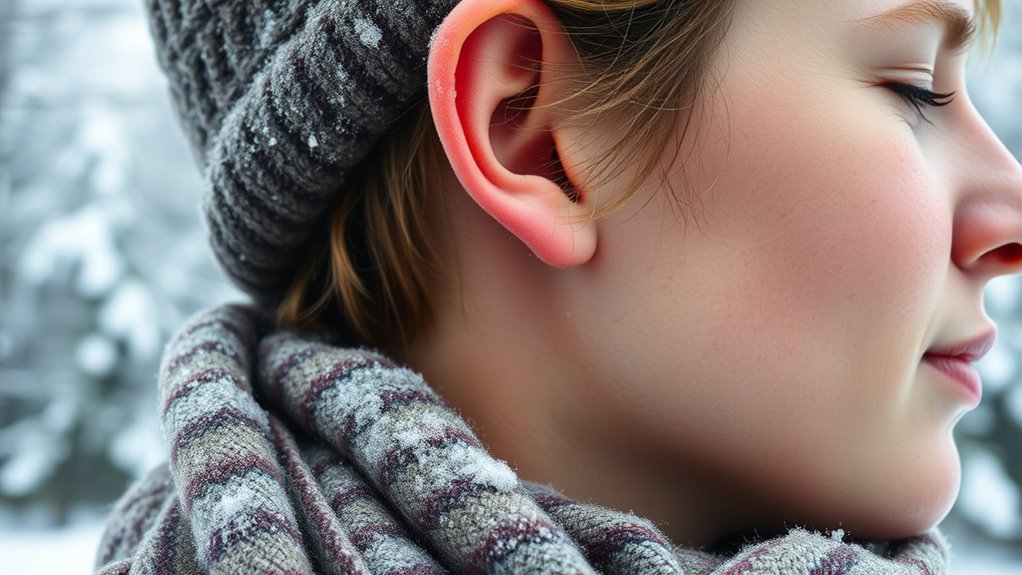
Cold exposure makes the blood vessels in your ear constrict, leading to sharp ear pain and discomfort.
Wind and low temperatures cool the ear canal directly, triggering feelings of pressure and irritation.
The sensitive skin around your ears can become inflamed by cold air, increasing pain.
Seasonal illnesses like sinus infections and colds often cause congestion, affecting your Eustachian tubes.
When these tubes swell or get blocked due to inflammation, they can’t drain properly, raising ear pressure and discomfort.
Sudden temperature changes also worsen this, making your ears more sensitive.
Understanding these causes helps you protect your ears better during cold weather.
How Cold Temperature Affects Ear Circulation
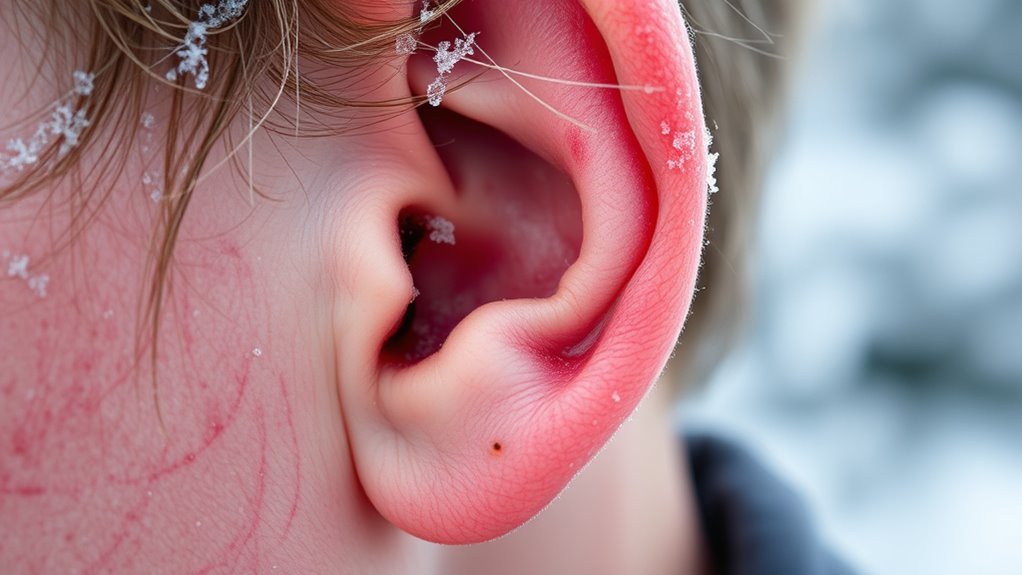
When you expose your ears to cold temperatures, the blood vessels constrict, which reduces blood flow and oxygen supply to the ear tissues.
This vasoconstriction affects both the inner ear and outer ear, limiting oxygen delivery and slowing ear circulation.
As temperature drops, the reduced blood flow means less warmth reaches your ears, which can trigger ear pain.
The constricted vessels also hinder the removal of metabolic waste, increasing the risk of tissue irritation or damage.
Poor circulation makes it harder for your ears to recover from minor injuries caused by cold exposure.
To minimize discomfort, it’s important to promote circulation by keeping your ears warm and protected during cold weather.
This helps maintain steady blood flow and oxygen delivery to support ear health.
Common Symptoms Associated With Cold-Induced Ear Pain
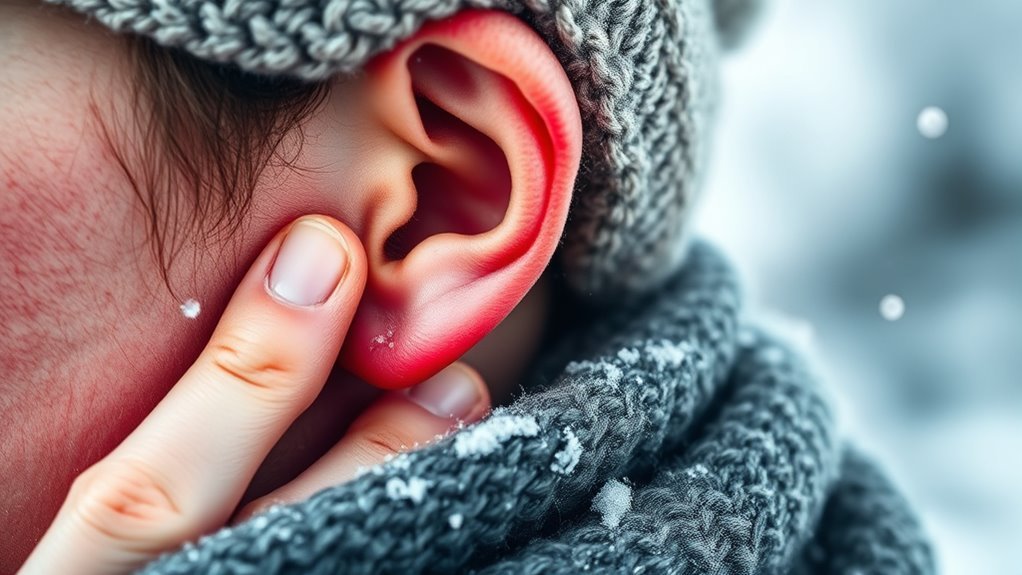
Reduced blood flow to your ears during cold weather can lead to several uncomfortable symptoms.
You might experience sharp ear pain or a persistent pressure in the ear that feels like fullness.
This ear discomfort often comes with dizziness and imbalance, making it hard to stay steady.
Sinus issues may also arise, causing headaches that accompany the pain.
If inflammation worsens, you could notice mucus drainage from the ear, signaling possible ear infections.
In some cases, swelling or fluid buildup blocks sound transmission, resulting in partial or complete hearing loss.
These symptoms highlight how cold weather impacts your ear health, emphasizing the need to protect your ears.
Seek medical advice if symptoms persist or worsen.
Role of Respiratory Infections in Winter Ear Discomfort
Since respiratory infections become more frequent during winter, you might notice an increase in ear discomfort caused by these illnesses.
Respiratory infections like colds and flu lead to sinus congestion and ear inflammation, which can block your Eustachian tubes.
Colds and flu cause sinus congestion and ear inflammation, blocking your Eustachian tubes.
This blockage causes ear pressure and ear pain that feels worse in cold weather.
Viral illnesses often trigger sinus congestion, making it easier for infections to spread to your middle ear, resulting in ear infections such as otitis media.
Fluid buildup from these infections raises the risk of further ear problems and prolonged ear discomfort.
Understanding the role of respiratory infections in winter ear pain helps you recognize how closely linked cold weather and ear inflammation are, especially when sinus congestion and ear pressure become persistent symptoms.
Preventive Measures to Protect Your Ears in Cold Weather
Although cold weather can cause ear pain and discomfort, you can take simple preventive steps to protect your ears.
Always wear insulated hats, earmuffs, or scarves that fully cover your ears to provide essential ear protection from wind chill and cold exposure.
When you’re involved in outdoor activities, this gear minimizes temperature fluctuations that often trigger ear discomfort.
Don’t forget skin care; apply moisturizers around your ears to prevent dryness and irritation caused by cold, dry air.
After being outside, use warm compresses or move indoors to gradually warm your ears, reducing sensitivity.
Maintaining good overall health by staying hydrated and managing sinus issues also supports your ears’ resilience.
These measures help you avoid pain and keep your ears comfortable throughout the cold weather season.
Managing Ear Pain and Irritation From Cold Exposure
Protective gear and skin care go a long way, but sometimes cold weather still causes ear pain and irritation.
When you face ear discomfort from cold exposure, try these steps to manage ear sensitivity and inflammation effectively:
- Wear insulated hats or earmuffs to shield your ears from wind and low temperatures. This will help reduce ear irritation.
- Keep your ears dry and clean. Maintaining good ear hygiene can prevent inflammation caused by that dry, cold air.
- Avoid sudden temperature changes that can worsen ear pain. Sudden shifts can cause blood vessel constriction, which isn’t fun.
- Apply a gentle moisturizer around your ears. This can combat dryness and soothe irritated skin.
When to Consult a Healthcare Provider for Ear Pain
If your ear pain lasts more than a few days or gets worse, you should see a healthcare provider to prevent complications.
Cold weather can cause discomfort, but persistent symptoms may signal an ear infection or other issues needing treatment.
You should seek medical attention if you notice ear drainage such as fluid, pus, or blood.
Also, if you experience sudden hearing loss, dizziness, or severe pain that home remedies don’t relieve, consult a doctor promptly.
Severe pain accompanied by fever or chills requires immediate care.
Additionally, if you have underlying health conditions like sinus infections or immune deficiencies, don’t ignore recurring or severe ear pain.
Timely medical evaluation helps address problems before they worsen.
Impact of Cold Weather on Hearing and Ear Health Devices
When cold weather hits, it can cause your ear’s blood vessels to constrict, reducing blood flow and making your hearing less sensitive. This can lead to ear pain and affect your ear health, especially if you use hearing devices.
Here’s how cold weather impacts your ears and devices:
- Cold weather can cause ear irritation and dryness, making hearing devices uncomfortable to wear.
- Ear inflammation or infections from cold exposure may cause swelling, disrupting device function.
- Sudden temperature changes create pressure fluctuations in the middle ear, impairing hearing device performance.
- Using proper ear protection helps maintain blood flow, prevents ear pain, and keeps hearing devices working well.
Taking these steps can protect your ears from cold-induced issues and ensure your hearing devices remain effective.
Frequently Asked Questions
How Do I Stop My Ears From Hurting in Cold Air?
You can stop your ears from hurting in cold air by wearing insulated hats or earmuffs.
Keeping them dry is also important, so make sure to protect them from moisture.
Using warm compresses can provide relief as well.
Avoid prolonged exposure to the cold and take breaks indoors.
This will help your ears adjust gradually and reduce discomfort.
What Does It Mean if Your Ears Hurt in the Cold?
If your ears hurt in the cold, it means your blood vessels are constricting, reducing circulation and causing discomfort.
It might also signal sensitivity, inflammation, or an underlying issue like sinus problems or ear infections.
Conclusion
Think of your ears in cold weather like delicate flowers facing a frosty morning—they need protection to stay vibrant.
When chilly winds nip at them, pain and discomfort can bloom, signaling you to shield them with warmth.
By wrapping up and staying mindful, you nurture your ears through winter’s bite.
But if the pain lingers like an unyielding frost, don’t hesitate to seek help.
Your ears deserve gentle care all year round.
In conclusion, protecting your ears from cold weather is crucial. Just like flowers need care, your ears require warmth to thrive in winter.
If you experience persistent pain, it’s important to consult a professional.
Remember, the cold can bring discomfort, but with the right protection, you can keep your ears healthy and pain-free.