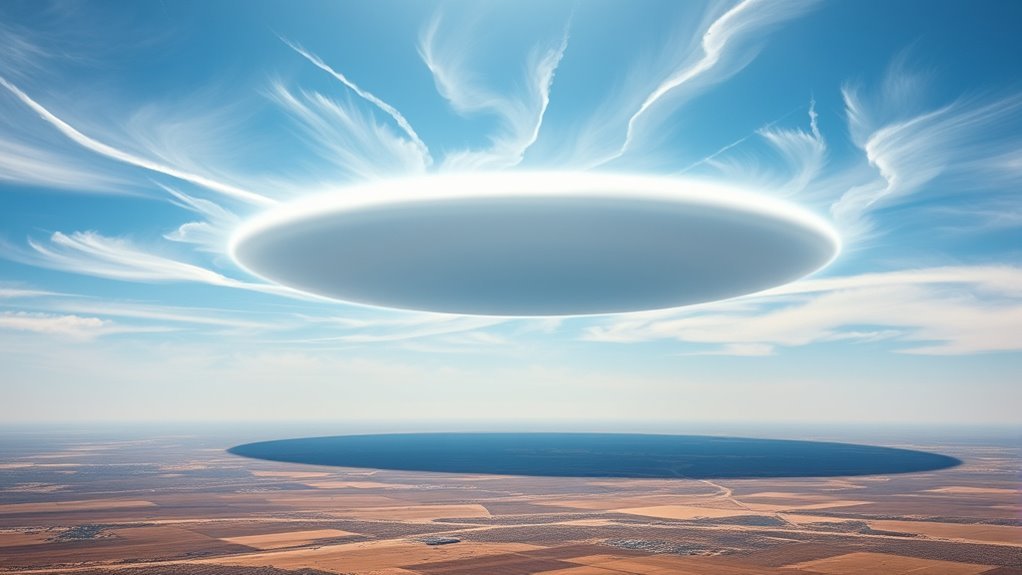
Which Type of Pressure Suppresses Weather Development?
If you’re curious about which type of pressure suppresses weather development, it’s high-pressure systems.
These systems push air downward, warming and drying it, which stops clouds from forming.
That means you get calm, clear skies and stable weather since moist air can’t rise to create storms.
In contrast, low-pressure systems do the opposite, encouraging weather activity.
Keep exploring to understand how these pressure patterns shape what you see outside!
Understanding Atmospheric Pressure and Its Role in Weather

Although you might not always notice it, atmospheric pressure plays a crucial role in shaping the weather you experience.
High pressure systems are key pressure areas where air pressure is higher than the surrounding environment. In these systems, descending air suppresses cloud formation by warming and drying the atmosphere.
This process limits moisture rising to form clouds, inhibiting weather development and leading to stable and often calm conditions.
Because high pressure systems prevent moisture from condensing, they reduce the chance of precipitation and storm formation.
Understanding how pressure systems work helps you see why certain days stay clear and quiet.
Stable atmospheric pressure in these high pressure areas keeps the weather predictable and fair for extended periods.
Characteristics of High-Pressure Systems
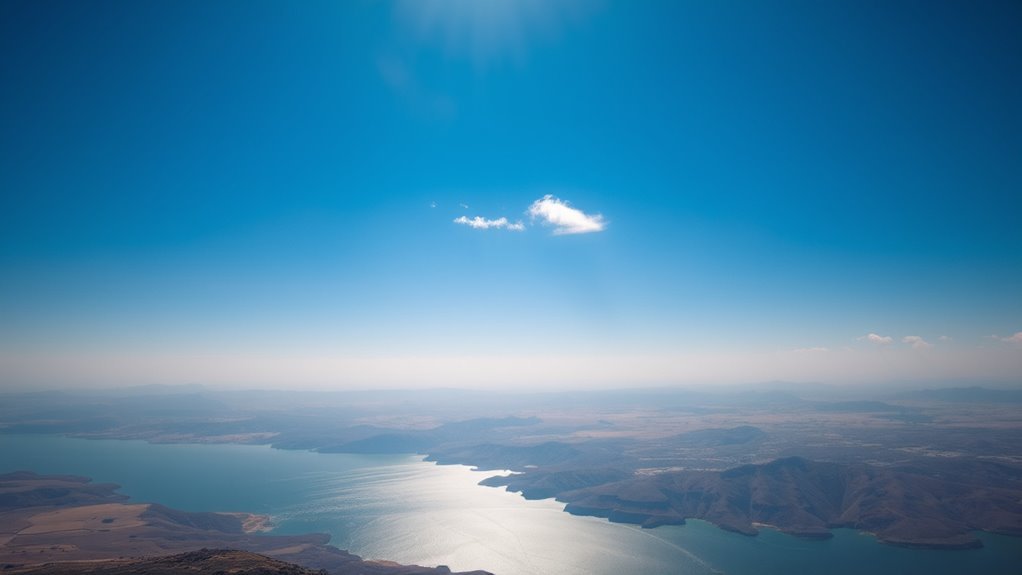
High-pressure systems shape much of the weather you experience by driving air downward and outward.
High-pressure systems influence weather by pushing air downward and outward, creating clear and calm conditions.
In these high-pressure zones, descending air warms as it sinks, which suppresses cloud formation and keeps the skies clear.
This descending air also stabilizes the atmosphere, creating calm weather that you often notice as bright, sunny days with little wind.
The air flows outward from the center of the high pressure system, preventing the vertical movement necessary for storm clouds and precipitation to develop.
Because the vertical movement of air is suppressed, these stable atmospheric conditions dominate, making high-pressure systems synonymous with dry and settled weather.
When you see clear skies and calm weather, you’re likely experiencing the effects of a strong high-pressure system with descending air that controls local weather patterns.
How High-Pressure Systems Suppress Weather Development
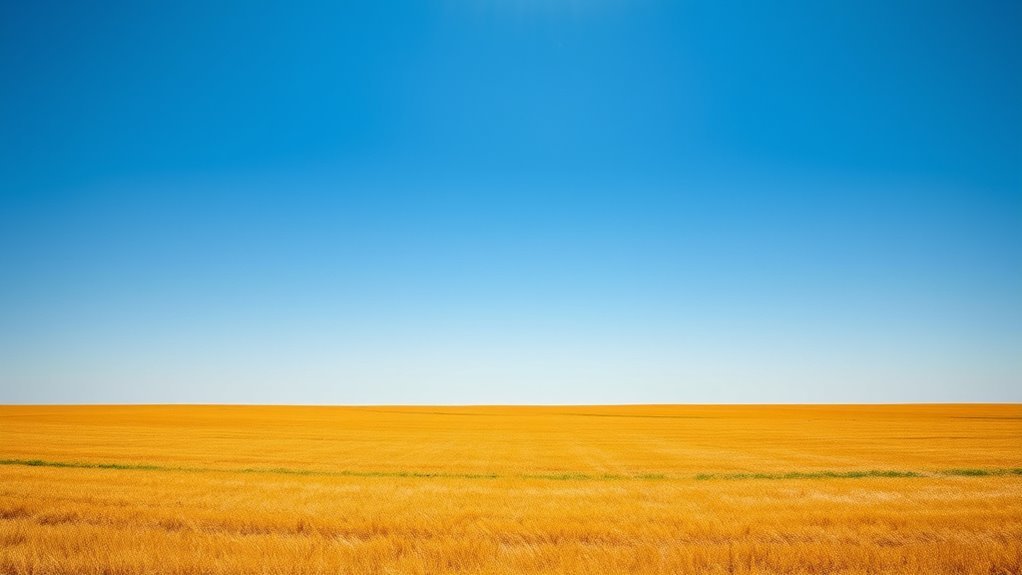
When air sinks and warms in these systems, it dries out the atmosphere and blocks the formation of clouds.
High-pressure systems feature descending air that creates a stable atmosphere, which suppresses clouds and vertical air movement necessary for storms.
This atmospheric stability leads to clear skies and dry weather because the downward airflow inhibits moisture buildup.
Additionally, outward diverging winds push air away from the high-pressure center, further reducing convection and the chance of precipitation.
You’ll notice fair weather dominates under these conditions, as the stable atmosphere prevents the development of storms.
Contrasting Effects of Low-Pressure Systems on Weather
Since low-pressure systems feature rising air, they encourage cloud formation and often bring unsettled weather.
Unlike high-pressure zones with descending air that promotes clear skies and calm weather, low-pressure areas enhance vertical movement of moist air.
This vertical movement is essential for storm development and precipitation, as it allows warm, moist air to rise and cool, forming clouds.
You’ll notice that stable conditions don’t prevail here; instead, the atmosphere becomes unstable, which fuels weather activity rather than weather suppression.
While high pressure suppresses cloud formation through descending air, low pressure does the opposite by fostering cloud formation and storm development.
Observing and Predicting Weather Through Pressure Systems
Although pressure systems may seem invisible, you can learn a lot about upcoming weather by observing changes in barometric pressure and interpreting weather maps.
High-pressure systems feature descending air that warms and dries, preventing cloud formation and promoting weather suppression.
When barometric pressure rises, it signals stable atmospheric conditions, reducing storm chances.
On weather maps, high-pressure zones appear with widely spaced isobars, indicating weak winds and stable weather.
| Feature | Weather Prediction Impact |
|---|---|
| High-pressure systems | Descending air inhibits clouds |
| Barometric pressure | Rising pressure signals stability |
| Isobars | Widely spaced = weak winds |
| Atmospheric stability | Suppresses weather development |
Frequently Asked Questions
What Pressure Suppresses Weather Development?
High pressure suppresses weather development because it causes air to sink, warming and stabilizing the atmosphere.
You’ll notice clear skies and calm conditions since this sinking air prevents clouds and storms from forming.
Which Type of Weather Suppresses Weather Development?
Clear, calm weather suppresses weather development because it stabilizes the atmosphere, reduces moisture, and prevents cloud formation.
You’ll notice fewer storms and precipitation when these conditions dominate, keeping the sky mostly clear and peaceful.
Which Type of Pressure System Brings Bad Weather?
You’ll find that low-pressure systems bring bad weather because they cause air to rise, which cools and condenses moisture, forming clouds and precipitation.
Does High or Low Barometric Pressure Cause Storms?
You might think high pressure causes storms, but it’s actually low barometric pressure that stirs things up.
When pressure drops, you’ll notice clouds gather and storms form, turning calm skies into turbulent weather quickly.
Conclusion
When you spot a high-pressure system, think of it as nature’s weather gatekeeper, calmly holding back storms and clouds.
High pressure pushes air down, stopping the rise of moisture and keeping the sky clear.
So, if you want to know when the weather will stay peaceful, watch for that steady, sinking air.
It’s like a silent guardian, quietly suppressing weather development and giving you those bright, calm days you love.
In conclusion, high-pressure systems play a crucial role in maintaining fair weather.
By pushing air down and preventing moisture from rising, they create clear skies and pleasant conditions.
So, whenever you see a high-pressure area in the forecast, you can expect a period of calm and tranquility in your weather.