
When Driving in Inclement Weather You Should Know These 10 Essential Safety Tips
When driving in inclement weather, it’s crucial to prioritize safety. Slowing down helps you maintain control of your vehicle, while increasing your following distance gives you more time to react.
Make sure to turn on your headlights for improved visibility.
Avoid standing water to prevent hydroplaning, which can lead to loss of control.
Always remember to turn off cruise control so you can manually adjust your speed as needed.
Planning your route with updated weather and traffic information is a smart move.
Before heading out, inspect your vehicle to ensure it’s in good condition.
If you do find yourself hydroplaning, stay calm and remember to steer gently.
And if visibility worsens or you start to lose control, don’t hesitate to pull over to a safe spot.
Keep going to uncover more essential safety details!
Reduce Your Speed to Maintain Control
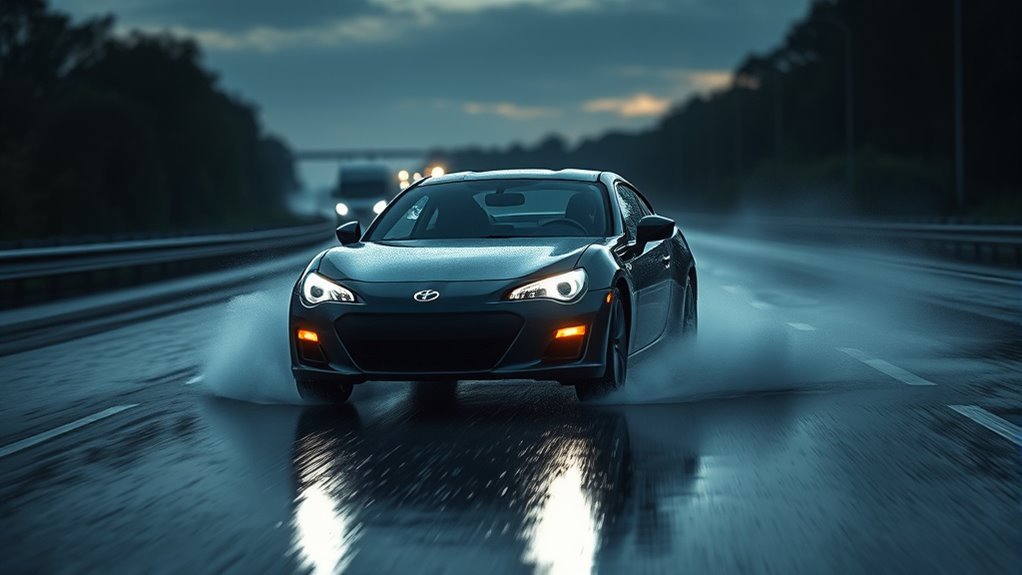
When driving in wet conditions, you should reduce your speed by about one-third to maintain control and lower the risk of hydroplaning.
On wet roads, slowing down substantially improves traction, helping you steer safely and avoid loss of control.
Slowing down on wet roads greatly enhances traction, enabling safer steering and preventing loss of control.
Speeding in poor weather not only increases the chance of skidding but also markedly extends your stopping distance.
For example, dropping from 60 mph to 40 mph on wet pavement can cut your stopping distance by over 50%, giving you vital extra time to react to hazards.
By slowing down, you enhance your vehicle’s grip on slippery surfaces, improve visibility, and boost overall safety for yourself and others.
Increase Following Distance for Safety
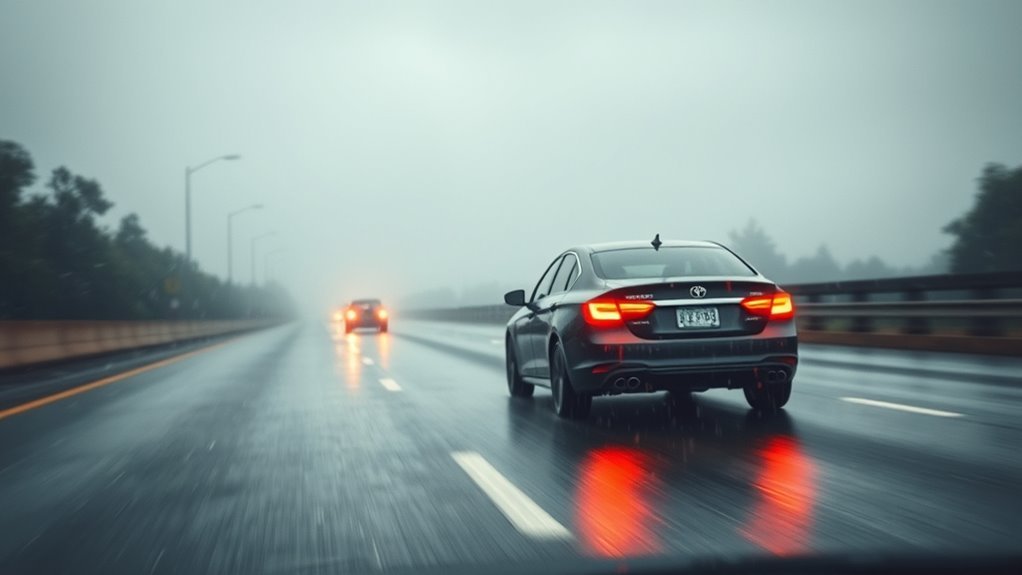
You should increase your following distance to at least 4-6 seconds when driving in rain or fog. This extra time gives you more opportunity to react to any sudden changes.
Wet roads extend your braking distance, so keeping extra space is essential for stopping safely.
Always adjust your gap based on the conditions to reduce the risk of collisions. It’s a simple step that can make a big difference in your safety on the road.
Maintain Extra Space
Since wet roads reduce traction and increase stopping distances, you should increase your following distance to at least 4-6 seconds in rainy conditions.
Maintaining extra space between you and the car ahead gives you more time to react to sudden stops or hazards, improving your vehicle control.
Wet roads raise the risk of hydroplaning, and doubling your usual following distance helps prevent rear-end collisions caused by this loss of control.
By keeping a greater gap, you effectively extend your braking distance and reduce the chance of accidents.
This simple adjustment is a critical part of safe driving in bad weather, allowing you to navigate slick surfaces with confidence and minimize crash risks.
Always remember, maintaining extra space is essential for your safety and that of others on the road.
Extend Braking Distance
Although bad weather challenges your driving, extending your braking distance considerably boosts safety on slick roads.
In wet conditions, increasing your following distance to 4-6 seconds gives you more stopping time, helping prevent collisions.
Hydroplaning can double your braking distance, so slowing down is key.
Remember, slick roads can require up to 55% more distance to stop than dry pavement.
| Condition | Recommended Following Distance |
|---|---|
| Dry Pavement | 2 seconds |
| Wet Conditions | 4-6 seconds |
| Hydroplaning Risk | Double braking distance |
| Slick Roads | 55% longer stopping distance |
Adjust for Conditions
When weather conditions worsen, increasing your following distance to at least 4-6 seconds gives you the extra time needed to react safely.
On wet roads, your vehicle’s traction decreases, making it harder to brake quickly or steer around hazards.
By doubling the usual 2-3 second following distance, especially in heavy rain or fog, you reduce the risk of collisions caused by sudden stops.
This extra space helps you compensate for longer braking distances and the danger of hydroplaning, where tires lose contact with the road surface.
Adjusting your following distance based on driving conditions ensures you can respond effectively, avoid rear-end crashes, and maintain control.
Use Headlights Appropriately
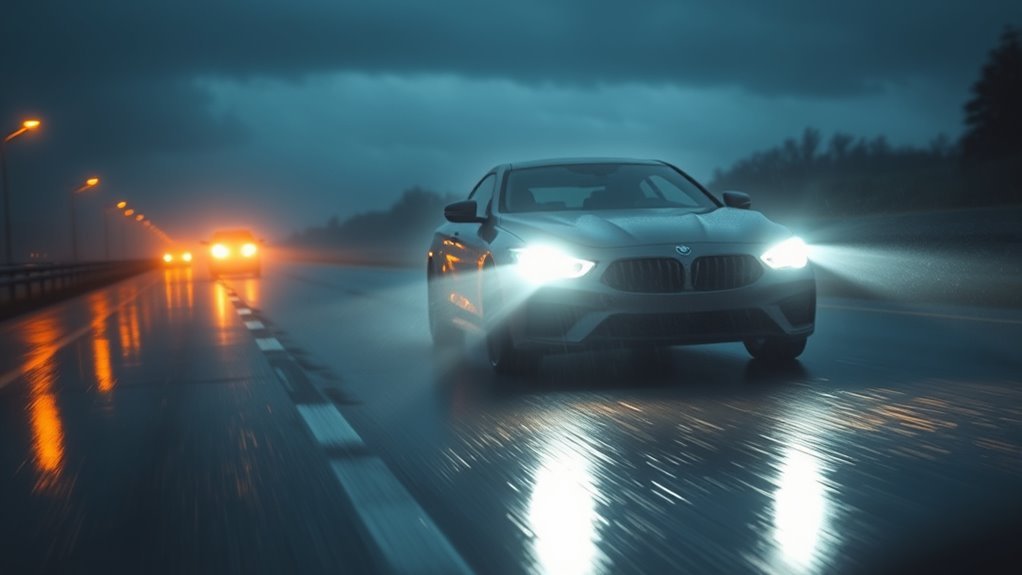
Whether you’re driving through fog, heavy rain, or simply using your windshield wipers, turning on your headlights increases your visibility and helps other drivers spot you.
In bad weather and low-light conditions, using headlights can reduce accidents by up to 38%.
Always switch them on whenever your wipers are active, regardless of the time of day.
Before you hit the road, check that all your vehicle’s lights—including headlights, taillights, and turn signals—are clean and working properly.
Proper headlight use isn’t just a safety tip; it’s often required by law in many states during nighttime and adverse weather.
Avoid Driving Through Standing Water
Using your headlights properly improves visibility, but staying safe also means knowing when to avoid hazards like standing water.
Driving through standing water can cause hydroplaning, which makes you lose control and traction.
Hydroplaning from standing water reduces traction and control, creating dangerous driving conditions.
Even shallow puddles might hide deeper flood water, posing serious risks.
To stay safe, remember these tips:
- Avoid driving over water covering road markings; it often signals deeper flood water.
- Never drive into flooded areas—just 12 inches of rushing water can sweep your vehicle away.
- Slow down to maintain traction and reduce the risk of hydroplaning.
- Steer clear of standing water whenever possible to keep control and ensure your safety.
Turn Off Cruise Control in Rainy Conditions
Since rainy conditions increase the risk of hydroplaning, you shouldn’t use cruise control.
When your vehicle encounters a wet road, cruise control can delay deceleration, reducing your ability to react quickly.
Turning off cruise control puts you back in full control, allowing you to adjust your speed instantly to match changing road conditions.
This manual control is vital for maintaining safety, especially when sudden hazards like standing water or debris appear.
By disabling cruise control in rainy conditions, you guarantee better reaction times and reduce the chances of losing traction.
Staying attentive and managing your speed yourself keeps you safer and helps prevent accidents caused by delayed responses during wet weather driving.
Employ Smooth Steering and Braking Techniques
When roads get wet or icy, you need to steer and brake smoothly to keep control and prevent skidding.
Using smooth steering and braking techniques helps you control your vehicle safely on wet roads. Here’s how to stay safe:
- Apply gentle steering inputs to maintain control and avoid skidding.
- Brake gradually to prevent wheel lockup and reduce hydroplaning risk.
- Avoid sudden acceleration or deceleration, which can cause loss of traction.
- If hydroplaning occurs, steer straight, ease off the gas, and don’t make abrupt movements.
Keep a firm grip on the steering wheel with both hands, so you can respond quickly to slippery conditions.
Smooth steering and braking are essential for safe driving in inclement weather.
Inspect Your Vehicle Before Driving
Before you hit the road in bad weather, inspect your vehicle to ensure everything functions properly.
A thorough vehicle inspection helps maintain visibility and control, which are vital in harsh conditions.
Check your windshield wipers for streaks or chatter and replace them if needed.
Make certain all lights are clean and operational to improve visibility.
Verify tire pressure and tread depth to avoid hydroplaning.
Also, inspect your brakes and fluid levels for effective stopping power.
Don’t forget to test your defroster and heater to keep windows clear inside.
| Item | What to Check |
|---|---|
| Windshield Wipers | Functionality and streaks |
| Lights | Cleanliness and operation |
| Tire Pressure | Proper inflation and tread depth |
| Brakes | Responsiveness and fluid levels |
Plan Your Route With Weather and Traffic in Mind
After ensuring your vehicle is ready for bad weather, you should plan your route carefully to avoid unexpected hazards.
Checking weather forecasts and traffic updates before you leave helps you anticipate delays caused by rain or fog.
Use navigation apps that offer real-time traffic info and alerts so you can pick the safest, quickest route.
To improve safety, consider these tips:
- Travel during daylight when visibility and traffic conditions are better.
- Identify alternative routes or detours in case your main route is blocked or flooded.
- Allow extra time for your trip to maintain safe speeds despite weather-related slowdowns.
- Monitor traffic conditions continuously to adjust your route as needed.
Planning ahead with weather and traffic in mind boosts your safety and reduces stress on the road.
Respond Calmly to Hydroplaning Situations
If your vehicle starts hydroplaning, staying calm is essential to maintaining control and preventing an accident.
Avoid slamming the brakes; instead, gently ease off the gas pedal.
Use smooth, gradual steering in the direction you want to go, avoiding sudden movements that can worsen the skid.
Your goal is to regain traction while maintaining safety.
| Action | Tips for Control |
|---|---|
| Gas pedal | Ease off gently |
| Steering | Turn smoothly toward travel |
| Brakes (ABS) | Apply steady pressure |
| Brakes (non-ABS) | Pump gently to avoid lockup |
Pull Over When Visibility or Control Is Compromised
Maintaining control during hydroplaning is crucial.
But sometimes, conditions get so dangerous that pulling over becomes your best option.
When visibility drops below 1000 feet or your windshield fogs up, it’s time to safely pull over until conditions improve.
Loss of control, like skidding or hydroplaning, also calls for an immediate stop to avoid accidents.
Hazardous road conditions, such as standing water or debris, may force you to wait for better weather or road clearance.
Remember to always turn on your hazard lights when you pull over to alert other drivers.
- Pull over if visibility is severely reduced by fog, rain, or snow.
- Stop immediately if you lose vehicle control.
- Avoid driving on hazardous roads with standing water or debris.
- Use hazard lights to warn others of your stopped vehicle.
Frequently Asked Questions
When Driving in Inclement Weather, You Should What?
You should reduce your speed, turn on headlights, avoid standing water,
turn off cruise control, and brake gently.
These actions help you maintain control, improve visibility, and reduce the risk of accidents in bad weather.
What Are 10 Safety Rules on the Road?
You should reduce speed and increase following distance.
Also, remember to turn on your headlights and avoid puddles whenever possible.
Never use cruise control in adverse conditions, and always stay alert.
Using signals is crucial for communicating with other drivers.
Don’t forget to check your tires regularly to ensure they are in good condition.
Keep your windows clear for optimal visibility and, of course, always wear your seatbelt to stay safe on the road.
What Are the 5 C’s of Safe Driving?
The 5 C’s of safe driving are Controls, Caution, Communication, Concentration, and Courtesy.
You’ll master your vehicle, stay alert, signal clearly, adjust speed, and respect others—
key to safer, smarter driving every time you hit the road.
Do You Put Your Hands at 10 and 2 or 9 and 3?
You should put your hands at 9 and 3 o’clock.
This position gives you better control, reduces fatigue, and lowers injury risk from airbags during collisions.
It also helps you react faster and safer, especially in tricky driving conditions.
Conclusion
When driving in inclement weather, you’ve got to stay sharp and follow these safety tips like your life depends on it—because it does.
Slowing down, keeping a safe distance, and turning off cruise control can be your lifeline in a storm.
Always plan ahead and don’t hesitate to pull over if things get too wild out there.
Remember, staying calm and prepared turns chaos into manageable challenges on the road.
Stay safe out there!
In conclusion, driving in bad weather requires a heightened awareness and adherence to safety guidelines. By reducing speed, maintaining a safe distance, and avoiding cruise control, you can navigate turbulent conditions more effectively.
Planning ahead and knowing when to pull over are essential skills that can help you stay calm amidst the chaos.
Ultimately, being prepared and composed can transform a potentially dangerous situation into a manageable one. Stay safe and drive smart!