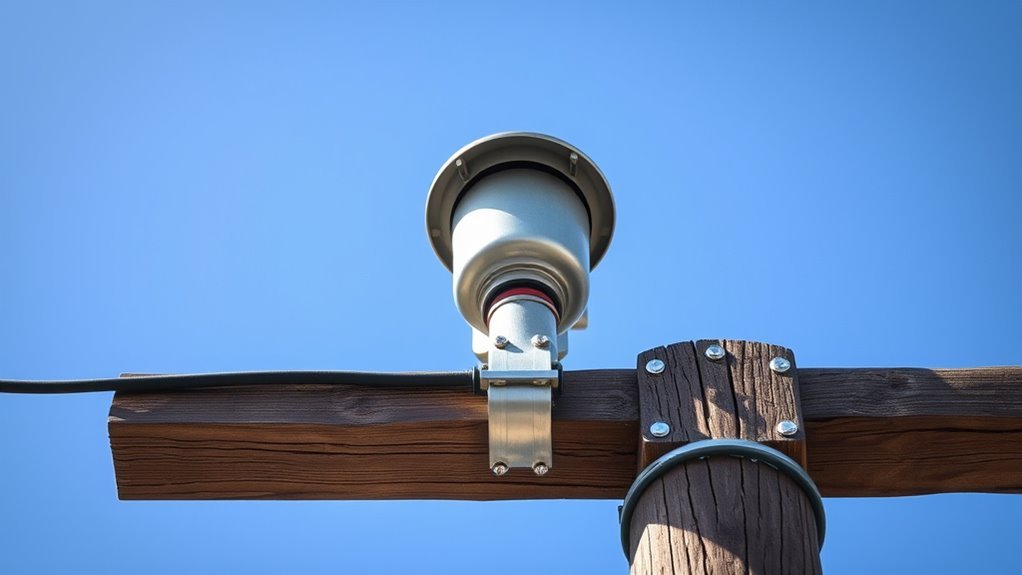
What Is a Weather Head and Why Is It Important?
A weather head is an essential component of your home’s electrical system. It’s the protective cap that covers where overhead electrical wires enter your building. This crucial feature is designed to prevent water, debris, and pests from entering your electrical system.
By stopping moisture, a weather head helps avoid shorts and electrical failures, which can be costly and dangerous.
Typically made from durable materials and featuring a curved design, it ensures safe, weatherproof connections.
To keep your electrical system reliable and safe, proper installation and regular upkeep by a licensed electrician are key.
Understanding the role of a weather head empowers you to maintain your home’s electrical safety effectively. Remember, a well-functioning weather head is vital for protecting your electrical infrastructure from the elements!
Definition and Function of a Weather Head
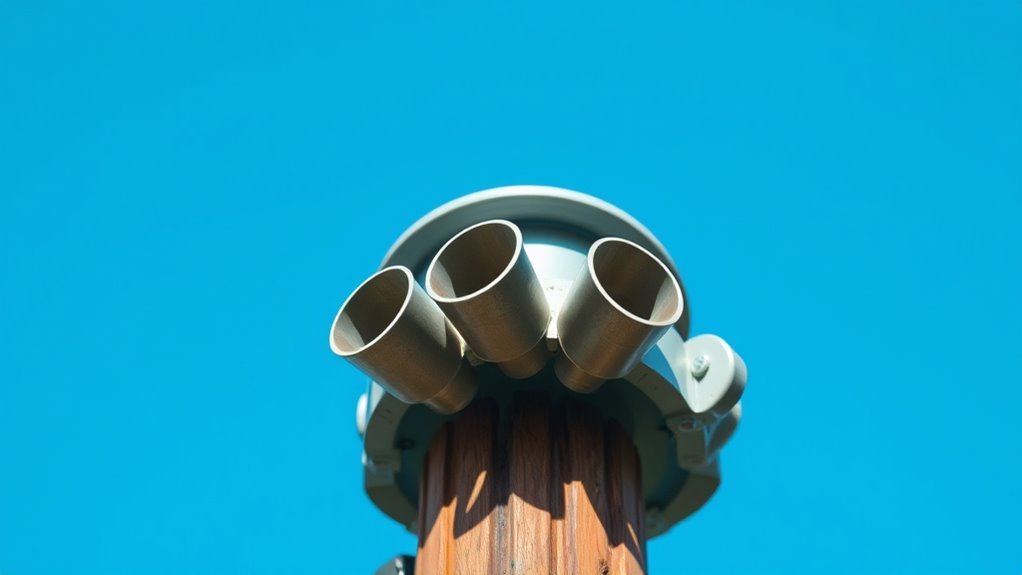
Although it might seem like a small component, a weather head plays a crucial role in your building’s electrical system by protecting where overhead wires enter.
A weather head is vital for safeguarding where overhead electrical wires connect to your building.
The weather head, sometimes called a service head or gooseneck, acts as a shield at the point where utility lines transition into your electrical system.
It prevents water intrusion, debris, and even wildlife from getting into the conduit, which could damage the electrical connection.
Made of metal or durable plastic, it features a downward-facing cap that guarantees a weatherproof seal.
Without this protection, moisture and contaminants could compromise your wiring, leading to shorts or failures.
Components and Design Features
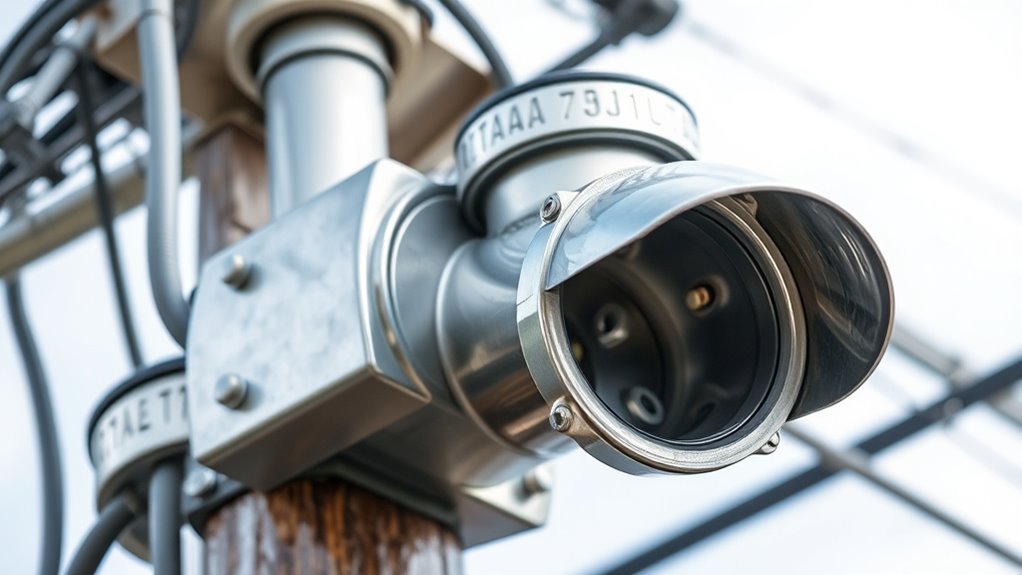
When you examine a weather head, you’ll notice its metal construction and distinctive curved cap designed to keep water and debris away from overhead wires.
This essential component protects electrical connections from the elements by fitting securely at the top of the service mast or conduit.
Key design features include:
- A metal box base that attaches firmly to the service mast
- A curved cap angled for effective water runoff
- A gasket or sealant inside to block moisture from entering the conduit
- Compatibility with cables up to 600 volts
- Durable materials selected for environmental protection
Together, these components ensure the weatherhead protects your electrical system by preventing water intrusion and maintaining a secure, weatherproof seal.
Installation Process and Safety Considerations
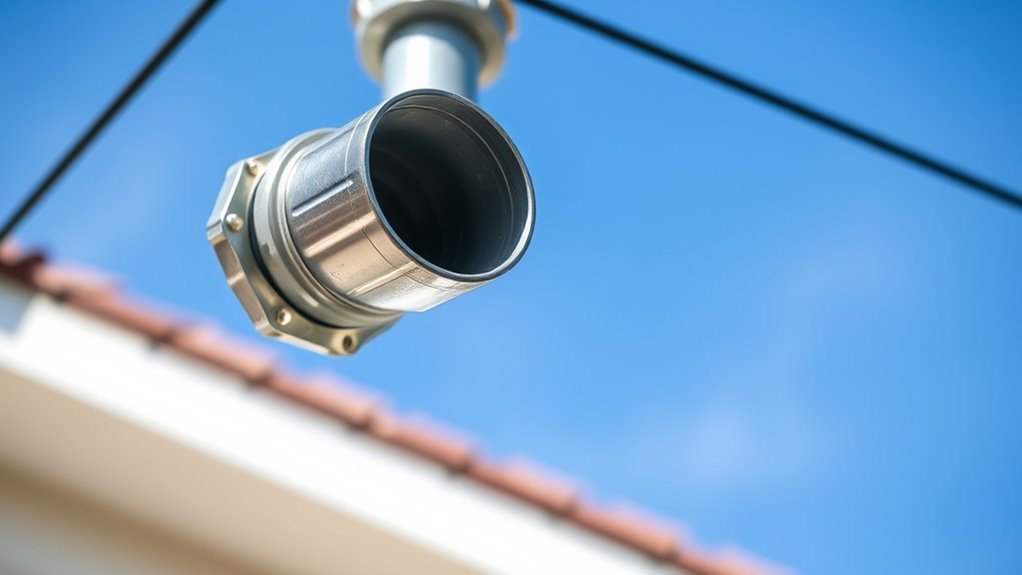
The design features of a weatherhead set the stage for a secure and effective installation.
When installing a weatherhead, you’ll need to secure it tightly to the service mast to guarantee proper drainage and weatherproofing.
A licensed electrician should handle the installation to comply with electrical codes and assure safety.
For proper connection, the service wires must match voltage specifications and be carefully threaded through the riser, preventing water ingress.
Applying weatherproof sealant around the weatherhead’s base is vital to keep the electrical connection dry and protected.
Following these steps not only ensures functionality but also safeguards your home from electrical hazards.
Maintenance and Repair Responsibilities
Since weatherheads are exposed to the elements, you must take responsibility for maintaining and repairing any damage to them, the service bracket, or pipe riser before utility services can be restored.
Proper maintenance prevents water intrusion and electrical hazards. Always hire a licensed electrician for repairs to ensure safety and compliance with codes.
Proper maintenance stops water damage and electrical risks; always use a licensed electrician for safe, code-compliant repairs.
After repairs, the electrician will notify City Utilities to verify the work before reconnecting service.
To keep your electrical connection safe and reliable, follow these tips:
- Inspect the weatherhead regularly for cracks or wear.
- Address damage promptly to avoid costly repairs.
- Use only licensed electricians for all electrical repairs.
- Ensure the service bracket and pipe riser remain secure.
- Schedule routine maintenance checks to catch issues early.
Taking these steps protects your electrical service and your property.
Role in Electrical System Safety and Reliability
Although often overlooked, weatherheads play an essential role in keeping your electrical system safe and reliable. They provide a weatherproof entry point for overhead wires, preventing moisture and debris from causing damage or electrical faults.
The weatherhead protects your electrical connections from rain, snow, and corrosion. This helps reduce the risk of short circuits and electrical faults.
By keeping these connections dry and secure, it enhances the overall safety of your electrical system. This minimizes shock hazards and ensures your home remains safe.
Proper installation and regular maintenance of the weatherhead are indispensable. They ensure it continues to shield your electrical components effectively.
Without this protection, your system becomes vulnerable to environmental damage. This can lead to costly repairs and unsafe conditions.
Frequently Asked Questions
What Is the Purpose of a Weather Head?
The purpose of a weather head is to keep your electrical lines dry and protected from water, debris, and pests.
It also prevents damage and guarantees your wiring stays safe and code-compliant where it enters your building.
How Much Does It Cost to Install a Weatherhead?
You’ll typically pay between $150 and $350 to install a weatherhead.
Labor costs range from $50 to $150, while materials can run between $50 to $200.
Don’t forget that extra fees, like permits or repairs, can raise the total.
Who Is Responsible for Weatherhead?
They say, “a stitch in time saves nine.”
You’re responsible for maintaining your weatherhead, while electricians handle repairs.
Utility companies install and own it up to your connection point.
Always hire pros for safety.
How Long Does It Take to Replace a Weatherhead?
Replacing a weatherhead usually takes you 1 to 3 hours.
If conditions are straightforward and you plan well, a professional electrician can finish it in one visit without delays or extra repairs slowing you down.
Conclusion
Think of a weather head as the umbrella for your home’s electrical system.
It shields your wires from rain, snow, and wind, keeping everything dry and safe. Without it, your electrical setup would be exposed to the elements, like a traveler caught in a storm without cover.
By understanding its role and maintaining it properly, you guarantee your home stays protected and powered, no matter what weather comes your way.
In conclusion, a weather head is crucial for safeguarding your electrical system against harsh weather conditions.
Regular maintenance can prevent potential hazards and ensure uninterrupted power. So, keep your weather head in top shape, and enjoy peace of mind knowing your home is shielded from the elements!