What Does Fair Mean in Weather and How Can You Understand It?
Fair weather means you’ll see mostly clear skies with less than 40% cloud cover.
There’s no rain or snow, and gentle winds around 10 knots or less.
Visibility is unlimited, so there’s no fog or mist to block your view.
Temperatures stay within normal ranges, making it comfortable outside.
Automated sensors might miss some high clouds, so human checks matter.
If you want to understand more about these calm, stable conditions and what marks a truly fair day, keep exploring.
Definition of Fair Weather in Meteorology

Although you might think of fair weather as simply a nice day, meteorologists define it more precisely.
Fair weather means no precipitation, very light or calm winds, and minimal cloud cover. Specifically, less than 40% cloud cover usually qualifies as fair weather, indicating mostly clear skies.
You’ll also find that stable atmospheric conditions play a vital role, preventing storms or heavy clouds from forming. This stability ensures good visibility and temperatures within normal seasonal ranges, making outdoor activities comfortable.
When you check weather reports, the term fair weather isn’t just a casual remark—it’s a standardized definition used by meteorologists to communicate consistent conditions.
Understanding this helps you better interpret forecasts and know when the day will truly be fair.
Key Criteria for Classifying a Day as Fair

Now that you know what fair weather means in meteorology, let’s look at the specific criteria that classify a day as fair.
According to the National Weather Service, a fair day features less than 3/8 sky coverage by opaque clouds, ensuring mostly clear skies and plenty of blue.
You’ll notice no precipitation and unlimited visibility, making it ideal for outdoor activities.
Winds typically stay at or below 10 knots, and temperatures remain steady without extreme fluctuations.
The conditions are calm and comfortable, free from storms or significant weather disturbances.
When these factors align, you experience what meteorologists call pleasant weather—a day that’s stable, clear, and inviting.
Recognizing these criteria helps you appreciate what truly defines a fair weather day.
How Cloud Cover Influences Fair Weather
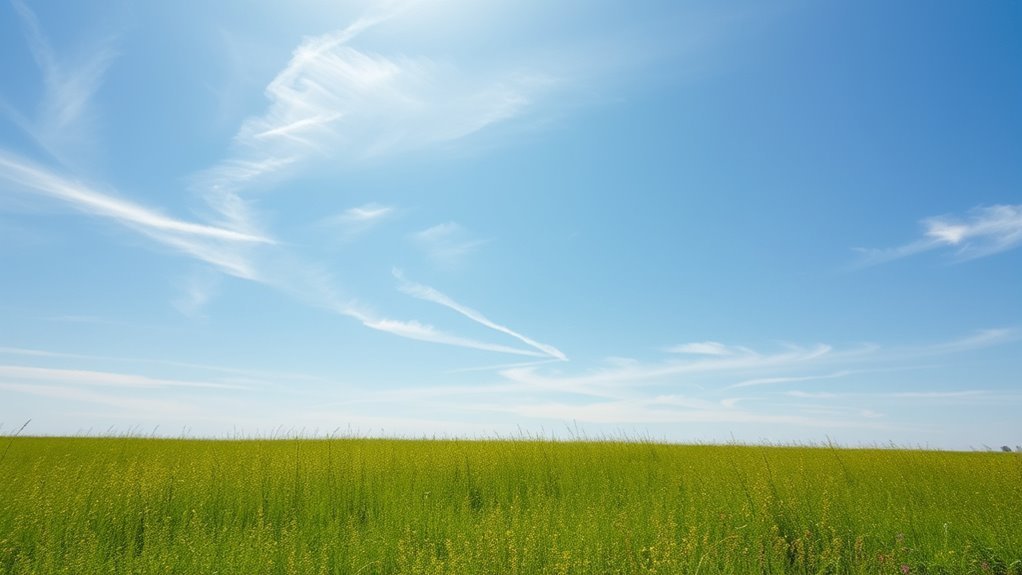
When you consider fair weather, cloud cover plays a crucial role in defining the sky’s clarity.
Here’s what you should know about how clouds influence what you call a fair day:
- Fair weather usually means less than 40% of the sky is covered by clouds, giving you mostly clear conditions.
- Automated sensors might miss high-altitude clouds, like cirrus clouds between 8,000 and 12,000 meters, causing some misclassifications.
- Satellite images and human observations often find more cloud cover than machines, but these high clouds don’t typically affect visibility or cause precipitation.
The Role of Precipitation and Visibility in Fair Conditions
Since fair weather hinges on more than just cloud cover, you’ll want to pay close attention to precipitation and visibility.
Fair conditions mean no rain, snow, or any moisture falling throughout the day.
Fair weather means a day free from rain, snow, or any form of falling moisture.
Even if clouds are present, as long as there’s no precipitation, the weather can still be classified as fair.
Visibility also plays a vital role. You’ll notice that in fair weather, your sightlines are clear and unlimited, with no fog or mist obstructing your view.
Meteorologists rely on these two factors heavily to determine if the weather is fair.
Keep in mind, automated systems might sometimes misreport conditions, so human observations help guarantee accuracy when evaluating precipitation and visibility for fair weather.
Wind and Temperature Standards for Fair Weather
Although fair weather is often associated with clear skies and no precipitation, wind and temperature play equally important roles in defining these pleasant conditions.
To understand fair weather better, consider these key standards:
- Wind speeds usually stay at 10 knots or less. This means the air feels calm and stable without disruptive gusts or storms.
- Temperatures remain within the normal seasonal range, avoiding extremes of heat or cold that could impact comfort.
- Light winds combined with moderate temperatures create ideal conditions for outdoor activities.
This ensures you can enjoy the day comfortably.
Limitations of Automated Weather Observations on Fair Weather Reporting
Because automated weather systems rely on sensors with limited range, they often miss high-altitude clouds that affect sky conditions.
Systems like ASOS and AWOS use ceilometers that detect clouds only up to 7,500 meters, so high cirrus clouds frequently go unnoticed.
This means you might see reports of clear or partly cloudy skies even when extensive high clouds are present.
Human observers, on the other hand, can visually spot these clouds, offering a more accurate picture of the sky.
Automated systems’ limitations often lead to underreporting cloud cover, causing discrepancies in fair weather reports.
When relying solely on automated data, you might get an incomplete sense of the actual sky conditions, especially during fair weather periods with subtle high cloud layers.
Historical and Cultural Context of the Term “Fair” in Weather
When sailors first used the term “fair” to describe weather, they celebrated favorable winds and calm seas that made their voyages safer and smoother.
You’ll find that “fair” weather historically symbolized calm, pleasant conditions perfect for travel and outdoor activities.
Over time, its meaning grew more precise in meteorology, referring to:
- Minimal cloud cover
- No significant precipitation
- Generally stable weather patterns
The phrase “fair winds” shows how deeply this term is rooted in culture, representing good fortune and safe journeys.
Even today, despite advanced weather technology, “fair” remains a popular word in forecasts and everyday talk.
It carries emotional weight, reminding you of happiness and stability whenever you hear it.
How Personal and Regional Differences Affect Perceptions of Fair Weather
You’ll notice that what feels like fair weather often depends on where you live and what temperatures you prefer.
Coastal areas might see cooler, less humid days as pleasant, while desert dwellers expect dry warmth to call it fair.
Your personal comfort shapes how you judge the same weather conditions differently from others.
Regional Climate Influences
Although fair weather generally suggests pleasant conditions, your perception of it largely depends on where you live and your personal preferences.
Regional climate plays a big role in shaping what you consider fair weather. For example:
- If you live near the coast, you might prefer cooler, less humid days as ideal.
- In desert regions, warmth and dry air often define fair weather.
- Humid areas usually see fair weather as days with low humidity and moderate temperatures.
Local culture and historical weather patterns also influence your views.
What feels fair in a northern, colder climate may differ greatly from southern areas where warmth is more welcome.
Individual Comfort Preferences
Because personal comfort varies so much, what feels like fair weather to you might differ widely from someone else’s idea.
Your tolerance for temperature, humidity, and wind depends on your preferences and the climate you’re used to. If you live in a humid coastal area, you probably prefer cooler, less muggy days.
On the other hand, someone from a desert region might find moderate warmth ideal.
Your cultural background and daily habits shape what you call pleasant weather. Seasonal expectations play a role too—a mild winter day may feel perfect, but that same temperature in summer might seem chilly.
Plus, your health affects your comfort; if you have respiratory issues or sensitivity to cold, you’ll experience fair weather differently than others.
Understanding these factors helps you appreciate the personal nature of “fair” weather.
Practical Tips for Recognizing and Planning for Fair Weather Days
When planning outdoor activities, start by checking weather reports for sky conditions labeled as “mostly clear” or showing less than 3/8 cloud cover.
This helps you spot fair weather days quickly.
Next, make sure there’s no precipitation forecast and that visibility is unlimited—both are essential indicators of fair weather.
Finally, keep an eye on wind speeds; ideally, they should be around 10 knots or less to ensure comfortable conditions.
Here are three practical tips to help you plan:
- Use forecasts that explicitly mention “fair” or “fair skies” for easy recognition.
- Confirm seasonal temperature norms to avoid extreme heat or cold.
- Double-check wind speeds and precipitation to avoid surprises.
Following these tips ensures you enjoy your day outside under ideal weather.
Frequently Asked Questions
What Is the Meaning of Fair in Weather?
Fair in weather means you’ll see little to no rain, light winds, and fewer than 40% clouds.
You can expect comfortable, stable conditions.
It’s perfect for outdoor plans without worrying about sudden storms or heavy clouds.
What Does It Mean to Have Fair Weather?
Fair weather means the sky’s playing nice with you, offering clear views, light winds under 10 knots, and temperatures just right.
You can expect pleasant, stable conditions perfect for getting outdoors without a hitch.
What Does Fair Weather Look Like?
Fair weather looks like mostly clear skies with just a few light clouds.
You can expect gentle winds under 10 knots, excellent visibility, and comfortable temperatures.
You’ll enjoy calm, stable conditions perfect for outdoor activities without any rain or fog.
Does Fair Weather Mean Sunny?
Fair weather doesn’t always mean sunny.
You might see some clouds, like thin or high ones, but no rain.
Conclusion
So, next time someone tells you it’s “fair” outside, don’t just grab your sunglasses and smile—remember, fair weather isn’t some magical, flawless condition.
It’s just a polite meteorological way of saying, “It’s not terrible… yet.” With clouds playing peek-a-boo and wind casually crashing the party, fair weather is more like nature’s polite nod than a guarantee.
So, pack your optimism—and maybe an umbrella—because fair doesn’t mean perfect!
In conclusion, fair weather is a term used to describe conditions that are generally pleasant but can still be unpredictable. It’s essential to understand that fair doesn’t equate to flawless skies or constant sunshine.
So, when you hear “fair,” be prepared for a pleasant surprise—and perhaps a little rain!