
Is It Shorts Weather: How to Decide Before Dressing
You’ll know it’s shorts weather when temperatures stay around 16°C to 21°C.
But don’t forget to factor in wind, humidity, and sunlight since they greatly affect comfort.
Bright sun can make cooler temps feel warmer, while wind chills or high humidity might make shorts less pleasant.
Choosing breathable fabrics and layering smartly helps on chillier days.
If you want to get the timing just right and find tips for styling and fabric choices, there’s plenty more to explore.
Understanding Ideal Temperatures for Wearing Shorts

Although personal comfort varies, most people find wearing shorts comfortable when the temperature ranges between 16°C and 20°C (60°F to 68°F).
This temperature range is ideal for shorts weather because it balances warmth without overheating.
You’ll know it’s time to wear shorts when the air feels pleasant enough to expose your legs without shivering.
You’ll know it’s time for shorts when the air feels just right to bare your legs comfortably.
Many start wearing shorts once the temperature consistently hits this range, as it’s neither too cold nor too warm.
Keep in mind, though, that this is a general guide—your comfort may differ.
When you decide to wear shorts, choose fabrics that suit the weather to stay comfortable.
Understanding these ideal temperatures helps you confidently decide the right time to start wearing shorts.
How Weather Conditions Affect Shorts Comfort

You might be tempted to wear shorts when the temperature hits around 70°F, but don’t forget how wind can cool you down and make you feel chilly.
Humidity plays a big role too, often making the air feel hotter and less comfortable than the thermometer shows.
Plus, bright sunlight can warm your skin enough to make shorts feel just right, even on cooler days.
Temperature and Wind Impact
How does wind influence your comfort when wearing shorts?
Wind can drastically change how temperature feels on your skin. Even if it’s warm, a strong breeze might make you feel chilly, pushing you to reconsider shorts.
Here’s what to keep in mind:
- Wind increases cooling, making warm temperatures feel cooler.
- High wind speeds cause fabric to flap, which can be uncomfortable.
- Moderate wind plus sunshine often makes shorts more pleasant.
- Wind speeds up sweat evaporation, cooling you but risking chills if cold.
- Strong wind with low temperature usually calls for layering under shorts.
Humidity’s Role in Comfort
Why does humidity make wearing shorts feel less comfortable even on warm days?
High humidity slows sweat evaporation, leaving you feeling sticky and hotter than the actual temperature suggests.
When humidity exceeds 60%, the heat index spikes, making shorts feel less invigorating.
To stay comfortable, choose lightweight, moisture-wicking fabrics that keep your skin dry.
Shorts with vented or mesh panels boost airflow, helping counteract humidity’s clingy effect.
Remember, humid conditions demand extra hydration to prevent overheating and maintain comfort.
While humidity challenges your shorts-wearing choice, picking breathable clothing and staying hydrated ensures you can still enjoy warm weather without feeling weighed down or uncomfortable.
Sunlight and Heat Perception
Although the air temperature might read 16°C (60°F), bright sunshine can make it feel noticeably warmer. This can encourage you to opt for shorts even on cooler days.
Your heat perception doesn’t just depend on the thermometer—it’s influenced by sunlight intensity, humidity, and wind.
Direct sunlight warms your skin quickly, making shorts feel comfortable. But remember, wind chills can lower your heat perception, urging caution.
High humidity raises the apparent temperature, pushing you toward lighter clothing. So, consider these factors before deciding on shorts:
- Bright sun boosts heat perception, making shorts inviting.
- Wind lowers skin temperature, possibly making shorts less comfy.
- High humidity amplifies warmth, favoring shorts.
- Shaded or cloudy spots reduce heat perception.
- Skin exposure to direct sunlight raises comfort in shorts.
Balance these to dress smartly for your comfort!
Choosing the Right Shorts for Different Temperature Ranges
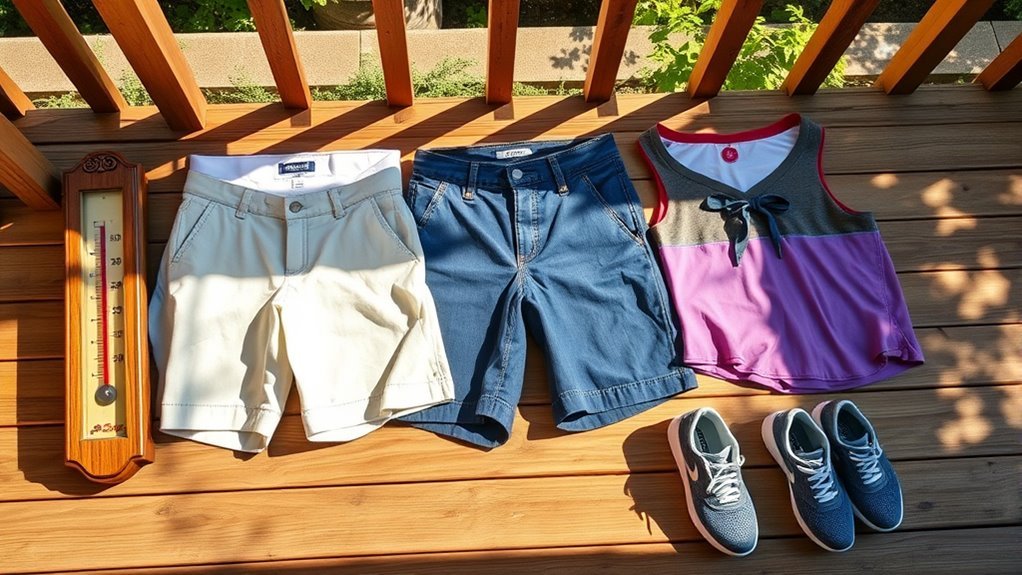
You’ll want to pick shorts made from breathable, lightweight fabrics when temperatures hit 16-20°C.
And if it gets warmer, above 21°C, opt for quick-drying materials.
For cooler days between 10-15°C, choose roomier shorts and layer up with a hoodie or jacket.
Understanding how to style and layer your shorts based on the temperature will keep you comfortable no matter the weather.
Ideal Shorts Fabrics
Choosing the right fabric for your shorts can make a big difference in comfort as temperatures change.
Lightweight fabrics like cotton, linen, and seersucker work great between 60-75°F, keeping you breathable and comfy.
For hotter days above 70°F, technical performance fabrics such as polyester and nylon wick moisture away, helping you stay dry.
Quick-drying materials cut down on dampness and chafing, especially in humid weather.
Breathable fabrics with mesh panels boost airflow when temperatures soar over 75°F.
Avoid heavy, clingy fabrics like thick denim or dense knits—they trap heat and moisture.
- Opt for lightweight fabrics in mild weather
- Choose moisture-wicking materials for hot, sweaty days
- Prioritize quick-drying blends in humidity
- Use breathable shorts with vents for high heat
- Steer clear of heavy, heat-retaining fabrics
Temperature-Based Styling
When is the right time to break out your favorite shorts?
You should start to wear them comfortably when the weather hits around 70°F (21°C) or higher.
Early spring might be too cool unless temperatures stay consistently warm.
For cooler days, it’s better to skip shorts and opt for layers instead.
Here’s a quick guide to help you decide:
| Temperature Range | Shorts Style | Weather Tip |
|---|---|---|
| Below 60°F (16°C) | Avoid shorts | Layer with jackets |
| 65-70°F (18-21°C) | Loose, breathable | Pair with light tops |
| 70°F+ (21°C) | Comfortable shorts | Perfect for daily wear |
| Above 80°F (27°C) | Lightweight, quick-dry | Ideal for hot weather |
Use this to know when to start and when to wear shorts based on the weather.
Layering With Shorts
Although shorts are often linked to warm weather, layering them correctly can keep you comfortable even when temperatures dip.
Choosing the right shorts based on the temperature range is key to effective layering.
In cooler weather (10-15°C), go for roomy, thick-fabric shorts to trap heat.
Mild days (16-20°C) call for breathable shorts paired with light sweatshirts or jackets.
When it’s hot (21°C+), lightweight, moisture-wicking shorts are best, layered with loose tees or tank tops.
For unpredictable weather, add oversized hoodies or carry extra layers.
- Opt for thicker fabrics in cool temps to retain warmth.
- Combine breathable shorts with light layers in mild weather.
- Use moisture-wicking materials for hot days.
- Layer with hoodies or jackets during fluctuating temperatures.
- Add socks and sneakers for adaptable comfort.
Layering and Styling Shorts in Cooler Weather
Even if the temperature dips to 10-15°C, you can still rock shorts by opting for roomy, loose-fitting styles made from thicker fabrics that accommodate layering.
Start by pairing your shorts with oversized hoodies or lightweight jackets to add warmth without sacrificing style.
High socks and sneakers not only complete the look but also help retain heat and shield your legs from chilly breezes.
When layering, choose breathable, moisture-wicking fabrics that pull sweat away from your skin, so you stay comfortable during activity.
Look for shorts with vents or mesh panels to improve airflow, keeping your legs cool even as you layer up.
With these tips, you’ll master layering and styling shorts confidently in cooler weather without compromising comfort or fashion.
Selecting Fabrics That Enhance Comfort in Heat and Humidity
Since staying comfortable in heat and humidity depends largely on what you wear, selecting the right fabrics is key.
Choosing moisture-wicking materials helps you stay dry by pulling sweat away from your skin and allowing it to evaporate quickly.
Opt for textured fabrics that prevent clinginess and promote airflow, keeping you cooler.
Quick-drying fabrics minimize discomfort caused by dampness, and ventilated clothing enhances breathability.
Consider these fabric features to boost your comfort:
- Moisture-wicking polyester, nylon, or merino wool for effective sweat management.
- Lightweight cotton for natural breathability.
- Seersucker and pique textures that hang away from the body.
- Quick-drying materials that reduce lingering dampness.
- Mesh panels or built-in vents for increased airflow.
Selecting fabrics with these qualities ensures you stay cool and comfortable in heat and humidity.
Practical Tips for Wearing Shorts During Transitional Seasons
When temperatures fluctuate during transitional seasons, you’ll want to wear shorts made from loose, lightweight fabrics like seersucker or pique. These materials hang slightly off your body to help keep you comfortable.
Opt for shorts weather outfits featuring moisture-wicking or quick-drying materials. This way, you can stay dry despite unexpected warmth or chills.
Look for shorts with built-in vents or mesh panels; they boost airflow and help sweat evaporate efficiently.
Always carry a layer, such as a light jacket or sweatshirt, so you can adjust quickly when temperatures drop.
Choose light-colored, sun-reflective shorts and accessories like hats to stay cool and shielded during sunny days.
Following these practical tips ensures you enjoy shorts weather comfortably and confidently through spring’s unpredictable shifts.
Recognizing When It’s Time to Switch to Shorts
Before you switch to shorts, pay close attention to the temperature and weather patterns.
It’s best to time your progression when the weather starts consistently warming up, around 70°F (21°C) or higher.
This helps keep your comfort intact and avoids the need for bulky layering.
Knowing when it’s time to start wearing shorts means watching for stable conditions, not just a warm afternoon.
- Check daily forecasts for steady warmth.
- Avoid shorts if humidity spikes or nights stay cold.
- Choose shorts made from lightweight materials for breathability.
- Plan to wear shorts in late April or early May typically.
- Carry a light jacket until you’re sure the warmth lasts.
These tips will help you confidently know when to start wearing shorts without second-guessing.
Additional Accessories to Complement Your Shorts Outfit
Once you’ve decided it’s time to wear shorts, think about the accessories that can enhance your comfort and protection.
Sunglasses with UV protection are essential to shield your eyes from harsh sunlight.
Pair them with a lightweight, breathable hat—like a bucket or wide-brim sun hat—to keep your face shaded and cool.
A lightweight, breathable hat like a bucket or wide-brim sun hat keeps your face shaded and cool.
Don’t forget to apply sunscreen with at least SPF 30 on all exposed skin to prevent sunburn.
A quick-drying bandana or neck gaiter can protect your neck from sun exposure and help manage sweat.
Finally, carry a small insulated water bottle or hydration pack to stay hydrated throughout the day.
These accessories complement your shorts outfit perfectly, keeping you comfortable and protected while you enjoy the warm weather.
Frequently Asked Questions
At What Temperature Do You Start Wearing Shorts?
You should start wearing shorts when temperatures hit around 70°F (21°C).
If it’s sunny and dry, you might feel comfortable at 60-65°F,
but waiting until it’s warmer helps you avoid feeling chilly.
Should I Wear Shorts Today in 70 Degrees?
Yes, you can wear shorts at 70 degrees if you feel comfortable.
If it’s sunny or you’re active, shorts work well.
Just keep a light jacket handy in case it gets breezy or cooler later.
Is 40 Degrees Too Cold to Wear Shorts?
You’ll find 40°F too cold for shorts since most people start feeling chilly below 50°F.
You shouldn’t wear shorts unless you layer with leggings, or you’re comfortable risking a cold chill.
Better stick to long pants.
Will I Be Cold if I Wear Shorts in 50 Degree Weather?
You might feel cold wearing shorts in 50°F, especially if it’s windy or humid.
But if you layer well with a hoodie or jacket, you can stay comfortable.
Your personal tolerance will also play a big role.
Conclusion
Think of deciding to wear shorts like tuning a guitar—you want just the right tension for perfect harmony.
When temperatures hit around 70°F and humidity isn’t too high, you’re in the sweet spot.
Remember, comfort is key; layering smartly or picking breathable fabrics can help you stay in tune even if the weather shifts.
So next time you hesitate, trust your feel and let your shorts be your summer’s melody.
—
In conclusion, wearing shorts is all about finding that perfect balance between temperature and comfort.
Aim for around 70°F with low humidity for optimal conditions.
Don’t forget to consider breathable fabrics and smart layering to adapt to changing weather.
So, when you’re unsure, listen to your instincts and embrace those shorts—after all, summer is waiting for you!