How to Test If Acacia Wood Is Weather Resistant
To test if your acacia wood is weather resistant, you’ll want to follow a few simple steps.
First, prepare smooth, labeled samples and weigh them to establish a baseline.
Next, expose the samples to various weather conditions such as water submersion, humidity, and sunlight over a period of days or weeks.
During this time, keep an eye out for any swelling, color changes, or cracking that may occur.
It’s also important to measure the moisture content before and after exposure using a moisture meter.
This will give you a clearer picture of how well the wood holds up against the elements.
Don’t forget to inspect the hardness and surface integrity for signs of wear and tear.
You might also consider applying sealants to the acacia wood, as this can reveal differences in durability.
Keep exploring these tests to truly discover how acacia’s outdoor strength stands up to the test!
Understanding Acacia Wood’s Natural Properties
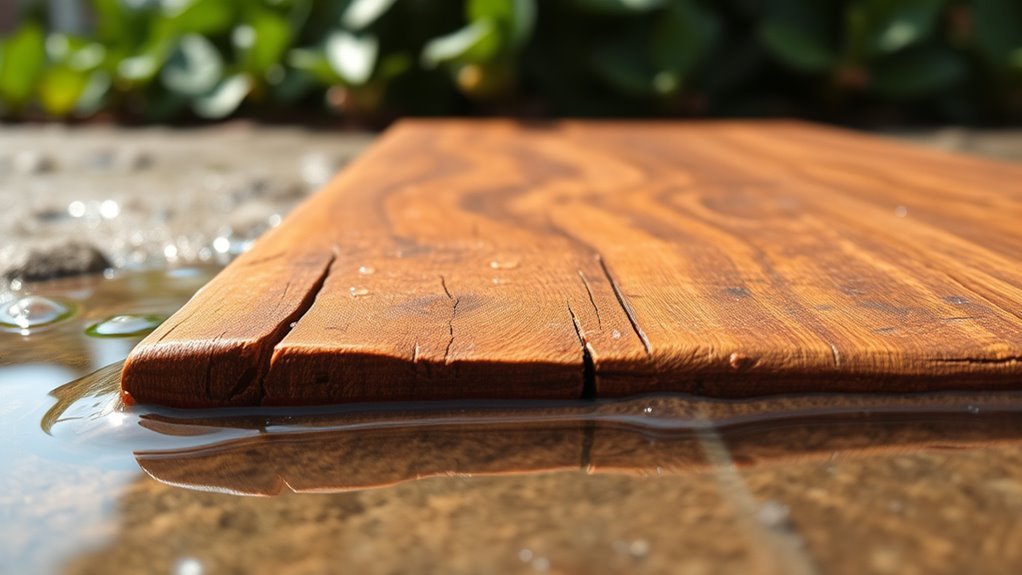
Although Acacia wood isn’t fully waterproof, its natural oils and dense grain give it strong resistance to water, pests, decay, and fire. This makes it a durable choice for outdoor use.
When you choose acacia wood, you benefit from its natural resistance, which helps it withstand harsh weather conditions without deteriorating quickly.
The wood’s grain structure plays a vital role in its water-resistant properties. Its dense and broad grain limits moisture absorption, enhancing its longevity.
You’ll also notice acacia wood’s natural antimicrobial qualities, which prevent mold and bacterial growth outdoors.
Keep in mind that different acacia species vary in durability. So, selecting the right type is essential for maximizing outdoor performance and extending the life of your wood products.
Preparing Acacia Wood Samples for Testing
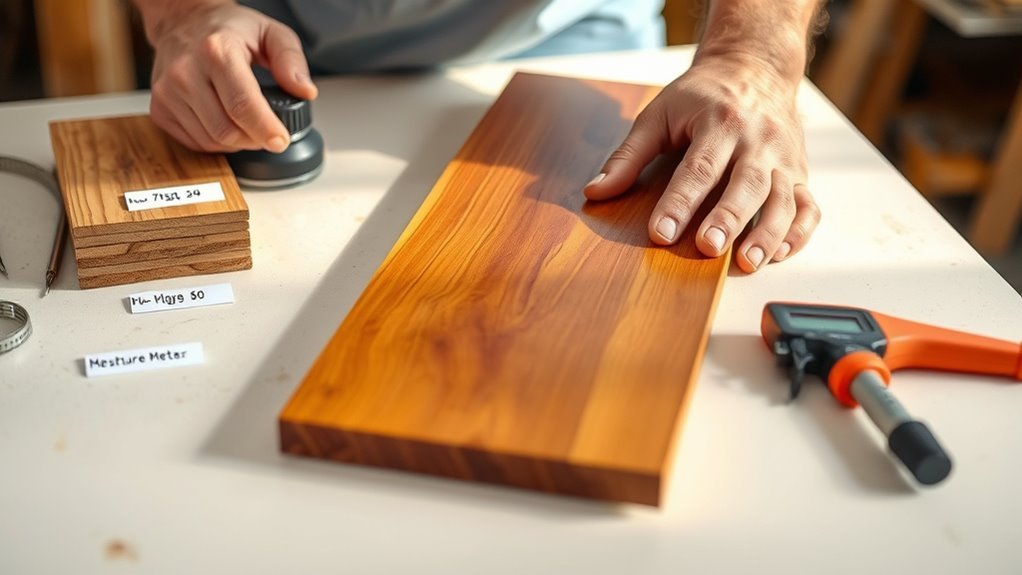
To accurately assess how well acacia wood holds up against weather, you need properly prepared samples.
Start by cutting small, representative pieces with clean, straight edges to ensure consistent results.
Next, sand each sample smoothly to eliminate surface irregularities that could skew water absorption measurements.
Label the samples clearly and record their initial weight, dimensions, and color to track changes.
Some testing samples should be treated with protective finishes to evaluate their effectiveness.
Finally, store all samples in a controlled environment before testing to prevent pre-test moisture exposure and establish baseline properties.
Follow these steps to prepare your acacia wood samples for reliable weather resistance testing:
- Cut and sand samples with clean edges
- Label and record initial data
- Apply protective finishes and store in controlled environment
Simulating Outdoor Weather Conditions
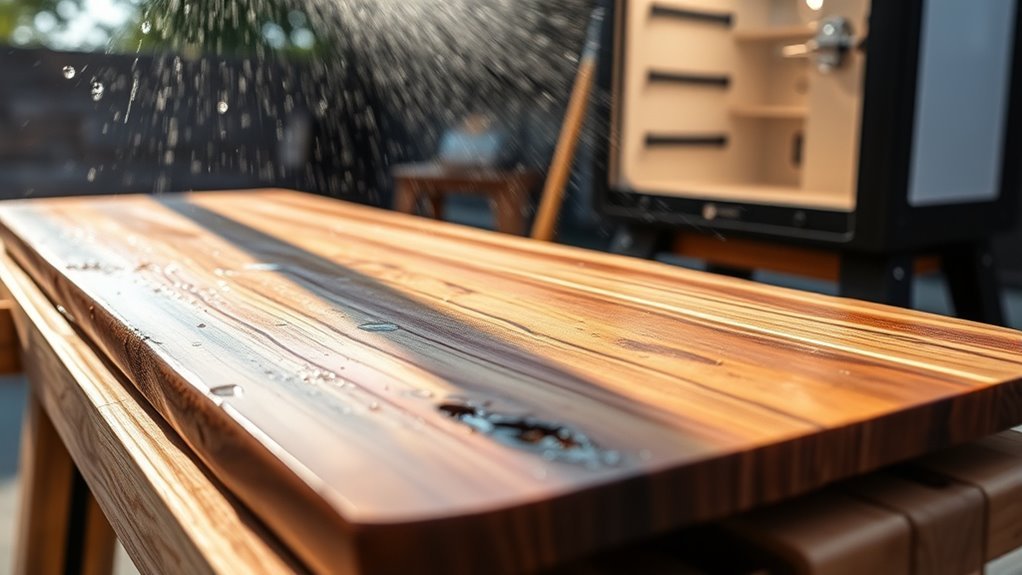
You’ll start by exposing the acacia wood to cycles of moisture to test how it handles wetting and drying.
Then, use a UV light to simulate sun exposure and watch for any fading or color changes.
These steps help you see how the wood stands up to real outdoor weather conditions.
Moisture Exposure Testing
When testing acacia wood’s resistance to moisture, you’ll want to simulate real outdoor conditions as closely as possible.
This helps assess moisture resistance, water absorption, swelling, and overall weather durability.
Try these three moisture exposure tests:
1. Submerge a small wood sample in water for 24 to 48 hours.
Check if it absorbs water or swells.
2. Use a humidity chamber set at 80% relative humidity for several days.
Watch for surface cracking or deformation.
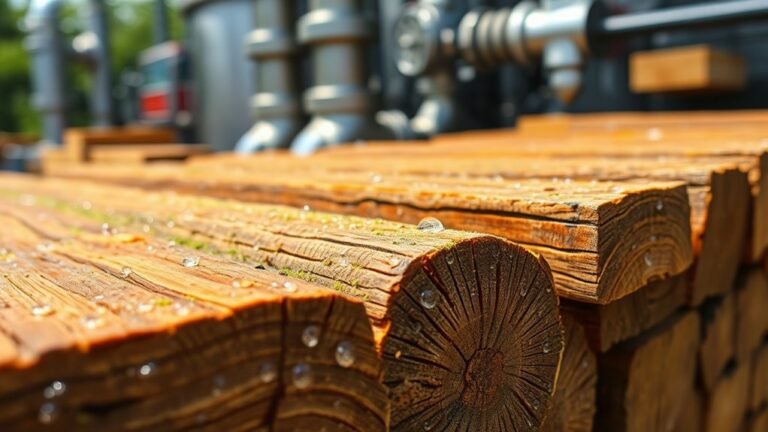
3. Place the wood outside in rain and sun for at least two weeks.
Measure dimensional changes before and after to track swelling or contraction.
These steps give you a clear picture of how acacia wood handles moisture and humidity testing in real-world conditions.
UV Light Simulation
Although moisture resistance is crucial, evaluating acacia wood’s durability against UV light is equally important for outdoor use.
To perform UV light simulation, expose a small wood sample to intense UV light—using either a UV lamp or direct sunlight—for several days.
During this period, watch for color fading, darkening, or grain pattern changes. These observations reveal how well the wood resists UV damage.
For precise analysis, use a UV spectrometer to measure wavelength absorption before and after exposure. This quantifies any chemical changes that occur.
Applying a standardized UV weathering test like ASTM G154 under lab conditions helps assess long-term effects.
Finally, compare your results with a known UV-resistant wood sample. This will help you evaluate acacia’s relative weather resistance effectively.
This process ensures a clear understanding of how acacia wood holds up against UV exposure.
Monitoring Changes in Color and Texture
As you expose acacia wood to outdoor elements, keep a close eye on any shifts in color and texture that might signal weathering.
Monitoring these changes helps you assess the wood’s durability against nature’s effects.
Focus on:
- Color changes – Look for discoloration, fading, or uneven tones. Acacia naturally darkens but shouldn’t show blotchy patches.
- Texture – Feel for increased roughness or smoothness. A consistent texture suggests good weather resistance.
- Surface integrity – Watch for cracks, splinters, or unusual streaks indicating deterioration.
Regularly compare the wood’s current appearance to its initial state.
Noticing these subtle signs early allows you to judge how well your acacia wood resists weathering and maintains its aesthetic quality over time.
Assessing Resistance to Moisture and Water Exposure
Since moisture can profoundly impact acacia wood’s durability, you should test how well it withstands water exposure.
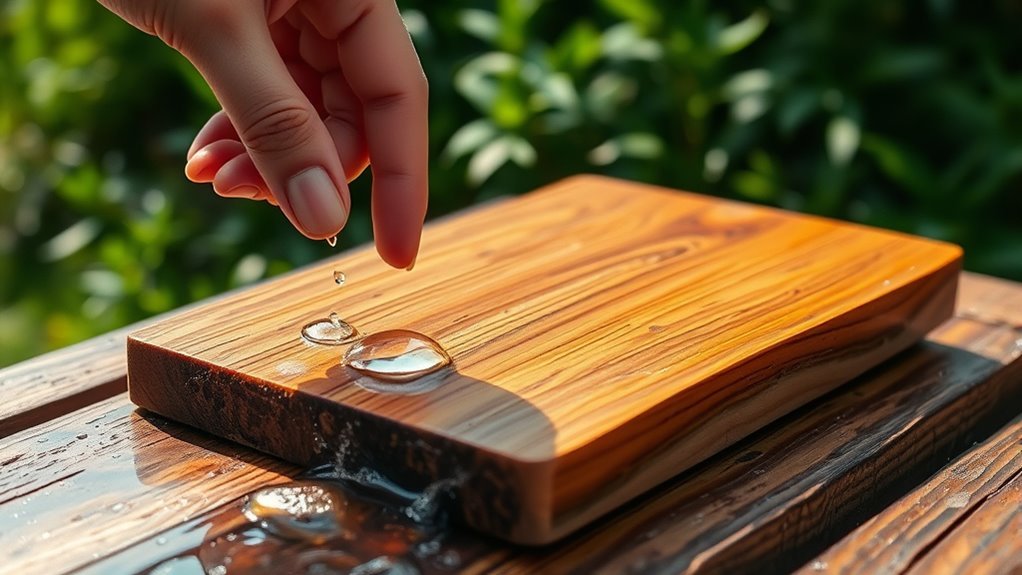
Start by applying a water droplet on the surface—if it beads up, that indicates good water resistance.
If it soaks in quickly, the wood may absorb moisture easily.
Next, submerge a small piece in water for 24 to 48 hours and watch for warping, swelling, or cracking.
Use moisture testing tools like a moisture meter to measure internal water absorption before and after exposure.
Also, expose the wood to humidity or light rain, then perform a surface inspection for any signs of water penetration, discoloration, or texture changes.
These steps help you assess acacia wood’s ability to resist moisture and maintain its integrity over time.
Evaluating Structural Integrity and Hardness Over Time
You’ll want to test Acacia wood’s hardness using the Janka scale to see how it resists dents and scratches over time.
Regularly inspect the wood for warping, cracking, or swelling, especially after exposure to weather changes.
Monitoring these structural shifts helps you gauge the wood’s longevity and overall durability.
Hardness Testing Methods
When evaluating the durability of acacia wood, you’ll want to start with hardness testing methods that reveal its structural integrity over time.
These tests help you measure how well the wood maintains its strength and weather resistance.
Here’s how to get started:
- Use the Janka hardness scale to measure the wood’s resistance to denting under standardized pressure.
- Perform impact testing by striking the surface repeatedly with a steel ball or hammer to assess durability against sustained stress.
- After exposing the wood to moisture, UV, or other aging conditions, retest and compare hardness values to track any loss in structural integrity.
These steps give you clear insights into the acacia wood’s ability to withstand weather challenges effectively.
Monitoring Structural Changes
Although acacia wood starts strong, you need to monitor its structural changes over time to guarantee lasting durability.
Regularly inspect the wood for warping, cracking, or swelling. These physical changes can signal compromised structural integrity from weather exposure.
Use a durometer to test hardness at intervals, noting any decrease in surface resistance.
Weigh the wood periodically; a significant drop may indicate moisture ingress and internal deterioration.
Tap the surface gently with a metal tool—if the sound is dull or hollow, the wood might be weakening inside.
Document and photograph these observations after each weather cycle to track progress.
Staying vigilant with these checks ensures you accurately assess the long-term resilience of your acacia wood and address issues before they worsen.
Longevity Indicators
Since weather exposure gradually affects acacia wood, you should regularly evaluate its structural integrity and hardness to gauge longevity.
Monitoring these longevity indicators helps you assess the wood’s weather resistance and durability under outdoor exposure.
Here’s how to keep track:
- Inspect for signs of deterioration like cracks, warping, or splitting. These issues weaken the wood’s structure.
- Periodically test hardness using a Janka hardness test. This can help you detect any loss in strength or softness over time.
- Check moisture resistance by observing surface discoloration, rot, mold, or insect damage. These factors can considerably reduce durability.
Applying Protective Treatments and Measuring Effectiveness
To protect your acacia wood from harsh weather, start by applying a water-resistant sealant or oil designed for outdoor use to a small, hidden spot on the wood.
After that, expose the treated area to natural weather conditions like sunlight, rain, or humidity for 24 to 48 hours.
Use a moisture meter to measure the internal moisture content before and after weather exposure to quantitatively assess water resistance.
Check for signs like discoloration, swelling, or warping to evaluate how well the protective treatment holds up.
Reapply the sealant periodically and repeat the test to compare results over time.
This method helps you determine if your chosen treatment offers long-lasting protection against weather exposure, ensuring your acacia wood stays durable and moisture-resistant.
Frequently Asked Questions
Is Acacia Wood Weather Resistant?
Yes, acacia wood is weather resistant because it naturally repels moisture and resists decay.
You’ll find it holds up well outdoors, but you should still seal it to boost its durability against harsh weather.
What Does Weathered Acacia Wood Look Like?
You’ll notice weathered acacia wood turns silvery-gray, losing its warm tone.
It shows uneven fading, maybe small cracks, raised grain patterns, and a worn, matte finish that gives it an aged, muted look.
Is Acacia Wood Ok for Outdoor Use?
Yes, you can use acacia wood outdoors because it’s naturally resistant to water and pests.
Just make sure you regularly seal and maintain it to prevent damage from moisture and UV exposure.
This will help ensure long-lasting durability.
How to Weather Proof Acacia Wood?
You can weatherproof acacia wood by applying a high-quality sealant or outdoor oil.
Reapply regularly, especially before wet seasons, to protect it from moisture, UV rays, and cracking.
This ensures long-lasting durability outdoors.
Conclusion
Now that you know how to test Acacia wood’s weather resistance, you can confidently evaluate its durability.
For example, imagine you’re building an outdoor deck—by simulating sun, rain, and humidity, you’ll see how well the wood holds up before committing.
This hands-on approach helps you decide if Acacia suits your project or if it needs extra protection.
With these simple tests, you’ll guarantee your wood stands strong, no matter the weather.
In conclusion, assessing Acacia wood’s weather resistance is crucial for any outdoor project. By performing tests for sun exposure, rain, and humidity, you can better understand its durability. This proactive approach ensures that your investment in Acacia wood will withstand the elements. Whether you’re building a deck or outdoor furniture, knowing how to evaluate its performance will help you make an informed decision. So, take the time to test and enjoy the benefits of weather-resistant Acacia wood!