How to Decide if 50 Degrees Is Shorts Weather
You can wear shorts at 50 degrees if you take a few key factors into account.
First, check the wind chill—strong breezes can make it feel much colder than the actual temperature.
On sunny, calm days, it feels warmer and makes wearing shorts much more comfortable.
Your activity level matters too; moving around generates body heat, so you’ll likely feel fine in shorts as you stay active.
When choosing your shorts, consider picking thicker, longer styles.
Layering warm tops or jackets can also help you stay cozy while sporting your shorts.
Want to know how to fine-tune your outfit and timing?
Understanding Temperature Perception at 50 Degrees
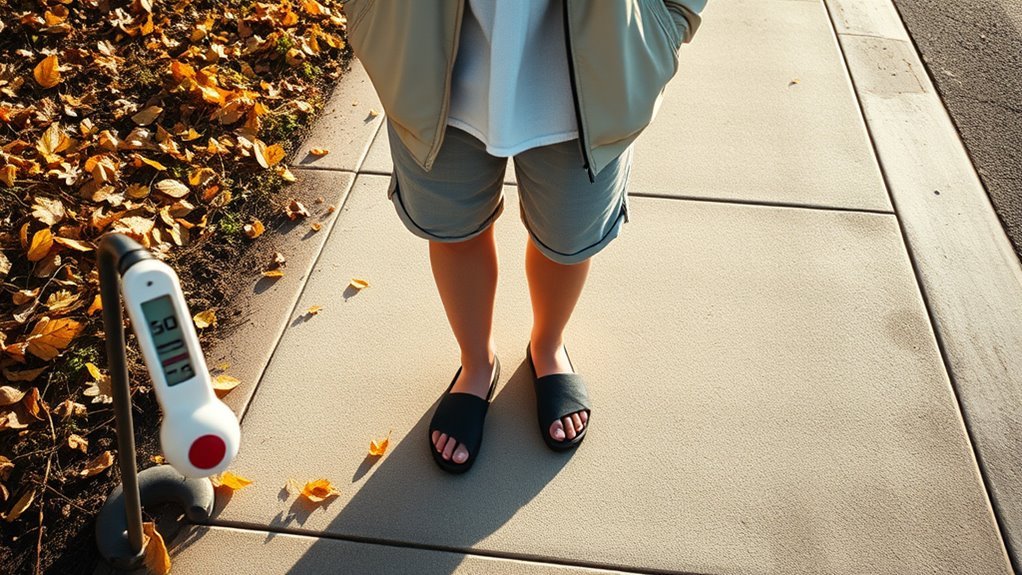
Although 50°F might seem straightforward, how it actually feels depends on factors like humidity, wind, and sunlight.
Your perception of this temperature can vary widely—sunny, calm mornings might feel pleasantly mild, while cloudy or windy conditions make it feel much colder.
Wind chill especially lowers how you perceive 50°F, often making it feel several degrees cooler than the air temperature.
Your body’s acclimation also plays a role; if you’re used to cooler weather, you might find 50°F comfortable, but others may feel chilly.
Personal comfort at 50°F also hinges on your clothing choices and activity level.
Understanding these nuances in temperature perception helps you decide whether shorts are a good option or if you should layer up instead.
Factors That Influence Comfort in Cooler Weather
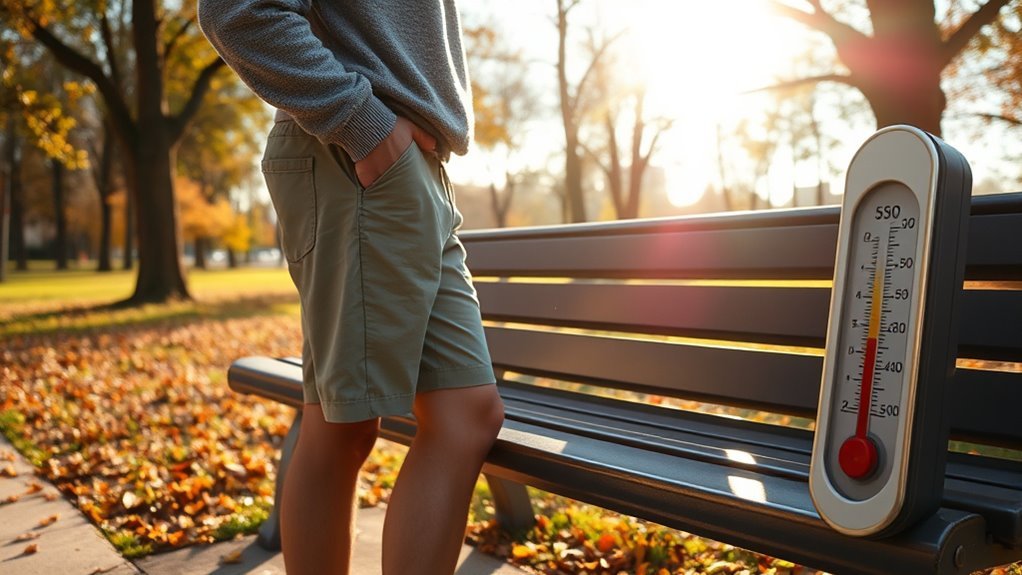
When it’s 50 degrees, wind and humidity can change how cold you actually feel, making shorts more or less comfortable.
If there’s a breeze, you’ll lose heat faster and might want extra layers.
But if you’re moving around, your body warms up, which can make shorts a better choice even in cooler weather.
Wind and Humidity Effects
Because wind can make the air feel 10 to 15 degrees colder, 50°F might not feel as mild as the thermometer suggests.
Wind combined with low humidity intensifies the chill, making you reconsider wearing shorts.
Conversely, high humidity traps heat near your skin, lessening the wind’s cooling effect and making the temperature feel more comfortable.
| Factor | Effect on Comfort |
|---|---|
| Wind | Increases chill, feels 10-15°F colder |
| High Humidity | Traps heat, reduces wind chill |
| Low Humidity | Enhances wind chill, feels colder |
| Sunshine | Warms skin, offsets wind chill |
| Temperature | Baseline, but feels vary with conditions |
So, check wind and humidity before choosing shorts on a 50°F day.
This way, you can stay comfortable in any weather.
Activity Level Impact
Besides wind and humidity, your activity level plays a big role in deciding if 50°F is shorts weather.
When you engage in vigorous activities like running or sports, your body generates more heat, making shorts feel comfortable despite the cooler temperature. Athletes often wear shorts in 50°F weather because increased circulation keeps them warm.
If your activity level is high, you can offset the chill without needing long pants.
However, if you’re resting or doing low-intensity activities, your body won’t produce enough heat to stay warm in shorts.
Also, consider how long you’ll be outside—short bursts of activity might allow shorts, but longer periods might require layering.
Selecting the Right Shorts Fabric and Length

Although 50°F isn’t exactly warm, you can still wear shorts if you choose the right fabric and length.
50°F might be cool, but the right shorts fabric and length make it wearable.
For shorts weather at this temperature, opt for thicker materials like twill or denim that provide better insulation.
Avoid lightweight fabrics such as linen or mesh, which are better for hot days.
Selecting longer shorts that reach the knee or just below helps retain body heat by offering more coverage.
Slim-fit shorts also work well since they trap warmth closer to your skin.
Additionally, darker colors absorb more heat, giving you extra warmth during cool 50-degree days.
Pairing Tops With Shorts for 50-Degree Days
When temperatures hover around 50 degrees, pairing your shorts with the right top is key to staying comfortable and stylish.
Start with long-sleeve tees or thermal shirts as your base layer; they provide warmth without overheating.
Layering a lightweight hoodie, flannel, or sweatshirt over these tops adds extra coziness and a casual vibe.
If it’s windier, throw on a bomber, denim jacket, or a lightweight puffer to block the chill.
Don’t overlook high-neck or turtleneck tops—they help retain heat around your neck and upper body.
For outdoor activities, layering moisture-wicking base layers under your tops keeps you dry and comfortable.
This smart layering approach lets you enjoy shorts on cool days without sacrificing warmth or style.
Choosing Appropriate Footwear for Cooler Temperatures
When it’s around 50 degrees, you’ll want footwear that keeps your feet warm without overheating.
Sneakers with high socks or leather boots can offer the right balance of insulation and protection, especially if it’s windy or damp.
Choosing shoes based on the weather—waterproof for wet days and breathable for dry ones—makes all the difference.
Footwear Warmth Considerations
Since cooler temperatures around 50°F can quickly make your feet feel cold, you want to choose footwear that provides good insulation and coverage.
High socks, leather boots, and high-top trainers are excellent choices to keep your feet warm and protected from wind or rain.
Avoid low socks and canvas sneakers, which leave your feet exposed and chilly unless paired with thick socks.
| Footwear Type | Warmth Level |
|---|---|
| Leather Boots | High – excellent insulation and coverage |
| High-Top Trainers | Moderate – good coverage with some insulation |
| Canvas Sneakers | Low – less insulation, better for dry weather |
Picking footwear with sufficient insulation and coverage prevents heat loss.
This keeps your feet cozy during cool 50°F days.
Weather-Appropriate Shoe Types
Choosing the right footwear makes a big difference in staying comfortable around 50°F.
When you wear sneakers, opt for ones that cover your ankles or pair them with high socks to keep warmth in.
Leather or waterproof boots are excellent choices if you expect wind or dampness, as they shield your feet better than low-cut shoes.
Lightweight trainers with moisture-wicking insoles work well for dry, brisk days, helping you stay comfortable without overheating.
Avoid canvas sneakers or any shoes that leave your ankles exposed since they let cold air in.
Also, choose footwear with good traction to prevent slipping on wet or uneven surfaces.
Socks and Insulation
Although 50°F isn’t freezing, you’ll want to prioritize socks and insulation to keep your feet comfortable.
Opt for high socks paired with insulated footwear like leather boots to retain warmth effectively.
Low-cut socks and lightweight sneakers can leave your feet exposed, making them less suitable for cooler weather.
Sneakers with thick insoles or thermal-lined boots offer better insulation during chilly conditions.
Additionally, selecting shoes with waterproof or windproof features helps shield your feet from wind chill and moisture.
Consider how long you’ll be outside and whether you’ll be stationary or active—these factors influence the insulation level you need.
Effective Layering Techniques to Stay Warm
When temperatures hover around 50°F, layering becomes your best strategy to stay warm without feeling bulky.
Start with a moisture-wicking base layer to keep sweat off your skin.
Add an insulating mid-layer like fleece or a lightweight puffer to trap heat.
Finish with a wind-resistant outer shell to block chilly gusts.
Don’t forget accessories—hats, scarves, and gloves help protect exposed areas.
Adjust layers based on your activity to avoid overheating.
| Layer Type | Purpose | Examples |
|---|---|---|
| Base Layer | Moisture-wicking | Thermal shirt, long-sleeve tee |
| Mid Layer | Insulation | Fleece, lightweight puffer |
| Outer Layer | Wind-resistant protection | Shell jacket, windbreaker |
Impact of Wind Chill and Environmental Conditions
Because wind chill can drastically lower the perceived temperature, you might find 50°F feeling much colder than the thermometer suggests.
Wind chill can make 50°F feel much colder than the actual temperature.
When wind speeds pick up, the wind chill can drop the temperature to near 40°F or below, making shorts uncomfortable.
Strong winds increase heat loss from your body, so even if the air temperature feels mild, the wind chill can quickly sap your warmth.
Environmental factors like overcast skies or rain also amplify the chill factor, lowering the effective temperature.
On calm, sunny days, wind chill is minimal, and 50°F feels more agreeable for shorts.
Checking the wind chill index helps you estimate how much cooler it feels, guiding you to dress appropriately and avoid getting cold in misleading conditions.
Activity Levels and Their Effect on Clothing Choices
Wind chill and environmental factors definitely influence how cold 50°F feels, but your activity level plays a big role too.
When your activity levels are high, like during vigorous exercise, your body generates more heat, making shorts comfortable even at cooler temperatures.
Athletes often prefer shorts in these conditions because movement keeps them warm.
However, if you’re engaging in slower or less intense activities, you might need to layer up or wear warmer clothing to stay comfortable.
The duration of your outdoor time also matters—longer exposure at moderate activity levels may call for extra warmth.
Ultimately, your personal endurance and exertion level substantially impact whether shorts are a good choice at 50°F.
Timing and Weather Patterns for Wearing Shorts
Although 50°F can feel chilly to some, many people start wearing shorts once the sun is out and the air is calm.
The timing and weather patterns play a pivotal role in your decision.
If you notice consistent temperatures above 55°F or prolonged sunshine with low wind chill, it’s a good sign to break out the shorts.
Regional climate affects timing, so warmer areas see shorts earlier, often in April or May.
| Temperature (°F) | Weather Pattern | Shorts Comfort Level |
|---|---|---|
| 45-50 | Cloudy, windy | Low |
| 50-55 | Sunny, calm | Moderate |
| 55-65 | Sunny, light breeze | High |
| 65+ | Warm, sunny | Very High |
| Varies | Regional climate | Depends |
Frequently Asked Questions
Is 50 Degree Weather Too Cold for Shorts?
50 degrees isn’t necessarily too cold for shorts if you’re active or don’t mind a bit of chill.
You’ll want to contemplate wind and humidity, though, and maybe choose longer or layered shorts for extra comfort.
What Should I Wear for 50 Degree Weather?
Since 50°F feels chilly to 60% of people, you should wear layered tops like hoodies or long sleeves with breathable shorts or pants.
Add sneakers with socks to keep comfortable without overheating or freezing.
How Cold Does 50 Degrees Feel?
At 50 degrees, you’ll likely feel cool or mildly chilly, especially if there’s wind or cloud cover.
Your clothing, activity level, and personal sensitivity will affect how cold it feels, so dress accordingly to stay comfortable.
What Shorts to Wear at 50?
Choose thicker, tailored shorts that snugly shield you from the chill.
Opt for fleece-lined or denim styles, preferably darker.
Layer with tights if needed.
You’ll stay stylishly snug without sacrificing comfort at 50°F.
Conclusion
So, you’re debating if 50 degrees calls for shorts—because nothing says “summer vibes” like shivering through your morning coffee.
Sure, you can brave the chill with the right fabric and layers, but don’t be surprised if your legs feel like they’re starring in a winter survival show.
Sometimes, the smartest move is to enjoy your shorts indoors, where the thermostat’s on your side and frostbite isn’t part of the outfit.
In conclusion, deciding if 50 degrees is shorts weather really depends on your personal comfort level and how you layer up.
If you’re feeling bold, go for it! But remember, the warm indoors can be a much better place for shorts when the temperature dips.
Stay cozy, and consider that sometimes it’s best to keep those shorts for warmer days ahead.