How to Drip Faucets in Cold Weather With 5 Easy Steps
To drip faucets in cold weather, it’s crucial to take steps to prevent your pipes from freezing.
Start by monitoring outdoor temperatures so you can catch any freezing risks early.
Next, choose the faucets that are furthest from your main water source, especially those located in unheated spaces like basements or garages.
When it’s time to set the drip, aim for a slow and steady flow using cold water.
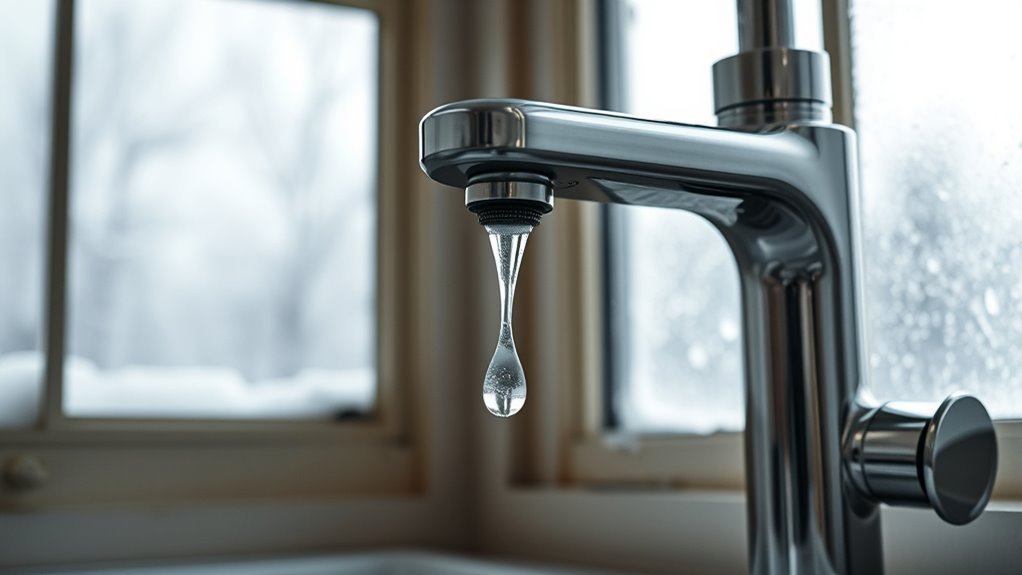
A good rule of thumb is to let the faucet drip about one drop every three seconds. This keeps the water moving and reduces the chances of freezing.
Additionally, prepare your home by opening cabinet doors and insulating any exposed pipes.
Remember to keep the faucets dripping until the temperatures stay above 20°F for a full day.
By following these simple steps, you can significantly protect your pipes from the damaging effects of freezing.
Monitor Outdoor Temperatures Closely
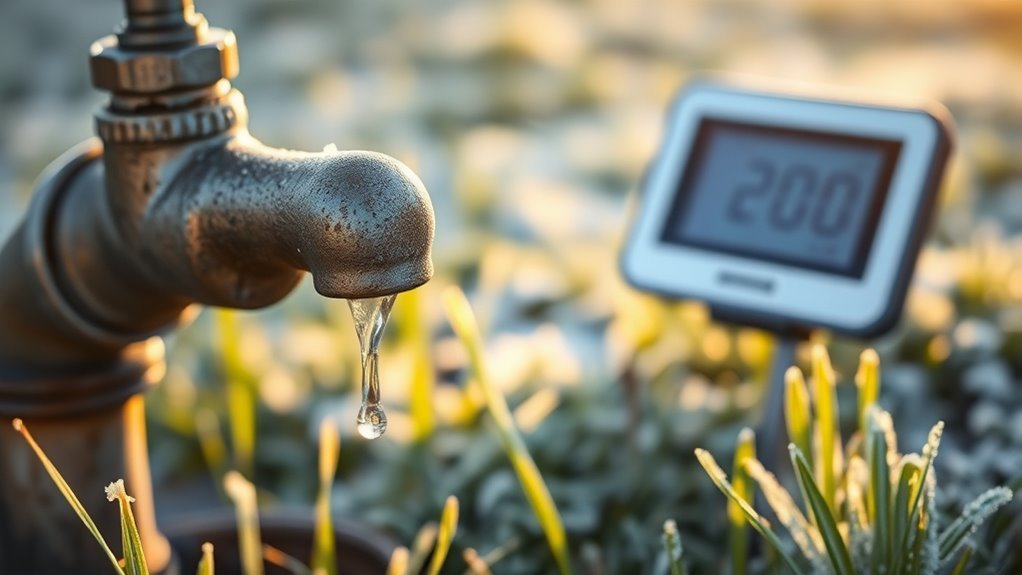
Although it’s easy to underestimate how quickly temperatures can drop, you should monitor outdoor conditions closely during cold weather.
Start by checking local weather reports daily for accurate temperature forecasts, focusing on cold spells that can threaten your vulnerable pipes.
Check daily weather reports to spot cold spells that could put your pipes at risk.
Use a reliable outdoor thermometer to track real-time temperature changes around your home.
Keep a close eye on outdoor temperatures, especially when they dip below 20°F for extended periods.
Don’t forget that wind chills can make it feel even colder, increasing the risk of freezing.
By monitoring temperatures consistently, you can react promptly and protect your plumbing.
Staying informed through weather reports and your outdoor thermometer helps you stay ahead of sudden drops and avoid costly damage during cold weather.
Select the Right Faucets to Drip
Once you’ve kept a close watch on dropping temperatures, it’s time to select which faucets to drip to protect your pipes.
Start by choosing the faucet farthest from your main water source to keep water flowing through your entire piping system.
Focus on faucets connected to exposed pipes, especially those in unheated areas like basements, attics, garages, or along exterior walls.
In cold weather, these locations face the highest risk of freezing pipes.
Always drip the cold water faucet since hot water is less likely to freeze, but if pipes are exposed, consider dripping both for added frost protection.
To conserve water while preventing freezing, drip only one faucet per vulnerable pipe.
Choosing the right faucets based on your specific weather conditions ensures effective frost protection without waste.
Adjust Faucet Flow to a Steady Drip
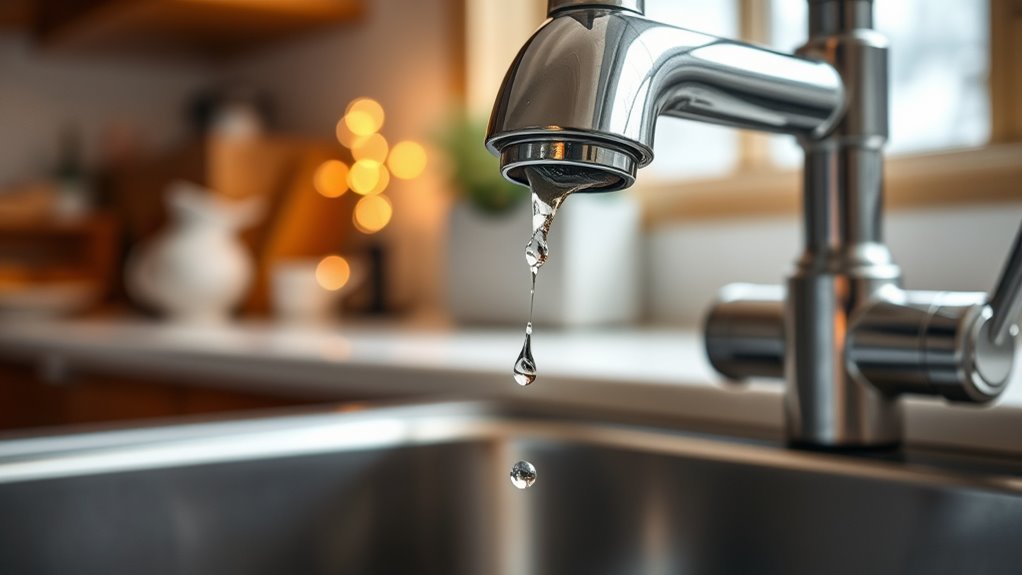
When you adjust your faucet to a slow, steady drip—about one drop every three seconds—you help prevent your pipes from freezing without wasting water.
To regulate faucet flow, use cold water rather than hot; cold water is less likely to cause issues in freezing pipes.
Use cold water to regulate faucet flow; it helps prevent problems in freezing pipes.
Adjust faucet flow carefully until you see a continuous stream, maintaining a steady drip that promotes consistent water movement.
Avoid excessive flow to conserve water while ensuring the drip rate is sufficient to prevent freezing.
In severe cold weather, especially below 0°F, slightly increase the drip rate for extra protection.
Regularly check the faucet to confirm the steady drip remains consistent throughout cold spells, keeping your pipes safe and minimizing water waste.
Prepare Your Home and Pipes for Freezing
To protect your home from freezing pipes, you should start by preparing both the interior and exterior.
Inside, open cabinet doors in kitchens and bathrooms to promote warm air circulation around pipes.
Insulate water lines in unheated areas like garages and crawl spaces to prevent pipes from freezing.
Keep your home temperature at 55°F or higher, even when away.
Outside, drain sprinkler systems before winter to avoid damage from frozen water expanding.
Winterize outdoor faucets by disconnecting hoses and installing freeze protection devices.
And don’t forget to drip faucets during extreme cold to maintain water flow and reduce freezing risks.
Taking these steps—insulating water lines, managing home temperature, opening cabinet doors, winterizing outdoor faucets, and draining sprinkler systems—helps protect your plumbing and ensures your home stays safe throughout winter.
Maintain Dripping Until Safe Temperatures Return
Although the cold may seem to ease, you should keep your faucets dripping until outdoor temperatures stay above 20°F for at least 24 hours. This ensures your pipes remain protected throughout thawing periods.
To prevent pipes from freezing, maintain a steady, slow water flow—about one drop every three seconds—during freezing temperatures and thawing periods.
Monitor weather reports closely. Even brief warm spells can be followed by drops below freezing, so don’t stop dripping prematurely.
Only stop dripping once you confirm your entire plumbing system stays above freezing and outdoor temperatures remain safely above 20°F for a full day.
Frequently Asked Questions
How Many Faucets Should You Let Drip in Cold Weather?
You should let multiple faucets drip, especially the ones farthest from the main supply and those connected to exposed or unheated pipes.
A small trickle in each vulnerable area helps prevent freezing effectively throughout your home.
Should You Drip Faucets All Day or Just at Night?
You should drip faucets all day during prolonged cold spells to keep water moving and prevent freezing.
For brief cold snaps, dripping faucets just at night might work, but continuous dripping offers the best protection.
Do You Drip Cold or Hot Water to Keep Pipes From Freezing?
You’ll want to drip cold water since it’s less likely to freeze and uses less energy.
Studies show dripping cold water can reduce pipe freeze risk by up to 50%.
This can save you costly repairs and headaches.
How Many Drips per Minute to Keep Pipes From Freezing?
You should drip about 20 drops per minute, roughly one drop every three seconds, to keep pipes from freezing.
This slow, steady drip prevents freezing without wasting too much water.
Adjust slightly if temperatures drop below zero.
Conclusion
Freezing pipes cause over $1 billion in damage annually, so dripping your faucets during cold weather is a smart move.
By monitoring temperatures, selecting the right faucets, adjusting flow to a steady drip, and preparing your home, you can avoid costly repairs.
Keep those faucets dripping until temperatures rise safely.
Taking these simple steps protects your home and gives you peace of mind all winter long.
Don’t wait—start dripping today!
—
In conclusion, preventing frozen pipes is essential for protecting your home during the harsh winter months. By monitoring temperatures and ensuring your faucets drip, you can avoid expensive damage.
Remember, it’s not just about saving money; it’s about ensuring peace of mind as well.
So, don’t overlook this important task—start dripping your faucets today to keep your plumbing safe and secure throughout the cold weather!