How Long Can You Hang Deer in 50 Degree Weather?
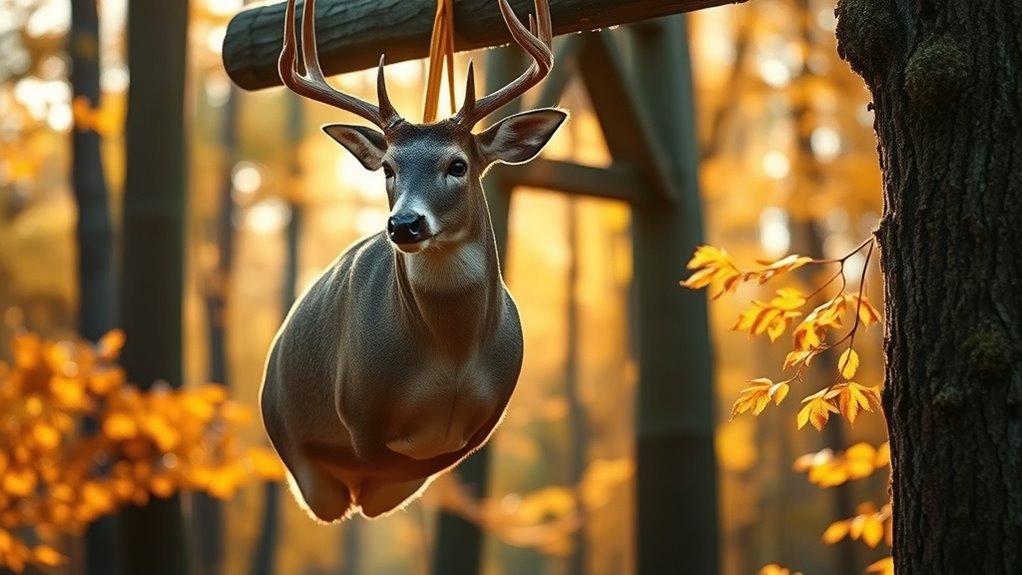
You can safely hang your deer for up to 12 hours in 50°F weather if you act quickly.
Make sure to gut and skin the animal within a few hours to reduce bacterial growth and contamination.
Using ice packs inside the cavity can also help keep the meat cool.
Hang the deer in a shaded, well-ventilated spot to further maintain its temperature.
Going longer than 12 hours risks spoilage and unsafe meat.
Always keep these tips in mind to protect your venison’s quality and flavor better.
By taking quick action and following these guidelines, you can ensure that your deer remains safe for consumption while preserving its delicious taste.
Ideal Temperature Range for Hanging Deer
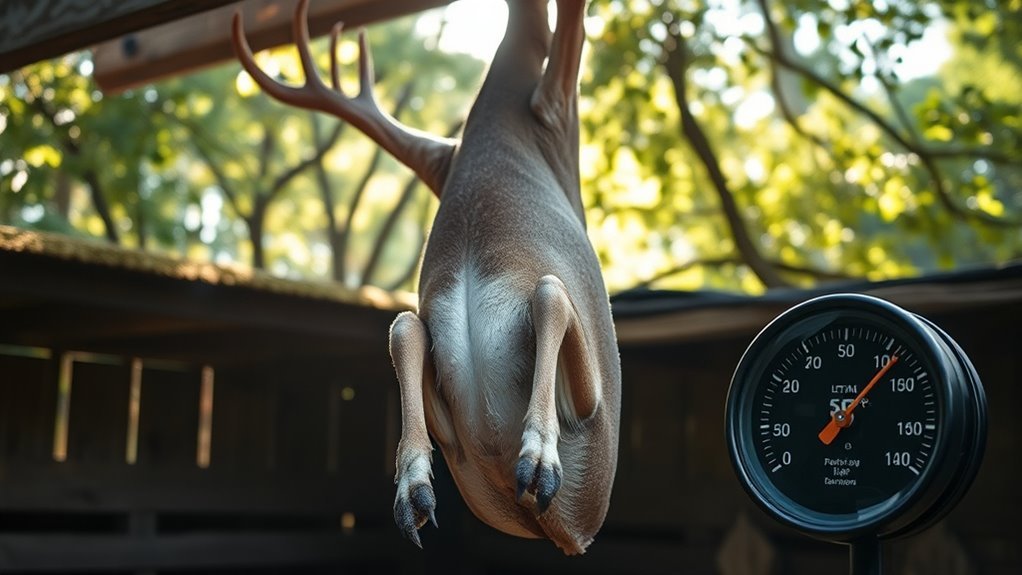
Although you might be tempted to hang your deer in warmer conditions, the ideal temperature range for hanging deer is between 33°F and 40°F.
Staying within this range slows bacterial growth and allows the meat to tenderize naturally, enhancing flavor and texture.
Maintaining ideal temperatures slows bacteria and naturally tenderizes meat, improving both flavor and texture.
When temperatures stay consistently below 45°F, you can extend hanging times without worrying about spoilage.
This ideal temperature range for hanging deer creates the perfect environment for proper aging and preservation, ensuring your venison remains safe and delicious.
If temperatures rise above this range, the risk of bacterial growth increases, which can compromise meat quality.
Effects of 50 Degree Weather on Venison Quality
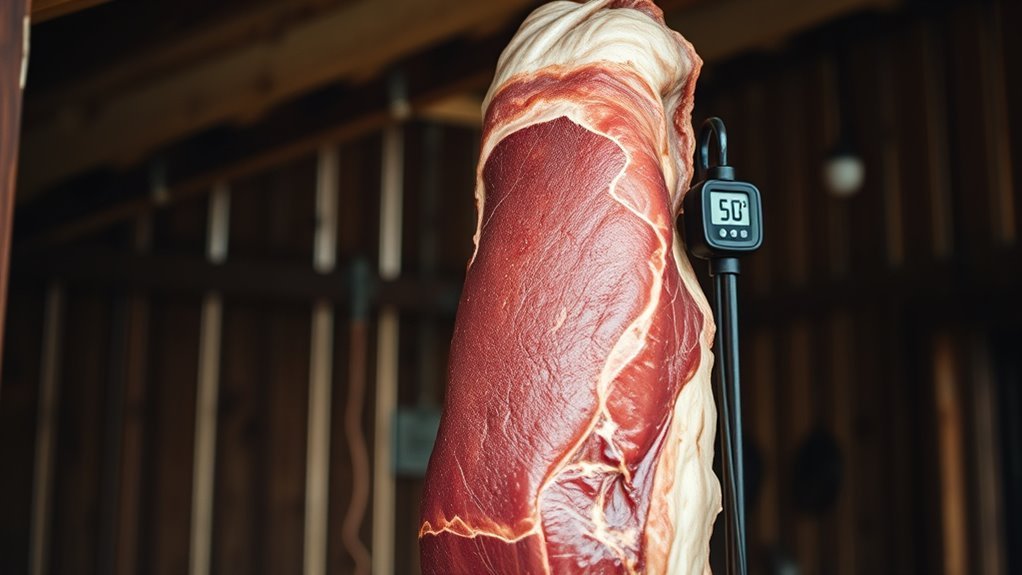
At 50 degrees, bacteria start to multiply faster, so you need to act quickly to keep your venison safe.
Using cooling methods like wrapping the deer or adding ice can help slow spoilage and preserve flavor.
If you wait too long, the meat’s texture and taste will suffer, making timely processing essential.
Temperature Impact on Bacteria
When you hang deer in 50-degree weather, bacterial growth slows down but doesn’t stop completely.
You might think hanging deer at these temps is safe, but bacteria like E. coli can still multiply if you let it hang too long.
To keep your venison from going bad, it’s smart to gut and skin properly before you hang a deer.
Some hunters even place a couple bags of ice inside the cavity to help keep temps lower overnight.
Using a bag of ice inside the cavity helps slow bacteria and keeps flies away.
If you’re hanging deer in 50-degree temps, try not to let it hang more than 24-36 hours.
After that, the risk of spoilage increases, especially as warmer temps are going to speed bacterial growth the next day.
Cooling Methods Effectiveness
Since 50-degree weather can allow venison to warm up quickly, you need effective cooling methods to keep the meat safe and fresh.
Here’s how you can optimize cooling:
- Wrap the carcass in a tarp and pack the cavity with ice to maintain temperatures below 40°F.
- Use frozen water jugs inside the cavity to sustain cold conditions for several days.
- Insulate the carcass with heavy or moving blankets to reduce heat exposure.
- Regularly replace ice or frozen packs to prevent temperature spikes above the safe threshold.
Meat Texture and Flavor
Although 50-degree weather can boost flavor development in venison, you need to manage the hanging time carefully to avoid bacterial growth.
At this temperature, enzymatic activity speeds up, making the meat more tender if you process it promptly.
However, hanging venison too long risks drying out the meat and spoiling its texture.
You might also notice an undesirable, gamey flavor emerging from microbial activity.
To maintain ideal texture and flavor, it’s essential to use proper cooling methods, like packing the carcass with ice.
This slows bacterial growth and prevents spoilage.
Importance of Prompt Skinning and Gutting
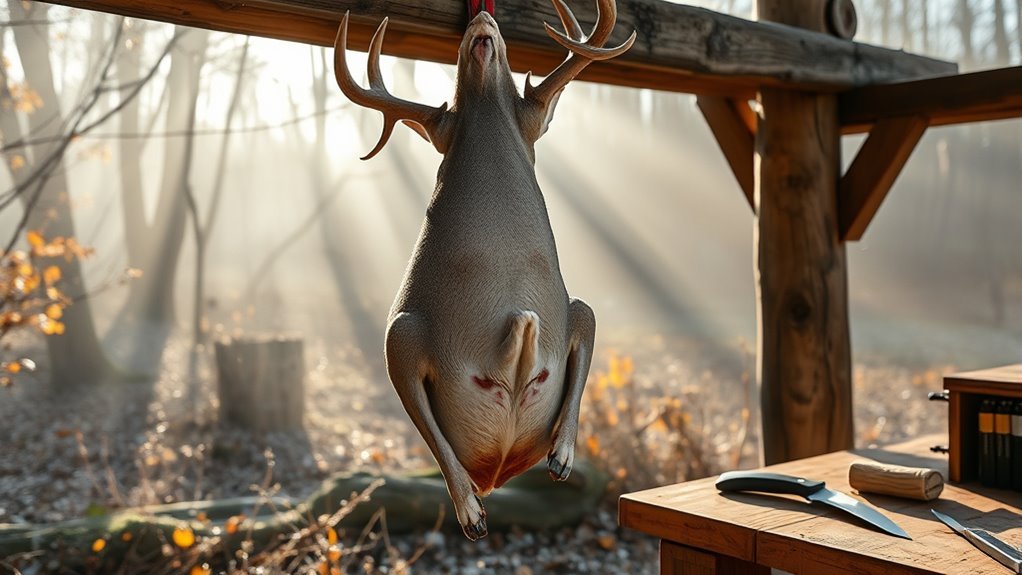
Because bacterial growth accelerates shortly after death, you should skin and gut your deer within a few hours to keep the meat fresh and safe.
Prompt action reduces spoilage risks and prevents contamination from gut bacteria, which is especially vital at 50°F.
By gutting early, you help the carcass cool faster, slowing bacterial multiplication and preserving quality.
Here’s why prompt skinning and gutting matter:
- Cuts down bacterial growth and spoilage risk.
- Stops gut bacteria from contaminating the meat.
- Speeds up carcass cooling, maintaining freshness.
- Prevents safety issues related to delayed processing.
Taking these steps quickly ensures your deer meat stays safe and flavorful during moderate temperature hanging.
Using Ice and Cooling Techniques for Extended Hanging
To hang your deer longer in 50-degree weather, start by packing the body cavity with ice or frozen jugs to keep temperatures low.
Wrap the carcass tightly with a tarp and add insulation like heavy blankets to lock in the cold.
Be sure to replace melted ice regularly to maintain consistent cooling and prevent spoilage.
Ice Placement Strategies
When you hang deer in 50-degree weather, placing ice strategically can make all the difference in preserving meat quality.
Here’s how to use ice effectively:
- Place ice inside the carcass cavity to maintain cold temperatures and slow bacterial growth.
- Position ice bags against the backstraps and ham to target the most meat-sensitive areas.
- Surround the carcass with ice or frozen jugs to mimic refrigeration, extending safe hanging time.
- Regularly replace or refreeze ice packs to keep temperatures consistently low.
Wrapping and Insulation
Strategically placing ice inside the carcass cavity isn’t the only step to keep your deer cool in 50-degree weather.
Wrapping the carcass tightly with tarps or blankets creates insulation that slows bacterial growth and maintains low temperatures.
You can press frozen water jugs or ice packs against key muscle groups like the backstraps and hams to mimic refrigeration.
Covering the deer with breathable cloth bags adds another insulating layer, helping preserve freshness for several days.
Just remember to replace melted ice or thawed jugs regularly to keep cooling consistent.
Combining these wrapping and insulation techniques ensures your deer stays at a safe temperature longer, even when ambient temperatures hover around 50°F.
This way, you can extend the safe hanging time without risking spoilage.
Maintaining Consistent Cooling
Although 50-degree weather is relatively mild, you’ll need consistent cooling to keep your deer safe during extended hanging.
Keeping the meat at or below 40°F is vital to prevent spoilage. Here’s how you can maintain that:
- Place ice or frozen water jugs inside the carcass cavity to cool the meat steadily without excess mess.
- Wrap your deer in a tarp or heavy blanket to insulate and retain the cooler internal temperature.
- Replace or refreeze ice bags regularly to avoid temperature spikes that speed up spoilage.
- Ensure proper air circulation around the carcass to dissipate heat and maintain a consistent temperature.
Risks Associated With Hanging Deer Overnight
Because bacterial growth speeds up quickly above 40°F, hanging your deer overnight in 50-degree weather can put the meat at serious risk of spoilage.
Even if the outside temperature seems moderate, the deer’s internal heat and gut contents create a perfect environment for bacteria to multiply rapidly.
If you leave the carcass hanging without proper cooling, harmful bacteria can reach unsafe levels, increasing the risk of food poisoning.
You’ll notice spoilage signs like bad odor, slime, or even maggots if the meat isn’t handled correctly.
Signs of spoilage include bad odor, slime buildup, and even maggots if meat isn’t properly handled.
To avoid these risks, you need to skin, gut, and cool the deer immediately.
Without these steps, hanging your deer overnight at 50°F isn’t safe and compromises the quality and safety of the meat.
Recommended Hanging Duration at 50°F
You can safely hang your deer for about 3 to 4 days at 50°F if you keep it properly cooled.
Make sure to keep the carcass open and pack the cavity with ice to slow spoilage.
Regularly checking and replacing the ice will help maintain the meat’s freshness during this time.
Safe Hanging Time
When hanging a deer in 50°F weather, you can safely keep it for about 3 to 4 days if you maintain proper cooling.
To guarantee safety and preserve meat quality, follow these key steps:
- Skin and gut the deer promptly to slow bacterial growth.
- Regularly replace ice or frozen jugs inside the cavity to keep temperatures low.
- Wrap the carcass in blankets or tarps for added insulation.
- Monitor the deer closely for any signs of spoilage and cool it further as soon as possible.
Cooling Techniques Required
Although 50°F is relatively mild, maintaining proper cooling techniques is essential to keep your deer safe for the recommended 3 to 4 days.
Start by packing the cavity with ice or frozen jugs to keep the internal temperature below 40°F.
You’ll also want to wrap the carcass in insulated materials like blankets or tarps to slow down temperature rise.
Make sure to regularly replace the ice or refreeze ice packs so the meat stays cold throughout the hanging period.
Position the deer in a shaded, well-ventilated area to promote air circulation and prevent spoilage.
These steps ensure your deer remains fresh and safe to process, maximizing the safe hanging window even in mild 50-degree weather.
Best Practices for Protecting Meat From Contamination
Since protecting your deer meat from contamination is essential, take steps like wrapping the carcass in a breathable tarp or cloth bag to keep flies away.
Also, pack the body cavity with ice to maintain low temperatures. Here’s how you can best safeguard your meat:
- Hang the carcass on a clean, dry surface in a shaded, well-ventilated area to avoid dirt and contaminants.
- Use frozen jugs or regularly replace ice packs inside the body cavity to keep internal temperatures low.
- Always handle the meat with clean, sanitized knives and gloves during processing to reduce bacterial risks.
- Check the carcass frequently to ensure coverings remain intact and the ice hasn’t melted.
Following these steps helps keep your deer meat safe and fresh while hanging in 50-degree weather.
Signs of Spoilage to Watch For
Taking steps to protect your deer meat from contamination helps delay spoilage, but you still need to watch carefully for signs that it’s gone bad.
Look for visible mold, a greenish slime, or a foul, rotten odor—these are clear indicators the meat is spoiled.
Check the carcass for maggots or fly eggs, which suggest advanced decay and unsafe meat.
Notice any discoloration, such as darkening or greenish hues, as that signals bacterial growth.
If the meat feels slimy or sticky to the touch, it’s likely spoiled and should be discarded.
Even after cleaning, a sour or putrid smell means the meat has gone bad.
Staying vigilant for these signs helps ensure your deer meat stays safe to eat.
Personal Experiences With Hanging Deer in Warm Weather
When you hang deer in 50°F weather, many hunters have found success by icing the cavity and wrapping the carcass to keep it cool.
Based on personal experiences, here’s what helps you hang deer longer without spoilage:
- Use ice packs inside the cavity and replace them frequently to maintain low temperatures.
- Wrap the carcass in blankets or tarps to shield it from warm air and insects.
- Hang the deer in a shaded, well-ventilated area to avoid direct sunlight.
- Gut the deer promptly to reduce internal bacteria and speed cooling.
Hunters report hanging deer 3 to 4 days easily, and some even up to a week by following these steps carefully.
With proper care, you can preserve meat quality and safety even in warmer weather.
Tips for Safe and Effective Venison Processing
Although hanging deer properly is essential, you’ll want to focus on safe and effective venison processing to preserve meat quality.
First, keep the deer skinless and gutted to reduce bacterial growth and speed up cooling.
Place ice packs or frozen water inside the carcass cavity to maintain temperatures below 50°F overnight.
Wrapping the carcass in a tarp or heavy blanket helps insulate it and slows spoilage, especially in warmer weather.
Always hang the deer in a shaded, well-ventilated spot to avoid heat buildup and keep insects away.
Finally, process and cool the meat as soon as possible—ideally within 24 to 36 hours—to guarantee safety and maintain the best flavor and texture of your venison.
Frequently Asked Questions
Can a Deer Hang in 50 Degree Weather?
Yes, you can hang a deer in 50-degree weather if you promptly skin, gut, and keep it cool.
Just don’t leave it hanging more than 3-4 days to avoid spoilage and maintain meat quality.
How Long Can Deer Meat Last in 50 Degree Weather?
You can safely hang deer meat for 3 to 4 days at 50°F if you keep it properly cooled and wrapped.
After that, bacteria grow quickly, so process or refrigerate the meat promptly to avoid spoilage.
How Long Can I Hang a Deer When Daytime Temperatures Are in the 50S?
You can hang a deer for about 3 to 4 days in daytime temperatures in the 50s.
Keep it cool, ventilated, and use ice inside the cavity to maintain freshness and prevent spoilage.
How Long Can You Let a Deer Hang in Cold Weather?
Think of hanging deer like tuning a fine instrument—you can hang it safely for about a week in cold weather.
Just keep it dry, cool, and check regularly to avoid spoilage and preserve quality.
It’s important to monitor the temperature and humidity, as these factors can affect the meat.
Stay vigilant to ensure you get the best results from your hanging process!
Conclusion
When hanging deer in 50-degree weather, you’ve got about 24 hours before spoilage risks increase considerably.
Studies show bacteria can double every 20 minutes at this temperature. So, prompt skinning and gutting are essential.
Using ice can help extend freshness, but don’t rely on hanging too long.
Always watch for spoilage signs and keep your meat safe.
By acting quickly and smartly, you’ll guarantee your venison stays delicious and safe to enjoy.
In conclusion, when hanging deer in warmer temperatures, it’s crucial to act fast.
Keep an eye on the clock, and remember that bacteria thrive in 50-degree weather.
By skinning and gutting promptly and using ice, you can help ensure your meat remains fresh.
Being proactive is key to enjoying safe and tasty venison.