Does Tire Pressure Decrease When Cold Weather Happens?
Yes, your tire pressure does decrease when cold weather hits because cooler temperatures cause the air inside your tires to contract.
Typically, tire pressure drops about 1-2 PSI for every 10°F decrease.
This loss can affect your car’s safety and performance, making regular pressure checks important, especially in winter.
You’ll also want to know how air density plays a role, how to check pressure accurately, and how to keep your tires properly inflated as seasons change.
How Temperature Affects Tire Pressure
Because air contracts as temperatures drop, your tire pressure decreases by about 1 psi for every 10°F cooler it gets.
Tire pressure drops roughly 1 psi for every 10°F decrease in temperature.
In cold weather, this pressure decrease happens because the air molecules inside your tires take up less space, lowering the overall tire inflation level.
When the temperature drops, your tires might look underinflated even if the pressure isn’t dangerously low.
That’s why it’s important to check tire pressure when the tires are cold; this ensures you get accurate readings.
Proper tire inflation matters for safe handling and ideal performance, especially as temperatures fluctuate.
If you ignore how temperature affects tire pressure, you risk driving on underinflated tires.
This can lead to poor fuel efficiency and uneven tire wear.
Why Tire Pressure Drops in Cold Weather
When temperatures drop, the air inside your tires contracts, causing the pressure to decrease by about 1 to 2 PSI for every 10°F change.
This happens because cold weather makes air molecules take up less space, lowering the air pressure inside your tires.
As a result, your tire pressure drops, which can affect your vehicle’s performance.
Here’s what happens when cold weather causes a temperature drop:
- Air inside tires compresses and occupies less space.
- PSI decreases, leading to underinflated tires.
- Reduced tire pressure affects traction and safety.
- Tire wear and fuel efficiency can suffer.
Understanding why tire pressure drops in cold weather helps you keep your tires properly inflated and maintain ideal driving conditions.
The Role of Air Density in Tire Pressure Changes
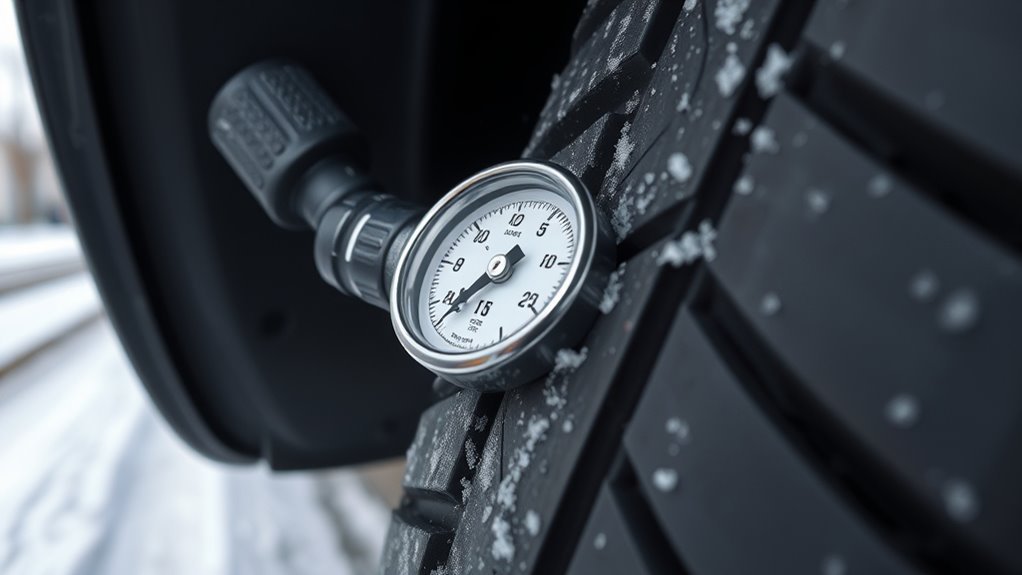
Although you might not notice it, the density of the air inside your tires changes as temperatures drop, directly affecting tire pressure.
Air density inside your tires shifts with temperature, causing noticeable changes in tire pressure.
In cold weather, air molecules slow down and pack more tightly, increasing air density. This higher density means the air takes up less volume and exerts less force on your tire walls, causing a pressure change.
Typically, tire pressure decreases by about 1 psi for every 10°F drop in temperature due to this effect.
Understanding how air density influences tire pressure helps you anticipate these changes before they impact your driving.
While your tire pressure monitoring system alerts you to low pressure, knowing the role of air density lets you stay proactive in maintaining *ideal* tire performance in cold weather.
Understanding the Tire Pressure Monitoring System (TPMS)
Your vehicle’s Tire Pressure Monitoring System (TPMS) keeps an eye on your tire pressure and alerts you when it drops considerably.
If the warning light comes on, you’ll need to check and inflate your tires manually.
Remember, TPMS might not catch small pressure changes caused by cold weather.
TPMS Purpose and Function
Because tire pressure can drop unexpectedly, the Tire Pressure Monitoring System (TPMS) plays a crucial role in keeping you safe on the road.
This pressure monitoring system constantly tracks your tire pressure and alerts you when it’s too low, especially during cold weather when tire pressure naturally decreases.
Here’s why TPMS matters:
- Sensors inside each tire measure air pressure in real time.
- TPMS alerts activate when tire pressure falls below a safe threshold.
- A dashboard warning light notifies you of low tire pressure.
- It helps prevent accidents caused by under-inflated tires.
While TPMS is indispensable, it doesn’t replace regular manual tire pressure checks.
Staying aware of your tire pressure ensures safer driving and better vehicle performance no matter the weather.
Low-Pressure Warning Signals
When tire pressure drops about 25% below the recommended level, the TPMS warning light comes on to alert you.
Cold weather often causes pressure drops because colder air contracts, reducing tire pressure even if the tires were properly inflated before the temperature change.
TPMS sensors constantly monitor the air pressure in each tire and send real-time data to your vehicle’s computer.
If the tire pressure light activates, you should check and consider inflating tires to the correct PSI.
Keep in mind, some TPMS systems detect small pressure changes, while others only warn at significant drops.
If the light stays on after inflating tires, a faulty sensor or system issue might be the cause, requiring professional attention.
Manual Pressure Checks Needed
Although TPMS provides valuable alerts for significant pressure drops, you still need to manually check your tire pressure regularly with a reliable gauge.
TPMS won’t notify you of minor fluctuations caused by cold weather, which can still affect your tire pressure and driving safety.
Relying solely on TPMS may leave you unaware of gradual pressure changes.
Remember to:
- Perform manual pressure checks weekly during cold weather.
- Use a precise tire pressure gauge for accuracy.
- Check tires when they’re cold, before driving.
- Adjust pressure according to the vehicle’s recommended levels.
How to Accurately Check Tire Pressure in Cold Conditions
You should check your tire pressure when the tires are cold, ideally after the vehicle’s been parked for at least three hours.
Use a reliable tire pressure gauge to get an accurate reading.
Then compare it to the recommended PSI in your vehicle’s manual or door placard.
If the pressure is low, adjust it to the proper level and replace the valve cap.
Make sure to repeat this for all tires regularly.
When to Check
Since tire pressure fluctuates with temperature, you should check it when your tires are cold—meaning the vehicle has been parked for at least three hours or before you start driving.
This guarantees accurate PSI readings, as pressure drops in cold weather can mislead you if measured after driving.
To properly check your tire pressure in cold weather:
- Always check tire pressure before driving or after the vehicle has been stationary for three hours.
- Avoid checking immediately after driving, since heat temporarily increases PSI.
- Use the recommended PSI listed on your vehicle’s door placard or owner’s manual.
- Don’t forget to check all tires, including the spare, regularly during cold weather.
Following these steps helps you maintain safe tire pressure despite cold weather fluctuations.
Using a Pressure Gauge
When checking tire pressure in cold conditions, using a reliable, calibrated pressure gauge is essential to get accurate readings.
Always perform your tire pressure check when the tires are cold—that means the vehicle hasn’t been driven for at least three hours.
Remove the valve stem cap, press the pressure gauge firmly onto the valve stem, and note the reading.
Cheap or old gauges can give false results, especially in cold weather, so invest in a quality tool.
Compare the measured tire pressure to your vehicle manufacturer’s recommended PSI, usually found on the driver’s door placard or owner’s manual.
This careful approach guarantees you get an accurate reading, helping maintain proper tire pressure and vehicle safety during chilly temperatures.
Adjusting Tire Inflation
Although cold weather affects tire pressure, you can accurately adjust inflation by checking your tires when they’re cold—meaning the vehicle hasn’t been driven for at least three hours.
This ensures the PSI reading reflects the true pressure, not inflated by heat from driving.
For precise pressure checks:
- Use a reliable tire pressure gauge for accurate readings.
- Check the recommended PSI on your vehicle’s door placard or manual.
- Inflate or deflate tires to match the specified PSI, adjusting for cold weather if needed.
- Securely replace valve stem caps to prevent air loss and dirt entry.
Tips for Maintaining Proper Tire Pressure During Winter
Because cold weather causes tire pressure to drop, you should check your tires regularly during winter.
Use a reliable tire pressure gauge to measure your tires when they’re cold—before driving or after at least three hours of inactivity—to get accurate readings.
Make sure each tire is inflated to the manufacturer’s recommended PSI, adjusting as needed since every 10°F temperature drop can lower tire pressure by about 1-2 PSI.
To maintain pressure, monitor your tires at least once a month throughout winter.
If possible, consider switching to winter tires, which are designed to hold pressure better and improve traction in cold weather.
The Safety Risks of Underinflated Tires in Cold Weather
If you don’t keep your tires properly inflated during cold weather, you increase your risk of losing traction on icy or snowy roads.
Underinflated tires cause a significant tire pressure drop, which creates serious safety risks when winter driving.
Here’s what you face with underinflated tires in cold weather:
- Reduced traction, making slipping more likely.
- Up to 25% longer stopping distances.
- Uneven tire wear, leading to premature damage.
- Impaired handling and braking performance.
Each 10°F drop can lower tire pressure by 1-2 PSI, so checking your tires frequently is essential.
Ignoring this can not only compromise your control but also increase the chance of blowouts.
Staying vigilant about tire pressure helps you avoid these risks and keeps your winter driving safer.
Adjusting Tire Pressure for Seasonal Temperature Fluctuations
Maintaining proper tire pressure during cold weather directly impacts your safety on the road.
But it’s not just about checking once. Seasonal temperature fluctuations cause tire pressure to drop about 1-2 PSI for every 10°F decrease.
Since cold weather contracts the air inside your tires, you need to regularly check tire pressure when tires are cold for accurate readings.
Consistently adjusting tire pressure helps maintain proper tire pressure and ideal performance.
| Temperature Change | Pressure Drop (PSI) | Action Needed |
|---|---|---|
| +10°F | +1 to +2 | Release air if needed |
| -10°F | -1 to -2 | Add air to compensate |
Benefits of Regular Tire Maintenance in Winter Months
When temperatures drop, it’s essential to check your tire pressure regularly. This helps prevent under-inflation, which can compromise both safety and fuel efficiency.
Regular tire maintenance during the winter months ensures your tires perform well despite the challenges of cold weather.
By staying on top of tire pressure, you can reduce tire wear and improve traction on icy roads.
Here’s why tire maintenance matters:
- It maintains proper tire pressure, avoiding pressure loss of 1-2 PSI per 10°F drop.
- It enhances safety by preventing blowouts and uneven tire wear.
- It improves fuel efficiency by keeping tires ideally inflated.
- It helps identify issues early through routine inspections and rotations.
Using a reliable gauge and following manufacturer guidelines will keep your tires in top shape throughout the winter months.
Frequently Asked Questions
Do You Need to Put Air in Tires When It’s Cold?
Yes, you should add air to your tires when it’s cold.
Tire pressure decreases as temperatures fall,
so checking and topping off guarantees safety, better fuel efficiency, and longer tire life during chilly weather.
Is It Normal for Tire Pressure to Go Down in the Cold?
Yes, it’s normal for tire pressure to drop in cold weather because air contracts.
You should check and adjust your tire pressure regularly during colder months to keep your vehicle safe.
This will help guarantee peak performance on the road.
Can a Tire Lose Pressure but No Leak?
Yes, your tire can lose pressure without a leak because cold air contracts inside it.
This drop is normal during temperature changes and doesn’t mean your tire has a puncture or damage.
Just check regularly.
What PSI Should I Fill Tires to in Winter?
Think of your tires like a balloon shrinking in cold air.
You should fill them to your vehicle’s recommended PSI, usually 30-35, checking when cold.
Don’t overinflate; just maintain the proper pressure for safety.
Conclusion
You might not realize it, but tire pressure can drop about 1 PSI for every 10°F decrease in temperature.
This means colder weather can substantially reduce your tire’s inflation without you noticing.
Keeping your tires properly inflated during winter isn’t just about performance—it’s vital for your safety.
By regularly checking and adjusting your tire pressure, you’ll maintain better traction, improve fuel efficiency, and reduce the risk of accidents caused by underinflated tires in cold conditions.
So, make it a habit to check your tire pressure often, especially when temperatures plummet.
Remember, proper tire inflation is key to not only your vehicle’s performance but also your safety on the road.
Stay vigilant this winter, and keep those tires inflated for a safer driving experience!