Does Cold Weather Kill Roaches and Help Control Infestations?
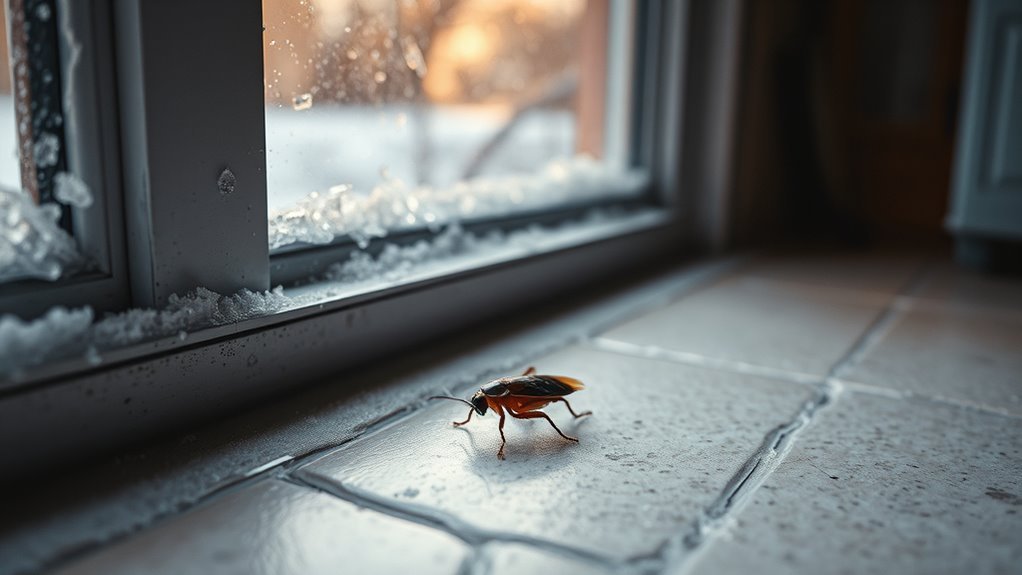
Cold weather can slow roaches down but usually won’t kill them, especially once they find warmth indoors.
These pests seek out cozy spots like cracks, behind appliances, and basements to survive winter’s chill.
Their eggs are even tougher, often lasting cold spells.
So, while cold temps might reduce numbers briefly, they won’t end an infestation on their own.
If you want to understand how roaches outsmart winter and what really works to control them, keep exploring these facts.
How Cockroaches Respond to Cold Weather
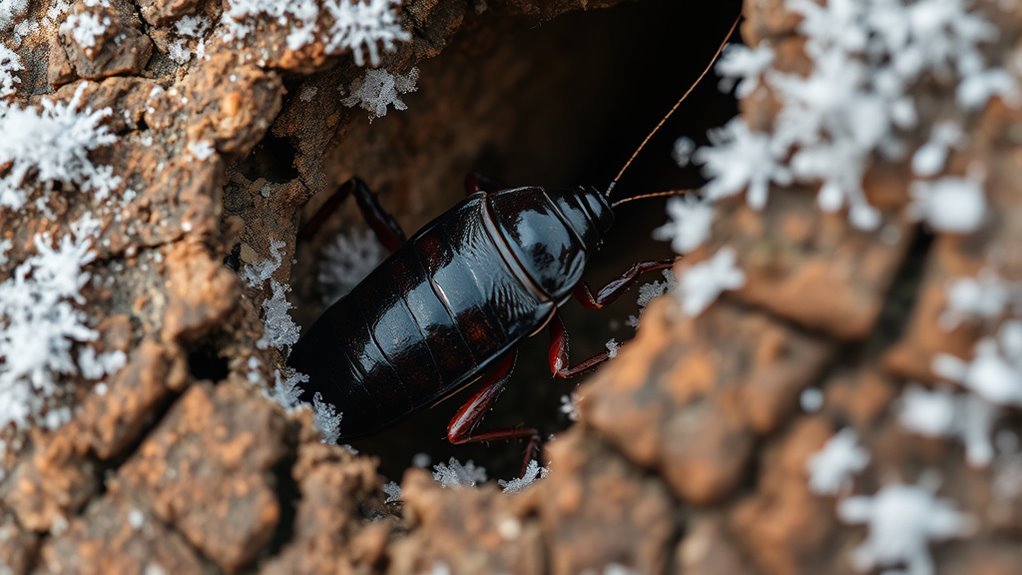
Although cockroaches are cold-blooded and slow down when temperatures drop below 45°F, they won’t simply die off in cold weather.
When cold temperatures arrive, you’ll notice their activity decrease as they seek warmer indoor spots to survive.
Cockroaches survive by finding shelter in heated buildings, avoiding the harsh outdoors.
Freezing temperatures below 32°F can kill adult roaches exposed outside or in unheated areas, but many eggs show more resistance to the cold.
However, extended exposure to freezing conditions generally harms both adults and eggs.
During winter, cockroaches often enter dormancy or reduce movement, conserving energy until temperatures rise.
Survival Strategies of Common Cockroach Species
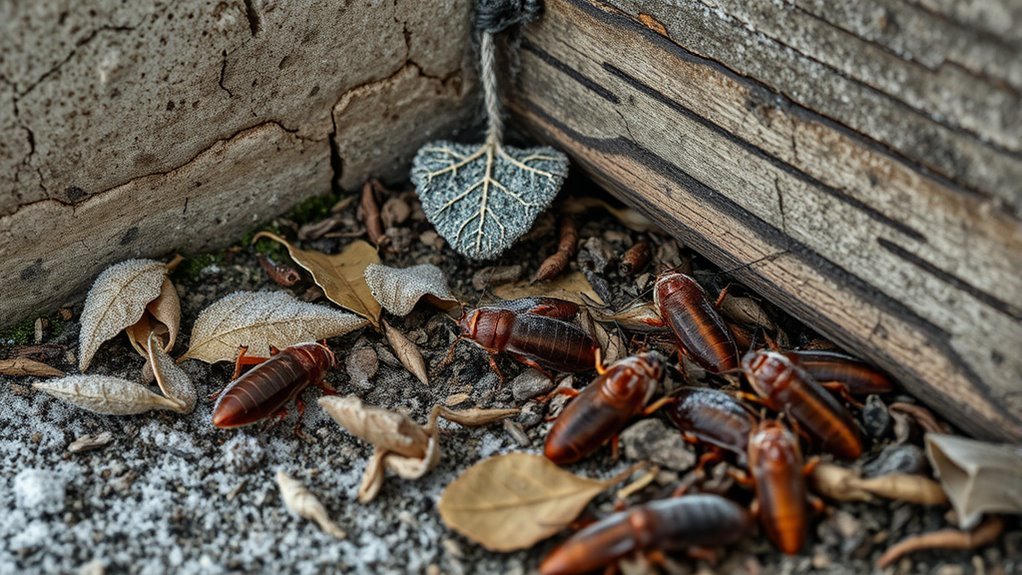
You’ll notice that different cockroach species handle cold weather in unique ways.
Some tolerate chill better than others.
Most prefer to shelter indoors, where warmth helps them stay active through winter.
Plus, their reproductive strategies adapt to colder months, ensuring their eggs survive even when adults can’t.
Species Cold Tolerance Differences
When temperatures drop, cockroach species show clear differences in how well they tolerate the cold.
German cockroaches struggle below 50°F, making cold weather a natural control for them.
Oriental cockroaches, however, endure colder temperatures longer, showing higher cold tolerance.
Cockroach eggs can survive brief exposure around 32°F but won’t hatch after extended cold.
Your best bet to control infestations is understanding these survival strategies.
| Species | Cold Tolerance Threshold | Egg Survival at Low Temps |
|---|---|---|
| German Cockroaches | Below 50°F (10°C) – lethal | Short-term survival |
| Oriental Cockroaches | Can survive below 45°F (7°C) | Short-term survival |
| American Cockroaches | Below 45°F (7°C) – lethal | Limited survival |
Indoor Shelter Preferences
Understanding how different cockroach species survive cold temperatures helps explain their indoor shelter choices.
When you notice roaches indoors during winter, they’re usually hiding in spots where temperature and warmth stay steady.
German cockroaches like to hide in cracks, cabinets, and behind appliances—places that maintain indoor warmth year-round.
American cockroaches prefer basements, pipes, and crawl spaces, where humidity and temperature remain consistent.
On the other hand, Oriental cockroaches seek cooler, damp areas like basements and beneath sinks to shelter.
These pests enter your home through gaps around doors, windows, and utility lines, then find hidden indoor shelters to survive.
Reproductive Adaptations Winter
Although cold weather slows cockroach reproduction, these pests have developed strategies to survive winter.
Their reproductive adaptation includes entering dormancy to reduce activity during cold temperatures, helping them achieve winter survival.
Cockroach eggs show more cold tolerance than adults, allowing some species to endure brief freezing spells.
For example, Oriental cockroach eggs survive cooler outdoor conditions, while American cockroaches seek heated indoor spots to keep reproducing.
| Species | Cold Tolerance | Reproductive Adaptation | Egg Survival | Winter Strategy |
|---|---|---|---|---|
| German Cockroach | Briefly withstands 50°F (10°C) | Reduced reproduction | Limited | Dormancy |
| American Cockroach | Avoids cold by indoors | Continuous reproduction | Moderate | Seeks warmth |
| Oriental Cockroach | High cold resistance | Slows reproduction | High | Egg survival outside |
You’ll see these tactics keep roaches thriving despite the chill.
The Role of Indoor Environments in Cockroach Winter Survival
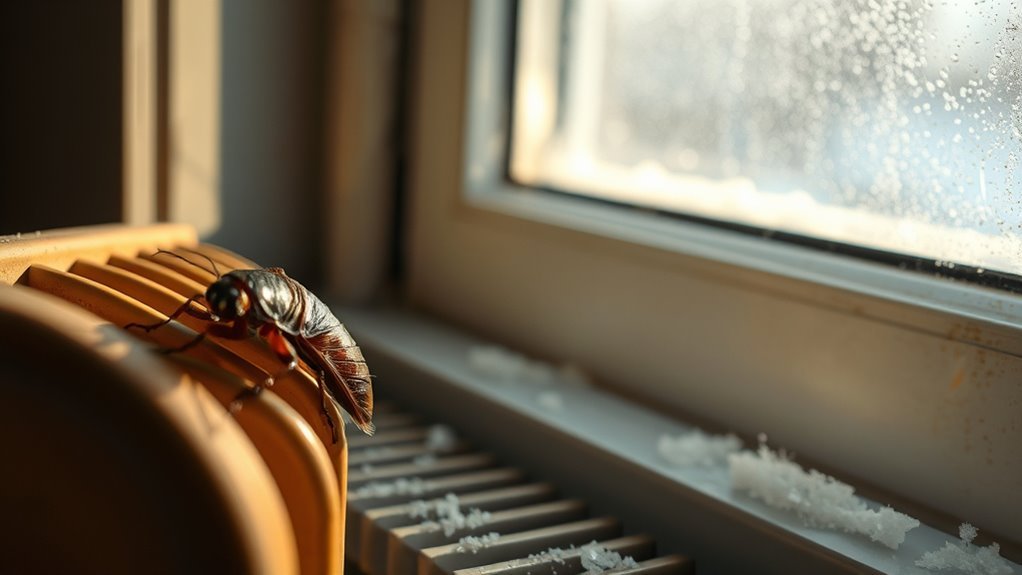
You’ll find that indoor warmth keeps cockroaches active throughout winter, especially in common hiding spots like behind appliances and under cabinets.
Household conditions such as heating and insulation create ideal microhabitats that protect them from the cold.
Understanding these factors helps you identify where roaches thrive when it’s chilly outside.
Indoor Warmth Sustains Roaches
Because indoor environments stay warm and stable, cockroaches can remain active throughout the winter instead of going dormant.
The indoor warmth created by heating systems and insulated walls maintains temperatures that allow cockroaches to survive cold months comfortably.
Unlike the harsh outdoor chill, your home offers microclimates where these pests find shelter, water, and food sources.
This consistent warmth prevents the lethal cold conditions that might otherwise reduce their numbers.
Understanding this helps you realize why cockroaches don’t hibernate indoors and why cold weather alone won’t prevent infestations.
To effectively control roaches, you need to address the warm indoor spaces they exploit, as simply relying on outdoor cold won’t eliminate them.
Managing indoor warmth and reducing access to resources is key to preventing infestations year-round.
Common Indoor Hiding Spots
Indoor warmth alone doesn’t guarantee cockroach survival during winter; these pests need secure hiding spots to stay protected from colder drafts and disturbances.
They exploit indoor spaces like behind appliances, cabinets, and wall voids, which offer warm environments essential for overwintering.
Entry points such as wall cracks and gaps around baseboards let them access these sheltered areas easily.
Here’s a quick look at common hiding spots:
| Hiding Spots | Description |
|---|---|
| Under sinks | Moisture and warmth attract them |
| Inside appliances | Dark, undisturbed warm spaces |
| Near food sources | Easy access to nourishment |
Recognizing these spots helps you understand why cockroaches survive winter indoors.
And it also shows why controlling infestations can be tough without targeting these critical areas.
Impact of Household Conditions
Although cold weather drives many pests outdoors, cockroaches find ways to survive by exploiting the conditions inside your home.
The indoor environment offers consistent warmth and humidity, especially when your insulation is effective.
However, cracks and gaps around windows, doors, and pipes provide easy entry points for these pests.
They slip through unsealed areas, settling near appliances like refrigerators and ovens that generate heat.
To limit their survival chances during winter, you need to focus on household maintenance.
Seal all cracks and gaps, clean up food crumbs and spills promptly, and fix any leaks to remove water sources.
Proper insulation and regular upkeep reduce cockroach-friendly spots, helping you control infestations when cold weather arrives.
Resilience of Cockroach Eggs to Low Temperatures
When temperatures drop below 50°F (10°C), cockroach eggs show greater resilience than adult roaches, but they still face significant risks.
Cockroach eggs are more cold-resistant, yet prolonged exposure to cold temperatures, especially below 45°F (7°C), often leads to high mortality rates.
While most eggs can’t survive extended periods under freezing (32°F or 0°C), some endure short cold snaps.
Cockroach eggs typically perish under long freezing spells but can survive brief cold snaps.
This means that if you’re relying on cold weather to control an infestation, cockroach eggs might still survive and hatch later when temperatures rise.
Their ability to withstand chilly conditions allows infestations to persist in milder climates.
Understanding the survival limits of cockroach eggs helps you realize that cold alone isn’t enough to eliminate all stages of infestation effectively.
Identifying Cockroach Hiding Spots During Winter
Since cockroaches can’t tolerate freezing temperatures, they actively seek warm, sheltered spots inside your home during winter.
To effectively identify cockroach hiding spots, focus on areas offering indoor shelter from the cold temperatures. Cockroaches often squeeze into wall voids, behind appliances, and inside cabinets where warmth lingers.
Look closely at cracks around windows, doors, and gaps near foundation or utility lines—these are prime entry points. Don’t overlook cluttered basements and attics, which provide cozy refuges.
Here are five common winter hiding spots to check:
- Wall voids and baseboards retaining heat
- Behind refrigerators, stoves, and microwaves
- Under sinks and within plumbing pipes
- Cracks around windows and doors
- Cluttered storage areas like basements and attics
Knowing these spots helps you spot infestations before they worsen.
Effective Winter Pest Control Measures for Cockroach Infestations
Spotting where cockroaches hide in winter is just the first step; controlling them requires targeted actions.
Since cold temperatures don’t always eliminate these pests, effective winter pest management focuses on sealing cracks and gaps around windows, doors, and utility lines to block entry.
Cold weather won’t stop cockroaches; sealing entry points is key to winter pest control.
You should also remove food debris, crumbs, and standing water to reduce attractants indoors.
Fixing leaks and using dehumidifiers can help cut the moisture that cockroaches need to survive.
Applying baits, traps, and residual insecticides in problem areas assists with reducing infestations by targeting hidden populations.
While you can take these steps yourself, consulting a pest control professional ensures tailored cockroach control strategies that address your home’s specific winter challenges.
This can ultimately improve long-term results!
When to Seek Professional Cockroach Treatment
If you notice cockroaches appearing regularly despite your best efforts to keep your home clean, it’s time to call in a professional.
A large or persistent cockroach infestation requires professional cockroach treatment to effectively target hidden nesting sites and prevent further spread.
As temperatures drop, roaches seek indoor refuge, making timely treatment essential to stop reproduction and infestation growth.
Experts use specialized sprays, baits, and traps that DIY methods can’t match.
Consider seeking professional help if you experience:
- Frequent cockroach sightings despite cleaning
- Signs of infestation in hard-to-reach areas
- Increased activity during colder months
- Rapid infestation growth
- Health concerns related to cockroach allergens
Don’t wait—early intervention guarantees better control and peace of mind.
Frequently Asked Questions
Does Cold Weather Kill Cockroaches?
Yes, cold weather can kill cockroaches if temperatures drop below freezing for a long time.
But since roaches hide indoors, you can’t rely on cold alone to control infestations effectively.
You’ll need extra pest control.
Will Cold Air Get Rid of Roaches?
You might think shoving roaches into a freezer sends them packing, but cold air alone won’t evict these resilient pests.
You’ll need smarter tactics—like sealing cracks and baiting—to truly kick them out for good.
Does Keeping House Cold Keep Roaches Away?
Keeping your house cold might slow roaches down, but it won’t keep them away for long.
They’ll find warmer spots inside, so relying on cold temperatures alone won’t effectively control or eliminate infestations.
It’s important to use other methods in conjunction with temperature control for better results.
How to Get Rid of Roaches During Winter?
Want to crush winter roaches?
Seal every crack, clean obsessively, and cut water sources.
Then, bait and spray where they hide.
Don’t let cold fool you—fight back with smart, relentless pest control tactics indoors.
Conclusion
Cold weather alone won’t wipe out roaches like a sudden storm clears fallen leaves.
These resilient pests adapt by seeking warm indoor spots and sheltering their eggs, so you can’t rely on winter chills to control them.
Instead, stay proactive by identifying hiding places and using effective treatments.
If the infestation feels overwhelming, don’t hesitate to call a professional—because beating roaches takes more than just waiting for the cold to do the job.
In conclusion, while cold weather may have some impact on roaches, it’s not a guaranteed solution for controlling infestations.
Being proactive and utilizing effective treatments is essential in managing these pests.
So, remember to identify their hiding spots and, if needed, seek professional help to ensure a thorough elimination of the infestation.
Don’t let the cold fool you; take action against roaches now!