Does Cold Weather Cause Migraines?
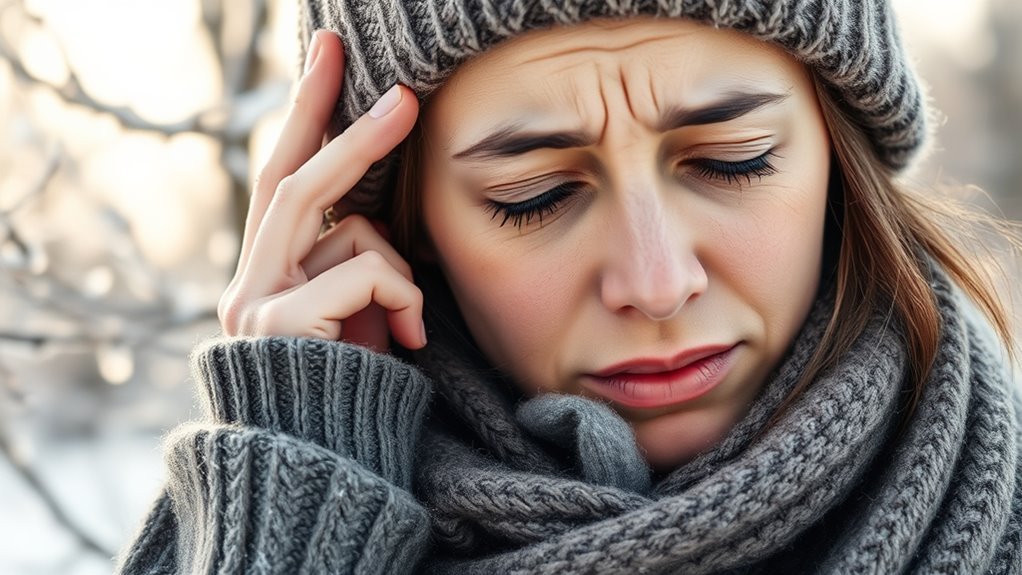
Yes, cold weather can cause migraines. The drop in temperature triggers biological changes like blood vessel constriction and shifts in nerve signaling, which can provoke headache symptoms.
Additionally, cold air can irritate your sinuses and create muscle tension.
On top of that, changes in barometric pressure can increase sensitivity to migraine triggers.
Let’s not forget about the dry indoor air from heating, which can also worsen symptoms.
If you want to understand how these factors interact and discover ways to prevent and manage cold-induced migraines, keep exploring these key insights.
How Cold Weather Affects Migraine Triggers
Although cold weather might seem harmless, it can directly trigger migraines by causing your brain’s blood vessels to constrict through vasoconstriction.
This reduced blood flow can provoke headache pain and increase your sensitivity to migraine triggers.
Temperature fluctuations and cold weather often bring barometric pressure changes, which are well-known migraine triggers.
When cold air irritates your sinuses, it can lead to sinus irritation, worsening headache symptoms.
Additionally, cold weather can cause muscle tension in your head and neck, especially from shivering or tightening muscles.
This tension further contributes to migraines.
Understanding how these factors interplay helps you recognize why cold weather may increase your migraine risk.
It also highlights why managing exposure and muscle tension can be vital in preventing migraine episodes.
Biological Responses to Cold and Migraine Development

Cold weather doesn’t just affect your environment—it triggers a series of biological responses that can lead to migraines.
When temperature changes cause vasoconstriction, your blood vessels narrow, reducing blood flow to the brain.
This vascular constriction, combined with shifts in brain chemistry like serotonin fluctuations, impacts nerve signaling and can spark migraines.
Additionally, cold-induced muscle tension and inflammation amplify headache intensity.
Understanding these biological responses helps you grasp why cold weather often worsens migraine symptoms.
| Biological Response | Effect on Migraines | Cause |
|---|---|---|
| Vasoconstriction | Reduced blood flow | Blood vessel narrowing |
| Serotonin fluctuations | Altered brain chemistry | Temperature changes |
| Nerve signaling shifts | Increased pain sensitivity | Cold exposure |
| Muscle tension | Headache aggravation | Stress response |
| Inflammation | Enhanced migraine severity | Cold-triggered immune reaction |
Common Cold Weather Migraine Triggers
When temperatures drop, your blood vessels tighten and barometric pressure shifts. Both of these changes can trigger migraines if you’re sensitive to them.
Cold weather brings several migraine triggers that can lead to headache episodes and seasonal migraines. You might notice:
- Vasoconstriction caused by temperature changes that reduces blood flow and sparks migraine pain.
- Dry air from indoor heating, which often causes sinus irritation and worsens migraine symptoms.
- Barometric pressure fluctuations that disrupt your nervous system, activating migraine triggers.
These factors combine to heighten your risk during colder months.
Being aware of how cold weather influences your body helps you understand why migraines may become more frequent or intense when the temperature drops.
Preventive Strategies for Cold Weather Migraines
Since cold weather can trigger migraines through various mechanisms, taking proactive steps can substantially reduce your risk.
Start by wearing layered clothing, including hats and scarves, to maintain body warmth and shield yourself from sudden temperature changes.
Gradually adjusting to colder environments can help minimize shock from abrupt shifts, which is a common migraine trigger.
Stay well-hydrated to combat dehydration, as this often worsens in winter.
Managing environmental triggers like low humidity is vital—using humidifiers helps maintain indoor humidity levels and soothes irritated sinuses.
Also, keep a consistent sleep routine and practice stress management techniques to further reduce your susceptibility to migraines.
Managing Indoor Environments During Winter
Although winter invites you to stay indoors, managing your indoor environment carefully can considerably reduce your migraine risk.
To achieve winter relief and support headache prevention, focus on controlling factors that trigger vasoconstriction and sinus dryness.
Keep your indoor temperature consistent to avoid sudden fluctuations that may provoke headaches.
Use a humidifier to maintain proper moisture control and prevent dry air from irritating your sinuses.
Also, minimize cold exposure by sealing drafts and insulating windows to block cold air that can cause vasoconstriction.
Here’s what you should do:
- Maintain a consistent environment with stable indoor temperature.
- Use a humidifier regularly to combat sinus dryness.
- Seal drafts and avoid direct cold exposure indoors.
These steps help you create a comfortable space that reduces migraine triggers during winter.
Lifestyle Tips for Reducing Migraine Frequency in Cold Seasons
To reduce migraine frequency during cold seasons, you should focus on lifestyle habits that keep your body warm and minimize exposure to harsh weather triggers.
Wearing layered clothing like hats and scarves helps maintain warmth and prevent cold weather from triggering headaches.
Stay indoors during extreme cold or wind to avoid weather triggers linked to weather-related migraines.
Make gradual seasonal adjustments to temperature changes to prevent sudden blood vessel constriction that can cause migraines.
Using humidifiers indoors increases humidity, counteracting dry air from heating systems and reducing sinus irritation for effective headache prevention.
Also, maintain a consistent sleep schedule and manage stress, as disruptions can worsen migraines.
Frequently Asked Questions
How to Get Rid of Winter Migraines?
To get rid of winter migraines, avoid cold exposure and stay hydrated.
Maintaining a regular sleep schedule is also key.
Wear warm clothes, use heating pads, and eat balanced meals.
Lastly, consult your doctor for personalized treatments and medication adjustments.
What Is the Best Climate for Migraine Sufferers?
Imagine waking up to gentle, steady weather that soothes your senses.
You’ll find the best climate for migraines offers mild temperatures, moderate humidity, and stable barometric pressure—conditions that help keep painful attacks at bay consistently.
What Is the Biggest Trigger for Migraines?
The biggest trigger for migraines is often bright sunlight and glare.
You might also notice changes in barometric pressure or extreme weather affecting you.
Everyone’s triggers differ, so track what impacts your headaches most.
What Time of Year Are Migraines Worse?
You’ll likely find migraines worse in fall and winter.
Decreased sunlight, colder temperatures, and lower barometric pressure disrupt your body’s rhythms.
This disruption can cause vasoconstriction, all of which combine to increase migraine frequency and severity during these months.
Conclusion
Cold weather can definitely trigger your migraines by affecting your body in surprising ways.
You might notice that chilly winds or sudden temperature changes set off your symptoms.
But don’t worry—you can take control by adjusting your indoor environment and adopting smart lifestyle habits.
Think of it like carrying a pocket watch in the age of smartphones: old-school prevention still works wonders.
Stay proactive, and you’ll keep those cold weather migraines at bay.
In conclusion, cold weather can indeed be a catalyst for migraines.
By understanding your triggers and making small changes in your environment and habits, you can mitigate these effects.
Don’t underestimate the power of traditional prevention methods.
Stay aware, stay prepared, and you can enjoy the winter months without the pain of migraines disrupting your life.