How Does Cold Weather Affect Your Water Heater?
Cold weather can significantly impact your water heater’s performance. When temperatures drop, your heater has to work harder to raise the colder incoming water to the desired temperature.
In addition, the lower ambient air temperature can cause more heat to escape from the tank and pipes, leading to decreased efficiency and increased energy consumption.
As a result, you might notice delays in getting hot water or even hear strange noises coming from the unit due to sediment buildup.
Taking proactive steps to protect and maintain your water heater can help you avoid these issues later on.
So, keep an eye out for key signs and solutions to ensure your water heater runs smoothly all winter long.
The Science Behind Water Heater Operation
Although water heaters seem simple, they rely on a precise process to deliver hot water.
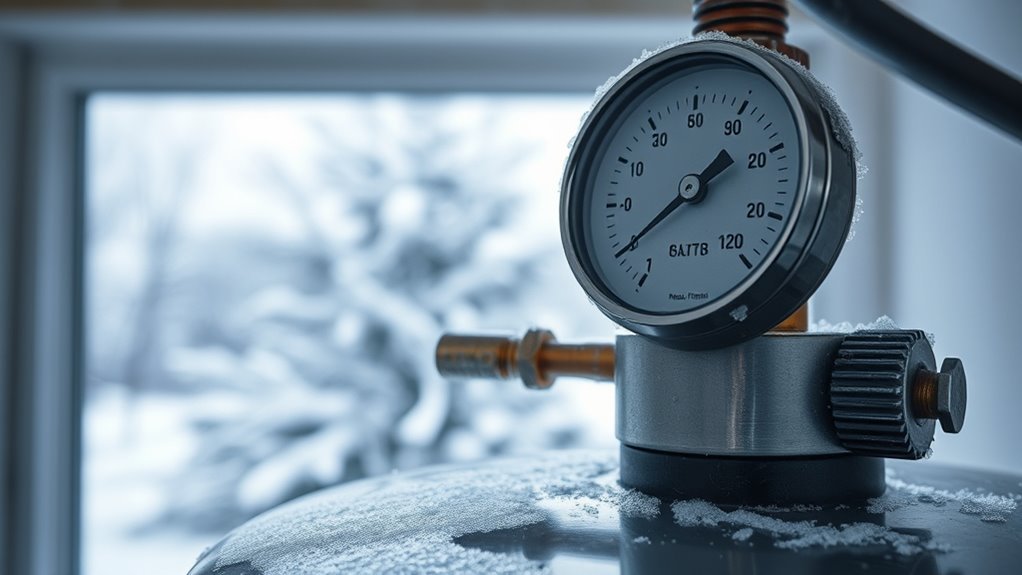
When cold water enters the tank, the heating elements or gas burners activate to raise the tank temperature to the thermostat’s set point.
The thermostat controls temperature regulation, ensuring water stays within your preferred range.
However, sediment buildup inside the tank reduces heat transfer efficiency by acting as an insulating layer, which forces the heater to work harder.
Ambient temperature and insulation around the tank also play vital roles.
Poor insulation increases heat loss, making it difficult to maintain consistent heat.
Understanding these factors helps you see why your water heater’s performance depends on more than just heating elements — it’s a balance of temperature control, insulation, and preventing sediment buildup.
Impact of Colder Incoming Water Temperatures
When colder weather arrives, your water heater faces a tougher challenge because incoming water temperatures can drop to around 40°F, compared to about 50°F in summer.
This temperature drop means your water heater must work harder to meet hot water demand, increasing energy consumption and heater strain.
Colder water forces your heater to work harder, boosting energy use and adding strain.
You might notice a delay in hot water supply and more frequent cycling of the heater.
Additionally, lower incoming water temperatures can accelerate sediment buildup, reducing heater efficiency over time.
Here’s what happens with colder incoming water:
- Your water heater consumes more energy to heat colder water.
- Increased heater strain can shorten its lifespan.
- Hot water supply may take longer to reach taps.
- Sediment buildup worsens, leading to efficiency loss and maintenance needs.
Be mindful of these effects as cold water challenges your system.
Effects of Lower Ambient Air Temperatures
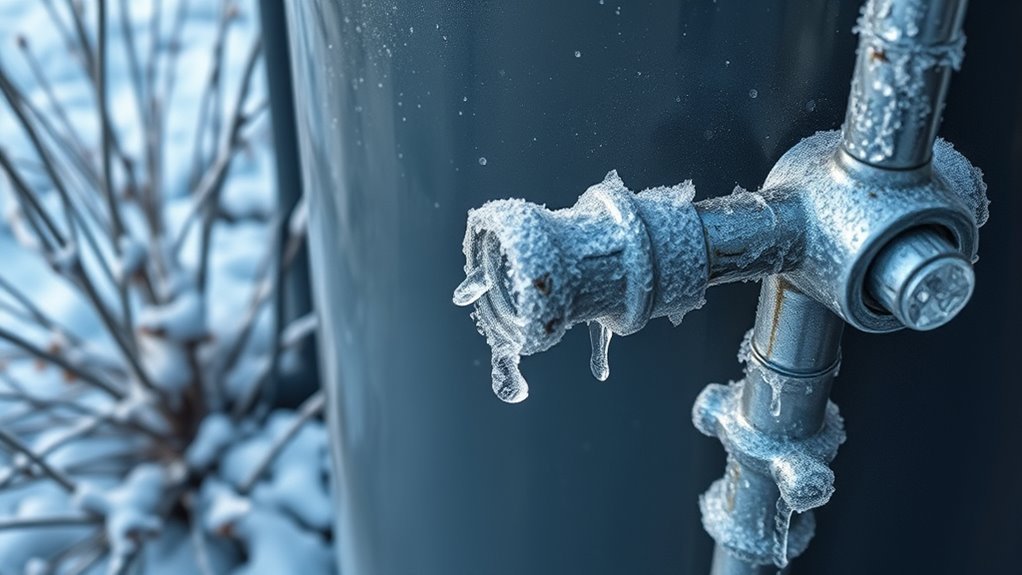
Since lower ambient air temperatures surround your water heater during winter, it loses heat more quickly. This forces it to work harder to maintain the desired water temperature.
Cold air reduces the efficiency of your heater’s insulation, which accelerates heat loss from the tank and pipes. As ambient temperatures drop, heat escape increases, leading to longer heating cycles and higher energy consumption.
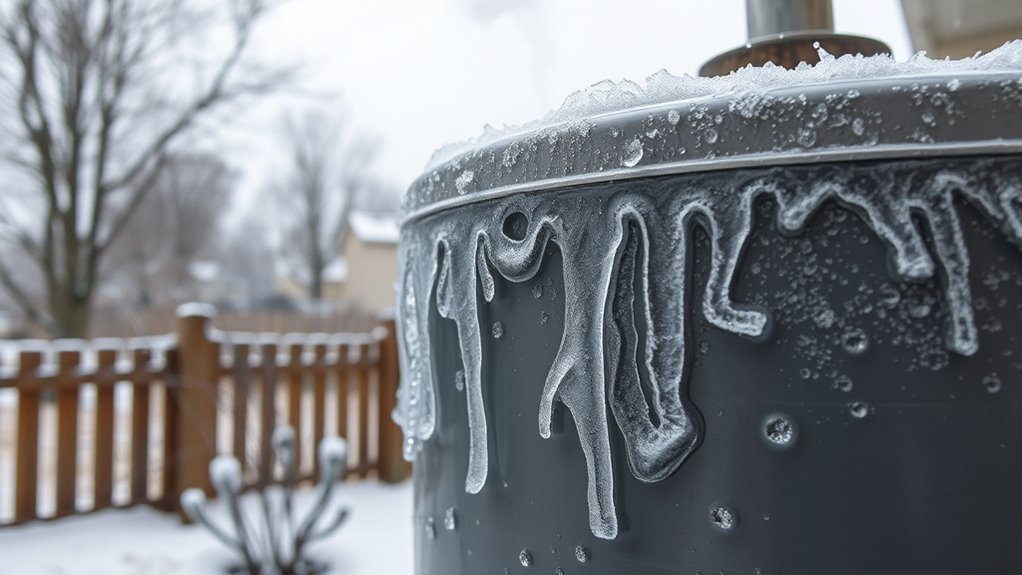
In unheated spaces like basements or garages, the temperature can fall below freezing. This raises the risk that your pipes will freeze and sustain damage.
Furthermore, this constant exposure to cold air makes the thermostat cycle more frequently. This can wear down components faster than usual.
To improve efficiency and prevent heat loss, make sure your water heater and pipes are well insulated. This will help minimize the impact of cold ambient temperatures on your system.
Common Winter Water Heater Problems to Watch For
You’ll want to keep an eye on sediment buildup inside your water heater, as it can reduce efficiency and cause noise.
Frozen pipes are another common winter hazard that can lead to costly damage if your plumbing isn’t properly insulated.
Recognizing these issues early helps you avoid bigger problems down the line.
Sediment Buildup Effects
Although colder water increases mineral deposits, it also speeds up sediment buildup inside your water heater during winter.
This sediment acts as an insulator, reducing heat transfer and forcing your heater to work harder, which raises energy costs.
Sediment accumulation can cause banging noises and uneven heating, sometimes leading to rust or foul odors in your hot water supply.
To keep your heater efficient and prevent damage, regular flushing and maintenance are vital during winter.
Here’s what you should watch for:
- Increased sediment buildup due to colder incoming water.
- Reduced heater efficiency from insulated heat transfer.
- Noises like banging or popping during operation.
- Rust and foul odors signaling sediment problems.
Routine flushing helps maintain your water heater’s performance and longevity.
Pipe Freezing Risks
Sediment buildup can strain your water heater, but winter also brings another serious threat: freezing pipes.
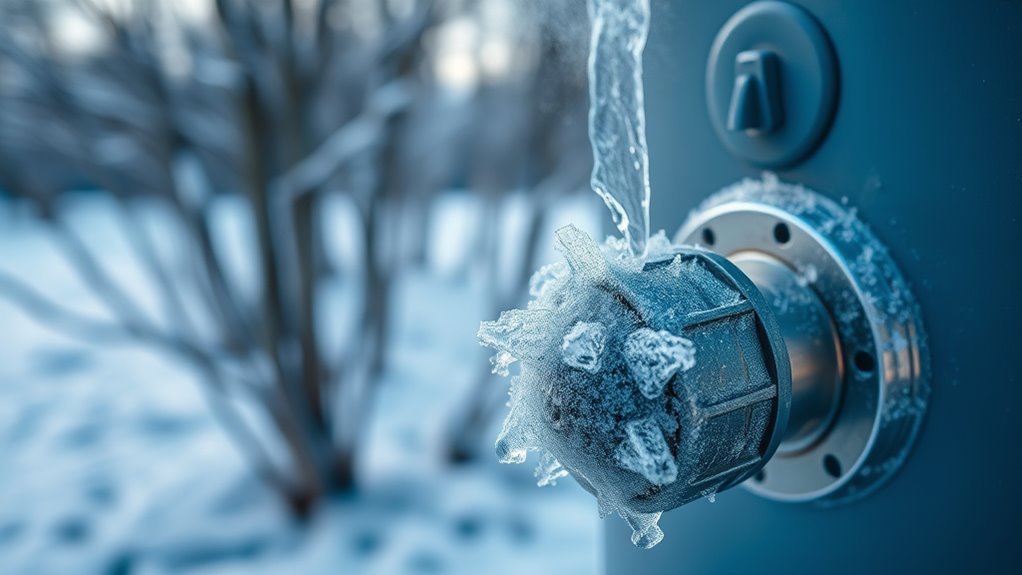
When freezing temperatures hit, water inside your pipes can solidify and expand, causing pressure buildup that may lead to burst pipes.
Pipes located in unheated areas or lacking proper insulation face the highest freezing risks during cold weather.
A burst pipe can cause significant water damage and compromise your water heater’s function.
To protect your system, make sure all vulnerable pipes are insulated well and consider adding heat tape in especially cold spots.
Taking these precautions helps prevent pipe freezing and costly repairs, ensuring your water heater runs smoothly throughout winter.
Don’t underestimate how cold temperatures can impact your home’s plumbing and water heater.
Tips to Protect and Maintain Your Water Heater in Winter
To keep your water heater running smoothly through winter, follow a simple maintenance checklist that includes flushing out sediment and checking for leaks.
Make sure to insulate your water heater and exposed pipes with foam sleeves or blankets to prevent freezing.
Taking these steps will help protect your system and maintain efficiency during the cold months.
Winter Maintenance Checklist
When cold weather sets in, you’ll want to take specific steps to protect your water heater from freezing and inefficiency.
Follow this winter maintenance checklist to keep your system running smoothly:
- Insulate your water heater and nearby pipes with foam or fiberglass to reduce heat loss and prevent freeze damage.
- Schedule professional maintenance in October to flush the tank, inspect, and test safety valves before the coldest months.
- Adjust the thermostat to about 120°F to optimize efficiency and reduce strain during winter.
- Protect outdoor plumbing with pipe insulation or insulated covers to avoid freezing and bursting.
Also, keep the area around your water heater clear to ensure proper airflow and operation throughout winter.
Insulation and Protection
Although cold weather challenges your water heater, proper insulation and protection can keep it running efficiently and prevent costly damage.
Using insulating materials like blankets or foam jackets reduces heat loss by up to 45%, boosting water heater efficiency.
Wrapping pipes with foam sleeves provides freeze protection, preventing burst pipes caused by external cold temperatures.
Maintaining pipe insulation keeps warm water flowing and lowers energy bills. Regularly check and replace worn insulation to ensure lasting protection.
| Task | Method | Benefit |
|---|---|---|
| Tank Insulation | Blanket or foam jacket | Reduces heat loss |
| Pipe Insulation | Foam sleeves or fiberglass | Prevents freezing, burst pipes |
| Maintenance | Inspect & replace insulation | Maintains efficiency and protection |
Protecting your water heater this way guarantees reliable warm water all winter.
When to Seek Professional Water Heater Assistance
If your hot water supply becomes inconsistent during cold weather, you should consider calling a professional for an inspection.
Cold can strain your water heater and pipes, causing water heater issues that need expert care.
Cold weather puts extra strain on your water heater and pipes, often requiring professional attention.
Watch for these signs to seek professional water heater services promptly:
- Your water heater is leaking or shows a sign of water pooling nearby.
- The water heater is struggling to maintain temperature or the water heater thermostat seems faulty.
- You notice unusual noises or sediment buildup inside the tank.
- Water might appear discolored or have a foul smell during cold months.
Timely professional water heater maintenance can prevent costly breakdowns and keep your hot water reliable all winter.
Don’t wait—address problems early with a licensed plumber.
Frequently Asked Questions
Can Cold Weather Mess up a Water Heater?
Yes, cold weather can mess up your water heater by freezing pipes, causing heat loss, and making it work harder.
You’ll notice reduced efficiency, possible damage, and increased wear if you don’t insulate and maintain it properly.
Will Hot Water Pipes Freeze Before Cold Water Pipes?
Hot water pipes freezing before cold ones?
That’s as rare as a snowstorm in July!
You won’t see it happen because hot water keeps pipes warm, so cold water pipes freeze way before hot ones do.
How Cold Is Too Cold for a Water Heater?
You’ll find water heaters struggle when temperatures drop below 32°F, risking frozen pipes and damage.
Below 0°F, the danger spikes, so keep your heater insulated and set between 120°F and 140°F to stay safe.
Why Is My Hot Water Not Working When It’s Cold Outside?
Your hot water isn’t working when it’s cold outside because colder incoming water makes your heater work overtime.
Plus, frozen pipes or sediment buildup can block heat transfer, so your water heater can’t keep up with winter demands.
Conclusion
Cold weather can challenge your water heater’s comfort and convenience. With colder incoming water and cooler ambient air, its operation can become complicated.
By being proactive—protecting pipes, performing proper maintenance, and watching for winter woes—you’ll prevent pesky problems and preserve performance.
Don’t delay in seeking skilled support if you’re struggling with sudden setbacks.
Staying savvy and sensible ensures your system remains strong and steady through the season’s shivers.
In conclusion, cold weather significantly impacts your water heater’s efficiency and performance. To keep your hot water flowing, it’s essential to take preventive measures. Regular maintenance, protecting your pipes, and being vigilant about any issues can help you avoid costly repairs.
Remember, if you encounter any challenges, don’t hesitate to call in a professional. This way, you can enjoy consistent hot water even in the coldest months.