How Does Catfish Bite in Cold Weather
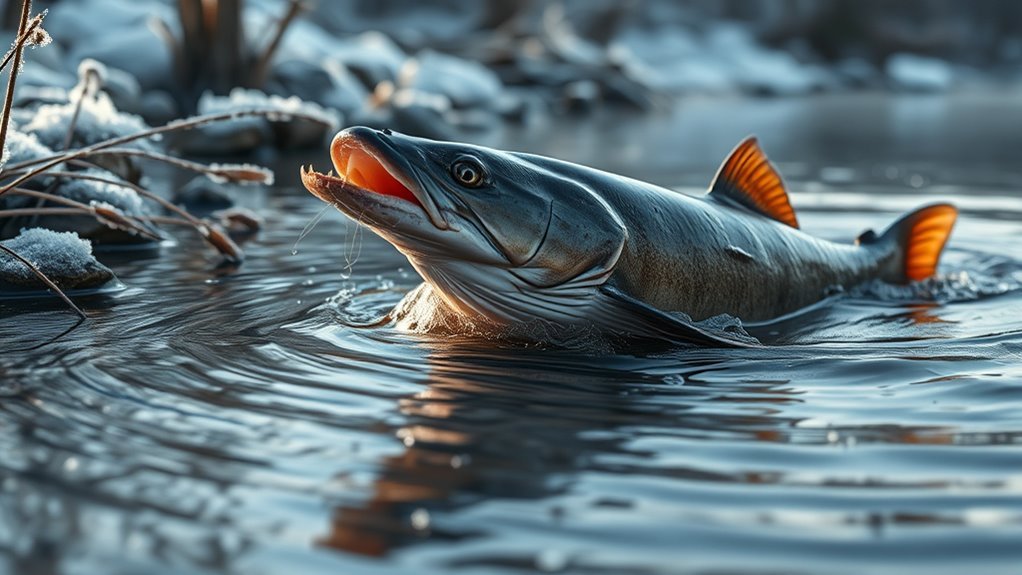
In cold weather, catfish bite slower and less aggressively because their metabolism drops with the temperature.
You’ll find them holding in deep, sheltered spots like logjams or underwater ledges, feeding cautiously and sporadically.
Using oily, strongly scented baits and slow presentations boosts your chances since catfish rely more on smell than sight when sluggish.
Staying patient and targeting structure-rich areas will pay off.
Keep exploring to discover the best tactics and gear to outsmart winter catfish.
Understanding Catfish Behavior in Cold Water
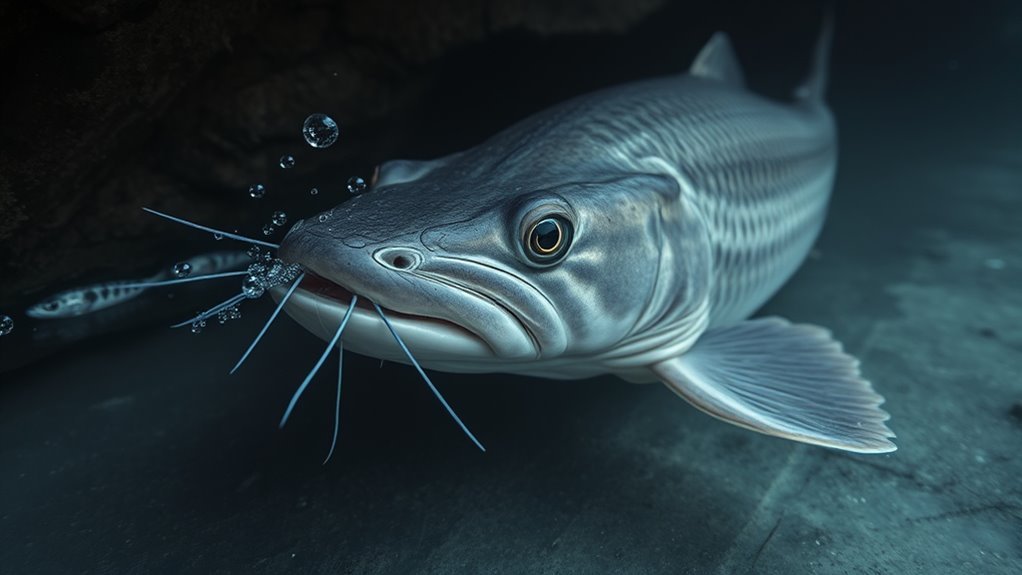
Although catfish slow down when water temperatures dip below 50°F, they don’t stop feeding entirely.
In cold water, catfish behavior shifts as they seek deeper, calmer spots like scour holes and areas beneath structures to escape chilly surface temperatures.
During winter fishing, you’ll notice they become sluggish, but they still target bait near underwater ledges, logpiles, and shelters that hold residual warmth.
Water temperature plays a vital role, with colder conditions reducing their activity. However, milder spells encourage more aggressive feeding.
To improve your success, focus on these warmer, sheltered spots and present your bait carefully at the right depths.
Understanding these patterns helps you adapt your winter fishing strategy and increases your chances of catching catfish even in cold water.
Effects of Water Temperature on Catfish Metabolism
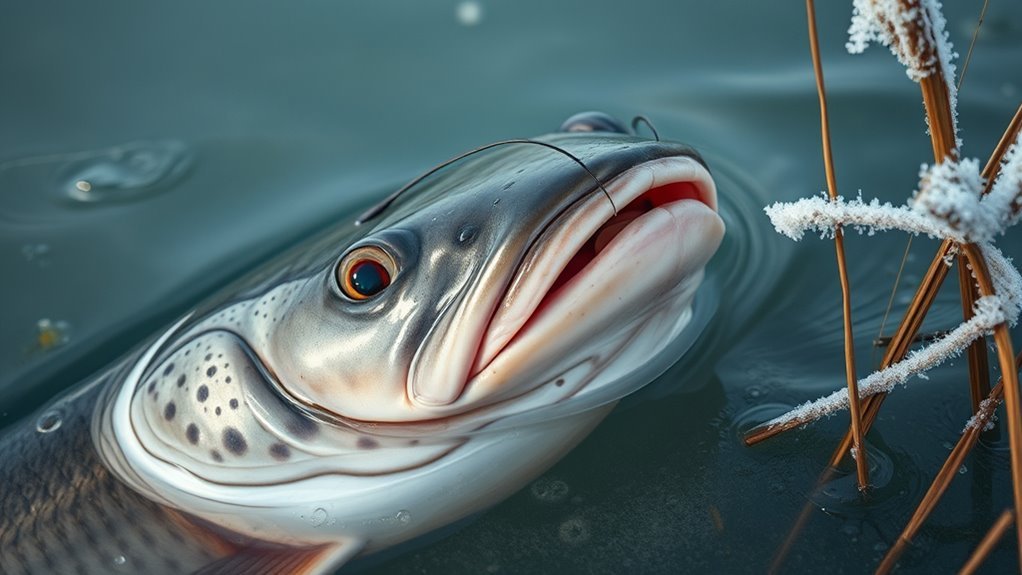
When water temperatures drop below 50°F, catfish slow their metabolism, which directly reduces how often they feed.
You’ll notice their feeding activity declines as cold water causes their bodies to conserve energy.
Understanding this link between water temperature and catfish behavior helps you adjust your tactics.
Here’s what happens as water temperature shifts:
- Below 50°F, metabolism slows, and catfish feed less frequently.
- Between 30°F and 40°F, catfish enter near dormancy to conserve energy.
- Metabolic rate rises sharply as water warms toward 50°F, increasing activity.
- Lower metabolism means reduced movement and less aggressive feeding behavior.
Ideal Baits and Attractants for Winter Catfishing
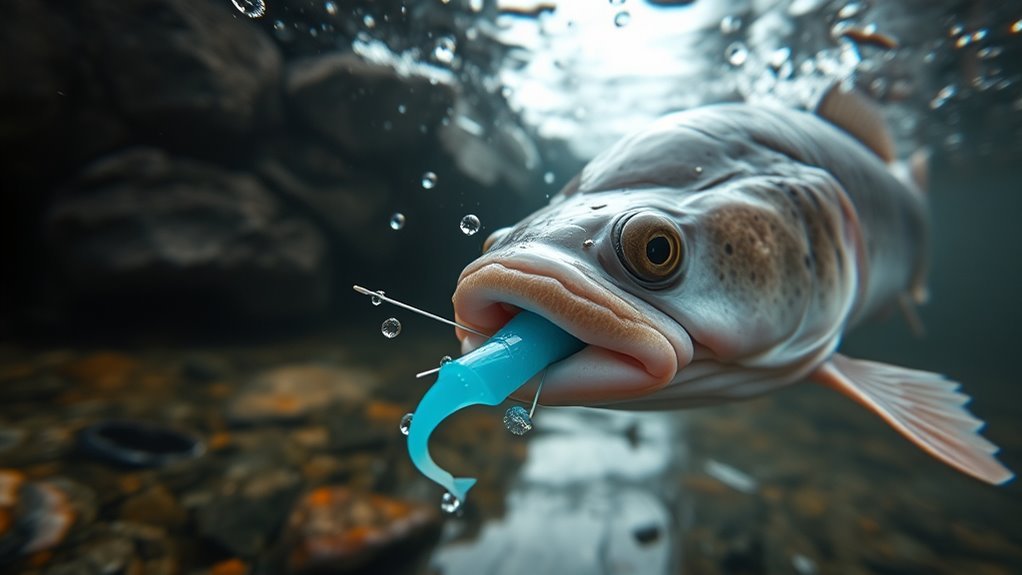
Because catfish slow down in cold water, choosing the right bait is essential to trigger their feeding response.
For winter baits, oily bait like cut skipjack herring or shad works best since their strong scent mimics natural food such as winterkill carcasses.
Using frozen bait or aged bait enhances scent dispersion, making it easier for sluggish catfish to detect.
You can boost your chances by adding scent attractants like garlic powder or strawberry jello to your bait.
Smaller options such as nightcrawlers or chicken livers also disperse scent well in cold conditions.
Keep in mind that dead or decaying fish naturally attract catfish, so matching these scents with your bait can improve your success during cold-weather fishing.
Effective Rigging and Gear for Cold Weather Fishing
Selecting the right bait lays the groundwork, but pairing it with proper rigging and gear makes all the difference in cold-weather catfishing.
Choosing the right bait is just the start; the right rigging and gear complete cold-weather catfishing success.
To improve your chances, focus on using light rods and slip-sinker rigs designed to detect subtle bites and keep bait in place.
Heavy sinkers are essential to counteract currents and hold your rig near structure.
- Choose light rods like the Blue Cat Number 2 for sensitivity.
- Use slip-sinker rigs with 18-inch leaders and breakaway snubbers to avoid snags.
- Opt for heavier sinkers (2-6 ounces) based on water conditions.
- Load your mainline with 40-pound-test braid and attach 60-pound-test leaders for strength.
This rigging and gear setup lets you fish efficiently and effectively in cold weather.
Best Locations to Target Catfish During Winter
Although catfish become less active in winter, you can still find them by focusing on deep scour holes between 30 and 45 feet, where calmer waters provide shelter.
In these winter months, catfish often gather near underwater structures like submerged logs, logjams, and beaver dams, especially when close to deep water with slow currents.
Steep ledges and drop-offs that quickly shift into deep water are also key spots because catfish seek refuge from colder water temperatures while hunting baitfish along these edges.
Since catfish return to the same locations annually, targeting known hotspots such as logpiles and underwater humps increases your chances.
Using a fish finder helps locate baitfish clouds and active fish in deep holes, making your winter catfish fishing more productive.
Adjusting Fishing Techniques for Sluggish Catfish
You’ll need to slow your bait presentation to match the catfish’s sluggish pace in cold water.
Focus on targeting secondary currents where food naturally drifts.
Choose bait that mimics slow-moving or dead prey.
Adjusting these techniques will help you trigger bites when catfish are less active.
Slow Presentation Methods
When catfish slow down in cold weather, presenting your bait with deliberate slowness becomes key to enticing bites.
You need to adapt your approach to match the lethargy of these sluggish fish.
Focus on a slow presentation that minimizes disturbance in cold water conditions.
Try these techniques:
- Use heavy rigs with long leaders to allow natural bait drifting at the right depth.
- Employ slip-sinker rigs or slow-moving floats to keep bait suspended just off the bottom.
- Retrieve or drift your bait slowly to avoid spooking catfish.
- Exercise patience, as bites tend to be subtle and infrequent during cold periods.
Targeting Secondary Current
Since catfish slow down in cold weather, they often settle in secondary current seams rather than strong primary flows.
To improve your winter fishing success, focus on these slow-moving pockets behind structures like submerged logs and rocks.
Catfish conserve energy here, making these calmer zones prime spots for a catfish bite.
Adjust your techniques by using lighter rigs and slow presentations to entice sluggish catfish in these areas.
Targeting secondary current not only places your bait where catfish naturally linger but also reduces drag on your line, making it easier to detect subtle bites.
Bait Selection Adjustments
Although catfish slow down in cold weather, adjusting your bait selection can considerably boost your chances of a bite.
In cold water, sluggish catfish respond best to natural baits that maximize scent dispersal. Focus on these key adjustments:
- Use smaller, natural baits like shad or cut bait to enhance scent spread.
- Thaw frozen bait and refrigerate it to intensify odor and attract slow feeders.
- Opt for larger, pungent baits such as skipjack fillets or chicken livers to stimulate feeding.
- Change your bait every 20 minutes to maintain a strong scent trail.
Keep your bait presentation slow and natural. Use long leaders and minimal movement to match cold water feeding behavior.
These bait selection tweaks will improve your success in chilly conditions.
Community Tips and Proven Strategies for Winter Catfishing
When winter hits, choosing the right bait like cut shad or prepared liver can make all the difference in attracting slow-moving catfish.
You’ll also want to slow your presentation and use longer leaders to keep your bait in the strike zone longer.
Many anglers swear by targeting deep holes and using sonar to locate where catfish gather during the cold months.
Winter Bait Choices
How do you choose the best bait to entice catfish in cold weather?
Your winter bait choices need to focus on maximizing scent and visibility in cold water when catfish slow down.
Here are proven tips to boost your catch rate:
- Use thawed frozen bait like shad or herring, as they release stronger odors than fresh bait in cold water.
- Opt for natural baits such as cut suckers, river chubs, or chicken livers to create irresistible scent trails.
Break bait into small pieces or chunks that mimic winterkill carcasses, matching what catfish naturally feed on.
Enhance your bait with scent attractants like garlic powder or strawberry jello soaking solutions to intensify the smell and draw catfish from afar.
These strategies help you adapt your bait choices to winter’s challenges effectively.
Angler Shared Techniques
Since catfish slow down in cold water, adapting your techniques is essential for success.
Many anglers swear by small, heavily scented baits like cut shad or liver to improve bite rates.
You’ll want to slow your bait presentation, using long leaders with slip-sinker rigs to increase hookup chances.
Maintaining a strong scent trail is key, so replace your bait every 20 minutes to keep it fresh.
Focus on structure—submerged logs, logpiles, and steep ledges—where catfish tend to gather in winter.
Using underwater sonar or fish finders helps you locate these spots more efficiently.
Finally, practice slow retrieval and long, deliberate casts to entice sluggish catfish.
Incorporating these community-tested techniques can boost your winter catfishing success.
Frequently Asked Questions
Do Catfish Bite When It’s Cold?
Yes, catfish bite when it’s cold, but they’re slower and less aggressive.
You’ll need to fish deeper, use slower bait presentations, and target sheltered spots.
Patience and timing during warming trends will boost your chances.
What Is the Best Bait for Catfish in Cold Weather?
You’ll want to use strong-scented baits like cut shad or herring, thawed frozen bait, or live bluegill.
Enhancing bait with garlic or liver boosts scent, making catfish more likely to bite in cold weather.
How to Find Catfish in Winter?
To find catfish in winter, focus on deep holes, underwater structures, and slow-moving areas.
Use sonar to locate baitfish schools near logs, ledges, or drop-offs.
Then target those spots where catfish seek shelter and food.
What Temperature Do Catfish Bite At?
You’ll find catfish biting most actively between 50°F and 60°F.
At these temperatures, their feeding spikes, making it prime time for fishing.
Below 40°F, bites slow considerably, so plan accordingly for success.
Conclusion
Even though catfish slow down and move sluggishly in cold water, you don’t have to slow your approach.
By understanding their metabolism and choosing the right baits and rigs, you can turn winter’s chill into your advantage.
While the water’s cold and quiet, your strategy can be sharp and active.
So, embrace the contrast—where catfish bite less, your knowledge and patience can make every cast count.
In cold weather, catfish may be less active, but that doesn’t mean you can’t catch them.
Focus on using the right techniques and staying persistent.
With the right mindset and approach, you can still reel in those winter catfish and enjoy the thrill of fishing.
Remember, patience and strategy in cold conditions can lead to successful catches.
So gear up, stay focused, and make the most of your catfishing experience, even in the chill!