What Do Mosquitoes Like in Cold Weather?
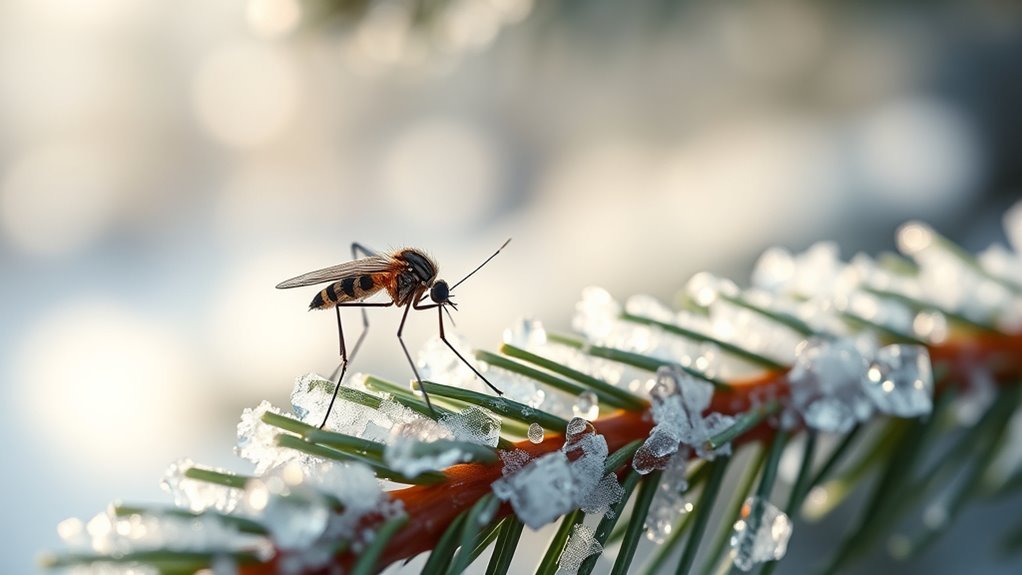
In cold weather, mosquitoes have some interesting survival tactics that help them endure the freezing temperatures. They prefer to find warm, sheltered spots like basements, storm drains, or animal burrows where they can hide from the cold.
During this time, mosquitoes stop flying and enter a state of dormancy to conserve energy. They often wait out the cold months in these protected places.
Some species survive as dormant eggs that can hatch when temperatures warm up. Others pause their breeding cycles until conditions are more favorable.
If you’re curious about how these survival tactics vary among mosquito species and how they affect mosquito activity, there’s certainly more to explore!
Mosquito Activity Levels at Low Temperatures
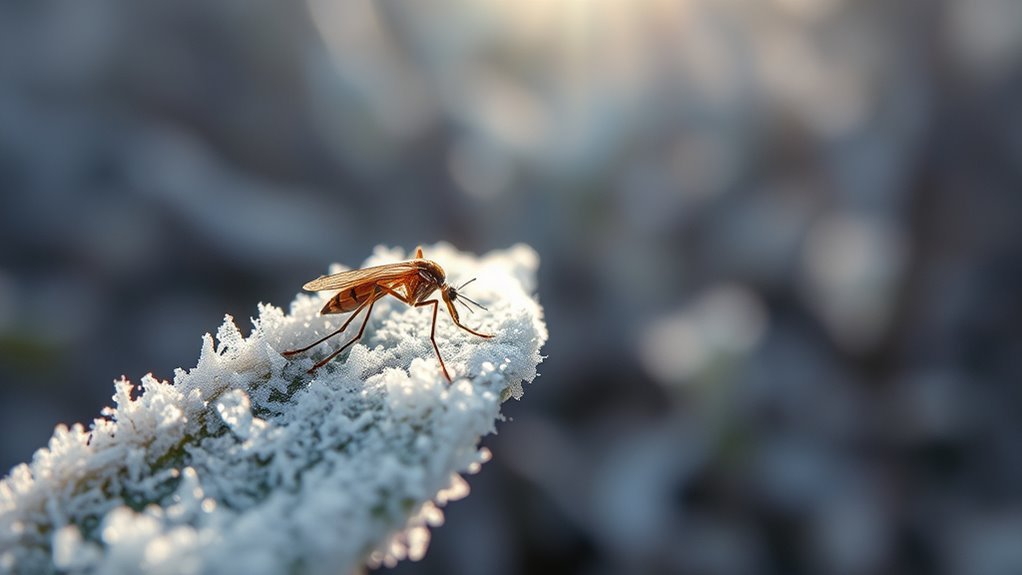
Although mosquitoes thrive in warm conditions, they become inactive and stop flying once temperatures fall below 50°F.
Mosquitoes stop flying and become inactive when temperatures drop below 50°F.
As the temperature decline continues, mosquito activity drops sharply, especially near 60°F and lower.
Adult mosquitoes reduce breeding and often seek shelter in warm, protected spots to survive cold weather.
Many species enter dormancy or hibernation, halting their usual activity until conditions improve.
Meanwhile, mosquito eggs can remain dormant through winter, waiting to hatch when water sources warm in spring.
This strategy ensures survival despite harsh conditions.
You’ll notice fewer mosquitoes buzzing around as cold weather sets in, thanks to their natural response to temperature changes.
This response limits their movement and breeding until the environment becomes favorable again.
Preferred Overwintering Habitats for Mosquitoes
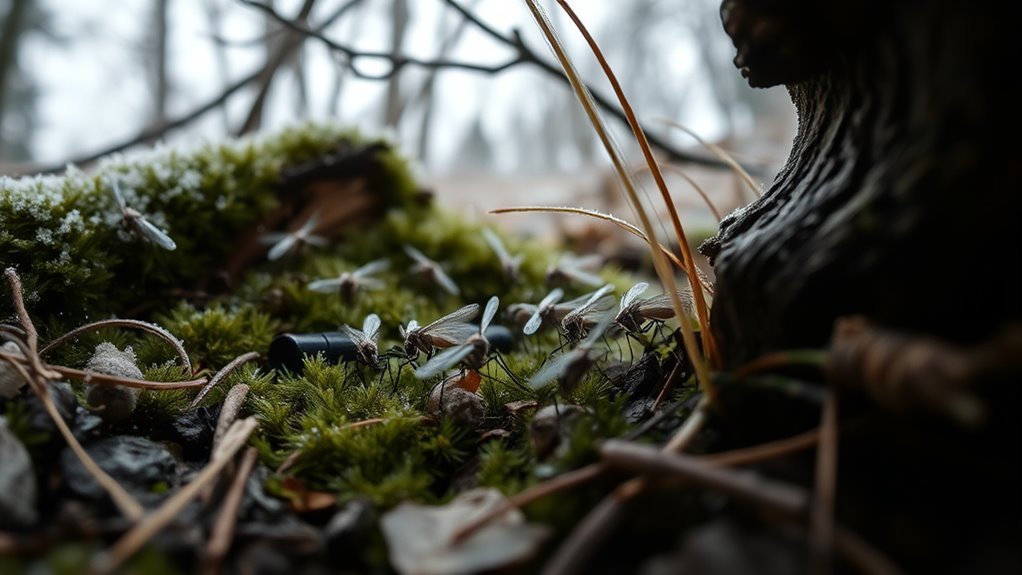
When temperatures drop, mosquitoes seek out sheltered, warm spots like basements, sewer drains, and animal burrows to survive the winter.
These overwintering habitats provide stable conditions with insulation from freezing temperatures.
You’ll find mosquitoes in protected sites such as underground storm drains, hollow logs, and caves where they stay safe from harsh weather.
Female mosquitoes often choose these sheltered locations to overwinter as adults.
Some species’ larvae cling to aquatic vegetation in wetlands, using the plants as natural overwintering sites.
Whether in animal burrows or underground storm drains, these overwintering habitats offer moisture and protection.
Dormancy and Survival Mechanisms in Cold Weather
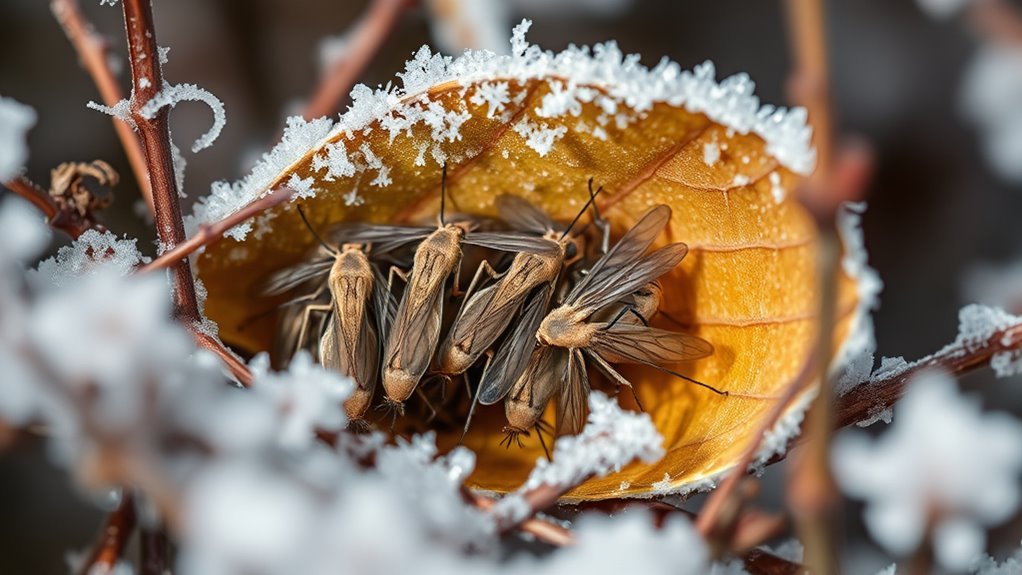
To survive the harsh conditions of winter, mosquitoes enter states like diapause or quiescence that drastically reduce their metabolic activity.
This dormancy helps them conserve energy during cold weather survival.
You’ll find that some adult mosquitoes seek refuge sites such as sewers, caves, or animal burrows to overwinter safely until spring.
Eggs remain dormant for extended periods—sometimes up to two years—waiting for water temperatures to rise so larvae develop.
Certain species’ larvae can even endure cold aquatic environments for months before emerging.
These physiological adaptations, including dormant eggs and reduced activity, ensure mosquitoes weather the winter’s chill.
Species-Specific Cold Weather Adaptations
Understanding how mosquitoes survive winter involves looking at the unique ways different species handle cold weather.
Their species-specific adaptations are key to cold weather survival. Some mosquitoes overwinter as adults, seeking protected habitats like sewers or caves.
Others rely on eggs that survive freezing, ready to hatch when water warms. Diapause allows certain eggs to pause development until conditions improve, while dormant larvae wait out the cold in wetlands.
For instance, Culex and Culiseta inornata overwinter as adults in protected habitats.
On the other hand, Aedes eggs survive freezing and hatch when water warms, while Spring Aedes eggs enter diapause, hatching post-snowmelt.
Additionally, cattail mosquito larvae remain dormant for months before emerging.
These strategies show how mosquitoes exploit overwintering habitats to persist through winter’s chill.
Impact of Cold Weather on Mosquito Reproduction and Life Cycle
Although mosquitoes become less active as temperatures drop below 50°F, their life cycles don’t simply stop—they enter a state that conserves energy and pauses reproduction until conditions improve.
During cold temperatures, many species undergo diapause, a dormant phase that halts their reproductive cycle. Eggs of certain mosquitoes, like Aedes, remain dormant for up to two years, waiting for warmer water to hatch.
Many mosquito species pause reproduction during cold via diapause, with eggs dormant up to two years until warmth returns.
Adult mosquitoes seek protective habitats such as basements or animal burrows to overwinter safely. This overwintering strategy allows them to survive harsh conditions and resume breeding when spring arrives.
Understanding how cold affects mosquito reproduction and life cycle helps you grasp their resilience and predict population surges once favorable conditions return.
Frequently Asked Questions
Can Mosquitoes Survive Cold Weather?
Yes, mosquitoes can survive cold weather by entering dormancy or finding sheltered spots.
You’ll notice they hide in caves or burrows. Their eggs wait dormant until warmer temperatures return in spring.
What Smell Do Mosquitoes Hate Most?
You’ll find mosquitoes hate the smell of citronella the most.
They also strongly dislike eucalyptus, lavender, and peppermint scents.
Using these smells can help keep mosquitoes away because they find them very unpleasant and repelling.
Can Mosquitoes Still Bite You in the Winter?
Even in winter’s icy grip, mosquitoes can bite you on rare warm days or indoors where warmth lingers.
They’re like hidden shadows waiting for a cozy moment, so don’t let your guard down completely.
Conclusion
When cold weather bites, mosquitoes don’t just vanish—they retreat like silent shadows, seeking cozy hideouts to wait out winter’s chill.
You’ll find them nestled in dark, damp corners, wrapped in nature’s quilt of dormancy. Their survival dance slows, but they’re far from defeated.
These tiny warriors adapt like champions in a frozen battlefield.
So next time frost nips at your nose, remember, these resilient pests are simply playing a patient game, waiting for spring’s warm whisper.
In conclusion, while mosquitoes may seem absent during the cold months, they are very much alive, hibernating in hidden spots.
When warmer weather returns, they’ll emerge ready to thrive again. So, it’s a good idea to prepare for their return, as these adaptable insects continue their cycle, proving that even in winter, they’re not completely out of the picture.