How Do Mini Splits Work in Cold Weather?
You can rely on mini splits to heat your home efficiently even when temperatures drop below zero.
These systems use refrigerants that absorb heat from freezing outdoor air, then compress and transfer it indoors.
Advanced models feature inverter compressors, defrost cycles, and special refrigerants to prevent ice buildup and maintain steady warmth.
Brands like Mitsubishi and Daikin offer units specifically designed for extreme cold.
If you want to understand how these technologies work together, keep exploring the details.
The Basic Operation of Mini Split Heat Pumps in Winter
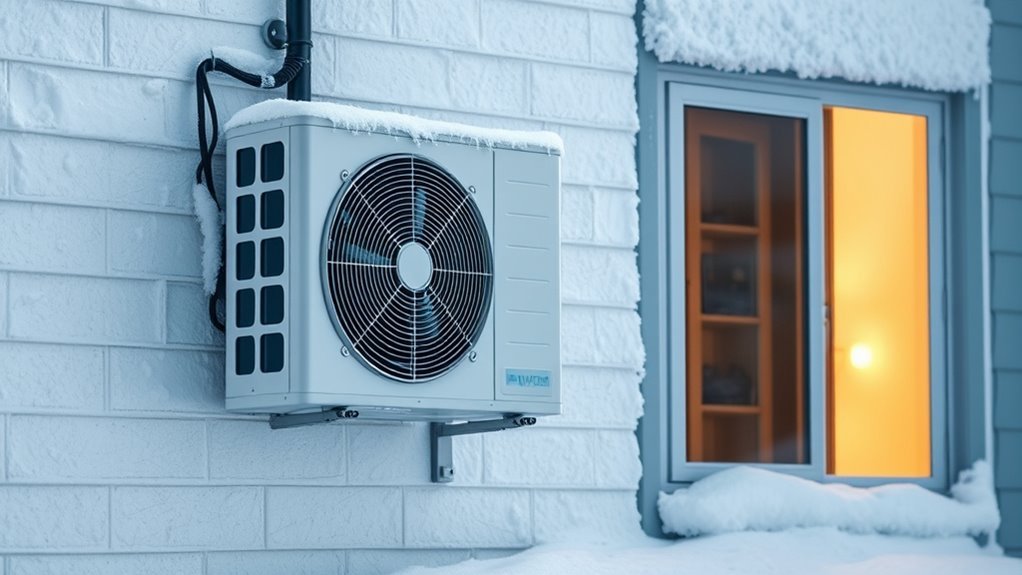
Although winter temperatures can plummet well below freezing, mini split heat pumps still deliver reliable warmth by extracting heat from the outside air and transferring it indoors.
These heat pumps use a refrigerant cycle to absorb thermal energy from the cold outdoor air, even when it’s as low as -13°F.
Advanced models with hyper-heating technology can maintain full heating capacity at temperatures down to -22°F.
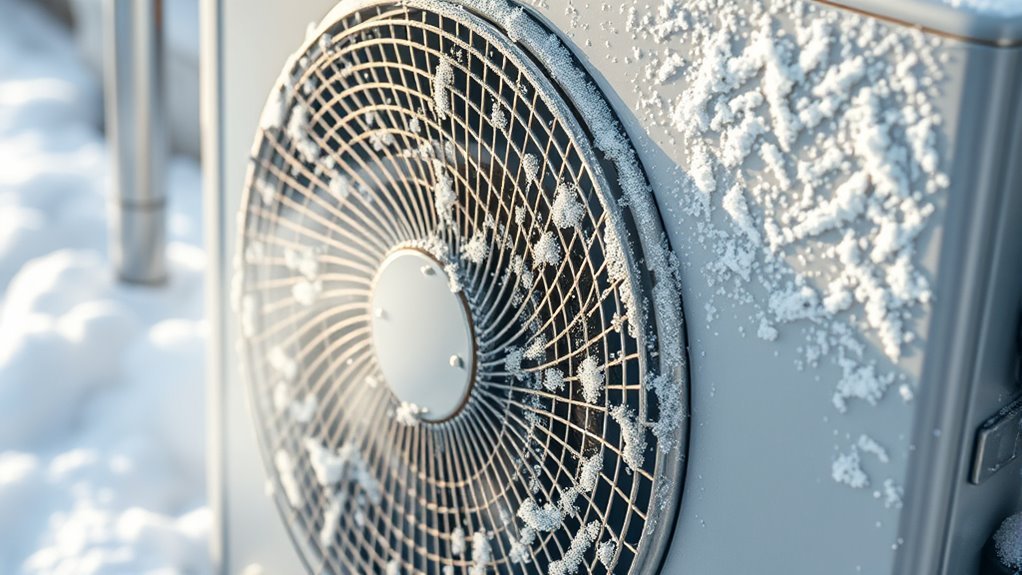
To keep operating efficiently in cold-weather conditions, mini splits rely on proper defrost cycles that prevent ice buildup on outdoor coils.
Components like base pan heaters work alongside defrost cycles to ensure the system runs smoothly without interruption.
This combination allows your mini split heat pump to provide consistent warmth despite harsh winter conditions.
How Mini Splits Extract Heat From Cold Outdoor Air
You might wonder how mini splits pull heat from chilly outdoor air.
They rely on refrigerants that change from liquid to vapor at very low temperatures, absorbing heat in the process.
This phase change is key to extracting warmth even when it’s freezing outside.
Heat Extraction Process
Because mini splits use a special refrigerant that vaporizes at very low temperatures, they can pull heat from outdoor air even when it’s freezing outside.
This refrigerant evaporates in the outdoor coil, absorbing heat energy even below freezing.
An inverter-driven compressor then compresses the vapor, raising its temperature before releasing heat indoors.
To keep frost from building up on the coils, the system periodically initiates a defrost cycle, ensuring continuous heat extraction.
| Step | Description |
|---|---|
| Refrigerant Evaporates | Absorbs heat from cold outdoor air |
| Compressor Speeds Up | Increases refrigerant temperature |
| Heat Released Indoors | Provides warmth inside the home |
| Frost Detection | Sensors monitor coil frost buildup |
| Defrost Cycle | Melts frost to maintain efficiency |
Refrigerant Phase Change
When the refrigerant in a mini split reaches temperatures as low as -50°F, it boils and changes from liquid to vapor. This allows it to absorb heat even from freezing outdoor air.
This phase change is essential because it lets the refrigerant pull thermal energy from cold weather that seems too harsh for traditional heating methods.
As the refrigerant vaporizes, it carries the absorbed heat indoors, where it condenses back to liquid, releasing warmth inside your home.
Advanced refrigerants and coil designs enhance this process, improving heat extraction efficiency in subfreezing temperatures.
Without this refrigerant phase change, mini splits wouldn’t be able to transfer heat effectively in cold weather.
This limitation would affect their performance and reliability during winter.
You can count on this process to keep your space comfortable year-round.
Key Technologies That Enhance Cold Weather Performance
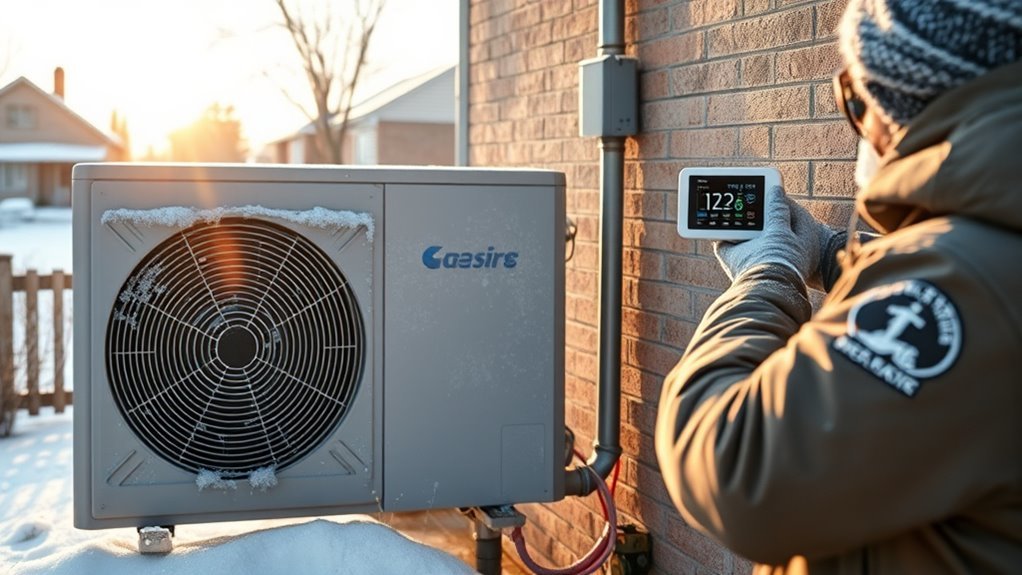
You’ll find that inverter compressor technology lets mini splits adjust their speed to keep heating steady, even in freezing weather.
Plus, smart defrost cycles and built-in heating features stop ice from building up on the coils, so your system keeps running smoothly.
These key technologies make sure your mini split performs reliably when temperatures drop.
Inverter Compressor Technology
Although cold weather can challenge traditional heating systems, inverter compressor technology keeps mini splits running efficiently even in extreme temperatures.
The inverter compressor continuously adjusts its speed to match your heating needs, maintaining high efficiency even when outdoor temperatures drop as low as -22°F.
Unlike fixed-speed compressors, this variable-speed operation prevents short cycling and reduces energy consumption, delivering consistent warmth during cold weather.
By modulating power output, the inverter compressor sustains heating capacity without overworking the system.
This technology also helps manage coil temperatures effectively, minimizing ice buildup and ensuring reliable performance throughout winter.
With inverter compressor technology, your mini split stays efficient, responsive, and powerful, making it an ideal choice for maintaining comfort in harsh, cold climates.
Defrost and Heating Features
How do mini splits keep running smoothly even when frost starts to form?
They rely on smart defrost and heating features designed to tackle ice buildup efficiently. Sensors detect frost on the coils and automatically trigger defrost cycles, activating heating elements to melt the ice without wasting energy.
Specialized refrigerants with lower boiling points help transfer heat effectively in subfreezing temperatures, while base pan heaters prevent ice accumulation on critical parts.
Advanced inverter technology adjusts compressor capacity to minimize ice formation and optimize defrost timing.
High-efficiency models even use smart algorithms to start defrost only when necessary, reducing downtime and energy use.
With these technologies, your mini split stays efficient and reliable, providing consistent warmth even in harsh winter conditions.
Top Mini Split Models Designed for Extreme Cold
Wondering which mini split models can handle the harshest winter conditions?
You’ll want units with cold-weather capabilities like hyper-heating or low-ambient heating technology.
Mitsubishi’s Hyper-Heating H2i models work efficiently down to -13°F and keep full capacity at 5°F, making them a top choice.
Daikin’s Aurora Series also performs well in cold weather, operating effectively to -13°F with variable-speed compressors that adapt to temperature changes.
Fujitsu’s Halcyon XLTH units handle extreme cold down to -15°F and include ice prevention features to maintain reliability.
LG’s Art Cool Premier models offer quiet operation and smart controls, functioning smoothly in temperatures as low as -13°F.
Choosing mini splits with these advanced cold-weather technologies guarantees you stay warm even in the most frigid winters.
Tips to Maximize Mini Split Efficiency During Winter
Selecting a mini split with advanced cold-weather features is just the first step to staying warm during winter.
To maximize your mini split heat pumps’ system efficiency, keep the outdoor units clear of snow and ice.
Keep outdoor mini split units free of snow and ice to ensure maximum heating efficiency.
Elevate them on stands to prevent airflow obstruction.
Set your thermostat to a consistent temperature instead of frequently adjusting it. This helps the system run smoothly.
Regularly clean or replace filters and check refrigerant levels to maintain ideal heat transfer.
Also, ensure base pan heaters or defrost features work properly to prevent ice buildup on coils.
Finally, operate your mini split continuously at a lower, steady temperature rather than turning it off.
This improves system efficiency and keeps your home comfortable throughout the cold weather season.
Comparing Mini Split Heat Pumps to Traditional Heating Systems
Although traditional heating systems like electric baseboards and gas furnaces have been common for years, mini split heat pumps offer a more energy-efficient and flexible alternative.
Unlike traditional heating systems that generate heat directly or lose up to 30% through ducts, mini splits transfer heat from outside air.
They achieve efficiencies over 300% even in cold weather!
With HSPF ratings between 10-13, they outperform electric baseboards and often match or exceed gas furnace efficiency.
Plus, their ductless design delivers heat directly to each room, reducing energy waste.
Thanks to inverter technology and hyper-heating features, mini split heat pumps can operate effectively at temperatures as low as -13°F.
This makes them a reliable choice for cold weather climates.
Choosing the Right Mini Split for Cold Climate Conditions
When looking for a mini split that performs well in cold climates, you need to focus on specific features designed to handle low temperatures.
Choose models with inverter-driven compressors, which adjust output to maintain steady heating even when it’s freezing outside.
Prioritize units that offer hyper-heating or low-ambient heating capabilities, ensuring efficient operation down to -22°F.
Reputable brands like Mitsubishi, Fujitsu, Daikin, and LG often specialize in cold climate systems.
Check for high HSPF ratings above 10 to guarantee energy efficiency.
Also, make sure the outdoor unit includes defrost cycles and base pan heaters to prevent ice buildup, keeping your system running smoothly.
Selecting these features will ensure reliable, effective heating in harsh winter conditions without sacrificing performance.
Frequently Asked Questions
Do Mini Splits Work Well in Extreme Cold?
Yes, you can count on mini splits with cold-climate technology to work well in extreme cold.
They adjust their output, prevent ice buildup, and keep your space warm even when temperatures drop far below freezing.
How to Use Mini Split Efficiently in Winter?
Set your system steadily, select ‘AUTO’ mode, and sweep snow from the setup.
You’ll save energy, sustain warmth, and stop system strain.
Clean filters consistently, clear coils carefully, and cherish continuous comfort all chilly season long.
At What Temperature Do Mini Splits Stop Working in Winter?
Mini splits usually stop heating around 5°F.
But cold-climate models with hyper-heating tech can work down to -13°F or lower.
Below freezing, you might need auxiliary heating to stay warm and comfortable.
How to Keep Mini Splits From Freezing up in Winter?
You don’t want your mini split frozen solid, right?
So, elevate the outdoor unit, clear snow regularly, keep filters clean, and let defrost mode do its job.
These simple steps keep your system running smoothly all winter.
Conclusion
Now that you understand how mini splits work in cold weather, you can choose the right model and optimize its efficiency.
You’ll also be able to compare it confidently to traditional systems.
You’ll know how they extract heat from freezing air and appreciate the technologies that boost performance.
Plus, you can apply simple tips to keep your home warm and energy-smart.
By mastering these steps, you’ll stay comfortable throughout winter, save money on energy bills, and make the most of your mini split system.
In conclusion, understanding mini splits in cold weather is essential for efficient home heating.
By selecting the right model and utilizing advanced features, you can maximize performance.
Don’t forget to implement strategies for maintaining warmth and energy efficiency.
With these insights, you’ll enjoy a cozy, cost-effective winter season!