What Do Labs Like in Cold Weather?
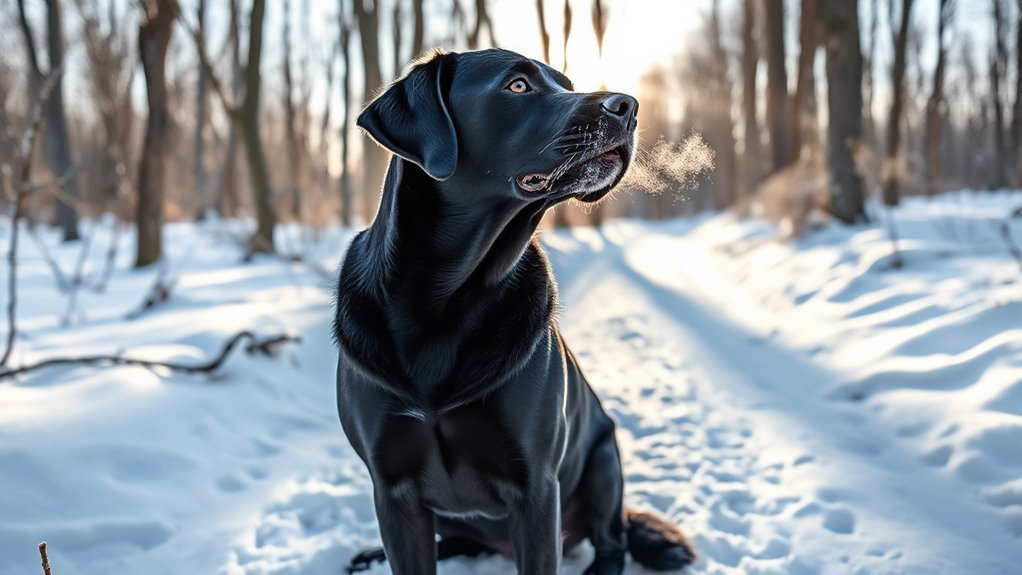
Your Lab loves the cold! With its thick, water-resistant double coat, it stays warm and dry even in chilly weather.
You’ll see them enthusiastically playing fetch, running through snow, and even swimming in icy water. Their energy spikes in colder conditions, making outdoor adventures more fun and exciting.
However, it’s important to watch for signs of discomfort, like paw lifting or shivering, to protect them.
With proper paw care, gear, and hydration, your Lab can happily enjoy winter. There’s plenty more to keep them safe and cozy, both outside and inside.
Labradors’ Natural Adaptation to Cold Climates
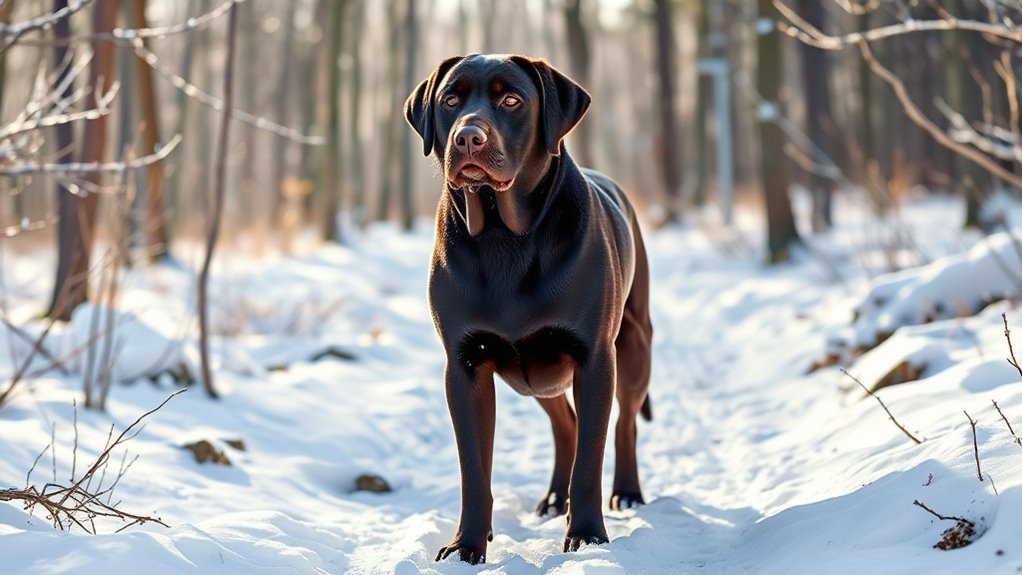
Although Labradors originated in the chilly climate of Newfoundland, they’ve adapted remarkably well to cold weather.
You’ll notice their double coat plays a vital role in keeping them warm. This coat has a water-resistant outer layer and a thick undercoat that insulates against freezing temperatures.
When your Lab spends time outside, make sure to watch for signs of discomfort.
But generally, they handle cold weather better than many breeds.
Their long history working alongside fishermen in icy waters proves their natural resilience.
Plus, their tough paw pads and water-repellent fur protect them from snow and ice.
So, when you take your Lab out in colder temps, you can feel confident they’re built for it.
Thanks to their incredible natural adaptations!
The Role of the Double Coat in Winter Comfort
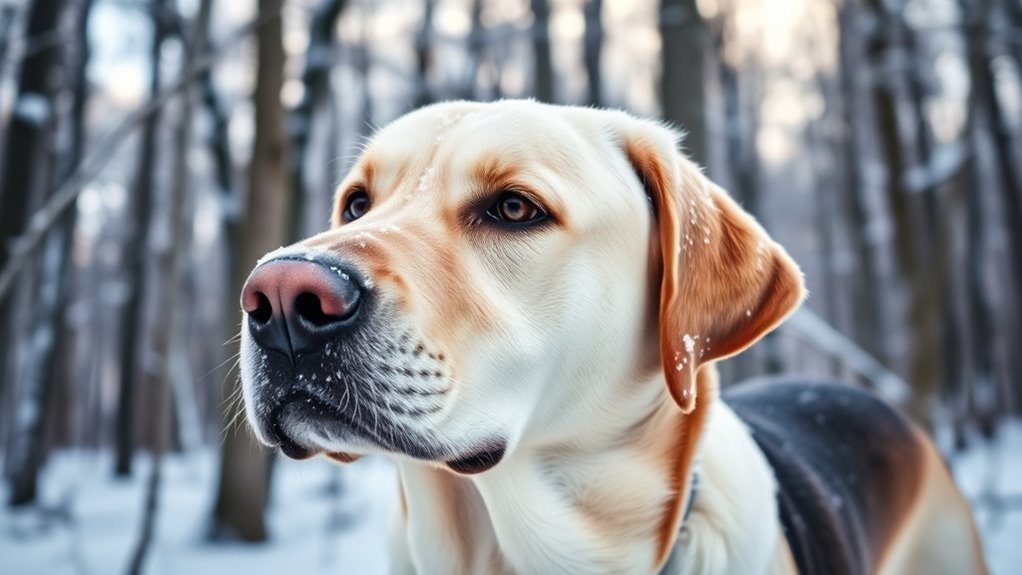
How does a Labrador stay warm in freezing weather?
It’s all thanks to their double coat, a natural marvel designed for winter comfort.
This double coat consists of a soft, dense undercoat and a tougher outer coat that work together to provide insulation against the cold.
The undercoat traps warm air close to your Lab’s body, keeping heat from escaping.
Meanwhile, the outer coat repels water, ensuring the undercoat stays dry even in snow or rain.
This combination prevents heat loss and keeps your Lab comfortable without extra clothing.
Plus, seasonal shedding helps adjust the coat’s thickness, so your Lab’s insulation is just right for the winter months.
That’s why the double coat is essential for cold-weather endurance!
Favorite Winter Activities for Labradors
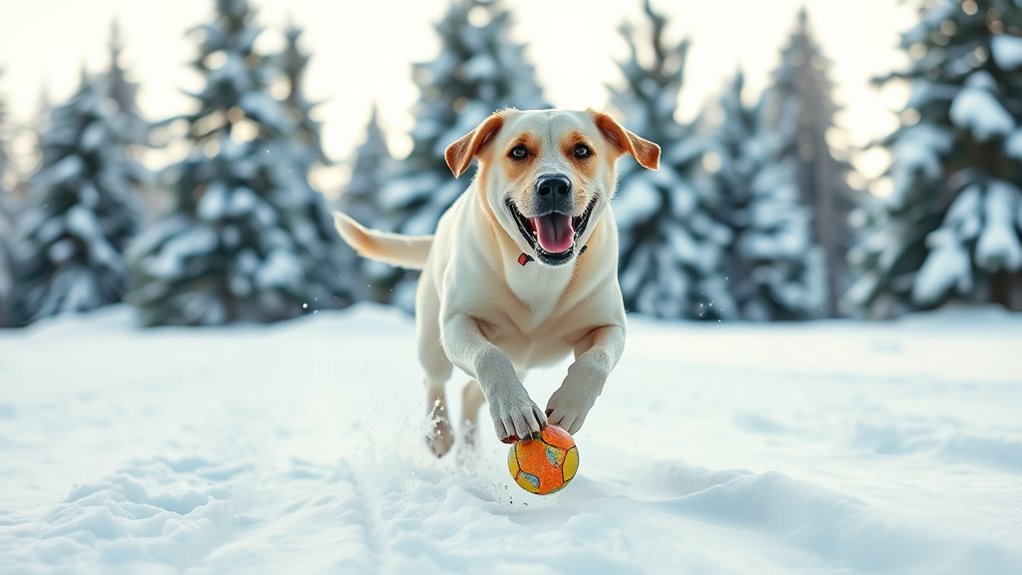
With their double coats keeping them warm and dry, Labradors are more than ready to enjoy a variety of winter activities.
Some of the favorite winter activities for Labradors include swimming in icy waters and chasing snow-covered balls during fetch sessions. Their water-resistant coats make these cold adventures comfortable and fun.
Labradors love swimming in icy waters and chasing snow-covered balls, thanks to their water-resistant coats.
You’ll also find your Lab thriving while snowshoeing or running through fresh snow, showing plenty of enthusiasm for vigorous exercise.
Digging in the snow and exploring wintry landscapes taps into their natural curiosity.
Engaging in tug-of-war or agility drills outside keeps them physically active and mentally sharp.
After all that cold-weather play, your Lab will likely seek out sunny patches or cozy blankets to warm up.
This makes winter a season full of fun and comfort for your furry friend.
How Cold Weather Affects Labrador Behavior
When temperatures drop, your Labrador’s behavior can change noticeably. Their thick, water-resistant double coat helps them stay comfortable in the cold.
Many Labs love the chill and are often ready to go for a long walk, showing more energy in chilly weather.
However, even though their thick coats provide insulation, extreme cold can still lead to hypothermia and frostbite. This is especially true for your dog’s feet and paw pads.
Watch for signs like paw lifting or reluctance to continue. These can indicate that your Lab needs a break or it’s time to head back inside.
Using paw balm like Musher’s Secret can protect your dog’s paws during long periods outdoors in cold conditions.
Keeping an eye on your Lab ensures they stay safe and happy despite the cold.
Signs Your Lab Is Enjoying the Cold
You’ll notice your Lab’s playful energy kicking up outdoors, with tail wagging and enthusiastic jumps.
Their relaxed body language shows they’re comfortable in the cold, often lying on snow or chilly spots.
When they explore more, sniffing around with bright eyes, it’s a clear sign they’re loving the cold weather.
Playful Behavior Outdoors
Although cold weather might seem harsh, your Lab often becomes more energetic and playful outdoors.
They enthusiastically run, jump, and engage in games like fetch or tug-of-war.
You’ll notice your Lab wagging its tail vigorously and bouncing around, eager to keep the fun going.
Their curiosity shines as they lift paws or roll in the snow, showing excitement for the winter environment.
This playful behavior signals your Lab is comfortable and happy in the cold.
Look for these signs that your Lab is enjoying outdoor playtime:
- Bright, alert eyes and an open mouth
- Willingness to stay outside longer
- Engaging actively in interactive games
- Loose tail wagging and relaxed movements
Comfortable Body Language
Playful behavior outdoors often comes with clear signs that your Lab feels right at home in the cold.
You’ll notice a relaxed, wagging tail and a loose body posture.
When your Lab lies on its side with paws stretched, it shows comfort and contentment.
Bright eyes and ears forward signal excitement and enjoyment.
Your Lab might also nuzzle you or lean into your touch, showing trust and happiness in the chilly environment.
| Body Language Sign | What It Means |
|---|---|
| Wagging Tail | Relaxed, happy |
| Side Lying with Paws | Comfortable, content |
| Bright Eyes & Ears | Alert, enjoying outdoors |
| Nuzzling/Leaning | Trusting, affectionate |
Willingness To Explore
When your Lab enthusiastically sniffs, digs, or runs through the snow, it’s clear they’re excited to explore the cold environment.
This eagerness shows they’re comfortable and curious about the chilly outdoors.
You’ll notice their energy spikes, and they’ll ardently seek out icy patches or fresh snow to investigate with their nose and paws.
Here are signs your Lab loves exploring cold weather:
- Wagging tail and lively movements
- Sniffing and digging enthusiastically in the snow
- Jumping, running with a relaxed, happy posture
- Vocalizing with excited barking or panting
Essential Hydration Needs in Winter
You need to make sure your Lab always has access to fresh water, especially after playing in the snow.
Keep their water from freezing by using a heated container or bringing warm water during outdoor activities.
Staying hydrated helps your dog maintain energy and stay healthy in the cold.
Importance of Fresh Water
How can you guarantee your dog stays properly hydrated during cold weather? Fresh water is key.
Even when temperatures drop, your Lab needs constant access to clean, unfrozen water to prevent dehydration and maintain energy. Staying hydrated supports digestion and joint health, especially in winter’s chill.
You should regularly check and refresh your dog’s water supply, ensuring it’s always available during outdoor activities.
Consider these points to keep your Lab hydrated:
- Provide fresh, unfrozen water frequently.
- Use insulated or warm bottles on walks to prevent freezing.
- Monitor water intake to avoid dehydration-related urinary issues.
- Ensure hydration supports overall winter health and activity levels.
Preventing Frozen Water
Although cold weather poses challenges, preventing your Lab’s water from freezing is essential to keep them hydrated and healthy.
You can keep water inside or in insulated containers during outdoor activities.
Carry warm water or use thermally insulated bottles to ensure your dog always has access to liquid hydration.
Regularly check and refresh their water, especially after play.
Heated or battery-operated bowls designed for cold weather help maintain liquid water.
| Method | Description | Benefit |
|---|---|---|
| Insulated Containers | Keep water from freezing outdoors | Easy to carry and maintain |
| Warm Water | Carry warm water in bottles | Immediate hydration access |
| Heated Bowls | Use battery-operated bowls | Keeps water liquid longer |
| Regular Checks | Refresh water frequently | Prevents dehydration |
These steps support your Lab’s energy and overall health in winter.
Hydration During Exercise
Since cold weather doesn’t reduce your Lab’s water needs, keeping fresh water accessible during winter exercise is essential to prevent dehydration.
Even when it’s chilly, your Lab loses water through panting and sweating, especially during vigorous play in the snow.
To keep your dog hydrated and healthy, consider these tips:
- Carry warm or insulated water bottles to prevent freezing.
- Offer room-temperature or slightly warm water instead of ice or frozen water.
- Monitor hydration more closely for puppies and older dogs.
- Provide frequent water breaks during outdoor activities.
Staying on top of your Lab’s hydration ensures they maintain energy and avoid the risks of dehydration, no matter how cold it gets outside.
Protecting Labrador Paws in Snow and Ice
When your Labrador ventures out into snowy or icy conditions, their tough paw pads still need protection from cold, salt, and chemicals that can cause cracking and irritation.
Applying paw wax or balms like Musher’s Secret creates a barrier that repels salt and keeps their pads moisturized.
After walks, rinse your Lab’s paws with warm water to remove salt and de-icing agents, then dry them thoroughly to prevent irritation.
Check regularly for cracks, redness, or ice buildup between the toes to catch any signs of discomfort early.
While your Lab’s paws are resilient, these simple steps help keep them healthy and comfortable.
This way, you can ensure their outdoor adventures remain safe and enjoyable throughout winter.
Appropriate Cold Weather Gear for Labs
Your Lab’s thick double coat usually keeps them warm, but you’ll want to pay attention to paw care.
Consider using booties or wax to protect against ice and salt.
When temperatures drop below freezing, think about adding a dog coat or sweater if your Lab stays still or faces extreme cold.
Let’s explore when extra clothing makes sense and how to keep your Lab comfortable in chilly weather.
Natural Coat Protection
How does your Labrador stay warm during chilly weather?
Thanks to their dense, water-resistant double coat, your Lab naturally handles the cold quite well.
The outer coat repels water and snow, while the soft undercoat traps body heat, keeping them cozy even when temperatures drop below 55°F.
This natural insulation helps prevent frostbite and hypothermia during your winter outings.
Usually, your Lab won’t need extra gear in mild cold conditions, but extreme cold might require added protection.
Key features of your Lab’s natural coat:
- Dense double coat for insulation
- Water-resistant outer layer
- Undercoat that traps warmth
- Protection against frostbite and hypothermia
Trust your Lab’s coat—it’s designed to keep them warm and dry.
Paw Care Essentials
Why should you pay extra attention to your Lab’s paws in cold weather?
Their paws face harsh conditions like ice, salt, and freezing temperatures that can cause irritation, cracking, or even frostbite.
Labs with thicker paw hair handle snow better, but if your Lab has thinner or sensitive paws, consider protective booties with insulation to keep them warm and dry.
Applying paw wax or salves like Musher’s Secret forms a barrier against harmful chemicals and ice.
After outdoor walks, always rinse and dry their paws thoroughly to remove salt and debris that can cause damage.
Regularly inspect their paw pads for roughness, cuts, or signs of frostbite.
This way, you can address any issues promptly and keep their paws healthy throughout the cold season.
When to Use Clothing
Although Labs have dense, water-resistant coats that usually keep them warm, you might need to dress them in a sweater or coat when temperatures drop below 20°F (-6°C) or if they’ll be standing still in windy conditions.
If your Lab has a thinner coat or health concerns, extra layers can provide necessary warmth during winter walks or playtime.
Make sure any clothing fits well and doesn’t restrict movement or cause overheating.
Also, consider paw protection on icy or salted surfaces.
- Use dog coats or sweaters for extreme cold or windchill.
- Choose comfortable, well-fitting gear that allows freedom of movement.
- Consider extra warmth for Labs with health issues or short fur.
- Protect paws with booties or paw wax on harsh surfaces.
Managing Outdoor Time During Winter
When temperatures drop, you’ll want to keep your Labrador’s outdoor time short—ideally 15 to 20 minutes—to prevent hypothermia and frostbite.
During extreme cold or windy days, limit your Lab’s exposure even more.
On extremely cold or windy days, reduce your Lab’s outdoor time to protect their health.
And if they must be outside, provide a warm, dry shelter nearby.
Make sure your dog wears protective paw gear or paw wax to shield against salt, ice, and cold surfaces.
After playtime, dry your Lab thoroughly and check their paws for ice balls or salt damage.
If your Labrador has a thinner coat or you plan longer outdoor sessions, use insulated clothing or coats to keep them comfortable.
Managing outdoor time wisely helps ensure your Lab stays safe and happy throughout winter.
Keeping Your Labrador Warm and Safe Indoors
Because Labradors have a natural double coat that provides excellent insulation, you don’t usually need extra clothing or blankets to keep them warm indoors during cold weather.
Their thick, water-resistant fur reduces heat loss, so your Lab stays cozy without much help.
To guarantee your dog remains comfortable and safe, focus on these indoor care tips:
- Provide a cozy, insulated bed to help maintain body heat during chilly nights.
- Keep your home’s temperature between 68°F and 72°F for ideal comfort.
- Brush your Lab regularly to remove loose fur and support insulation.
- Avoid overdressing or covering your Lab with heavy blankets, which can cause overheating.
Frequently Asked Questions
What Temperature Is Too Cold for a Labrador to Be Outside?
You shouldn’t let your Labrador stay outside when temperatures drop below 0°F (-18°C).
Without protection, frostbite can occur quickly.
Always watch for shivering or paw lifting, and limit outdoor time to keep them safe.
Do Labs Need Sweaters in the Winter?
No, your Lab doesn’t need a sweater unless you want to compete in the canine fashion show.
Unless it’s freezing or your pup’s elderly, they’re naturally equipped to handle winter without shivering in style.
What Is the 5 Minute Rule for Labradors?
The 5-minute rule says you shouldn’t keep your Labrador outside longer than five minutes for each degree below 32°F.
So, at 20°F, limit outdoor time to about an hour to keep them safe and warm.
It’s important to remember that Labradors can be sensitive to cold weather.
Keeping track of the temperature can help ensure your furry friend stays comfortable and healthy.
Do Labs Need a Blanket at Night?
Yes, your Lab will appreciate a blanket at night.
It keeps them warm, cozy, and secure, mimicking their natural burrows.
Just make sure the blanket’s clean and fits well for their best comfort and restful sleep.
Conclusion
Your Labrador is built to handle cold weather, thanks to their double coat and natural instincts.
They love romping in the snow and showing off their winter spirit.
But you’ll want to keep a close eye on their paws and limit outdoor time when it’s freezing.
With the right gear and care, your Lab will be as snug as a bug in a rug, enjoying winter’s chill without missing a beat.
Remember, while Labradors are resilient in cold temperatures, it’s essential to monitor their comfort.
A cozy dog jacket or booties can help protect them from the harsh elements.
In conclusion, keep your Lab happy and safe during winter by ensuring they have proper care and gear.
With a little attention, your furry friend can thrive in the cold while enjoying all the fun that comes with the season.
So, embrace the winter wonderland with your Lab and create unforgettable memories together!