How Do Fleas Live in Cold Weather?
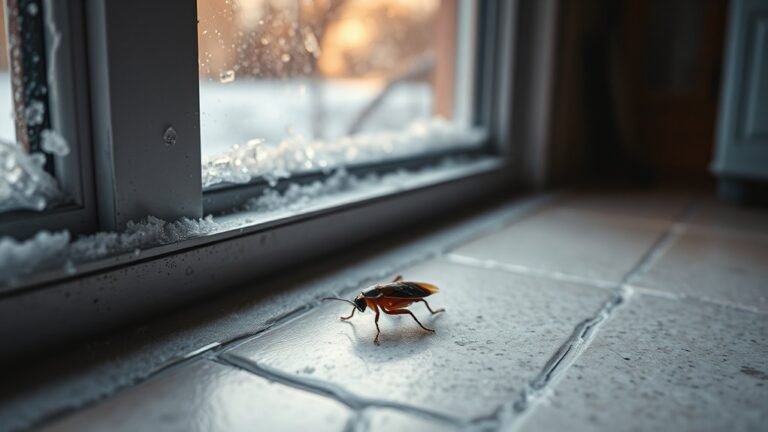
You might think freezing cold kills fleas instantly, but they’ve got clever ways to survive.
Fleas hide indoors in warm spots like pet bedding, carpets, or your furniture where temperatures stay above freezing.
Their eggs and larvae develop there, while dormant pupae can wait months for better conditions.
Pets provide warmth and a blood supply for fleas to thrive through winter.
Want to understand more about how fleas stay active even during harsh weather?
Flea Life Cycle and Winter Survival
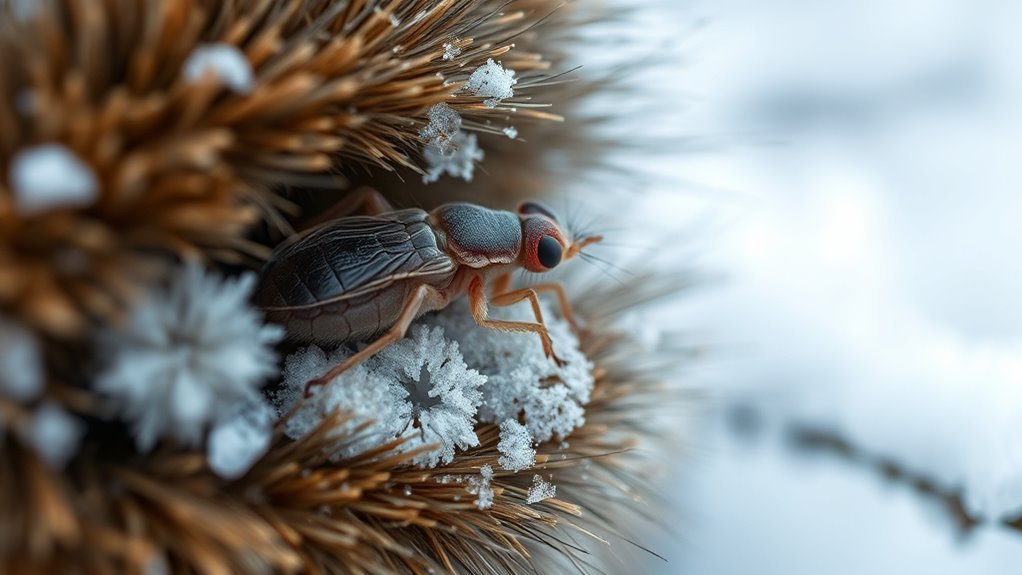
Although cold weather can be harsh, fleas have adapted life stages that help them survive winter.
Understanding the flea life cycle is key to grasping their winter survival strategies. Flea eggs and larvae thrive in indoor environments where temperatures stay above freezing, allowing their development to continue despite cold temperatures outside.
Flea pupae, however, take winter survival a step further by remaining dormant inside cocoons for months, even up to a year.
This dormancy lets them wait out harsh conditions until warmth and vibrations signal it’s time to emerge. While adult fleas struggle in freezing weather, the shelter provided by indoor or protected areas lets flea populations persist.
This clever use of each life stage ensures fleas survive winter and quickly rebound when conditions improve.
How Fleas Find Shelter in Cold Weather
Where do fleas hide when temperatures drop?
They seek out flea shelters in warm spots like your home’s indoor environment, sheds, and garages.
You’ll find their eggs and larvae thriving especially well in pet bedding and other hidden areas where insulation keeps temperatures above freezing.
Outdoor refuges such as leaf litter and animal burrows also provide protection during mild winter spells.
Fleas rely on these insulated spots to maintain winter survival by avoiding harsh cold.
Fleas survive winter by hiding in insulated spots that shield them from harsh cold.
By hiding in these warm, concealed places, fleas can continue their life cycle despite dropping temperatures.
Understanding where fleas shelter helps you target these areas to control infestations before they worsen during the cold months.
The Role of Pets in Flea Survival During Winter

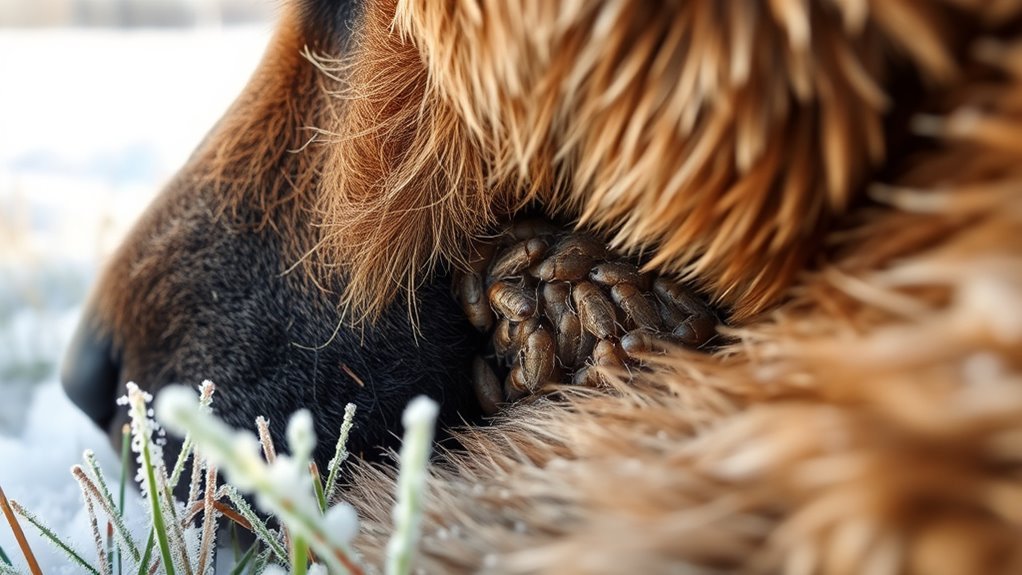
Since pets provide a warm, blood-rich environment, they play a crucial role in helping fleas survive and reproduce during winter months.
Fleas rely on your pets’ body heat to stay alive when outdoor temperatures plunge. By staying close to a warm host, fleas find the ideal conditions for flea reproduction even in cold weather.
Indoor pet habitats like pet bedding and soft furniture offer protected spaces where fleas thrive year-round.
When your pets move between outdoor and indoor environments, fleas latch on, avoiding cold exposure and continuing their life cycle.
Protecting pets during winter means understanding how their warmth supports flea survival.
Impact of Freezing Temperatures on Flea Populations
When temperatures drop below freezing, flea populations face significant challenges, but they don’t always disappear.
Extended freezing temperatures, especially multiple hard freezes, are usually needed to kill outdoor fleas.
While adult fleas struggle to survive prolonged cold, flea pupae, eggs, and larvae show remarkable endurance.
Flea pupae inside protective cocoons can remain dormant for months, even up to a year, waiting for warmer conditions.
Eggs and larvae also survive better in sheltered, protective environments where freezing temperatures are less severe.
Outdoors, these cold weather survival tactics reduce flea numbers, but they rarely eliminate them entirely.
Indoors vs outdoors, fleas have a clear advantage indoors because the temperatures rarely dip below freezing.
This allows flea populations to persist year-round despite harsh outdoor conditions.
Indoor Environments as Flea Havens in Winter
Although outdoor temperatures plummet during winter, fleas find refuge indoors where warmth and humidity let them thrive.
Indoor environments like heated buildings maintain temperatures above 46°F, creating perfect conditions for fleas to survive year-round.
Heated indoor spaces staying above 46°F provide ideal conditions for fleas to thrive all year.
You’ll often find them hiding in pet bedding, carpets, and furniture—soft surfaces that serve as ideal breeding grounds.
Fleas complete their entire lifecycle indoors, from eggs to adults, regardless of the cold outside.
The warm, humid atmosphere inside your home supports flea development and boosts their survival chances during winter months.
Since fleas hitch rides on pets or clothing, they easily establish populations indoors, making winter infestations common.
Understanding how fleas exploit your indoor spaces helps you stay alert to their presence even in the coldest seasons.
Effective Strategies for Year-Round Flea Prevention
To keep fleas at bay throughout the year, you need to apply veterinarian-recommended preventatives consistently, no matter the season.
Year-round flea control stops winter flea survival by interrupting the flea lifecycle before eggs and larvae hatch.
Here’s how you can maintain effective flea prevention:
- Use flea treatment monthly as advised by your vet to protect your pet continuously.
- Practice environmental cleaning regularly—vacuum floors and furniture, wash pet bedding frequently, and apply indoor flea control sprays or foggers.
- Keep your home’s temperature above 46°F and humidity balanced to prevent dormant flea eggs and larvae from activating.
Frequently Asked Questions
Will Cold Weather Kill Fleas?
Cold weather can kill fleas if it stays below freezing for several days.
But you can’t count on it outdoors.
Indoors, fleas survive easily since heating keeps temperatures warm enough for them to live year-round.
What Will 100% Get Rid of Fleas?
You’ll get rid of fleas 100% by combining vet-approved spot-on treatments or oral meds with thorough cleaning—
vacuuming, washing bedding, and treating your home and yard consistently to kill all life stages and prevent reinfestation.
It’s important to stay on top of it to ensure those pesky fleas don’t come back!
What Time of Year Do Fleas Die Off?
You’ll see fleas die off mostly during the coldest months of winter, especially when temperatures drop below freezing.
In milder climates, they may survive longer, but freezing weather usually limits their outdoor survival considerably.
Will Fleas Die if You Freeze Them?
You won’t kill all fleas by freezing them briefly—they survive short freezes and protected spots.
Prolonged, deep cold over multiple days might reduce their numbers, but many fleas, especially pupae, can endure freezing temperatures.
Conclusion
Even in freezing temperatures, fleas can survive by finding warm shelter, especially on your pets or inside your home.
Did you know that up to 90% of fleas live indoors during winter?
This means preventing fleas isn’t just a summer concern—you need to stay vigilant year-round.
By understanding how fleas adapt, you can take proactive steps to protect your home and pets from these persistent pests no matter the season.
It’s essential to regularly check your pets for fleas and maintain a clean living environment.
Using flea prevention treatments during colder months can also be incredibly effective.
In conclusion, fleas can thrive in cold weather by seeking warm spots, particularly indoors.
Being aware of their survival tactics and taking action year-round is crucial for keeping your home and pets safe from these unwanted pests.
Stay proactive and protect against fleas to ensure a comfortable living space for you and your furry friends!