How Do Fleas Live in Cold Weather and Can You Manage Them?
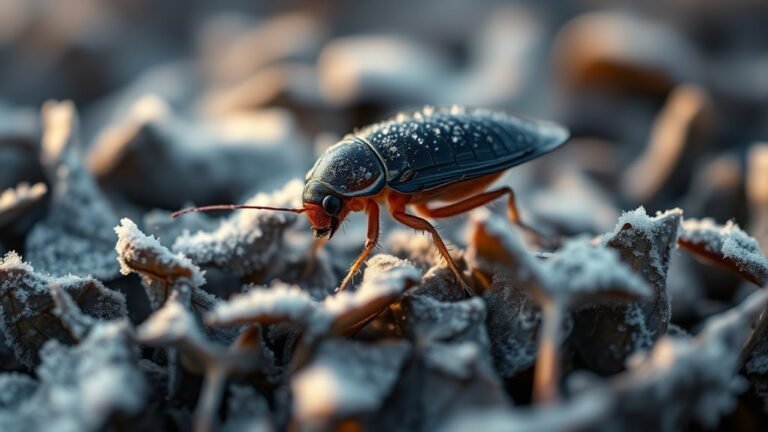
Fleas are resilient pests that can thrive even in cold weather. During the chillier months, they often seek refuge indoors, where it’s warm. Your pets are prime targets for these little bugs, as they provide both heat and a food source.
Fleas can remain inactive as pupae for several months, waiting for the perfect conditions to hatch. Once inside your home, they can flourish in heated areas, such as carpets and bedding.
To effectively manage fleas, regular treatment of your pets is essential.
Don’t forget to vacuum frequently and wash your pet’s bedding in hot water to eliminate any lurking fleas.
Using indoor flea sprays can also help control their population.
By maintaining a clean environment, you can break the flea life cycle and keep these pests at bay during the colder months.
Keep exploring to discover more tips for controlling fleas effectively!
Flea Survival Mechanisms in Cold Temperatures
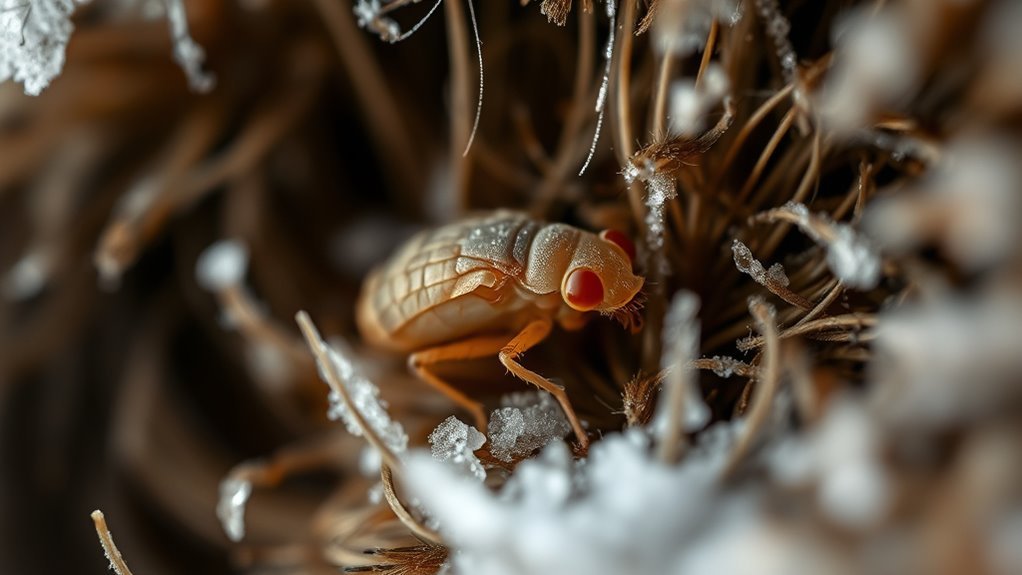
Although cold weather poses challenges, fleas have developed clever ways to survive freezing temperatures.
Their flea survival mechanisms rely heavily on dormant stages within the flea life cycle. For example, flea pupae enter a cocooned state that can withstand freezing conditions.
This allows them to stay inactive for weeks—sometimes up to 30 weeks at around 52°F—until warmth returns.
Flea eggs and larvae, however, are more vulnerable to cold but can remain viable if they’re in sheltered indoor environments that stay above freezing.
Adult fleas prefer warmer temperatures near 75°F, so they rarely survive outdoors in cold weather.
Understanding these survival strategies helps you grasp how a flea infestation can persist through winter, especially when fleas find refuge indoors where temperature and hosts support their survival.
Indoor Environments That Support Flea Activity

Fleas find it much easier to stay active indoors when temperatures remain steady and warm.
Indoor environments like heated homes and pet bedding provide the warmth and humidity essential for flea survival year-round.
Soft furnishings such as carpets and upholstery create ideal hiding spots for flea eggs and larvae, allowing them to thrive if temperatures stay above 50°F.
Because fleas can reproduce indoors during winter, regular cleaning and vacuuming become critical.
You should focus on these tasks to disrupt flea life cycles and remove eggs and larvae lurking in protected areas.
Effective flea control relies on maintaining cleanliness and treating indoor spaces to prevent infestations from worsening.
This ensures your home remains uncomfortable for fleas despite the cold weather outside.
The Role of Pets in Flea Overwintering

One of the main reasons fleas survive winter indoors is your pets, who provide the warmth and blood meals these pests need to thrive.
As primary flea hosts, pets offer body heat that sustains flea metabolism and supports continuous flea reproduction, even in cold months.
Fleas hide not only in your pet’s fur but also in the pet’s bedding and nearby indoor environments, creating ideal spots for overwintering.
Pets and wildlife bring fleas inside, where warmth shields them from harsh outdoor temperatures.
Understanding this role is vital because fleas depend heavily on pets to survive winter.
To effectively manage fleas, you’ll need to focus on your pets since they are central to overwintering flea populations and serve as the main gateway for fleas in your home.
Preventative Measures to Control Fleas in Winter
Since pets play such a central role in harboring fleas during winter, controlling these pests means taking proactive steps inside and outside your home.
For effective winter flea control, focus on these key flea prevention actions:
- Regularly treat pets with veterinarian-approved products to stop fleas at the source.
- Vacuum carpets, furniture, and pet bedding weekly to remove flea eggs and larvae.
- Wash all bedding and blankets in hot water to kill fleas at every life stage.
- Use indoor flea treatments like sprays or foggers with insect growth regulators.
And don’t forget outdoor flea control!
Trimming grass, clearing debris, and applying natural repellents can make a big difference.
Combining these regular treatments ensures you minimize flea populations and protect your pets and home throughout the cold months.
Effective Treatments for Flea Management During Cold Months
Although cold weather slows flea activity, you can’t let your guard down when managing these pests during winter.
Year-round flea treatments recommended by your veterinarian are essential for winter flea prevention.
Consistent, year-round flea treatments prescribed by your vet are key to effective winter flea control.
Combine these with indoor control measures like frequent vacuuming and washing pet bedding in hot water to eliminate flea eggs and larvae.
Using a flea comb regularly helps catch fleas early, while environmental management interrupts the flea life cycle and reduces infestations.
For stubborn problems, professional pest control treatments incorporating insect growth regulators (IGRs) provide effective relief by breaking the flea life cycle.
Frequently Asked Questions
How to Get Rid of Fleas in Cold Weather?
You’ll get rid of fleas in cold weather by vacuuming regularly, washing pet bedding in hot water,
applying vet-approved flea treatments, and considering professional pest control with insect growth regulators to break their life cycle effectively.
What Will 100% Get Rid of Fleas?
You won’t get 100% rid of fleas without combining professional insect growth regulators, thorough cleaning, regular vacuuming, washing bedding, and veterinarian-approved treatments.
Consistency and targeting all flea stages are key to complete elimination.
How Long Can Fleas Survive in the Cold?
Fleas can survive cold for several weeks, especially as pupae inside cocoons.
You’ll find adults lasting longer indoors where it’s warm.
To manage them, focus on treating pets and cleaning living spaces regularly.
Will Fleas Die if They Freeze?
Yes, fleas generally die if they freeze because most adults and eggs can’t survive below 0°C (32°F).
However, pupae in cocoons can resist cold longer.
Conclusion
So, how do fleas survive the chill and still manage to bother you?
They cleverly hide in warm indoor spots and latch onto your pets, making winter no excuse for a flea-free home.
You can take control by keeping your pets treated, cleaning regularly, and using effective treatments.
Don’t let the cold fool you—fleas are tougher than you think.
Are you ready to keep your home and furry friends flea-free all year round?
It’s important to remember that even in cold weather, fleas are resourceful.
By being proactive about treatment and cleanliness, you can ensure that your home remains a safe haven.
Stay vigilant, and don’t let the winter months lull you into a false sense of security.
With the right steps, you can effectively manage fleas and protect your beloved pets all year long!