How Do Cockroaches Live in Cold Weather?
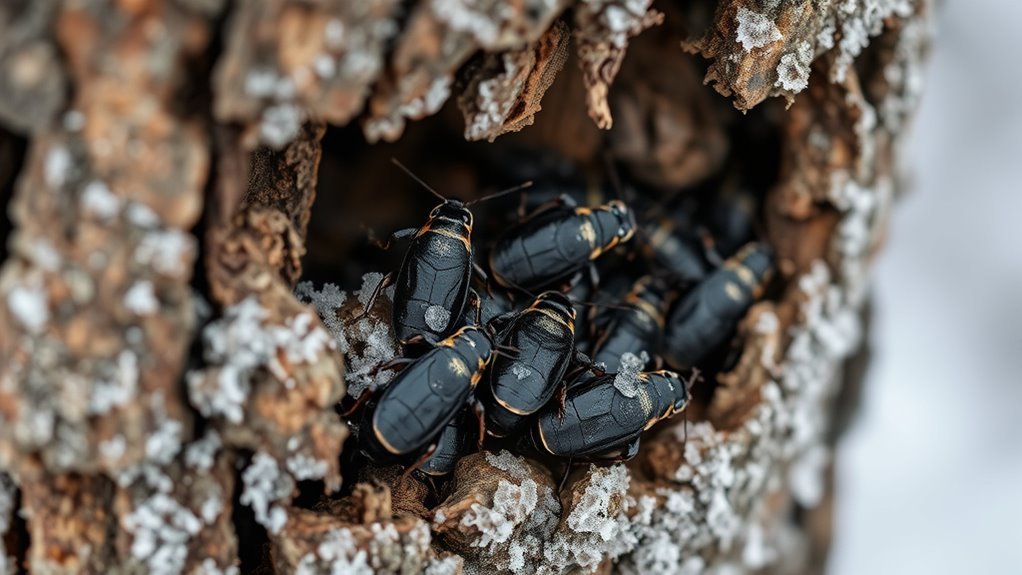
You’ll find that cockroaches have some clever ways to survive cold weather.
They seek warm spots indoors, like wall voids or behind appliances, where they can slow their metabolism to conserve energy.
These insects can’t withstand freezing temperatures for long, so they hide in insulated cracks and gaps to stay protected.
Interestingly, while their eggs can tolerate brief cold, they still need shelter to develop properly.
If you want to understand which species manage winter best and how to prevent infestations, you’ll find plenty more helpful details ahead.
So, let’s dive deeper into how these resilient creatures adapt and how you can keep them at bay!
Cockroach Behavior During Cold Weather
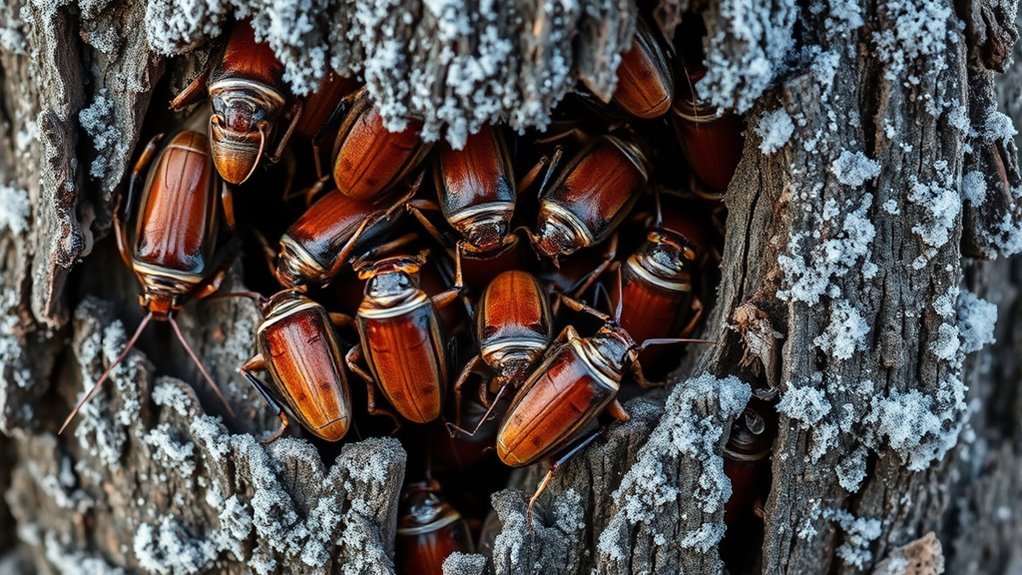
Although cockroaches can’t survive freezing temperatures for long, they adapt by entering a dormant state called diapause that slows their metabolism.
When temperatures drop during cold weather, you’ll find cockroaches seeking out warm indoor environments to survive.
They rely on hiding spots like wall voids, cracks, and areas behind appliances, where warmth is retained.
Cockroaches use entry points around your home to gain access and escape the harsh outdoor chill.
During dormancy, their slowed metabolic rate helps them conserve energy, but they still need these sheltered spots to avoid freezing.
Since most can’t tolerate prolonged exposure below 15°F, finding cozy hiding places inside is essential for their survival through winter’s cold.
Understanding this behavior helps you identify where they might be nesting during colder months.
Species of Cockroaches That Survive Winter
Understanding how cockroaches behave in cold weather sets the stage for knowing which species manage to survive winter.
Recognizing cockroach behavior in cold weather reveals which species endure the winter months.
You’ll find German cockroaches thriving indoors, reproducing year-round in warm wall voids within heated buildings.
American cockroaches often overwinter by seeking indoor shelter like basements or behind appliances, avoiding harsh outdoor cold.
Oriental cockroaches prove hardier, surviving cold weather in damp places such as sewers and crawl spaces, relying on moisture for survival.
All these species depend on warmth and shelter inside human structures to survive winter’s chill.
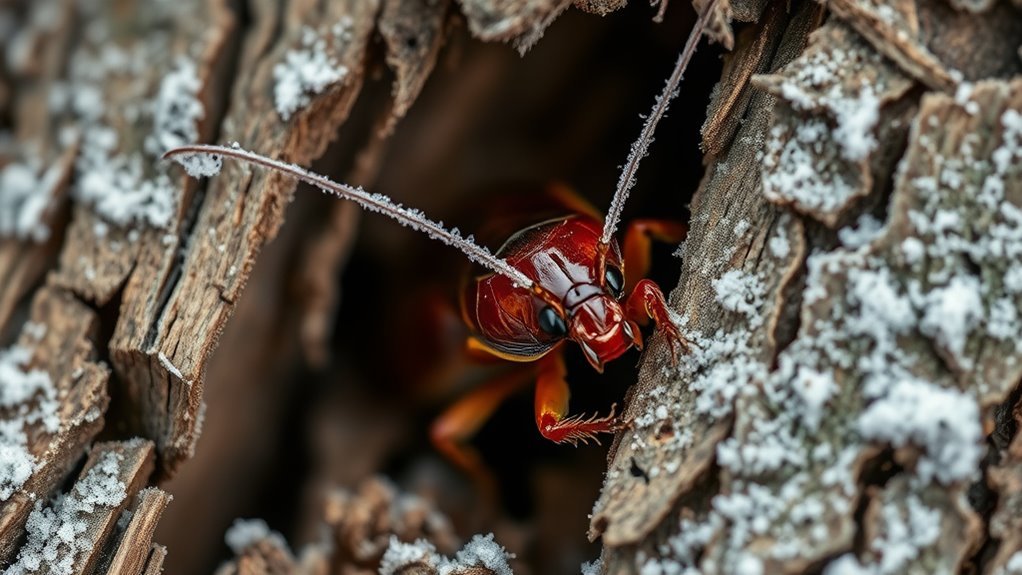
Even outdoor American cockroaches take refuge under wood piles or decaying trees, moving indoors when temperatures drop.
Common Winter Hiding Places for Cockroaches
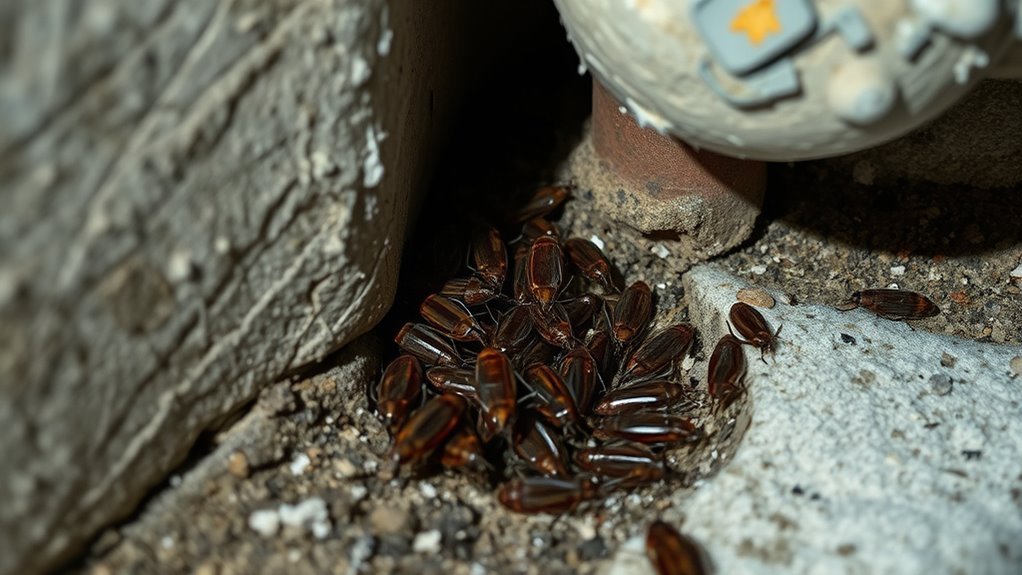
When temperatures drop, cockroaches find cozy spots like wall voids, under baseboards, and inside cabinets to stay warm.
They exploit cracks and gaps around pipes or foundations as entry points, gaining shelter from freezing conditions.
Appliances such as refrigerators and ovens provide residual heat, making them prime hiding spots.
Outdoors, cockroaches nestle in wood piles and debris, using insulation to conserve warmth.
| Hiding Spot | Location Type | Reason for Shelter |
|---|---|---|
| Wall Voids | Indoor | Warmth, insulation |
| Cracks & Gaps | Foundation/Pipes | Entry points, protection |
| Appliances | Kitchen | Residual heat |
| Outdoor Debris | Yard | Warmth, shelter |
| Under Baseboards | Indoors | Concealment, warmth |
Knowing these spots helps you target cockroach shelter effectively.
How Cold Temperatures Affect Cockroach Eggs and Growth
While cold temperatures can slow down their growth, cockroach eggs often survive brief exposure to near-freezing conditions better than adult roaches.
These eggs show greater cold-tolerance, enabling their embryos to endure short spells around 32°F without significant harm.
However, if temperatures drop below 15°F and freeze for extended periods, most embryos won’t survive.
You’ll find that eggs laid in sheltered environments, especially indoors, avoid extreme cold and continue incubation safely.
Cold temperatures delay development and hatching, which means infestations usually pick up only when it warms.
Keep in mind that cold-tolerance varies among species—some cockroach eggs handle chilly spells better than others.
Understanding how these temperatures affect cockroach eggs helps explain why they persist despite winter’s challenges.
Effective Strategies to Prevent Winter Cockroach Infestations
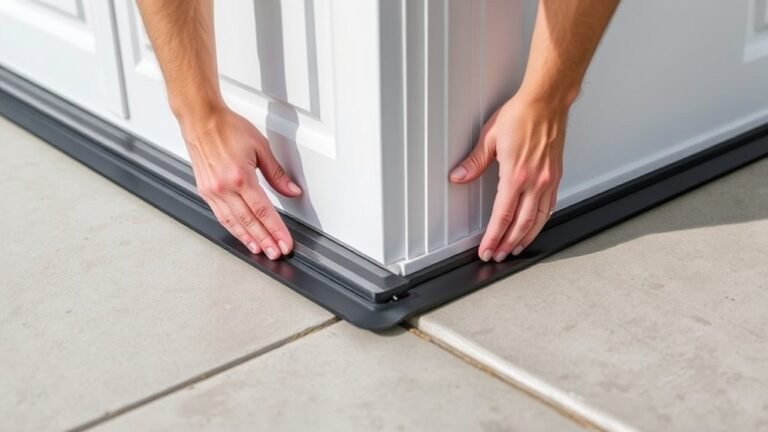
Since cockroaches seek warmth and shelter during winter, you can prevent infestations by sealing gaps around windows, doors, and foundations to block their entry.
Cockroaches enter homes in winter seeking warmth—seal gaps around windows, doors, and foundations to keep them out.
Next, reduce indoor moisture by fixing leaks and using dehumidifiers to create an environment less inviting to cockroaches.
Store food in airtight containers and maintain regular clutter removal, especially in kitchens and basements, to eliminate hiding spots.
These actions are essential for winter infestation prevention.
Additionally, consider professional pest control services; targeted treatments can reach hidden populations and provide long-term control.
By combining sealing gaps, reducing indoor humidity, proper food storage, and expert treatments, you considerably lower the chances of a winter cockroach problem.
This way, you can maintain a pest-free home throughout the cold months.
Frequently Asked Questions
How Cold Is Too Cold for Roaches?
You’ll find cockroaches can’t survive prolonged temperatures below 15°F (-9°C).
Eggs handle cold better but still struggle below freezing.
Why Should You Never Kill a Cockroach?
You shouldn’t kill a cockroach because it can release pheromones attracting 200+ others nearby.
Instead, use traps or call professionals to avoid worsening infestations.
This way, you can also prevent dead roaches from spreading bacteria or feeding other pests.
What Kills Roaches Immediately?
You can kill roaches immediately by using insecticides with pyrethroids.
Pouring boiling water on them is also effective.
Applying aerosol sprays for quick knockdown works wonders, too.
You can trap them with lethal glue boards or snap traps.
These methods act instantly, which is great for quick results.
Will a Cold House Get Rid of Roaches?
You might hope a cold house kills roaches, but it won’t.
They hide in warm spots indoors and survive.
To truly get rid of them, you need more than just dropping the thermostat.
Conclusion
You might think cold weather sends cockroaches running for good, but they’re basically tiny winter warriors, surviving where you least expect.
They squeeze into the tiniest cracks, outsmarting the chill like seasoned ninjas.
If you don’t act fast, these resilient pests could turn your home into their frosty fortress.
So, don’t underestimate their cold-weather cunning—take action now before your place becomes a roach winter wonderland!
In conclusion, cockroaches are surprisingly adept at surviving cold weather. They find shelter in small crevices and adapt to the chill, making your home a potential refuge.
To prevent these pests from turning your space into a winter wonderland, it’s crucial to take proactive measures.
Seal off entry points and maintain cleanliness to deter these resilient invaders. Don’t let cockroaches outsmart you this winter—act now to protect your home!