Can You Paint in Cold Weather?
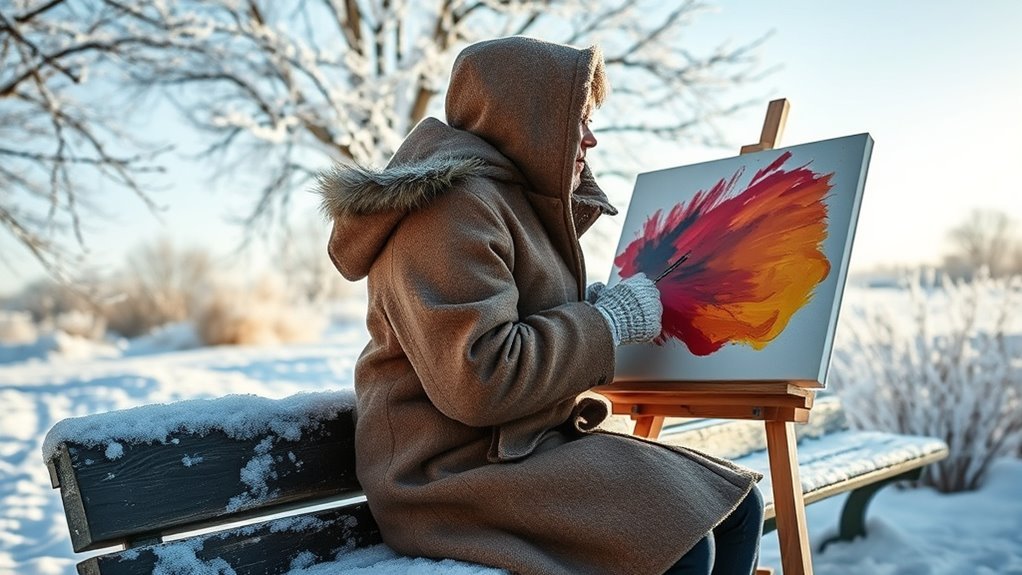
You can paint in cold weather, but you need to take extra steps to guarantee success.
Cold temperatures can slow down drying and curing, which means surfaces must be dry and above 50°F for the paint to adhere properly.
It’s crucial to use paints that are specifically designed for low temperatures.
Also, be ready to extend drying times between coats.
Proper surface preparation and maintaining warmth and ventilation are key to preventing issues like peeling or dust contamination.
If you want a durable, smooth finish despite the chill, there’s more you should know about preparation and product choices.
Understanding these factors will help ensure that your painting project goes smoothly, even when the weather is less than ideal.
Why Temperature Matters for Painting
Although it might seem like a minor detail, temperature plays a vital role when you’re painting outdoors.
You need to take into account both the air temperature and the surface temperature before starting. If the surface temperature falls below 50°F, drying times slow dramatically, which can compromise adhesion.
In cold weather, paint may not cure properly, increasing the risk of peeling and cracking later. This happens because low temperatures interfere with the chemical processes that harden the paint.
By managing temperature conditions carefully, you ensure that the paint adheres well and cures fully. This results in a durable and smooth finish.
Ignoring temperature can lead to poor results and reduce the lifespan of your paint job. So always check the temperature before you begin.
Ideal Temperature Ranges for Exterior and Interior Painting
When you paint, keeping the temperature within the ideal range is essential to achieving a smooth, durable finish.
Temperature affects paint application, drying, curing, and adhesion.
For exterior latex paint, aim for 50°F to 70°F, while oil-based paints work best between 45°F and 90°F.
Indoors, maintain 40°F to 90°F to avoid thickening or poor adhesion.
Staying within these ranges guarantees your paint cures properly and lasts longer.
| Paint Type | Ideal Temperature Range |
|---|---|
| Exterior Latex | 50°F – 70°F |
| Exterior Oil-based | 45°F – 90°F |
| Interior Paint | 40°F – 90°F |
| Below Range | Risk of poor adhesion |
Follow these guidelines to get the best results during your painting project.
Effects of Cold Weather on Paint Drying and Curing
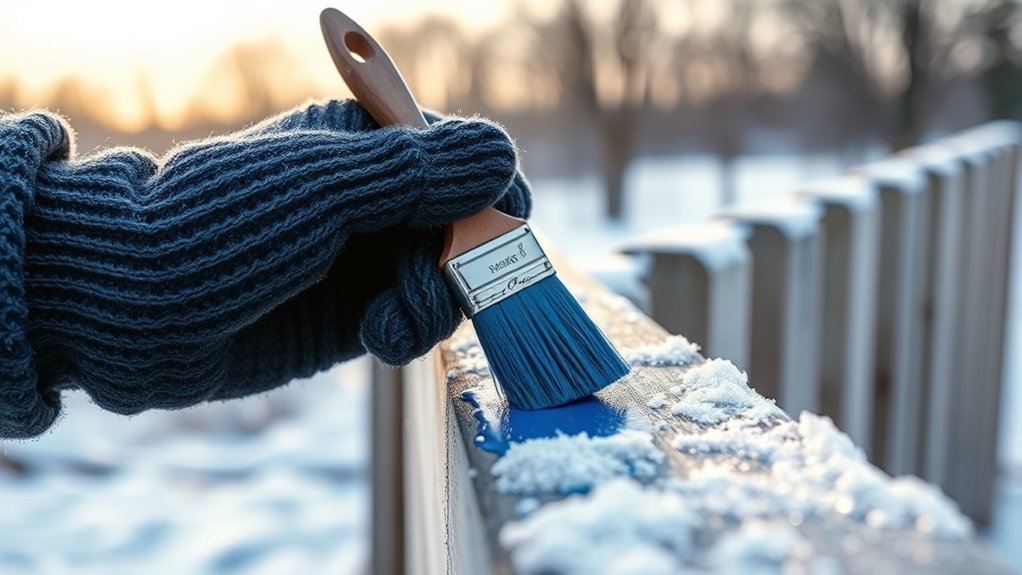
When you paint in cold weather, expect the drying process to slow down considerably, which can extend your project time.
The lower temperatures not only delay drying but also interfere with proper curing, leading to weaker adhesion and less durable finishes.
Keep in mind that if the surface is frozen or damp, the paint may not stick well.
This increases the risk of peeling later on.
Slowed Drying Process
Since cold temperatures slow down the evaporation of water and solvents in paint, you’ll notice that drying times stretch out considerably.
When the temperature dips below 55°F, the chemical reactions needed for curing slow down, causing the finish to remain softer longer.
This extended drying period means paint can stay tacky, attracting dust and debris that mar the surface.
Cold weather affects paint formulation too, as not all paints are designed to dry well in these conditions.
While slower drying times might seem manageable, they increase the chance of compromised adhesion, leading to peeling and reduced durability.
To avoid these issues, you need to think about temperature and paint formulation carefully when painting in cold weather to ensure proper drying and curing.
Adhesion and Curing Issues
How does cold weather affect the way paint sticks and cures on your surfaces?
Cold temperatures can seriously impact both adhesion and curing, causing issues like peeling or sticky finishes.
If the surface isn’t properly prepared—especially if it’s frozen or damp—paint won’t bond well.
Freeze-thaw cycles further weaken the paint’s hold.
To avoid problems, consider these points:
- Avoid painting on surfaces below 50°F for better adhesion and curing.
- Use low-temperature paints designed to perform well in colder conditions.
- Ensure thorough surface preparation to eliminate moisture and frost.
- Expect longer curing times as cold slows moisture evaporation and bonding.
Selecting the Right Paints and Tools for Cold Conditions
Choosing the right paints and tools for cold weather is essential to achieving a smooth, durable finish.
Selecting proper cold-weather paints and tools is key for a flawless, long-lasting finish.
You’ll want paint formulated specifically for cold weather, rated to perform well down to at least 35°F. Always check manufacturer labels for their recommended temperature range to match your surface temperatures.
Proper planning includes selecting brushes with nylon, polyester, or Chinex bristles since they handle thicker, cold-weather paints better.
To maintain proper viscosity during application, consider using paint heaters or blankets to keep your paint warm.
Be cautious with thawed frozen paint—if it looks lumpy or stringy, replace it.
Preparing Surfaces for Painting in Low Temperatures
Before you start painting in low temperatures, you need to prepare the surface carefully to guarantee proper adhesion and finish.
Surface preparation directly impacts drying and curing times, which slow down in the cold. Make sure the temperature of the substrate is at least 50°F to avoid poor adhesion or trapping moisture.
Remove any ice, frost, or snow to prevent moisture issues. Use tools like a surface thermometer to check conditions accurately.
Key steps for effective preparation include:
- Clean surfaces thoroughly with a damp cloth or tack rag to remove dust, grease, and dirt.
- Ensure surfaces dry completely before painting.
- Remove all ice, frost, or snow and delay painting if necessary.
- Protect surfaces from moisture and cold by covering or heating to aid curing.
These steps help ensure your paint job holds up despite the cold weather.
Scheduling and Planning Painting Projects During Winter
Although winter poses challenges for exterior painting, you can still plan effectively by scheduling projects during stretches of warmer days with temperatures above 50°F.
Check local weather forecasts to find consecutive days with ideal conditions—minimal wind, low humidity, and no precipitation.
Start your painting schedule around 10 a.m. when the surface temperature is higher, helping the exterior paint dry properly.
Remember, cold weather slows the curing process, so timing is vital to avoid issues.
If possible, reschedule major projects to warmer months like July or August to guarantee optimal results.
Use colder periods for client outreach and preparing materials, since exterior painting becomes tougher.
Tips for Painting Indoors During Cold Weather
When painting indoors during cold weather, you need to keep the temperature steady between 40°F and 90°F for proper drying and adhesion.
Use space heaters or central heating to maintain warmth.
Also, pick paints designed for low temperatures.
Don’t forget to ventilate the room well to reduce fumes and moisture.
This will help ensure a smooth finish.
Temperature Management Essentials
Since cold temperatures can hinder paint drying and adhesion, you’ll want to keep indoor temperatures between 50°F and 90°F while painting.
Proper temperature management guarantees your paint dries well and sticks properly. Here’s how to maintain ideal conditions indoors:
- Use space heaters or central heating to raise the temperature above 60°F before starting.
- Schedule painting during the warmest parts of the day, like late morning or early afternoon.
Keep windows slightly open or use fans for ventilation to reduce paint fume buildup.
Choose paints formulated for low temperatures and follow the manufacturer’s indoor drying guidelines.
Ventilation and Paint Selection
Managing temperature is just one part of creating the right environment for indoor painting during cold weather.
You also need to focus on ventilation and paint selection to guarantee proper drying and adhesion.
Choose paints formulated for low temperatures, like latex or acrylic options rated for 35°F or lower, so the paint cures well despite chilly conditions.
Proper ventilation is vital—you should open windows slightly or use fans to disperse fumes safely, especially in poorly ventilated spaces.
Exhaust fans or air movers help improve airflow without creating drafts that could chill surfaces and disrupt drying.
Keep indoor humidity below 50% to avoid moisture problems.
Finally, store your paints in a climate-controlled space to prevent freezing and maintain their application properties throughout the winter season.
Common Challenges and Solutions When Painting in Cold Weather
Although cold weather poses unique challenges, you can still achieve a quality paint job by understanding the common issues that arise.
Cold temperatures slow paint drying and extend drying times, which increases the risk of dirt and debris embedding in the finish.
Poor surface preparation, especially with moisture or frost, leads to adhesion problems like peeling or cracking.
To combat these issues, use low-temperature paints designed to cure properly in the cold.
Keep these tips in mind:
- Avoid painting below the manufacturer’s recommended temperature.
- Thoroughly prepare and dry surfaces before painting.
- Choose paints formulated for cold weather.
- Allow extra drying time between coats to ensure proper curing.
With these steps, you’ll overcome cold weather challenges and get lasting results.
Frequently Asked Questions
What Is the Coldest Temperature You Can Paint In?
You can paint as low as 36°F with specialized latex paints or around 40°F with oil-based ones.
But it’s best to prevent temperatures below 50°F to ensure proper adhesion, drying, and avoid damage to the paint.
Will Paint Dry in 30 Degree Weather?
No, paint won’t dry properly at 30 degrees.
You’ll find it thick and slow to cure, often staying tacky.
It’s best to wait until temperatures rise above 35°F for proper drying and adhesion.
Will Paint Cure at 40 Degrees?
You won’t get proper paint curing at 40 degrees since it slows chemical reactions and evaporation.
Unless you use specialized cold-weather paint, it’ll dry slowly and may not adhere well,
risking poor finish quality.
Is It Okay to Paint in Winter?
Yes, you can paint in winter, but don’t expect good results if it’s too cold.
Keep your space warm above 50°F.
Use suitable paint, and guarantee ventilation to help your paint dry properly and last longer.
Conclusion
You might not realize it, but painting in cold weather can slow drying times by up to 50%, affecting your results.
That’s why you need to choose the right paint, prepare surfaces carefully, and plan your project around temperature fluctuations.
By understanding how cold impacts paint and using proper tools, you can still achieve a smooth, lasting finish—even in winter.
With a bit of patience and preparation, painting in cold weather is definitely possible.
In conclusion, although cold weather can pose challenges for painting projects, it’s not impossible.
By selecting the right materials and taking a few extra precautions, you can ensure your paint adheres well and dries properly.
So, don’t let the chill deter your creativity—embrace the winter season and get started on your painting project with confidence!