How Do Roaches Survive Cold Weather?
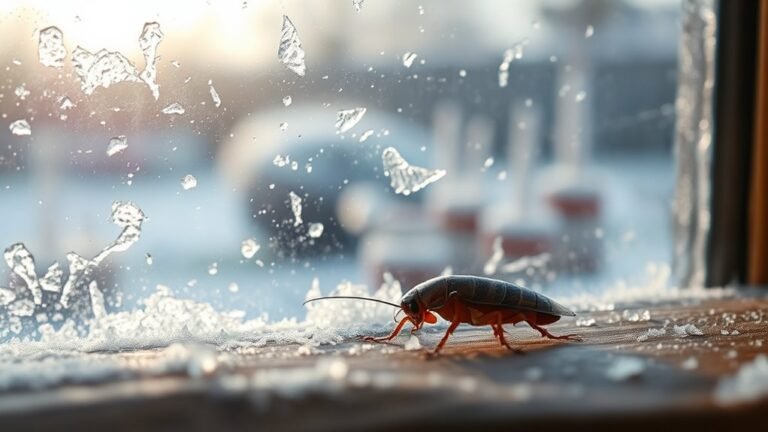
You might think roaches disappear in cold weather, but they actually survive by slowing down and hiding indoors where it’s warm.
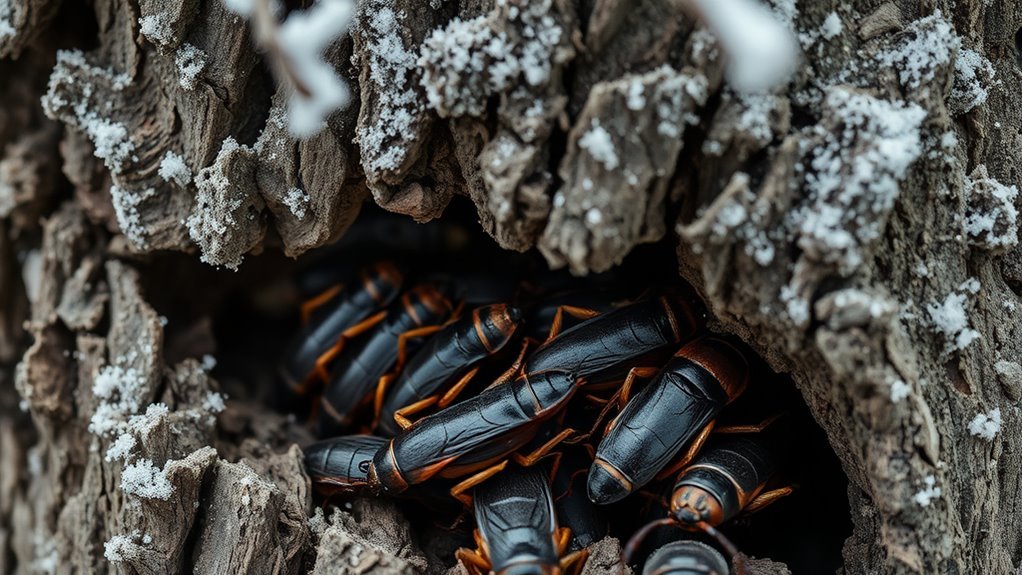
They seek dark, damp spots like basements, wall voids, and behind appliances.
While most roaches can’t tolerate freezing temperatures outside, their eggs withstand short cold spells.
These eggs hatch when it warms up, ensuring the survival of the population.
Roaches stay close to moisture and shelter to make it through winter.
Keep exploring to discover how they stay hidden and ways you can stop them.
Cockroach Behavior During Cold Seasons
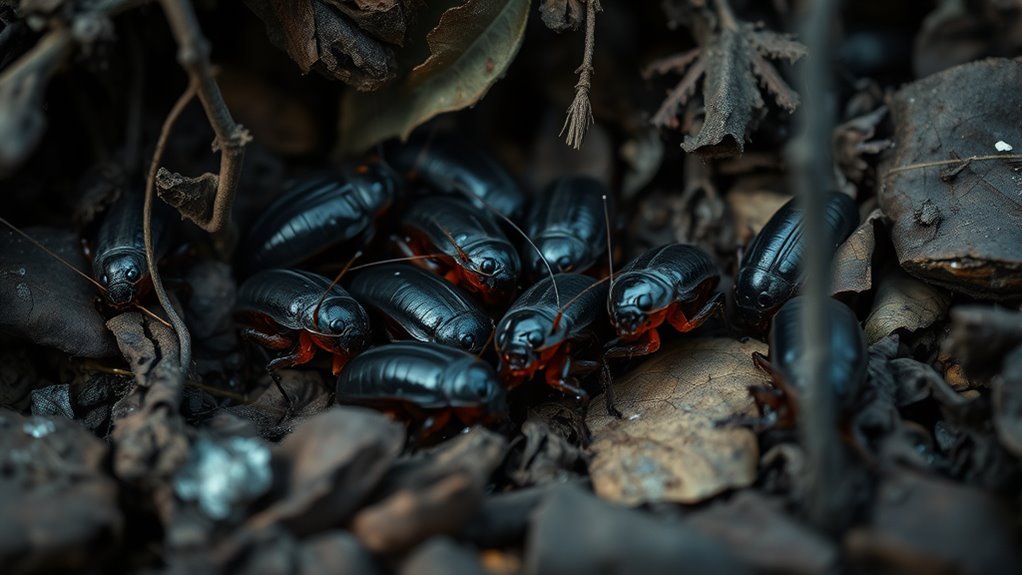
When cold weather sets in, cockroaches enter a state called diapause that slows their metabolism and activity.
This hibernation-like survival strategy helps them endure cold temperatures by decreasing movement and reproduction.
This survival strategy reduces activity and reproduction, helping cockroaches withstand cold temperatures.
You’ll notice cockroach behavior changes as they seek warm indoor environments such as basements, wall voids, and behind appliances.
They hide in dark, damp areas where indoor temperatures stay stable, avoiding the chill outside.
Because of these survival strategies, cockroaches can thrive year-round indoors, especially species like German cockroaches.
Understanding this behavior is essential for effective pest control, as targeting their preferred hiding spots during winter can prevent infestations.
Temperature Limits for Roach Survival
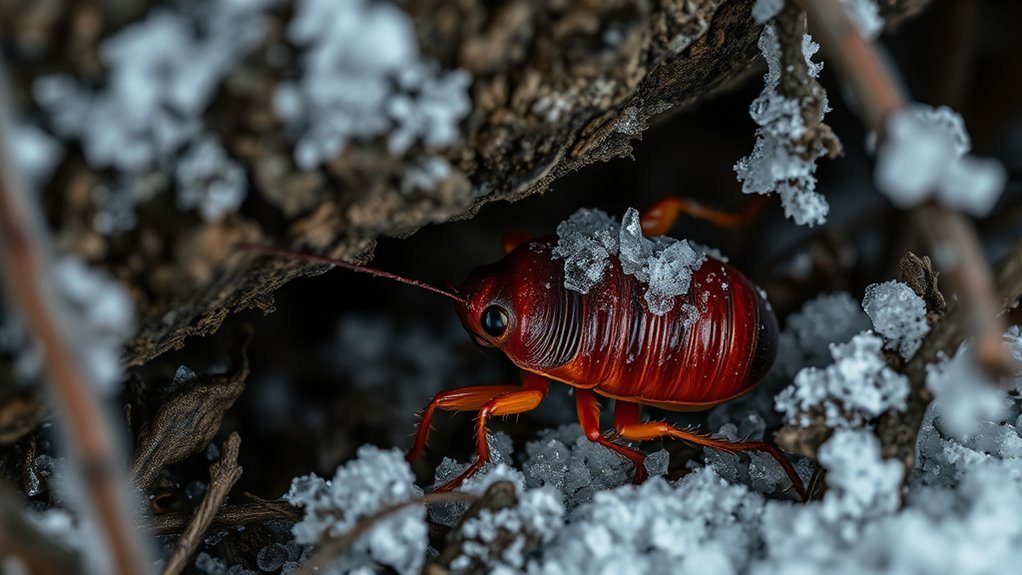
Although cockroaches can tolerate a range of temperatures, they struggle to survive prolonged exposure to cold conditions below 45°F (7°C).
These temperature limits are critical for roach survival, as adult cockroaches generally cannot withstand long-term cold temperatures.
Especially when they drop toward freezing temperatures around 32°F (0°C). Most won’t survive extended temperature exposure below 15°F (-9°C).
While egg resilience offers some advantage, even cockroach eggs rarely endure freezing temperatures for long.
Some species, like Oriental cockroaches, have slightly higher temperature tolerance, helping them better survive winter.
Understanding these temperature thresholds is key to knowing how roaches manage cold weather.
If you want to limit infestation, keeping indoor temperatures below their survival limits can reduce adult cockroach activity during cold months.
Resilience of Cockroach Eggs in Cold
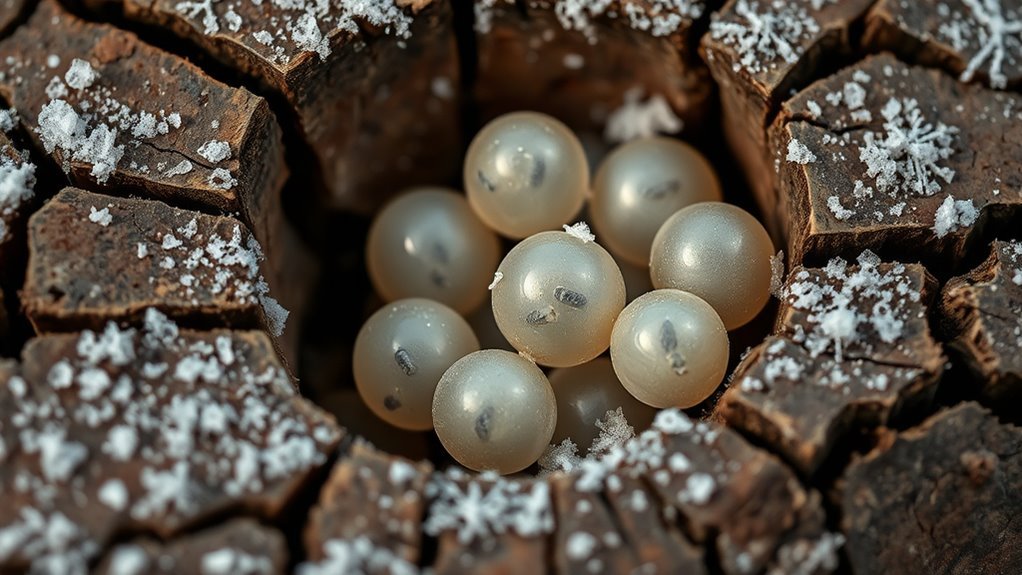
Since cockroach eggs have a protective casing, they can withstand short-term exposure to cold temperatures around 32°F (0°C) better than adult roaches.
This egg casing provides vital insulation, boosting egg resistance during brief cold weather spells.
However, if freezing temperatures drop below 50°F (10°C) for extended periods, most cockroach eggs won’t survive.
Prolonged cold exposure weakens the embryos inside, reducing survival chances.
Fortunately, winter’s chill usually doesn’t last long enough to kill all eggs.
When warmer weather returns, the eggs hatch, continuing the infestation cycle.
So, while adult roaches struggle in cold, cockroach eggs remain resilient enough to endure winter’s cold temperatures and hatch once spring or summer arrives.
Understanding this resilience helps explain why roach populations rebound after cold weather.
Common Winter Hiding Places for Roaches
Because roaches need warmth to survive winter, they hide in places that offer heat and shelter.
You’ll often find them in wall voids, where insulation keeps temperatures stable. Common indoor hiding spots include cabinets, appliances, and cracks around windows or doorframes.
Roaches seek indoor shelter behind furniture and near pipes or sinks, where moisture adds to their comfort. Basements and crawlspaces also provide excellent insulation and protection from the cold.
These cluttered areas offer roaches plenty of cover, making them ideal winter refuges.
By understanding these typical roach hiding spots, you can better identify where they might be nesting during colder months.
This is also why they become more noticeable indoors as temperatures drop outside.
Tips to Prevent Winter Cockroach Infestations
As roaches seek warmth and shelter indoors during colder months, it’s important to take steps that keep them out of your home.
To prevent infestations caused by cold temperatures, focus on eliminating their access and appeal.
First, seal cracks around windows, doors, and foundations to block entry points.
Next, maintain cleanliness by promptly removing food debris and crumbs that attract roaches.
Also, fix leaks and reduce moisture sources in kitchens and bathrooms to remove hiding spots.
It’s a good idea to install door sweeps and weatherstripping to further seal off potential entry points.
Regularly inspect vulnerable areas, and consider professional pest control if needed.
Effective Control Strategies for Winter Roach Problems
You can keep winter roaches at bay by sealing entry points and maintaining a clean, dry home.
Setting bait stations and traps helps catch those hiding in dark corners.
If the problem persists, don’t hesitate to call in professional pest control for targeted treatments.
Winter Roach Prevention
When winter arrives, roaches seek warmth and shelter inside your home, making prevention essential.
You can effectively reduce their presence by focusing on sealing cracks and entry points around windows, doors, and foundations.
Maintaining cleanliness is vital—remove food crumbs, spills, and standing water to eliminate attractants.
Lower indoor humidity and fix leaks to discourage roach hiding spots and breeding areas.
Additionally, bait stations placed in known hiding areas help monitor and reduce populations.
- Seal cracks, gaps, and entry points to block access.
- Keep your home clean by removing food crumbs and standing water.
- Reduce indoor humidity and repair leaks to limit roach hiding spots.
- Use bait stations for monitoring and population control.
Consult pest control professionals for customized winter treatment plans to guarantee long-term prevention.
Professional Pest Treatments
Although cockroaches hide in hard-to-reach places during winter, professional pest treatments target these areas with specialized insecticides and baits to effectively eliminate infestations.
Pest control experts perform thorough inspections to identify cockroach species and nesting sites, allowing for targeted treatments tailored to your situation.
These professional treatments use advanced methods like gel baits, dust formulations, and residual insecticides to reach pests hiding in wall voids and cracks.
Additionally, sealing entry points is vital to prevent re-infestation, especially as cold weather drives roaches indoors.
Because cockroaches concentrate inside during winter, these focused pest control efforts are particularly effective.
Frequently Asked Questions
What Temperature Is Too Cold for Roaches?
You’ll find that temperatures below 45°F (7°C) are too cold for roaches; they usually die or become inactive.
Prolonged exposure to freezing temperatures below 32°F (0°C) is often fatal for both adults and eggs.
Why Should You Never Kill a Cockroach?
Why kill one when others are hiding nearby?
You shouldn’t kill a cockroach because dead ones release chemicals attracting more roaches.
Instead, focus on prevention and sealing entry points to stop infestations effectively.
Can Cockroaches Survive the Freezing Cold?
No, cockroaches can’t survive freezing cold for long.
They usually die unless you let them find warm indoor spots.
Even their eggs struggle below freezing, so keeping your home warm helps stop them from thriving.
How Long Does It Take for Cold to Kill Cockroaches?
Like Jack Frost’s swift touch, cold kills roaches within hours below freezing.
You’ll find most adults perish in a few hours under 32°F.
While eggs resist slightly longer, they ultimately die after several days.
Conclusion
You might think cold weather would chase roaches away, but they’re like tiny, stubborn survivors—just like that one friend who refuses to leave a party early.
Studies show that cockroaches can tolerate temperatures just above freezing by hiding in warm spots and entering a dormant state.
So, don’t let your guard down this winter; taking proactive steps now keeps your home roach-free, no matter how chilly it gets outside.
It’s important to remember that these pests are resourceful. They can find shelter in your home and remain inactive until conditions improve.
To ensure your home stays roach-free, consider sealing cracks, removing food sources, and maintaining cleanliness.
By taking these preventive measures, you can combat any potential infestation, regardless of the temperature outside.
Stay vigilant this winter to keep those unwanted guests at bay!