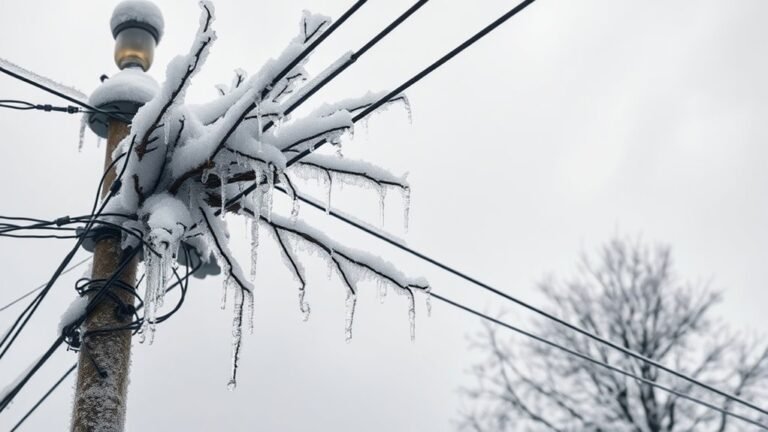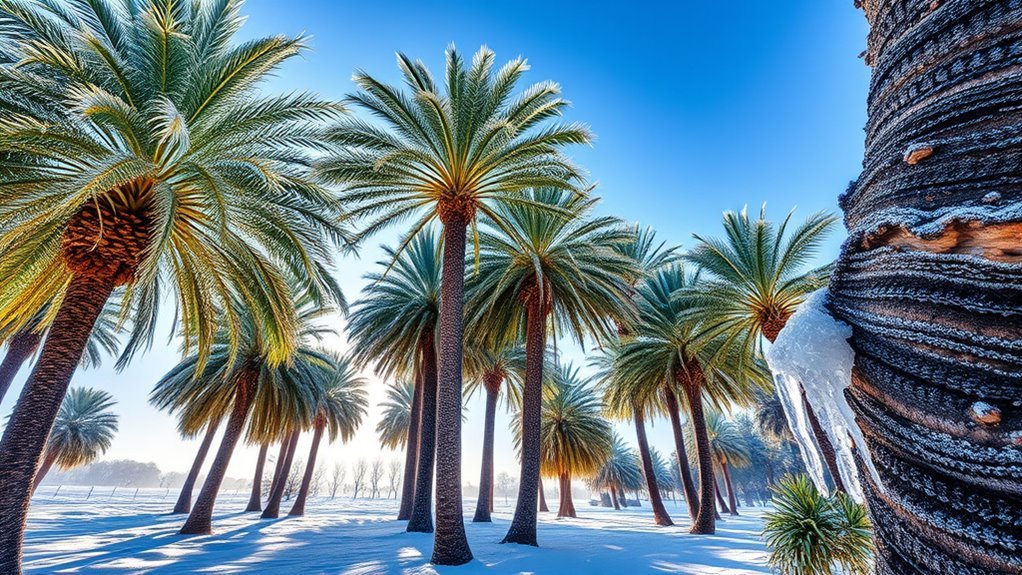
What Happens When Palm Trees Live in Cold Weather?
When palm trees face cold weather, freezing temperatures puncture their cells, causing brown, wilted fronds and even death.
If you leave them exposed, water and nutrient flow get blocked, stressing the tree.
Some palms survive brief frosts, but others need protection or won’t make it.
Hardiness varies by species and maturity, with certain palms enduring below freezing better than others.
Keep going to discover which palms thrive in cold and how you can help protect them.
Effects of Freezing Temperatures on Palm Tree Physiology
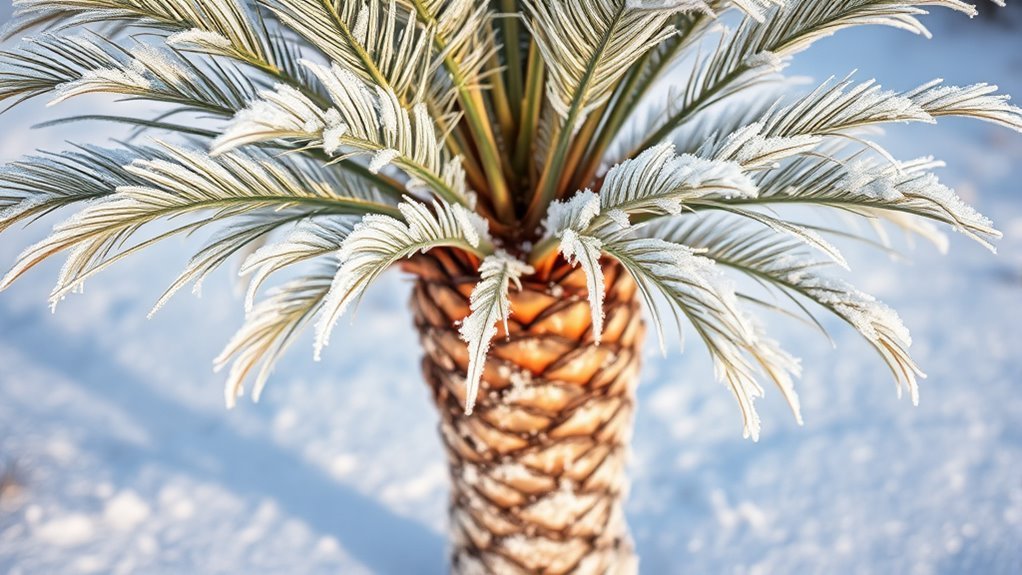
When freezing temperatures hit, your palm tree’s cells suffer as ice crystals form inside, puncturing membranes and causing cell death.
This cellular damage disrupts essential functions, leading to tissue necrosis where fronds turn brown and wilt.
Cold stress prompts your palm to produce antifreeze proteins and boost sugar levels, helping reduce ice formation and protect cells.
However, prolonged exposure below 20°F worsens injury by blocking water and nutrient flow through damaged vascular tissues.
Repeated freezing and thawing cycles add more strain, making recovery harder and increasing the risk of permanent damage.
Understanding how freezing temperatures affect your palm’s physiology can help you recognize the signs of cold stress and the limits of its natural defenses against severe winter conditions.
Key Factors Influencing Palm Tree Cold Hardiness
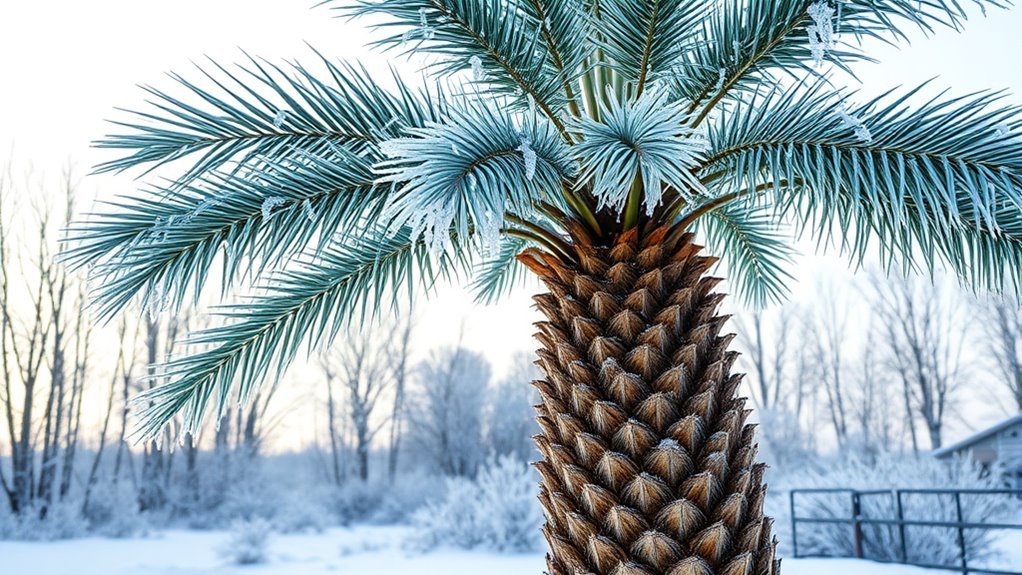
Although cold hardiness varies widely among palm species, understanding key factors that influence their tolerance can help you select and protect palms suited for your climate.
Species tolerance plays a major role—some palms survive temperatures as low as 5°F, while others tolerate only down to 20°F.
Hardiness zones like USDA zones 7-11 guide you in choosing palms adapted to your region.
Environmental conditions, including shelter from wind and proper mulching, considerably boost cold hardiness by reducing stress on the tree.
Mature trees generally withstand cold better because their established root systems offer greater insulation.
Additionally, palms with palmate leaves often show stronger cold tolerance than those with pinnate leaves.
Differences Between Cold Hardy and Super Cold Hardy Palms
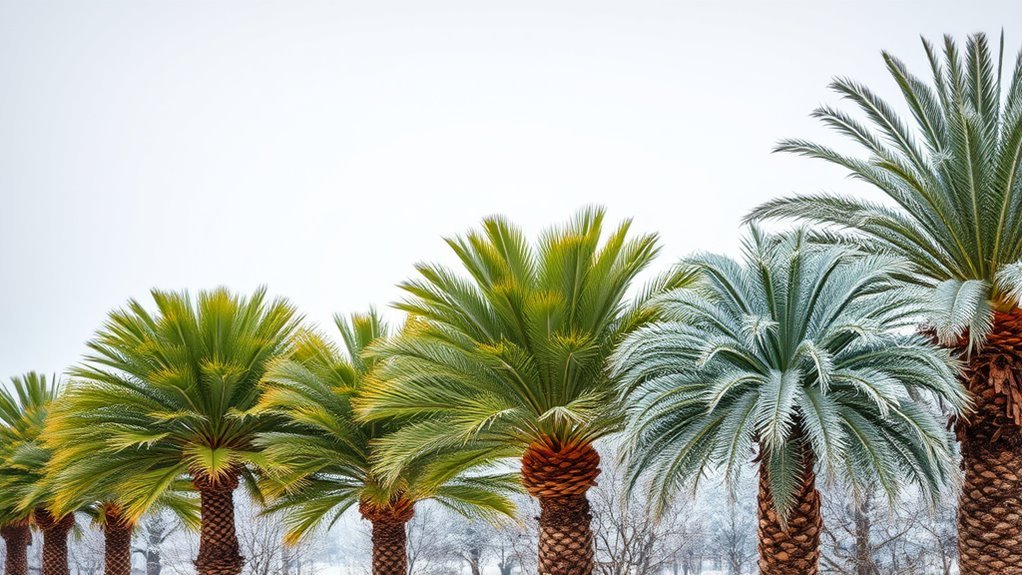
Understanding the factors that influence palm tree cold hardiness sets the stage for recognizing the key differences between cold hardy palms and super cold hardy palms.
Cold hardy palms, like Windmill and Cabbage palms, can survive brief freezing temperatures down to about 10°F.
However, they might suffer some damage during severe frosts. You’ll often need to provide extra winter protection for these palms in colder zones.
On the other hand, super cold hardy palms, such as Needle and Dwarf Palmetto, tolerate prolonged freezing temperatures often below 0°F.
They withstand extended cold, windchill, and ice accumulation while maintaining their health and appearance.
Characteristics and Benefits of the Windmill Palm
If you’re looking for a palm that combines striking appearance with impressive cold tolerance, the Windmill Palm (Trachycarpus fortunei) stands out.
As one of the most cold-hardy palms, it can survive freezing temperatures as low as 10°F, and sometimes even 0°F.
Surviving freezing temperatures down to 10°F, sometimes even 0°F, this palm is impressively cold-hardy.
You’ll appreciate its slender trunk wrapped in coarse fibers and its large, fan-shaped fronds that add visual interest.
This palm grows rapidly—about 5 feet a year—and can reach heights of 20 to 40 feet in the right climate.
The Windmill Palm thrives in USDA zones 7 through 11, making it ideal for areas with mild to moderate winters.
Plus, it resists frost damage better than many palms, so you can enjoy a tropical vibe without worrying about your palm suffering in cold weather.
Features and Landscape Uses of the Dwarf Palmetto
When you want a hardy palm that stays compact yet visually appealing, the Dwarf Palmetto (Sabal minor) fits the bill perfectly.
This evergreen palm typically grows 4 to 6 feet tall with upright, fan-shaped fronds emerging from a single base, giving you a neat, miniature palm look.
Thanks to its impressive cold tolerance, surviving temperatures as low as 0°F, it’s one of the most reliable hardy palms for cooler climates.
You’ll find the Dwarf Palmetto thriving in USDA zones 7-11, adapting well to well-drained soils and even steep or sloped terrain.
Its versatile landscape use makes it ideal as a short focal point, a hedge, or an understorey plant.
This is especially true in areas prone to colder weather where other palms might struggle.
The Needle Palm: Adaptations for Sustained Cold
Though many palms struggle in cold climates, the Needle Palm (Rhapidophyllum hystrix) stands out as one of the hardiest. It can endure temperatures as low as 0°F (-18°C).
You’ll notice its stiff, needle-like leaves help shield it from freezing temperatures. Plus, its dense clumping form resists winter winds.
The underground rhizomes play a vital role, allowing the palm to survive cold spells and regrow if damaged.
| Adaptation | Benefit |
|---|---|
| Needle-like leaves | Protect from frost damage |
| Cold-hardy species | Survives down to 0°F (-18°C) |
| Underground rhizomes | Regrowth after freezing |
| Dense growth habit | Wind and cold resistance |
| Tough fibrous trunk | Structural durability |
You can rely on the Needle Palm’s unique design to thrive in cold weather.
Common Signs of Cold Damage in Palm Trees
Since palms aren’t naturally built for freezing temperatures, you’ll often spot cold damage through changes in their fronds and trunk.
Look for leaf discoloration like browning, yellowing, or crispy edges on your palm fronds—these are clear signs of stress from cold.
Drooping or wilting leaves also indicate your palm has been hit by freezing temperatures.
Dead fronds often shed early, leaving your palm looking bare or sparse.
Check the tips of the leaves for blackening or decay, which suggests frost injury.
Beyond the fronds, examine the trunk: cold damage can cause it to soften, discolor, or become unstable due to internal tissue harm.
Recognizing these signs early helps you understand how your palm is coping with cold weather.
Practical Tips for Protecting Palms During Winter
Noticing cold damage on your palm signals it’s time to take action to protect it during winter.
Start by applying a thick layer of mulch around the base to insulate the roots and prevent freezing damage.
Wrap the trunk and fronds with frost cloth or burlap to shield against freezing temperatures and wind chill.
Water your palm thoroughly before a cold snap; this helps maintain cell fluid balance, boosting its resilience.
For container palms or extremely cold nights, consider installing outdoor heaters or heat lamps to provide extra warmth.
Covering your palm with blankets or specialized frost blankets overnight also reduces frostbite risk.
These practical winter protection steps are essential for effective palm care, ensuring your trees survive and thrive despite harsh cold conditions.
Frequently Asked Questions
How Cold Is Too Cold for Palm Trees?
You’ll find palm trees struggle below 15°F, with most suffering damage or death.
Only cold-hardy types tolerate near 0°F.
Sudden or prolonged freezes worsen harm, so protect your palms during harsh cold snaps.
Can Palms Survive a Freeze?
Yes, palms can survive a freeze if it’s brief and temperatures don’t drop too low.
You’ll need to protect them and choose cold-hardy species, or else their heart tissue may freeze, causing irreversible damage.
What to Do With Palm Trees in the Winter?
Did you know palms tolerate temperatures as low as 20°F?
You should wrap trunks, mulch roots, and water well before cold hits.
Move potted palms indoors and prune damaged fronds in spring to keep them healthy.
Why Can’t Palm Trees Live in Cold Climates?
You can’t grow palm trees in cold climates because their cells get damaged by freezing temperatures.
They lack natural antifreeze proteins, so ice forms inside their tissues, killing cells and causing their fronds and trunks to die.
Conclusion
When palm trees face colder climates, they might experience a gentle pause in their usual vibrancy.
You may notice subtle signs of winter’s quiet touch. While some palms gracefully endure these chillier moments, others prefer warmer retreats.
By understanding their unique needs and offering thoughtful protection, you can help your palms weather the season’s softer challenges.
With the right care, they can continue to bring their tropical charm, even when the cold whispers through your landscape.
In conclusion, knowing how to care for palm trees in cold weather is crucial.
By providing protection and understanding their requirements, you can ensure these beautiful plants thrive.
This way, they’ll keep adding a touch of the tropics to your space, regardless of the chill outside.