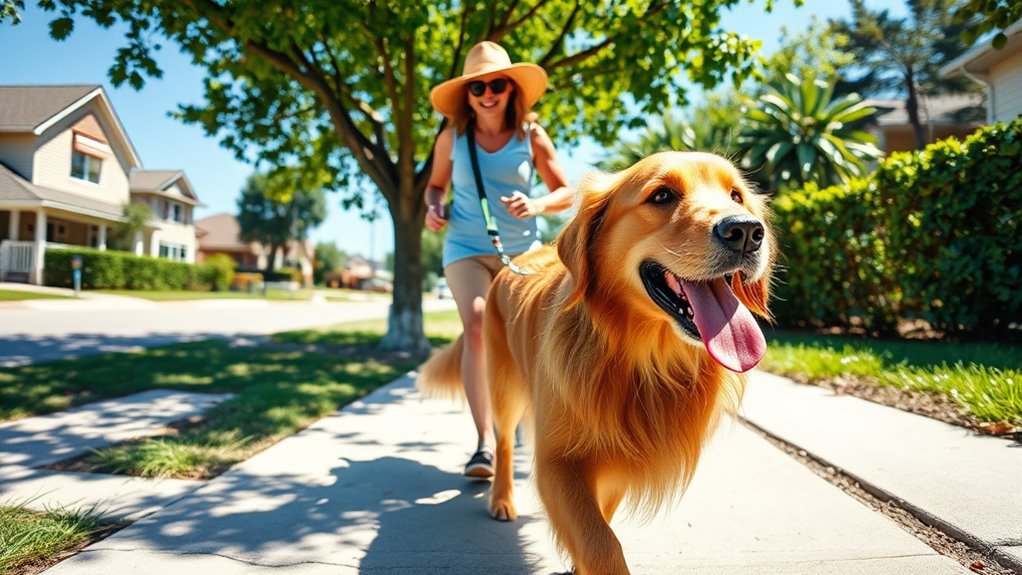
10 Tips for Walking My Dog Safely in 80 Degree Weather
When walking your dog in 80-degree weather, it’s crucial to prioritize their safety and comfort.
Choosing early mornings or late evenings helps you avoid the peak heat of the day.
Always check the pavement temperature by holding your hand down for 10 seconds.
If it’s too hot for you, it’s definitely too hot for your pup’s paws.
Stick to shaded, grassy paths and carry fresh water to keep your dog hydrated.
Watch for signs of overheating, like heavy panting and excessive drooling.
It’s also a good idea to protect your dog’s paws with booties or balm.
Using pet-safe sunscreen on exposed skin can help prevent sunburn, especially on lighter-coated breeds.
Adjust walks for vulnerable breeds and keep them shorter to avoid exhaustion.
There’s more to help keep your furry friend comfy and safe in the heat!
Choose the Best Time for Walks
To keep your dog safe in 80°F weather, choose the best time for walks carefully.
Aim for early morning before 10 a.m. or late evening after 7 p.m., when temperatures are cooler and more comfortable.
During these times, the hot pavement cools down enough to avoid burning your dog’s paws.
Cooler times mean pavement is safe for your dog’s paws, preventing burns and discomfort.
Avoid walking your dog between 10 a.m. and 4 p.m. because that’s when the sun’s peak heat makes outdoor activity risky.
Walking during cooler hours reduces the chance of heatstroke, dehydration, and paw injuries.
Monitor the Heat Index and Humidity
Although the temperature may seem manageable, high humidity can make it feel much hotter and put your dog at risk.
You need to observe the heat index, which combines air temperature and humidity to show how hot it really feels.
For example, 80°F with 80% humidity creates a heat index well above safe levels for dogs.
High humidity limits your dog’s ability to cool down through panting, increasing the risk of heatstroke even when temperatures seem moderate.
When the heat index reaches 150 or higher, it’s best to avoid outdoor exercise altogether.
By checking both temperature and humidity before your walk, you can ensure you’re not exposing your dog to dangerous conditions in hot weather.
Monitoring these factors keeps your dog safe and comfortable.
Limit the Duration of Outdoor Activity
Keeping an eye on the heat index helps you understand when it’s time to adjust your dog’s outdoor activity.
On days over 80 degrees, it’s essential to limit outdoor walks to no more than five minutes to prevent overheating.
Limit outdoor walks to five minutes on days above 80 degrees to keep your dog safe from overheating.
Hot surfaces can quickly increase your dog’s body temperature, so shorter walks reduce the risk of heat stroke.
Instead of one long walk, break it into multiple brief sessions during cooler parts of the day.
Always watch your dog closely for signs of distress, and be ready to bring them indoors if they start showing signs of overheating.
By limiting outdoor activity duration and avoiding hot surfaces, you help keep your dog safe and comfortable, even in warm weather.
Prioritize shaded areas to make walks more enjoyable and secure.
Test Pavement Temperature Before Walking
Before heading out with your dog, always test the pavement temperature to protect their paws from burns.
Asphalt and concrete can get 40°-60°F hotter than the air, so even if it’s 75°F outside, the pavement might reach 125°F—hot enough to burn paws in just 60 seconds.
Use the back of your hand or bare foot to check the surface. If it’s uncomfortable to hold for 10 seconds, it’s too hot for your dog.
Be extra cautious during midday when pavement temperature peaks.
Regularly test the pavement temperature during your walk, especially on blacktop or asphalt, to avoid paw injuries.
Pick Shaded and Grass-Covered Routes
Choose routes with plenty of shade to keep your dog cool and comfortable during your walk.
Grass-covered paths are ideal because they stay cooler than pavement and protect your dog’s paws from burns.
Always prefer shaded, grassy areas over sun-exposed pavement when the temperature rises.
Benefits of Shaded Paths
When you pick shaded and grass-covered routes for your dog’s walk, you considerably lower the risk of paw burns and overheating.
Shaded paths offer natural cooling that helps prevent overheating, especially during peak heat hours. They keep the walking surface cooler by up to 20°F compared to hot pavement, protecting your dog’s sensitive paws.
- Shaded paths reduce heat exposure, making walks safer.
- Cooling effects from foliage prevent heatstroke risks.
- Grass-covered routes keep paws comfortable and burn-free.
- Less sun means fewer breaks needed during your walk.
- Your dog enjoys a more pleasant, stress-free stroll.
Choosing these routes ensures your furry friend stays comfortable and protected while you both enjoy the outdoors safely in warm weather.
Grass vs. Pavement
Although warm weather invites longer walks, the ground you pick can make all the difference in your dog’s comfort and safety.
Pavement heats up quickly—at 75°F air temperature, it can reach 125°F, burning your dog’s paw pads in just 60 seconds.
Grass, especially in shaded areas, stays much cooler and protects against overheating.
Check the ground with your hand: if hot pavement feels uncomfortable after 10 seconds, it’s too hot for your dog.
Choose grass-covered, shaded routes to keep your dog’s paws safe and avoid heat stress.
| Surface | Temperature | Paw Pad Risk | Comfort Level | Best For |
|---|---|---|---|---|
| Pavement | Up to 125°F | High (burn risk) | Uncomfortable | Short walks only |
| Grass | Cooler, shaded | Low | Comfortable | Longer walks |
Bring Fresh Water and Offer It Frequently
Since your dog can overheat quickly in 80-degree weather, it’s super important to bring fresh water and offer it frequently during your walk. Staying hydrated is key to keeping your dog safe and comfortable.
To prevent dehydration, keep these tips in mind:
- Carry a portable, collapsible bowl or water bottle with a built-in dish for easy access to fresh water.
- Offer your dog water every 15 to 20 minutes, even if they don’t seem thirsty.
- Use clean, cool water from a reliable source to keep your dog well-hydrated.
- Avoid stainless steel bowls outdoors as they can heat up and cause discomfort.
- Always monitor your dog and ensure they have continuous access to fresh water throughout your walk.
Following these steps will help keep your dog healthy and happy in warm weather.
Watch for Early Signs of Overheating
Keep a close eye on your dog for signs like excessive panting, drooling, or a rapid heartbeat.
If you notice these symptoms, act quickly to cool them down by moving to shade and offering water.
Catching overheating early can prevent serious health issues and keep your dog safe during warm walks.
Recognize Overheating Symptoms
When you walk your dog in warm weather, watch closely for signs of overheating like excessive panting, drooling, and a rapid heartbeat.
Recognizing these overheating symptoms early helps you prevent heatstroke and keep your dog safe.
Keep an eye out for these signs:
- Weakness or stumbling, indicating heat stress.
- Bright red or bruised gums, a serious warning sign.
- Excessive drooling beyond normal levels.
- Disorientation or confusion, showing distress.
- Refusal to drink water or vomiting.
If you notice any of these signs, it’s essential to act quickly to protect your dog.
Early recognition of overheating symptoms can make all the difference in avoiding severe heat-related issues during your walks in warm weather.
Immediate Cooling Actions
If you spot early signs of overheating like rapid panting or bright gums, act quickly to cool your dog down.
Move them immediately to a shaded area to reduce sun exposure.
Use cool water—not ice-cold—to gently wet their coat, helping to lower their body temperature without causing shock.
Avoid forcing your dog to drink; instead, offer cool water freely.
Watch closely for worsening signs of overheating such as weakness, stumbling, or disorientation.
These symptoms can lead to heat stroke, a life-threatening condition requiring urgent veterinary care.
If your dog shows any of these severe signs, get to a vet right away.
Quick, calm action can prevent serious complications, so keep an eye out and respond promptly during hot walks.
Protect Your Dog’s Paws With Booties or Balm
Although the air might feel warm but bearable, pavement can become dangerously hot—reaching up to 125°F—and can burn your dog’s paws in just a minute.
To guarantee proper paw protection, consider using booties or applying paw balm before your walks.
- Test hot pavement with the back of your hand; if it’s uncomfortable after 10 seconds, it’s unsafe for your dog.
- Choose durable booties designed to shield paws from heat and rough surfaces.
- Apply paw balm or wax to create a heat-resistant barrier.
- Opt for grassy or shaded routes to avoid direct contact with hot pavement.
- Regularly check your dog’s paws for signs of burns or blisters during and after walks.
Using booties or paw balm helps keep your dog’s paws safe and pain-free on hot days.
Use Pet-Safe Sunscreen on Exposed Skin
Since your dog’s nose, ears, and other exposed skin are vulnerable to sunburn, you should apply a pet-safe sunscreen before heading outdoors in 80-degree weather.
Choose products like SPF 15 Doggy Sun Mist or Sun Stick, specifically designed for dogs.
Opt for SPF 15 Doggy Sun Mist or Sun Stick, made especially for your dog’s sun protection needs.
Avoid human sunscreens containing harmful ingredients such as zinc oxide or oxybenzone.
For sunburn prevention, apply sunscreen to all exposed skin areas, especially if your dog has thin hair or pink skin.
Remember to perform a patch test first to check for allergic reactions.
During outdoor walks, reapply the sunscreen every two hours, or more often if your dog is sweating or swimming, to maintain effective protection.
Using pet-safe sunscreen guarantees your furry friend stays safe and comfortable under the sun.
Adjust Walks for Vulnerable Breeds and Health Conditions
If your dog belongs to a flat-faced breed like a Bulldog or Pug, you’ll need to be extra cautious since they’re more prone to overheating.
For senior dogs or those with health issues, keep walks shorter and less intense to avoid heat stress.
Always watch for signs of overheating and check with your vet before increasing activity on warm days.
Breed-Specific Heat Sensitivity
When walking your dog in 80-degree weather, you need to adjust your routine based on their breed and health.
Breed-specific heat sensitivity plays a big role in how your dog handles the heat. Flat-faced breeds, like Bulldogs and Pugs, struggle to breathe and cool down, so keep walks short and in shaded areas.
Also, protect your dog’s paw pads from hot pavement to prevent burns. Watch for signs of heat-related illnesses, especially in dogs with thick coats or senior pets.
Here are key tips to keep in mind:
- Limit walk time for flat-faced breeds.
- Avoid walking on hot pavement to protect paw pads.
- Schedule walks during cooler parts of the day.
- Monitor for heavy panting or lethargy.
- Consult your vet about your dog’s heat tolerance and exercise limits.
Health Condition Precautions
Beyond breed-specific concerns, your dog’s overall health and age greatly influence how they handle warm weather walks.
Dogs with certain health conditions, thick coats, or special needs may overheat quickly.
You should shorten walks, provide frequent rest breaks in shaded areas, and watch for signs of overheating like excessive panting or weakness.
Always consult your vet for advice tailored to your dog’s health condition.
| Dog Type | Precaution |
|---|---|
| Senior or Health-Compromised | Short walks, frequent rest breaks |
| Thick-Coated Breeds | Monitor closely, avoid midday heat |
| Special Needs Dogs | Vet consultation, customized exercise |
Adjusting walks based on these factors helps keep your furry friend safe and comfortable in warm weather.
Frequently Asked Questions
Is It Safe to Walk Your Dog in 80 Degree Weather?
Yes, you can walk your dog in 80-degree weather, but you shouldn’t walk during peak heat hours.
Keep walks short, check the pavement temperature, and stay in shaded areas.
Also, provide plenty of water to keep your dog safe.
What Is the 3 3 3 Rule for Dogs Moving?
You give three days for initial adjustment.
Then, you allow three weeks for your dog to settle in.
Finally, you give three months for full acclimatization.
During this time, it’s important to provide comfort.
Establishing a routine is key, too.
And remember to patiently wait for your dog to feel secure and at home.
What Is the 90 10 Rule for Dogs?
The 90-10 rule means you limit your dog’s outdoor activity to 90 minutes daily.
With no single walk over 10 minutes in hot weather, this helps prevent overheating.
It keeps your dog safe and comfortable.
What Is the 5 Second Rule for Walking Dogs?
The 5 second rule means you test the pavement with your hand for no more than 5 seconds.
If it feels too hot to hold, it’s likely unsafe for your dog’s paws.
Conclusion
Walking your dog safely in 80-degree weather is essential. Studies show that pavement can reach temperatures over 120 degrees, causing burns to your pup’s paws in just minutes.
By choosing cooler times to walk, sticking to shaded routes, and watching for signs of overheating, you’ll keep your furry friend comfortable and safe.
Make sure to carry water for both you and your dog, and consider dog booties to protect their paws.
Remember, a little extra care goes a long way in making your warm-weather walks enjoyable for both of you.
In conclusion, being mindful of the heat can ensure your dog’s safety and comfort. Choose appropriate walking times, stay in the shade, and stay alert for any signs of distress.
With a bit of planning, you can enjoy sunny walks without worry. Prioritizing your dog’s well-being during hot weather is crucial for an enjoyable outing together!