
What Causes Sore Throat in Cold Weather?
In cold weather, your throat can become sore for several reasons. The chilly air and indoor heating tend to dry out your throat quickly, reducing humidity levels. This dryness can irritate and weaken your throat’s protective lining.
Additionally, many people resort to mouth breathing, especially when dealing with nasal congestion. This habit can exacerbate the problem by allowing dry, cold air to enter directly.
Moreover, winter often brings a rise in viral and bacterial infections. With decreased immune defenses and more time spent indoors, you may find yourself more susceptible to these infections.
If you’re still experiencing discomfort, there are various factors to consider that might explain why the winter months worsen sore throat symptoms.
How Cold Air Affects the Throat
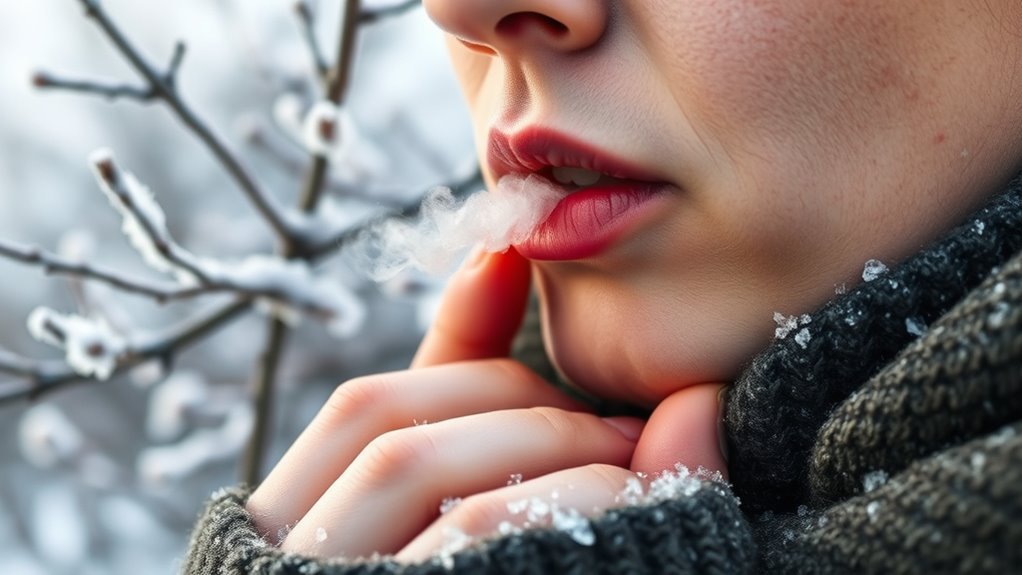
When you breathe in cold air, its dryness quickly robs moisture from the tissues lining your throat.
This dry air causes dehydration of the mucous membranes, reducing the protective moisture that keeps your throat comfortable.
As a result, your throat becomes more vulnerable to irritation and soreness.
Cold air also constricts blood vessels in your throat, which worsens tissue dryness and discomfort.
Additionally, the decreased humidity impairs mucociliary clearance, meaning your throat can’t clear irritants as effectively.
The small nerve endings in your throat grow more sensitive in response to this dryness, increasing throat irritation and the scratchy feeling you experience.
Understanding how cold air impacts your throat helps explain why you often feel soreness during chilly weather.
Common Viral and Bacterial Infections in Winter

You’ll often notice sore throats caused by viral infections like the common cold or flu during winter.
Bacterial infections, such as strep throat, also become more common and need different treatment.
Knowing how to spot the symptoms can help you get the right care quickly.
Winter Viral Infections
Although cold weather brings festive cheer, it also increases your risk of catching winter viral infections like the common cold and influenza.
During cold weather, you tend to spend more time indoors, where viruses spread easily through close contact. Low humidity dries out your respiratory tract, weakening mucosal defenses and making it easier for viruses to invade.
This can lead to symptoms such as a sore throat, congestion, and fatigue.
Cold weather also impairs your immune response, reducing your body’s ability to fight off these viral invaders effectively.
Understanding how winter viral infections develop can help you take precautions like staying hydrated, using a humidifier, and practicing good hygiene to protect your throat and overall health during the colder months.
Bacterial Causes Overview
Since cold weather drives people indoors, it creates the perfect environment for bacterial infections like strep throat and tonsillitis to spread rapidly.
You’re more likely to catch these infections because close contact makes it easier for bacteria to move from person to person.
Bacterial infections can hit hard, causing severe sore throats, fever, and swollen tonsils.
Sinus infections add to the misery by causing post-nasal drip that irritates your throat further.
Watch out for signs like white patches or pus in your throat, which often mean you need antibiotics.
Here’s why bacterial infections in winter are tough:
- Strep throat causes sudden, painful symptoms that disrupt your day.
- Tonsillitis worsens, making swallowing painful and difficult.
- Sinus infections drip irritants that prolong your sore throat.
Infection Symptoms Identification
Recognizing the symptoms of infections during winter can help you decide when to seek medical care.
Viral infections like the common cold and flu often bring a sore throat along with a cough, nasal congestion, body aches, and fever. These symptoms usually develop gradually.
In contrast, bacterial infections such as strep throat cause a sudden, severe sore throat with red, swollen tonsils and white patches, but no cough.
You might also notice high fever, swollen lymph nodes, and fatigue with bacterial infections.
Since infections spread easily in cold weather due to indoor crowding and dry air, it’s important to monitor symptoms closely.
If your sore throat lasts more than a week or you experience difficulty swallowing or breathing, consult a healthcare professional to rule out serious viral or bacterial infections.
The Role of Dry Indoor Heating on Throat Health

When you use indoor heating during cold weather, the dry air can quickly sap moisture from your throat, making it feel scratchy and irritated.
Heating systems often lower humidity levels, which thickens mucus and reduces your throat’s ability to fight off germs.
To prevent discomfort, you’ll want to add moisture back into the air with a humidifier or vaporizer.
Effects of Dry Air
Although you might not notice it, dry indoor heating drastically lowers humidity levels, often dropping them below 30%. This can dry out your throat tissues.
As a result, this dry indoor air causes your mucus lining to thicken, making it less effective at trapping germs.
So, what does this mean for you? Well, you may experience throat irritation and increased vulnerability to inflammation.
Here’s what happens when you’re exposed to dry air:
- Your throat’s natural moisture barrier weakens, leading to soreness and scratchiness.
- Sensitive nerve endings get irritated by cold, dry air, making your throat feel raw.
- Prolonged dryness raises the risk of infections due to impaired defenses.
Keeping humidity balanced can prevent these effects and protect your throat health during cold weather.
Heating Systems and Moisture
Because dry indoor heating systems lower humidity levels by up to 30%, they can particularly dry out your throat lining and cause irritation.
When you use central or space heaters without humidifiers, the dry air they produce reduces indoor humidity drastically.
This dry air dehydrates the mucus membranes in your throat, leading to inflammation and soreness.
Without enough moisture in the air, your throat struggles to stay lubricated, increasing the risk of throat irritation.
Maintaining indoor humidity between 40-60% helps preserve mucosal moisture, preventing dryness and discomfort.
If your heating system lacks humidifiers, be aware that prolonged exposure to dry air can worsen throat soreness.
Understanding how heating systems impact moisture helps you recognize why your throat may feel sore in cold weather.
Preventing Indoor Throat Irritation
If you want to prevent throat irritation during cold weather, managing the dryness caused by indoor heating is essential.
Low indoor humidity from heating systems often drops below 30%, leading to throat dryness and discomfort.
To keep your throat healthy, focus on maintaining balanced moisture levels.
Here are three effective steps you can take:
- Use humidifiers to keep indoor humidity between 40-60%. This helps preserve mucous membrane moisture and reduces throat soreness.
- Regularly ventilate rooms to refresh the air. This prevents stagnation of dry heat, making your indoor environment more comfortable.
- Avoid prolonged exposure to dry heated environments. This protects your mucociliary clearance from impairment, keeping your throat feeling better.
These simple steps can make a big difference!
Mouth Breathing and Its Impact on Throat Irritation
When you breathe through your mouth in cold weather, you skip the natural warming and humidifying process your nose provides.
This leaves your throat exposed to dry, chilly air. Mouth breathing lets cold, dry air hit your throat directly, causing moisture loss and throat irritation.
This exposure makes your throat feel scratchy and sore, especially if you breathe through your mouth for long periods, like during sleep.
Often, mouth breathing happens because nasal congestion blocks your usual airflow, forcing you to breathe through your mouth instead.
Without your nose filtering and warming the air, more dry particles irritate your throat lining, worsening discomfort.
To reduce throat irritation, try managing nasal congestion and breathing through your nose whenever possible.
This will help keep your throat moist and protected.
Winter Allergens That Trigger Sore Throats
Although cold weather itself can irritate your throat, winter allergens like mold, dust mites, and pet dander often play a bigger role in causing soreness.
Spending more time in heated indoor environments increases your exposure to these allergens, especially if your home has leaks or poor ventilation that encourage mold growth.
As these allergens irritate your throat lining, you may experience discomfort, nasal congestion, and coughing.
You might relate to these common struggles caused by winter allergens:
- Constant throat irritation that won’t go away
- Struggling with post-nasal drip worsening your sore throat
- Feeling stuck indoors where allergens thrive and aggravate symptoms
Recognizing how mold, dust mites, and other allergens impact your throat helps you take steps to reduce exposure and soothe irritation effectively.
Dehydration and Its Effect on Throat Moisture
Because cold weather often makes you drink less water, dehydration can quickly dry out your throat and increase irritation.
When you’re dehydrated, your body reduces saliva production, which lowers throat moisture and leaves the mucous membranes less protected.
This dryness makes your throat more prone to soreness and inflammation.
Cold weather also encourages drinking hot beverages with caffeine or alcohol, both of which can worsen dehydration and throat dryness.
Without proper hydration, your body can’t produce enough mucus to lubricate and shield your throat tissues effectively.
To keep throat moisture balanced and prevent soreness during cold weather, it’s essential to stay well hydrated by drinking plenty of water and avoiding excessive caffeine or alcohol.
Environmental Factors That Increase Infection Risk
Keeping your throat hydrated helps maintain its natural defenses, but cold weather brings other challenges that increase your risk of infection.
Dry air and indoor heating drastically reduce humidity, drying out your mucous membranes and making it easier for viruses to invade.
Dry air and heating dry mucous membranes, lowering defenses and easing viral invasion.
Here are three key environmental factors to watch out for:
- Dry air from cold weather irritates your nasal passages and throat, weakening their protective barrier.
- Indoor heating lowers humidity even more, drying out tissues that trap and fight bacteria and viruses.
- Viruses like rhinoviruses survive longer and spread more easily in low humidity environments.
These factors combine to create a perfect storm, increasing the chance you’ll catch a sore throat during cold months.
Lifestyle Habits That Influence Throat Discomfort
When you breathe through your mouth in cold weather, your throat dries out faster, making soreness more likely.
Mouth breathing bypasses the natural humidifying effect of your nose, leaving your throat vulnerable to irritation.
Dehydration worsens this dryness, so drinking plenty of water is essential, especially since cold weather often reduces your thirst.
Avoid excessive alcohol and caffeine, as they contribute to dehydration.
Smoke exposure, whether from smoking or secondhand smoke, inflames your throat lining, increasing discomfort during winter.
Additionally, poor indoor air quality—laden with dust or mold—can irritate your throat further.
To minimize soreness, maintain good hydration, avoid smoke, and improve indoor air quality with proper ventilation and air purifiers.
These lifestyle habits play a vital role in preventing throat discomfort in cold weather.
When to Seek Medical Evaluation for a Winter Sore Throat
If your sore throat lasts more than a week despite home care, you should see a healthcare provider.
Persistent symptoms may signal bacterial infections that often need antibiotics.
Also, seek medical advice if you notice white patches or pus in your throat, as this can indicate strep throat.
Be especially cautious if you experience additional symptoms like:
- High fever or chills.
- Difficulty swallowing or breathing.
- Swollen glands or neck pain.
These signs suggest that your body is fighting a more serious infection that requires prompt evaluation.
Don’t ignore worsening symptoms or sore throats that keep coming back.
Getting a timely diagnosis helps prevent complications and ensures you receive the right treatment.
When in doubt, consult a healthcare professional to protect your health during cold weather.
Frequently Asked Questions
Is It Normal to Have a Sore Throat During Cold Weather?
Yes, it’s normal to have a sore throat during cold weather because cold, dry air and indoor heating can irritate your throat.
Staying hydrated usually helps, but if it persists or worsens, you should see a doctor.
How to Cure Throat Pain in Winter?
You can cure throat pain in winter by drinking warm herbal tea with honey.
Using a humidifier can also help, as it adds moisture to the air.
Gargling salt water is another effective remedy.
Additionally, staying hydrated is key for your throat health.
Don’t forget to get plenty of rest; it helps your immune system fight off infections effectively.
What Is a Red Flag for a Sore Throat?
When your throat feels like a fiery storm, watch for red flags:
difficulty swallowing or breathing, white patches, persistent pain over two weeks, high fever, or neck swelling.
Don’t ignore these—seek medical help immediately.
What Is the Fastest Way to Cure a Sore Throat?
To cure your sore throat fast, gargle warm salt water.
Drink soothing teas with honey, and use pain relievers like ibuprofen.
Inhale steam or use a humidifier, and get plenty of rest to help your body heal quickly.
Conclusion
When cold weather hits, your throat often takes the brunt, thanks to dry air, viruses, and even indoor heating.
Remember, “an ounce of prevention is worth a pound of cure.”
Staying hydrated, avoiding mouth breathing, and managing allergens can keep your throat comfortable all winter.
If soreness lingers or worsens, don’t hesitate to see a doctor.
Taking simple steps now can save you from bigger discomfort later.
Stay warm and take care!
—
In cold weather, sore throats can be a common nuisance. The dry air can irritate your throat, while viruses thrive in chilly conditions.
To keep your throat healthy, make sure to drink plenty of water, breathe through your nose, and keep allergens at bay.
If you find your throat is still sore after trying these remedies, it’s wise to consult a healthcare professional.
Proactive steps can prevent more serious issues later on.
So, stay warm, hydrate, and take care of your throat this winter!