How Do Cockroaches Live in Cold Weather?
You’ll find that cockroaches can surprisingly survive cold weather by seeking refuge in warm, sheltered indoor spots.
They often hide in wall voids, behind appliances, and along baseboards where temperatures remain above freezing.
To cope with the cold, they slow their activity to conserve energy and enter a hibernation-like state.
Interestingly, their eggs can withstand brief cold spells better than the adults, ensuring their survival until conditions improve.
Most species depend on heated environments to successfully overwinter.
If you’re curious about their habits and want to learn how to prevent infestations during winter, keep exploring effective strategies.
Understanding these behaviors can help you maintain a pest-free home even in the coldest months!
Cockroach Behavior in Cold Weather
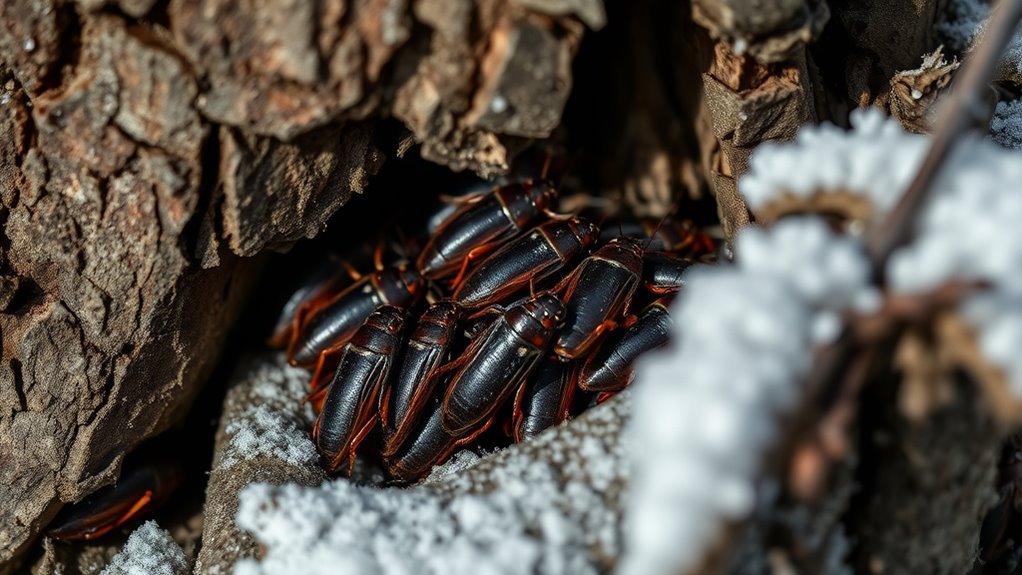
When temperatures drop below 44°F, cockroaches reduce their activity and hide in wall voids to stay safe.
Cockroaches become less active below 44°F, seeking shelter in wall voids to stay protected.
You’ll notice they seek out warm, sheltered places indoors, like cracks, crevices, and behind appliances, to maintain their body heat.
Cockroaches enter diapause, a hibernation-like state, allowing them to survive harsh, cold conditions by slowing their metabolism.
This behavior helps them conserve energy and avoid freezing.
Although adult cockroaches struggle in low temperatures, their eggs are more cold-tolerant and can endure short periods near 32°F.
If you’re dealing with cockroaches during colder months, you’ll find they’re less active but still present in hidden warm spots.
Understanding how cockroaches hide and enter diapause helps you better prevent infestations during winter’s chill.
Cockroach Species That Survive Winter
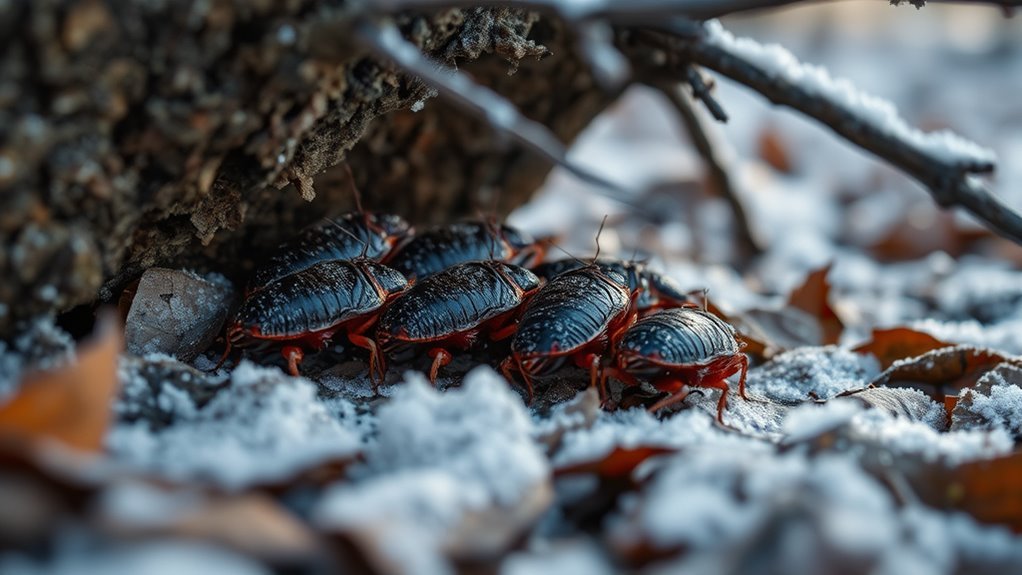
Although cold temperatures pose challenges, several cockroach species have developed strategies to survive winter by seeking warmth indoors.
German cockroaches, for example, overwinter in heated structures, staying active year-round by reproducing in warm indoor environments like walls and rafters.
American cockroaches also avoid the cold by moving into indoor environments such as vents and behind appliances, relying on milder climates and heated spaces to survive.
Oriental cockroaches overwinter in damp, sheltered spots like basements and crawl spaces where moisture and warmth persist.
Since cockroaches generally can’t tolerate temperatures below 15°F, they depend heavily on human-made heated structures to get through winter.
Understanding these species’ indoor survival tactics can help you better manage and prevent infestations during cold months.
Typical Winter Hiding Places for Cockroaches
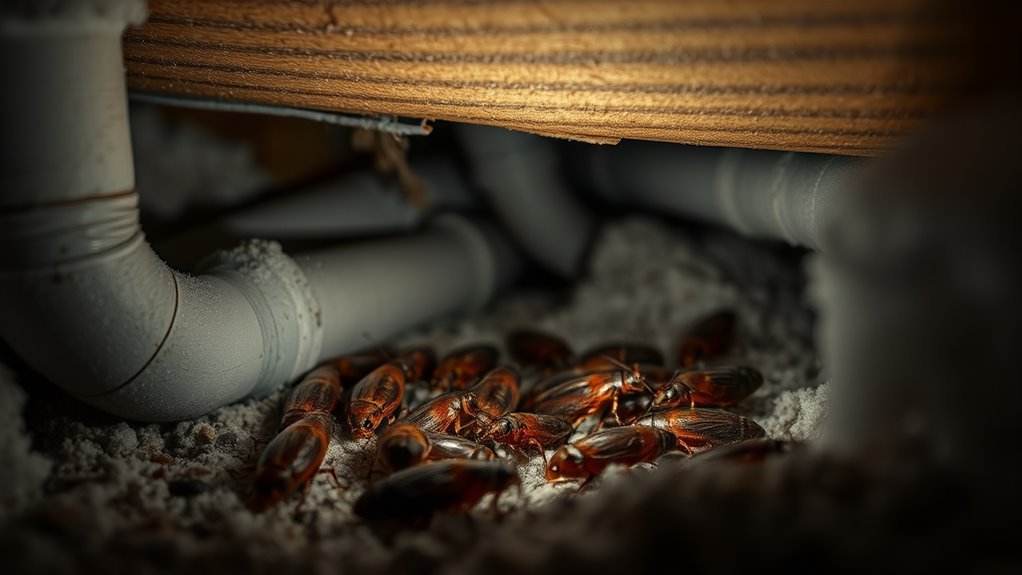
When winter hits, cockroaches look for cozy indoor spots like cracks, appliances, and basements to stay warm.
You’ll also find them hiding outside in places like stored firewood and decaying leaves.
Understanding these common hideouts helps you spot and prevent infestations during the cold months.
Indoor Shelter Spots
Since cockroaches seek warmth during winter, they often hide in places like wall voids, behind baseboards, and inside cabinets.
You’ll find indoor shelter spots in cracks and gaps around windows and doors, which serve as entry points and cozy hideouts.
Appliance hiding spots, such as behind refrigerators, stoves, and microwaves, provide warmth and protection.
Basements near plumbing and drains also offer damp, insulated environments ideal for them.
| Indoor Shelter Spot | Typical Location | Why Cockroaches Choose It |
|---|---|---|
| Wall Voids | Between walls | Warm, dark, and undisturbed |
| Baseboards | Along floor edges | Hidden and close to food sources |
| Cabinets | Kitchen and bathroom | Shelter and moisture |
| Appliance Hiding Spots | Behind refrigerators, stoves | Consistent warmth |
| Cracks/Gaps | Windows, doors, vents | Easy access and protection |
Outdoor Winter Hideouts
Cockroaches don’t just find shelter indoors during colder months—they also seek out outdoor winter hideouts to stay warm.
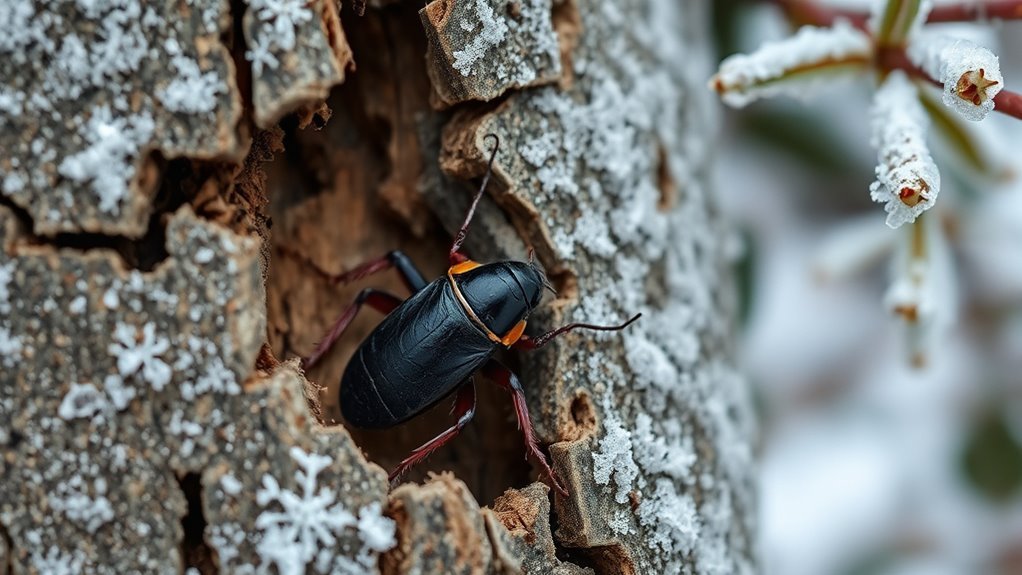
You’ll often find them hiding in cracks and gaps of decaying trees, stumps, and wood piles.
These natural shelters offer protection from freezing temperatures.
Besides natural spots, cockroaches use cracks and gaps in outdoor structures like sheds, porches, and fences as cozy winter hideouts.
They even take advantage of open chimneys, attic rafters, and wall voids, which provide insulation against the cold.
Be aware that during winter, these pests can slip through vents, damaged window screens, and other gaps to invade your home seeking warmth.
Understanding these outdoor winter hideouts helps you spot and prevent cockroach infestations effectively.
How Cockroach Eggs Withstand Cold Temperatures
You’ll find that cockroach eggs are tougher against cold than the adults, surviving brief dips to around 32°F.
However, they usually can’t handle long spells below freezing, even with their protective ootheca.
When temperatures warm up in spring or summer, the eggs hatch, starting the cycle anew.
Egg Cold Tolerance
How do cockroach eggs manage to survive cold temperatures that would harm many other insects?
Cockroach eggs show remarkable cold tolerance, especially compared to adult cockroaches.
While most eggs can’t withstand extreme cold, they often survive brief exposure to temperatures around 32°F.
This ability plays a vital role in their winter survival, allowing eggs to remain viable even when development slows down during colder months.
In milder winter climates or protected indoor environments, cockroach eggs stay safe above freezing, ensuring their viability until conditions improve.
When spring or summer arrives, these eggs hatch, restarting infestations.
So, if you’re dealing with cockroach problems, remember their eggs’ cold tolerance lets them endure winter.
This makes year-round control necessary.
Survival Threshold Temperatures
Although many insects freeze solid in cold weather, cockroach eggs can tolerate short bursts of temperatures at or just below 32°F without dying.
You’ll find that most cockroach eggs won’t survive prolonged exposure to temperatures below freezing, but brief cold snaps won’t kill them.
Their cold resistance is higher than adult cockroaches, which means egg survival through winter is possible in milder climates.
In places like Southern California, the temperature rarely drops low enough to be lethal, so eggs can survive year-round.
Understanding these survival threshold temperatures helps explain why cockroach infestations often return after winter.
The eggs withstand the cold, ready to hatch once warmer conditions arrive.
Egg Hatching Timing
While cockroach eggs can survive brief cold spells, their ability to hatch depends largely on timing and environmental conditions.
These egg capsules are cold-resistant, allowing them to endure short periods when temperatures dip below freezing.
You’ll find them tucked away in warm, sheltered spots like cracks or inside buildings, where conditions stay stable.
Although cold temperatures slow their development, they generally don’t kill the eggs.
Once spring arrives and temperatures rise, the hatching timing kicks in, and new cockroach nymphs emerge.
This strategic timing ensures the eggs hatch when survival chances are higher.
Signs of Cockroach Infestations During Cold Months
Even in cold months, cockroaches can stay active indoors as they seek warmth.
You might not see them easily, but signs of a hidden infestation often appear if you know where to look.
Hidden infestations reveal themselves through subtle signs if you know where to check.
Keep an eye out for droppings and egg casings in dark, undisturbed areas. Their activity usually increases near heating sources like pipes or appliances.
You may also detect a musty odor or find shed skins and carcasses near cracks and crevices.
These clues signal that cockroaches are surviving despite the cold.
Watch for:
- Droppings and egg casings in concealed spots
- Increased activity near heat sources
- Musty odors indicating infestation
- Shed skins or carcasses around cracks
Recognizing these signs helps you address infestations early during winter.
Effective Winter Pest Prevention Strategies
Noticing signs of cockroaches during winter means it’s time to take action to keep them out.
Start by sealing gaps around windows, doors, and foundations to block entry points.
Control indoor moisture by repairing leaks and ventilating damp areas—cockroaches thrive in humidity.
Reducing clutter and storing food securely removes their attractants.
Regular inspections combined with professional pest control help eliminate hidden populations before they grow.
Also, remove outdoor debris and firewood near your home to limit hiding spots.
| Strategy | Action | Reason |
|---|---|---|
| Sealing Gaps | Caulk windows and doors | Prevents entry |
| Indoor Moisture | Fix leaks, ventilate | Discourages shelter |
| Reducing Clutter | Clean, store food securely | Removes attractants |
| Outdoor Cleanup | Remove debris, firewood | Limits hiding spots |
| Pest Control | Regular inspections, treatments | Eliminates hidden roaches |
When to Seek Professional Cockroach Control
If your DIY efforts haven’t eliminated the cockroaches or you can’t reach their hiding spots, it’s time to call a professional.
Professional pest control experts can identify specific cockroach species and locate hidden nests. They provide targeted treatments that you can’t easily do yourself.
Early intervention is vital to stop a small issue from becoming a winter-long infestation. Since cockroaches tend to concentrate indoors during cold weather, professional services work more effectively in winter.
Consider seeking professional help when you notice:
- Persistent cockroach presence despite DIY methods
- Difficulty accessing nesting areas
- Signs of increased cockroach activity during winter
- Desire for eco-friendly, safe pest control solutions
Acting promptly with professional pest control ensures efficient, lasting results.
Frequently Asked Questions
How Cold Is Too Cold for Roaches?
You’ll find cockroaches struggle to survive below 15°F (-9°C).
Adults die after a few hours at these temps, while eggs resist a bit longer but can’t handle prolonged freezing.
Stay warmer, and they’ll persist.
Why Should You Never Kill a Cockroach?
Killing a cockroach is like poking a hornet’s nest—you’ll trigger an alarm, making others scatter.
You’ll also risk spreading bacteria and attracting more pests.
What Kills Roaches Immediately?
You can kill roaches immediately by using insecticide sprays that act on contact or pouring boiling water directly into their hiding spots.
Both methods deliver quick results, instantly eliminating exposed cockroaches and their eggs.
Will a Cold House Get Rid of Roaches?
You might hope a chilly home sends roaches packing, but they’re clever survivors.
They nest where it’s cozy, so cold alone won’t do.
You’ll need targeted pest control to truly bid them farewell.
Conclusion
You might think cold weather is a cockroach’s enemy, but these resilient pests sneak through winter like shadows in the night.
They find cozy hiding spots and protect their eggs, making them tough to spot when it’s chilly outside.
To keep your home pest-free, stay vigilant and act early—because letting cockroaches settle in is like inviting a winter storm indoors.
Don’t wait; take control before they multiply in the cold.
In conclusion, cockroaches are surprisingly adaptable creatures that can survive even in the coldest months.
By understanding their behavior and taking proactive measures, you can safeguard your home from these unwanted intruders.
Regular cleaning, sealing entry points, and using pest control methods are essential.
Stay proactive and ensure your living space remains a no-go zone for cockroaches, especially when temperatures drop.