How Do Polar Bears Survive Warm Weather?
You can see polar bears survive warm weather by changing their behavior and diet to stay cool and fed.
They swim in icy water, chew on ice, and seek shade to shed heat.
When sea ice melts, they spend more time on land scavenging alternative foods like whale carcasses.
Their fur and skin help regulate temperature, and genetic shifts improve heat tolerance.
If you keep exploring, you’ll uncover how these remarkable adaptations help them cope with a warming Arctic.
Behavioral Adaptations to Rising Temperatures
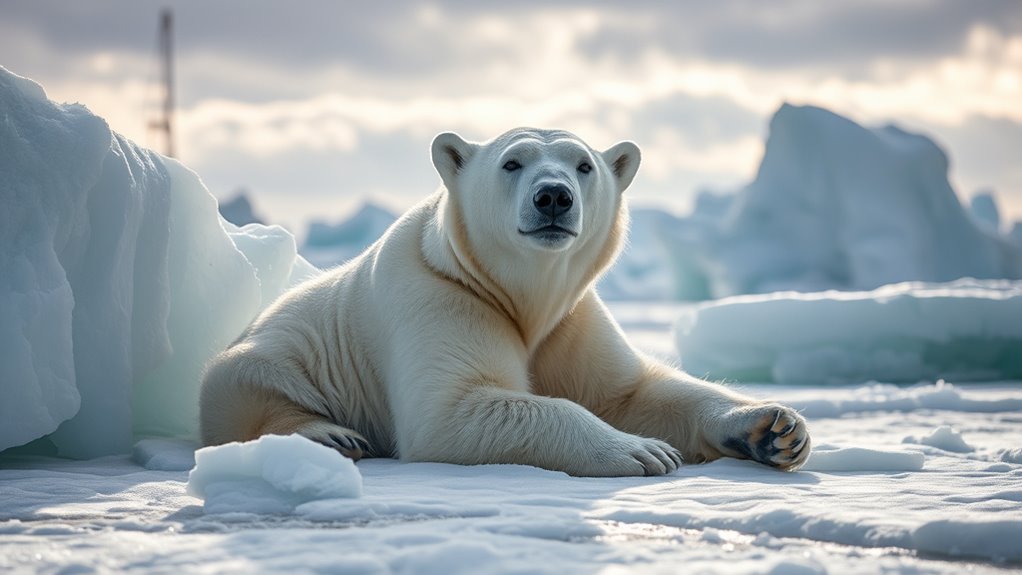
Although polar bears are built for cold climates, they’ve developed clever behaviors to stay cool as temperatures rise.
Polar bears use smart behaviors to stay cool even as their environment warms.
When you watch polar bears, you’ll notice they often plunge into the icy sea, using the cold water to shed excess heat.
Swimming keeps them active and helps dissipate warmth from their thick fur and fat layer.
On land or in captivity, polar bears chew on ice, toys, or other objects to regulate their body temperature during warmer spells.
Zoos support these natural behaviors by providing air-conditioned indoor spaces and water features that mimic the sea environment.
These adaptations help polar bears stay comfortable despite their cold-weather design, letting them cope with rising temperatures more effectively.
Changes in Diet and Foraging Habits
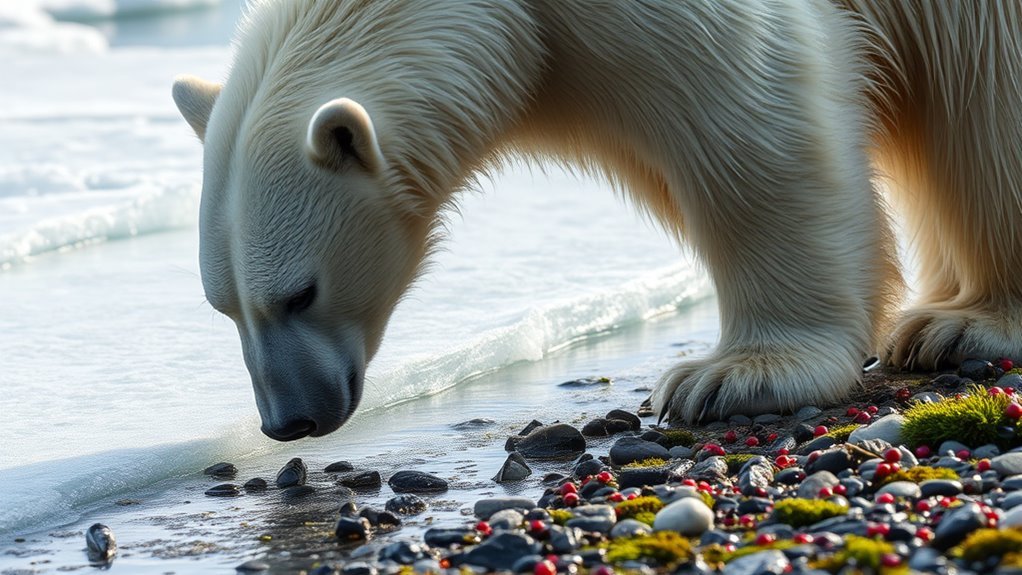
As sea ice melts earlier, you’ll notice polar bears shifting from hunting seals to scavenging whale carcasses or searching for eggs and land animals.
They’ve had to adapt by exploring new food sources and changing where and when they forage.
These shifts in diet and strategy are vital for their survival in a warming world.
Shifts in Food Sources
How do polar bears find enough food when their icy hunting grounds vanish?
As Arctic sea ice melts sooner and forms later, polar bears face longer fasting periods. They shift their diet to survive, relying less on seals and more on alternative sources like:
- Whale carcasses washed ashore, offering rich nutrients.
- Sea duck eggs, found in coastal nests during warmer months.
- Reindeer and other land animals, which require different hunting skills.
These shifts in food sources help polar bears adapt, but they don’t replace the high-fat seal diet they’re built for.
You’ll notice polar bears scavenging in new ways, sometimes even exploring human garbage. This dietary flexibility is vital as the Arctic warms, but it also challenges their health and reproduction.
Ultimately, it shapes their survival in a rapidly changing world.
Alternative Foraging Strategies
When melting sea ice limits access to seals, polar bears adapt by changing what and how they forage.
They turn to alternative foraging strategies like scavenging whale carcasses, hunting reindeer, and collecting sea duck eggs.
These changes help them survive but often provide less fat, which affects their health.
Some bears even scavenge near human settlements during longer ice-free periods.
Here’s a quick look at their evolving diet:
| Food Source | Availability Impacted by | Energy Content |
|---|---|---|
| Seals | Melting sea ice | High |
| Whale carcasses | Less dependent on ice | Moderate |
| Reindeer & eggs | Terrestrial | Lower |
These shifts reflect how polar bears cope with warming Arctic conditions and the challenges posed by melting sea ice.
Denning Challenges and Cub Survival
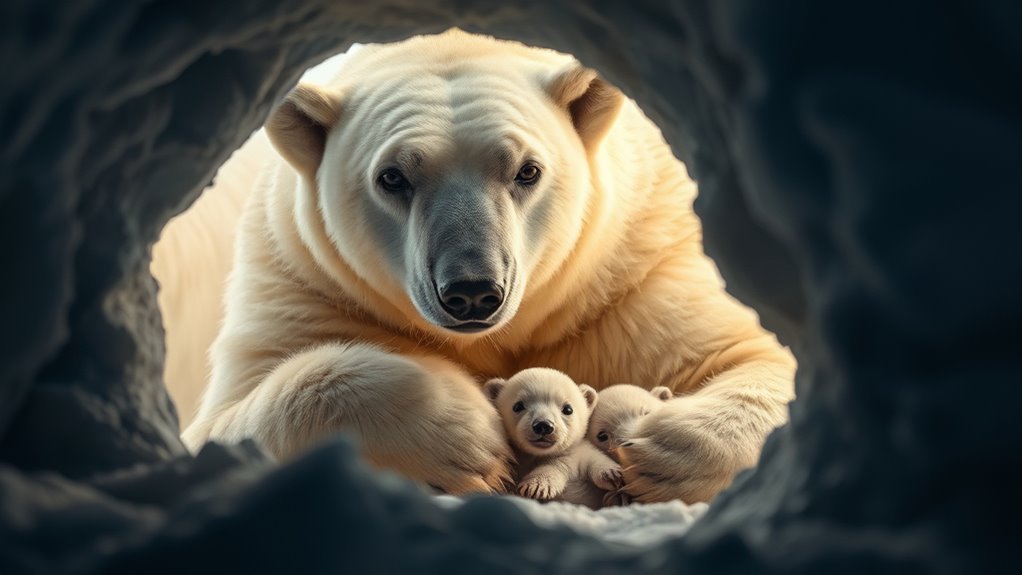
What happens to polar bear cubs when their dens collapse in warm winters?
Denning challenges directly threaten cub survival.
When the snow shelters fall, these vulnerable cubs face harsh exposure, risking their lives.
You can imagine:
- A mother bear weakened by extended fasting, struggling to protect her young.
- Cubs left exposed to cold winds and predators without their cozy dens.
- Reduced safe denning habitats shrinking as climate change advances.
With less than a third of suitable denning areas remaining compared to the 1980s,
and longer ice-free periods forcing mothers ashore, cub survival rates drop sharply.
The loss of dens means cubs lose essential protection, leading to smaller litter sizes and overall population decline.
Understanding these denning challenges highlights how fundamental stable, cold environments are for polar bear families to thrive.
Physiological Features Supporting Heat Regulation
Although polar bears thrive in icy environments, their bodies have evolved remarkable features that help them regulate heat when temperatures rise.
You’ll notice their dense undercoats and hollow guard hairs trap air, providing insulation and balancing body temperature.
While their clear, pigment-free fur reflects visible light to aid camouflage and reduce heat absorption, their black skin underneath absorbs solar heat.
Clear fur reflects light for camouflage, while black skin beneath absorbs heat to keep polar bears warm.
This is essential for warmth in cold conditions but manageable during warmer days.
Their large, wide paws not only support movement on snow but also help cool them while swimming.
When it gets too warm, they submerge into icy pools or seek shade, using these behavioral strategies alongside their physiological traits to keep cool and maintain comfort despite rising temperatures.
Impact of Sea Ice Loss on Habitat Use
You’ve probably noticed how shrinking sea ice changes where polar bears can live and hunt.
As ice disappears, bears have to adjust by spending more time on land or swimming longer distances.
Let’s explore how these habitat shifts force them to adapt their strategies for survival.
Sea Ice Decline
As Arctic sea ice continues to decline every month since 1979, polar bears face shrinking habitats that challenge their survival.
Sea ice decline forces polar bears to adapt quickly, but they might struggle as their essential hunting grounds vanish.
You can imagine their plight by picturing:
- Melting ice stretching further apart, making seals harder to catch.
- Polar bears swimming long distances, using up precious energy.
- Summers without ice, leaving bears to rely solely on fat reserves.
This loss affects all 19 polar bear subpopulations, limiting their ability to hunt and reproduce.
With less ice, polar bears might spend more time on land, exposing them to dangers and human conflicts.
Understanding this decline helps you grasp the urgent challenges polar bears face in a warming world.
Habitat Adaptation Strategies
Shrinking sea ice forces polar bears to change where and how they live.
As their primary hunting platform disappears, you’d notice them spending more time on land, relying on habitat adaptation to survive.
Without enough sea ice, polar bears can’t hunt seals effectively, so they turn to terrestrial foods like berries, bird eggs, and reindeer.
You’d also see them swimming longer distances and traveling more on land, which means they use up more energy and face longer fasting periods.
Changes in sea ice conditions even affect where and when they den and breed, shifting their habitat use patterns.
This ongoing loss of sea ice threatens their survival by limiting access to traditional prey and safe resting spots, forcing polar bears to constantly adapt to a rapidly changing environment.
Use of Terrestrial Environments During Warm Seasons
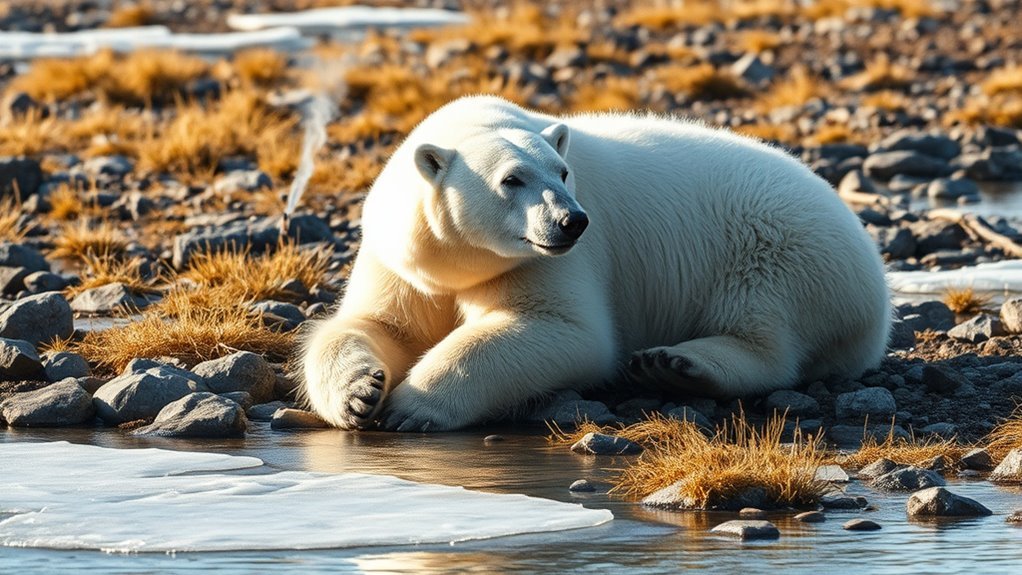
When sea ice melts during warmer seasons, polar bears move onto land to rest and conserve energy.
You’ll notice how their adaptation to terrestrial environments becomes essential for survival.
Once on land, polar bears adjust their behavior to cope with warmth by:
- Foraging for terrestrial foods like berries, bird eggs, and sometimes reindeer.
- Digging dens or finding shelter in snowbanks to stay cool and shield from heat.
- Swimming to cooler areas or icy patches to regulate body temperature.
These strategies highlight how polar bears use terrestrial environments effectively during warm seasons, relying on their adaptive flexibility.
Genetic Adaptations to Climate Stress
Though polar bears have long relied on behavioral changes to cope with warming habitats, recent research reveals they’re also undergoing genetic adaptations to climate stress.
You’ll find that polar bears in warmer climates show genetic changes, especially in genes linked to heat stress, aging, and metabolism.
These shifts happen at different rates across populations, highlighting their rapid response to rising temperatures and melting sea ice.
By rewiring their DNA, polar bears may better tolerate warmer conditions and adjust their diets.
This genetic flexibility proves they’re evolving quickly amid climate change, though you should remember the long-term success of these adaptations isn’t guaranteed.
Understanding these changes helps you appreciate the complex ways polar bears strive to survive in an increasingly hostile environment.
Conservation Efforts and Future Outlook
How can we guarantee polar bears survive the challenges posed by climate change?
You play a key role in the conservation of nature by supporting efforts that reduce greenhouse gas emissions and protect polar bear habitats.
The Circumpolar Action Plan (CAP) unites countries to tackle the high risk of extinction polar bears face.
You should focus on:
- Backing adaptive management strategies informed by ongoing scientific research and habitat monitoring.
- Promoting international cooperation to enforce protective measures and secure prey availability.
- Advocating for policies that address climate change, the root cause of habitat loss.
Frequently Asked Questions
Can Polar Bears Survive in Warm Weather?
You can survive warm weather as a polar bear, but you’ll need to plunge into icy water, seek shade, and rest during heat.
Your thick fur helps, but prolonged warmth still challenges your health and comfort.
How Does a Polar Bear Survive Its Climate?
You’ll see polar bears survive their climate by relying on thick fur, diving into icy water, seeking shade, and adjusting behavior.
They adapt well, using natural cooling methods and conserving energy to handle fluctuating temperatures effectively.
How Do Polar Bears Not Freeze After Swimming?
You won’t see polar bears freeze after swimming because their thick double-layered fur traps warm air.
Their black skin absorbs heat, and a thick fat layer insulates their body, keeping them warm even in icy water.
Pretty impressive, right? These adaptations are crucial for their survival in such frigid environments!
Why Can’t Polar Bears Survive Without Ice?
You can’t expect polar bears to survive without ice because they rely on it to hunt seals, rest, and reproduce.
Without ice, they struggle to find food, exhaust energy swimming, and lose essential habitat, threatening their survival.
Conclusion
You might think polar bears are just icons of the icy Arctic, but they’re proving to be survivors in a warming world.
Facing melting ice and rising temperatures, they adapt their behavior, diet, and habitats in remarkable ways.
Like nature’s resilient warriors, they fight against the odds to thrive.
If we don’t act soon, their future could slip through our fingers—so it’s up to you to help protect these incredible creatures before it’s too late.
Polar bears are facing unprecedented challenges due to climate change.
As their icy habitats disappear, they’re finding new ways to survive and adapt.
However, this fight for survival is not just their battle; it’s ours too.
By taking action now, we can ensure that these magnificent beings continue to roam the Arctic.
Let’s work together to protect polar bears and their habitat for generations to come.