Does Cold Weather Kill Cockroaches and How to Use It Effectively
Cold weather can be an effective tool in managing cockroach infestations. While it slows down their activity and can kill many adult cockroaches when temperatures drop below freezing, it won’t completely eliminate them.
This is because cockroach eggs can survive mild cold temperatures, and these pests often find warm hiding spots indoors.
To use cold effectively, freeze infested items at 0°F (-18°C) for a minimum of 4 days.
Additionally, it’s crucial to seal entry points in your home to prevent reinfestation.
For the best results in controlling cockroaches, combine cold treatments with thorough cleaning and sealing.
There’s so much more to discover about targeting their winter hiding places and behaviors!
Understanding Cockroach Behavior in Cold Weather
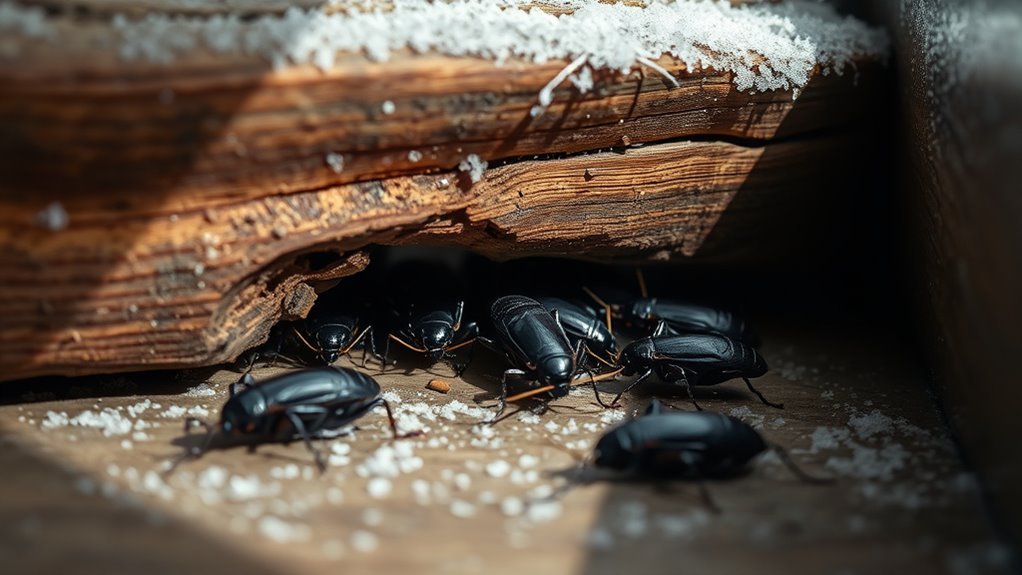
Although cold weather slows cockroaches down, they don’t disappear.
Cold weather may slow cockroaches, but it doesn’t make them vanish entirely.
When cold temperatures drop below 45°F, you’ll notice cockroaches reduce activity and hide in wall voids.
They enter a state called diapause, which slows their metabolism but isn’t true hibernation.
Most cockroach eggs can survive short periods at 32°F, although extreme cold usually kills them.
You’ll find cockroaches seeking indoor warmth during winter, especially in basements, attics, and kitchens where temperatures stay higher.
Cold temperatures above freezing rarely kill cockroaches, so if your home stays heated, these pests can survive and even thrive.
Understanding this behavior helps you realize why cockroaches persist despite cold weather.
It also highlights the importance of controlling indoor warmth to limit their survival.
Common Cockroach Species Found in Cold Climates
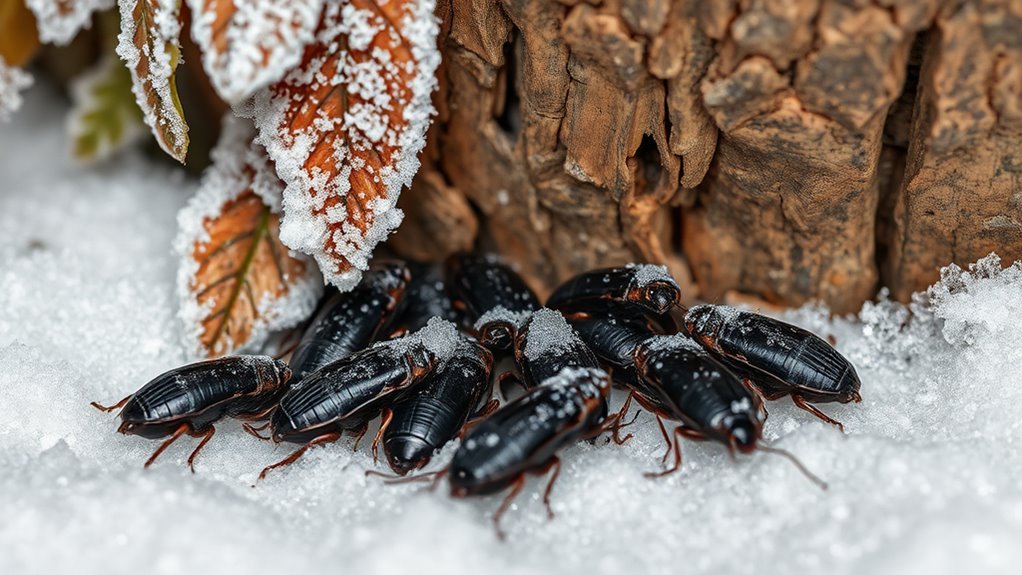
You’ll notice that some cockroach species handle cold better than others.
Oriental cockroaches, for example, can survive in chilly, damp places like basements.
On the other hand, German and American cockroaches struggle with low temperatures.
Knowing which species are more likely to invade your home during winter helps you stay ahead of infestations.
Species Adapted to Cold
When temperatures drop, the Oriental cockroach (Blatta orientalis) stands out as one of the few common species that can handle the cold better than others.
You’ll find that this species shows remarkable temperature survival, tolerating cold temperatures down to 45°F for extended periods. Unlike German or American cockroaches, the Oriental cockroach’s seasonal adaptation allows it to thrive in cooler environments.
In cold climates, they often hide in damp, shaded spots like basements and mulch beds where temperatures stay relatively stable. This resilience makes them a persistent indoor pest during winter months when other species struggle to survive.
Understanding the Oriental cockroach’s cold tolerance helps you recognize why certain cockroach infestations continue despite dropping temperatures and how their seasonal adaptation supports their survival.
Cold Climate Survivors
If you live in a cold climate, you’ll notice that only a few cockroach species manage to survive the harsh winter months.
The Oriental cockroach, for example, shows impressive cold tolerance and thrives in damp, cool environments. This makes it a true cold climate survivor.
On the other hand, American cockroaches often seek warmth indoors during winter. But they can also endure outdoor cold temperatures if they find sheltered spots.
The German cockroach struggles more with cold and can’t withstand prolonged temperatures below 45°F. This limitation really affects its ability to survive outdoors during the winter.
Many species adapt by entering diapause, which is a dormancy state that slows their activity to survive those cold spells.
These adaptations highlight how cockroach survival hinges on their ability to cope with cold temperatures.
It’s fascinating to see how some species are resilient pests even in chilly environments!
Temperature Thresholds That Affect Cockroach Survival
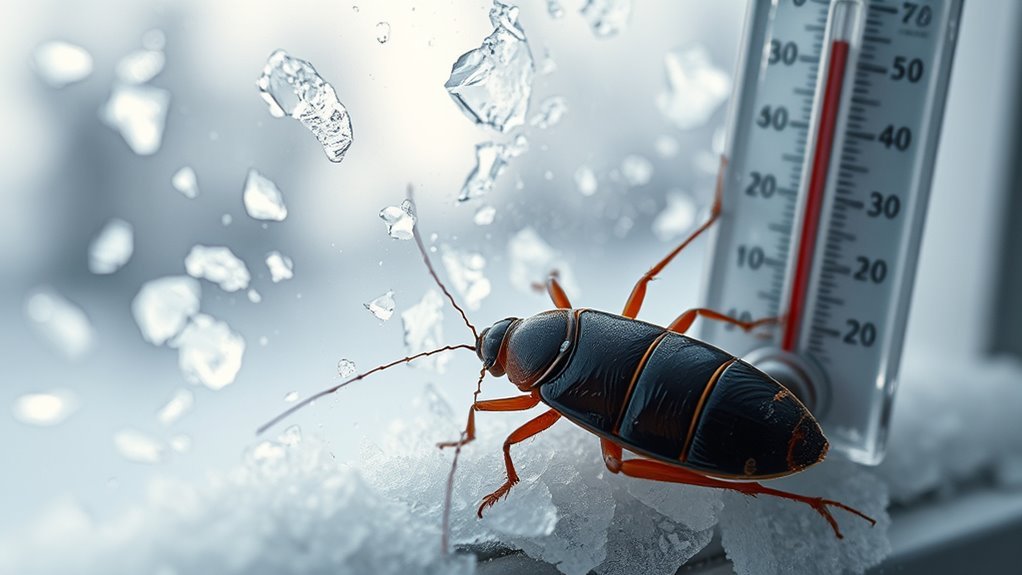
Although cockroaches thrive in warm environments, they struggle to survive once temperatures drop below 45°F for long periods.
Cold temperatures near or below this threshold markedly reduce cockroach survival, especially with extended exposure.
When temperatures fall to 32°F or lower, adult cockroaches typically perish quickly.
These temperature thresholds are critical because even brief exposure to freezing conditions can be lethal.
Understanding these limits helps you use cold effectively to control infestations.
Keep in mind that while adults are vulnerable below 45°F, extended exposure to these cold temperatures is what truly impacts their survival rates.
Cold Tolerance of Cockroach Eggs Compared to Adults
Since cockroach eggs withstand cold better than adults, you’ll find they survive brief dips below freezing that would quickly kill mature roaches.
Cockroach eggs show greater resistance to cold temperatures, but their temperature survival has limits. Here’s what you need to know:
- Eggs can endure short periods at 32°F (0°C), tolerating brief cold snaps adults can’t.
- Most cockroach eggs won’t survive prolonged exposure below 50°F (10°C), so extended cold reduces egg viability.
- Temperatures above freezing usually don’t threaten eggs, allowing them to persist through mild winters.
Understanding these differences helps you target infestations effectively.
Knowing that while adults die quickly in cold, eggs require longer, sustained cold exposure to be controlled is key.
Typical Hiding Places Cockroaches Use During Winter
When temperatures drop, cockroaches seek out warm, sheltered spots indoors where they can avoid the cold.
During winter, their typical hiding spots include wall voids, ceiling spaces, and behind baseboards—all areas that offer insulation from cold temperatures.
You’ll often find them in cabinets, around appliances like stoves and microwaves, and near pipes where warmth lingers.
They also hide under sinks and inside cracks or crevices in floors and walls.
Cluttered areas, storage boxes, and furniture backs provide additional insulation, making these excellent winter refuges.
Understanding these common hiding places helps you target areas for effective control during cold months.
This way, you can prevent cockroaches from thriving despite the chilly weather.
Can Cockroaches Survive Inside Refrigerators and Freezers?
Have you ever wondered if cockroaches can survive inside refrigerators or freezers?
While these pests might be attracted to food inside refrigerators, the cold environment usually prevents them from surviving long.
Here’s what you need to know:
- Cockroaches generally die if trapped in refrigerators or freezers for an extended time due to low temperatures.
- Species like Oriental cockroaches can survive longer in cold, but temperatures below 32°F (0°C) cause rapid death.
- Prevent cockroaches from entering by sealing cracks and keeping food sealed to avoid attracting them.
How Cold Weather Impacts Cockroach Reproduction and Growth
Although cockroaches can survive in various environments, cold weather slows their metabolism and drastically reduces their reproduction and growth rates.
When temperatures drop below 44°F, cockroach reproduction nearly stops as females halt egg-laying. Cold temperatures stunt nymph development, delaying their progression to adulthood.
Most cockroach eggs can’t survive prolonged exposure to temperatures below 32°F, which severely limits egg survival and prevents new infestations during winter.
Cockroach eggs rarely survive long in freezing temperatures, reducing winter infestations significantly.
You’ll notice cockroach populations decline in colder seasons or climates since their reproductive cycle is interrupted.
By understanding how cold weather impacts cockroach reproduction and growth, you can better anticipate seasonal changes in their activity and manage infestations more effectively.
Cold temperatures are a natural barrier to cockroach proliferation, slowing their life cycle considerably.
Effective Cold Weather Pest Control Strategies
Since cold weather naturally hinders cockroach activity, you can leverage low temperatures to control infestations effectively.
When temperatures drop, cold becomes a powerful tool to weaken and kill these pests. Here’s how to use cold strategically:
- Maintain indoor temperatures below 45°F for several days to kill adult cockroaches.
- Use freezing infested items at 0°F for at least 4 days to eliminate eggs and adults.
- Seal entry points and reduce moisture to enhance cold treatment effects and prevent infestations.
Combining these methods with other pest control strategies boosts your chances of total eradication.
Regularly applying freezing techniques to infested belongings helps keep cockroach populations under control during winter’s chill.
Preventing Cockroach Infestations During Winter Months
When winter arrives, you need to take proactive steps to keep cockroaches from invading your home.
Although cold temperatures can limit their activity, cockroaches still seek warmth indoors during winter months.
To prevent cockroach infestations, seal gaps and cracks around windows, doors, and your foundation.
This physical barrier stops them from entering.
Keep your home clean and store food in airtight containers to reduce attractants.
Fix leaks and use dehumidifiers to eliminate excess moisture in kitchens and bathrooms since cockroaches thrive in damp areas.
Regularly inspect your home for new entry points and seal them promptly.
Using targeted bait and traps indoors further controls their population.
When to Seek Professional Help for Winter Cockroach Problems
If you notice cockroaches in unusual spots like your refrigerator or electrical outlets during winter, it’s a sign of a severe infestation.
When DIY efforts don’t cut it, professional pest control can thoroughly eliminate hidden populations and prevent them from coming back.
Getting expert help guarantees you tackle the problem quickly and effectively before it worsens.
Signs of Severe Infestation
Although you might spot a few cockroaches during winter, severe infestations show clear warning signs that mean it’s time to call a professional.
Recognizing these signs of infestation early helps you avoid a worsening cockroach problem.
Here are three key indicators of a severe infestation:
- You notice a strong musty odor and find numerous droppings or egg cases in hidden areas.
- You see live cockroaches during daytime, indicating a large, established population.
- You frequently spot shed skins or carcasses, signaling high activity and reproduction.
When you observe these signs, professional pest control is essential.
DIY efforts rarely succeed against severe infestations, so timely expert help can effectively manage and eliminate your cockroach problem.
Benefits of Expert Treatment
Because cockroaches hide in hard-to-reach places and multiply quickly during winter, you need expert treatment to effectively eliminate them.
The benefits of expert treatment include access to professional pest control that targets specific cockroach species and their hidden spots in wall voids and appliances.
Experts conduct a thorough inspection to uncover persistent infestations you might miss.
They also apply seasonal treatments designed for cold weather, preventing rapid population growth as cockroaches seek warmth indoors.
Professional pest control uses specialized baits, traps, and residual insecticides proven effective during winter.
By seeking expert help, you get a customized plan that addresses your unique winter cockroach problem efficiently.
This approach saves you time and reduces the chance of reinfestation throughout the cold season.
Frequently Asked Questions
How Cold Is Too Cold for Roaches?
You’ll find temperatures below 32°F too cold for roaches, killing adults within hours.
To be effective, keep it consistently under 45°F for several days.
This targets both adults and eggs to reduce their survival chances.
Why Should You Never Squish a Roach?
You shouldn’t squish a roach because you spread bacteria,
you leave behind eggs, and you attract more pests.
Instead, use proper pest control methods that protect your health,
prevent infestations, and keep your home clean.
What Kills Roaches Immediately?
You can kill roaches immediately by using boiling water or steam at 212°F, or quick-knockdown insecticidal sprays.
These methods deliver instant results, so act fast and target their hiding spots directly for best effect.
How Long Does the Cold Take to Kill Cockroaches?
Like a slow winter’s whisper, cold kills cockroaches within 24 to 48 hours if temperatures stay below freezing.
You’ll need consistent exposure, as shorter chills only weaken them.
They’re tough little survivors, but not invincible.
Conclusion
Just as the biting chill seeps through cracks, you’ll find cockroaches retreating to hidden nooks.
They struggle against the cold that doesn’t quite kill them but slows them down.
You can use winter’s bite to your advantage by sealing entry points and keeping things dry.
But remember, when these resilient pests refuse to vanish with the frost, calling a professional might be the warm solution you didn’t expect.
Turning winter’s chill into your strongest ally can be beneficial in managing cockroach infestations.
In conclusion, while cold weather can hinder cockroach activity, it doesn’t eliminate them entirely.
Sealing entry points and maintaining a dry environment are key strategies.
If they persist despite your efforts, don’t hesitate to seek professional help to ensure your home remains pest-free.