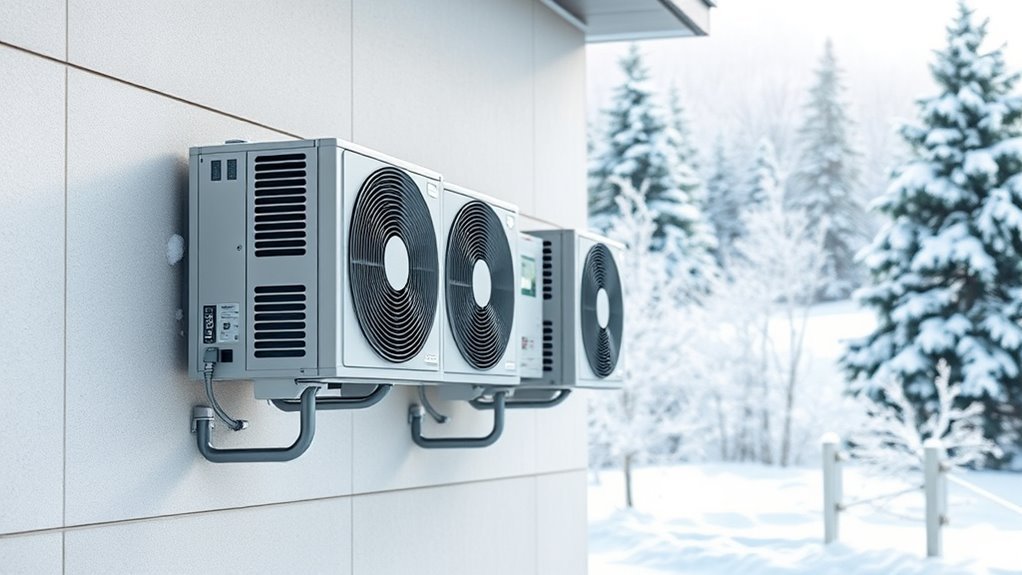
2 Best Cold Weather Mini Split Systems for 2026
For 2026, the two best cold weather mini split systems you’ll want are the COSTWAY 12000 BTU and the Nexaro 12000 BTU models. These top-rated cold weather mini splits excel in handling freezing temperatures, making them ideal for harsh winter conditions.
Both units feature efficient inverter technology and eco-friendly refrigerants to help cut energy costs and reduce emissions.
They operate quietly and come with smart controls for easy and convenient use. These models are built to withstand severe cold, ensuring your space stays warm and cozy without relying on extra heating sources.
Keep exploring to see which cold weather mini split system fits your specific needs best and enhances your comfort throughout winter.
COSTWAY 12000 BTU Mini Split AC & Heater
Experience comfort in any season with the COSTWAY 12000 BTU Mini Split AC & Heater. This system is built to maintain ideal temperatures, heating rooms down to -4℉ and cooling up to 127℉. It ensures your living space stays cozy during harsh winters and refreshingly cool in the summer, solving the problem of unreliable climate control.
Equipped with a 20 SEER2 inverter system, it delivers efficient performance while keeping energy costs manageable. The unit is designed for spaces up to 750 sq.ft., making it a practical choice for many homes or apartments. Its quiet operation at just 28 dB means it won’t disrupt your daily activities.
Controlling the system is simple and flexible. You can use the Wi-Fi app, voice commands, or the included remote to adjust settings from anywhere. The unit offers seven modes and a 4D auto swing feature to distribute air evenly, enhancing comfort throughout the room.
Maintenance is straightforward thanks to washable filters and a self-clean function. These features reduce the effort and cost of upkeep, helping the system run efficiently over time. The sleek design blends easily into various interiors without being intrusive.
Best for: homeowners or renters needing a reliable, energy-efficient mini split system for heating and cooling spaces up to 750 sq.ft., even in extreme temperatures.
What We Like:
- Energy-efficient 20 SEER2 inverter with quiet 28 dB operation
- Multiple control options: Wi-Fi app, voice commands, and remote
- Seven operating modes and 4D auto swing for even airflow
- Washable filters and self-clean function simplify maintenance
Specification:
| Feature | Details |
|---|---|
| Manufacturer | COSTWAY |
| Cooling Capacity | 12000 BTU |
| Heating Range | Down to -4℉ |
| Cooling Range | Up to 127℉ |
| Energy Efficiency | 20 SEER2 inverter |
| Max Coverage Area | 750 sq.ft. |
| Noise Level | 28 dB |
| Power Consumption | 1120 watts |
| Control Methods | Wi-Fi app, voice, remote |
| Maintenance Features | Washable filters, self-clean function |
12000BTU Mini Split Air Conditioner Heat Pump
Experience reliable climate control tailored for rooms up to 750 sq.ft. The Nexaro 12000BTU Mini Split Air Conditioner Heat Pump offers efficient heating and cooling by adapting to your space’s needs. Its advanced inverter technology ensures consistent temperature without fluctuations, improving comfort throughout the year.
This mini split operates quietly at just 38 decibels, making it ideal for bedrooms or offices where low noise is important. You can switch between five modes, including Eco and Sleep, to optimize energy use and maintain a peaceful environment. The unit’s design also prioritizes easy maintenance with washable filters and anti-mildew protection, promoting cleaner air and longer system life.
Installation is simplified thanks to the pre-charged condenser and included kit, although professional setup may still be needed to ensure peak performance. Environmentally conscious users will appreciate its use of eco-friendly R32 refrigerant, which supports better air quality and reduced environmental impact.
While perfect for smaller spaces, this model is not suitable for large areas beyond 750 sq.ft. It balances quiet operation, energy efficiency, and straightforward upkeep to keep your space comfortable without high energy bills or noise disruption.
Best for: homeowners or renters looking for a quiet, energy-efficient heating and cooling solution for medium-sized rooms with simple maintenance needs.
What We Like:
- Quiet operation at 38 decibels supports restful environments
- Five adjustable modes including Eco and Sleep for personalized comfort
- Uses eco-friendly R32 refrigerant for cleaner air and lower environmental impact
- Washable filters and anti-mildew protection simplify maintenance and enhance air quality
Specification:
| Feature | Specification |
|---|---|
| Manufacturer | Nexaro |
| Cooling/Heating Capacity | 12000 BTU |
| Suitable Area | Up to 750 sq.ft. |
| Compressor Type | 19 SEER2 inverter |
| Noise Level | 38 dB |
| Refrigerant | R32 (eco-friendly) |
| Installation | Pre-charged condenser with kit included |
Factors to Consider When Choosing a Cold Weather Mini Split
When choosing a cold weather mini split, you’ll want to focus on heating performance range and energy efficiency ratings to keep your space warm without high costs. Consider installation requirements and noise levels to guarantee the system fits your home and lifestyle.
Don’t forget to check control and connectivity options for easy operation and convenience.
Heating Performance Range
Because cold weather mini splits must operate reliably in frigid conditions, you’ll want to focus on their heating performance range. This means checking the minimum outdoor temperature at which the unit can sustain effective heating, often down to -4°F or even lower. A wider heating range ensures you’ll stay warm during extreme cold snaps.
Pay close attention to the heat pump’s capacity to maintain your desired indoor temperature, especially below 0°F. Some models include auxiliary or electrical heating elements that boost performance in very low temperatures, providing extra warmth when needed.
Choosing a mini split with a robust heating range guarantees consistent comfort and reliable operation, even in the harshest winter weather.
Energy Efficiency Ratings
Three key energy efficiency ratings help you evaluate a cold weather mini split: SEER, HSPF, and inverter technology. SEER measures how efficiently the system cools or heats, with higher values like 19+ meaning you’ll save on electricity bills. HSPF focuses specifically on heating efficiency, which is essential in cold climates to guarantee your mini split performs well during winter.
Inverter technology adjusts the compressor speed continuously, optimizing energy use as outdoor temperatures change. Choosing a system with strong ratings in these areas ensures you get reliable heating while keeping operational costs low.
Plus, higher efficiency reduces your environmental impact, making it a smart, sustainable choice for cold weather. Always prioritize these ratings to find a mini split that balances performance and energy savings.
Installation Requirements
Choosing a cold weather mini split with strong energy efficiency ratings sets you up for long-term savings, but proper installation is what guarantees the system performs reliably in harsh conditions. First, verify the unit is rated for low ambient heating, functioning effectively down to at least -4℉. You’ll need enough space for both indoor and outdoor units, allowing proper airflow and easy maintenance access.
Confirm your power supply matches the system’s voltage and amperage requirements, usually 115V. The outdoor mounting spot must withstand snow, wind, and debris while protecting the unit. Finally, make sure the installation includes correct refrigerant piping, electrical wiring, and drainage to avoid leaks or water damage, especially critical in cold climates.
Following these steps ensures your mini split runs efficiently all winter.
Noise Level Considerations
When selecting a cold weather mini split, you’ll want to pay close attention to noise levels, as they greatly influence indoor comfort. Look for units with noise ratings around 28 dB or lower to maintain a quiet environment, especially in bedrooms or home offices. Noise above 38 dB can be disruptive, so choosing a quieter system is essential for sensitive spaces.
Inverter technology helps by adjusting the compressor speed smoothly, reducing noise during operation. Don’t forget to check the outdoor unit’s noise level too, since loud sounds can disturb neighbors and outdoor areas. Opting for a quieter model benefits everyone, ensuring comfort both inside and outside your home during cold weather months.
Control and Connectivity Options
How easily you can control your mini split greatly impacts your overall comfort and convenience. Look for systems offering multiple control options like a Wi-Fi app, remote control, and voice commands so you can adjust settings from anywhere. Check if it supports voice assistants such as Alexa or Google Assistant to enable hands-free operation.
Make sure the remote control has a sufficient range—ideally at least 26 feet—so you can change settings without moving around. Models with programmable timers and sleep modes help automate temperature control, saving energy while keeping you comfortable.
Also, verify compatibility with your smart home system to guarantee seamless integration and remote access, giving you full control no matter where you are.
Maintenance and Durability
A reliable cold weather mini split depends heavily on proper maintenance and durable construction to withstand harsh conditions. You should regularly clean and replace filters to keep the system running efficiently and extend its life. Opt for units with corrosion-resistant parts like coated coils and sturdy casings to handle moisture and cold.
Proper installation is essential—secure insulation and sealed connections protect against damage from temperature swings. Models with strong defrost and auto defrost features help prevent ice buildup, reducing wear and tear. Don’t forget routine checks on refrigerant levels and electrical components to spot issues early.
Environmental Impact
Why should you consider environmental impact when choosing a cold weather mini split? Opting for systems that use R-32 refrigerant *considerably* lowers your carbon footprint since it has a much lower global warming potential than traditional refrigerants like R-410A. You’ll also want a model with energy-efficient inverter technology, which cuts electricity use and reduces emissions tied to power generation.
Mini splits designed to perform well in extreme cold prevent reliance on extra heating sources, saving energy overall. Look for units with high SEER ratings to minimize greenhouse gas emissions by using less energy for heating and cooling. Finally, proper installation and regular maintenance keep refrigerant levels *ideal* and efficiency high, ensuring you don’t waste energy and further reduce your environmental impact.
Frequently Asked Questions
How Do Mini Splits Compare to Traditional HVAC Systems in Efficiency?
You’ll find mini splits more efficient than traditional HVAC because they heat and cool specific zones without wasting energy. They use inverter technology, reducing electricity use, and perform better in cold weather, saving you money year-round.
Can Mini Split Systems Be Installed in Large Commercial Spaces?
Yes, you can install mini split systems in large commercial spaces. They’re flexible, energy-efficient, and allow zoned heating and cooling, so you’ll save money while keeping different areas comfortable without relying on bulky ductwork.
What Maintenance Is Required for Mini Split Systems in Winter?
You’ll want to clean or replace filters regularly, check for ice buildup on the outdoor unit, clear debris around it, and schedule a professional inspection to guarantee your mini split runs efficiently throughout winter’s coldest months.
Are Mini Splits Suitable for Extremely Humid Climates?
Yes, you’ll find mini splits work well in extremely humid climates. They can remove up to 30 pints of moisture per hour, helping you stay comfortable while reducing mold and mildew risks efficiently.
Do Mini Splits Require Special Electrical Wiring or Outlets?
You usually don’t need special wiring or outlets for mini splits, but they do require a dedicated circuit.
Make sure your electrical panel can handle the load, and it’s best to have a licensed electrician install it.
Conclusion
Choosing the right cold weather mini split system is like finding a warm hug on a frosty day. With options like the COSTWAY 12000 BTU Mini Split and the efficient 12000BTU Heat Pump, you’ll stay cozy without breaking the bank.
Keep an eye on heating range, energy efficiency, and noise levels to make a smart pick. These factors ensure you get the best performance when temperatures drop.
With the right system, you’ll enjoy comfort, control, and peace of mind all winter long. Selecting a reliable cold weather mini split system is key to maintaining warmth and energy savings during the colder months.