7 Essential Tips to Maintain Your Roof in Harsh Weather Conditions
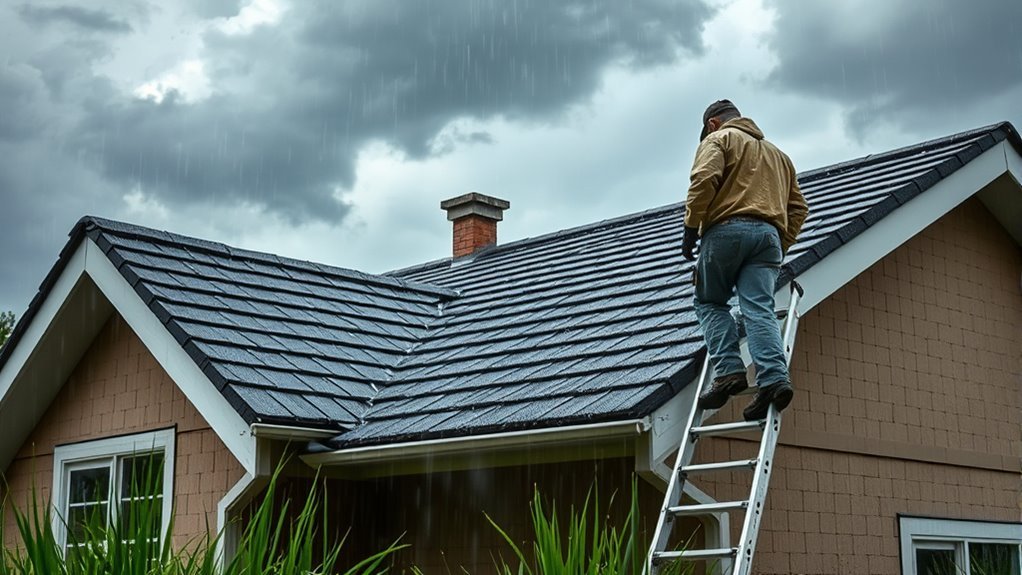
To protect your roof in harsh weather conditions, it’s essential to conduct regular inspections at least twice a year and after any storms. Look out for missing shingles or leaks, as these can lead to significant damage if not addressed promptly.
Keeping your gutters and downspouts clear is also critical. This prevents water from backing up, which can cause water damage to your roof and home.
If you notice any minor issues, repair them quickly using weather-resistant materials. It’s a small investment that can save you from costly repairs down the line.
Make sure your attic has proper ventilation and insulation. This helps reduce both moisture and heat damage, ensuring your roof lasts longer.
Consider reinforcing your roof with impact-resistant shingles and remember to secure any loose components before severe storms hit.
Additionally, regular branch trimming and debris removal can go a long way in maintaining your roof’s integrity.
Want to learn how to prepare your roof for any weather challenge?
Understanding Harsh Weather Impacts on Roofs
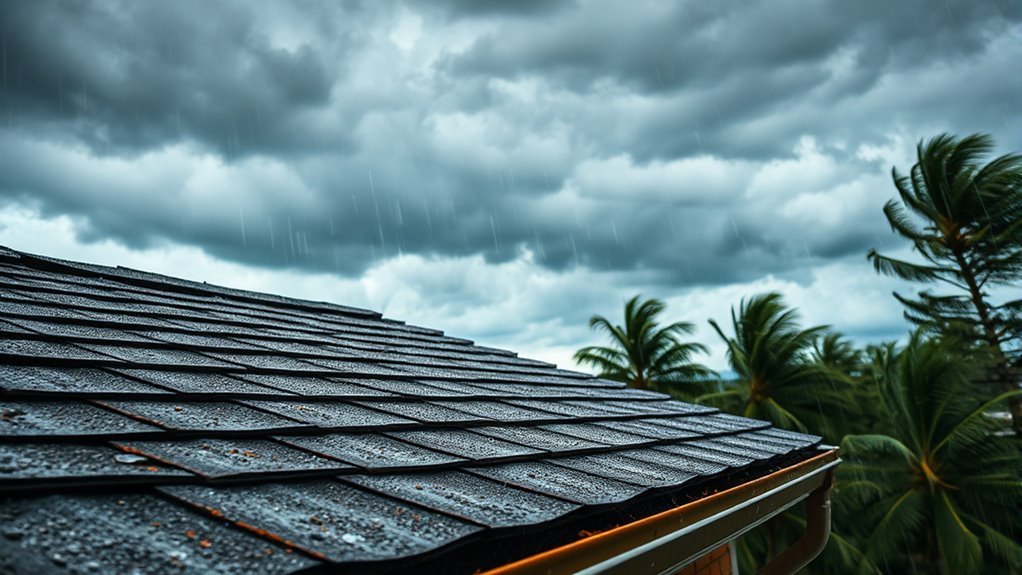
Because harsh weather can take a serious toll on your roof, it’s essential to understand how different conditions affect its durability.
Heavy rainfall often damages shingles or flashing, leading to water leaks that compromise your home’s interior. Wind damage from storms can dislodge shingles, exposing vulnerable areas that invite further roof damage.
Heavy rain and wind storms can damage shingles, causing leaks and exposing your roof to further harm.
In colder climates, snow and ice buildup create ice dams, which cause water to back up and seep inside. Extreme heat also harms roofing materials by causing expansion and contraction, which results in cracks and faster wear.
All these storm impacts accelerate roof deterioration, making it critical to monitor your roof’s condition closely.
While regular roof inspection is key to catching issues early, knowing how harsh weather affects your roof helps you prioritize timely maintenance and protect your investment.
Conducting Regular Roof Inspections
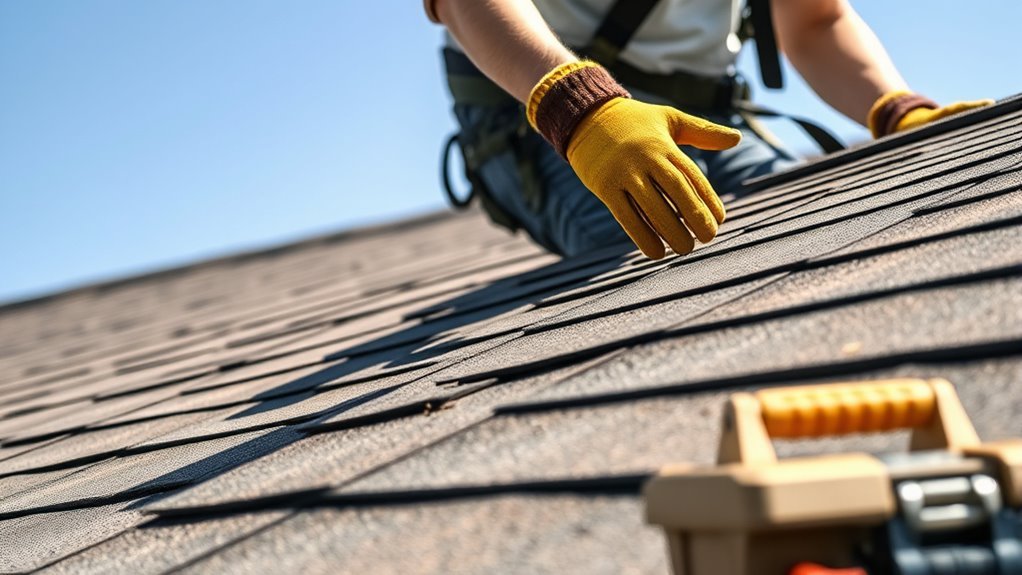
You should inspect your roof at least once a year and right after severe weather to catch damage early.
Keep an eye out for missing shingles, damaged flashing, and signs of leaks in your attic.
Regular checks help you spot problems before they get worse.
Inspection Timing Tips
Although roof inspections might seem like a hassle, scheduling them at least twice a year—preferably in spring and fall—helps you catch early signs of wear before extreme weather hits.
After storms, conduct a thorough inspection to assess damage from heavy rain, wind, or hail.
Focus on missing shingles, damaged flashing, and signs of water intrusion.
Don’t forget to check gutters and roof penetrations to ensure debris isn’t blocking water flow or causing further damage.
Keeping a detailed maintenance log of inspection dates, findings, and repairs helps you stay on top of necessary upkeep.
When you notice leaks, sagging, or visible issues, call a professional roofing service for a detailed assessment.
Regular, well-timed inspections are key to protecting your roof from harsh weather.
Key Damage Indicators
Regular inspections reveal key damage indicators like missing shingles, cracks, or loose flashing that can lead to leaks during storms.
After harsh weather, check for water intrusion signs such as water stains or mold inside your attic or ceilings.
These early clues help prevent extensive storm damage and roof leaks.
Watch for sagging areas or pooling water on your roof, as these point to structural weakness or drainage problems.
It’s a good idea to document any damage with photos to support timely repairs and insurance claims.
While you can spot visible issues, scheduling professional inspections at least once a year ensures hidden problems like worn underlayment or ventilation issues don’t go unnoticed.
Staying vigilant with these damage indicators helps you maintain a strong, leak-resistant roof.
Cleaning and Maintaining Gutters and Downspouts
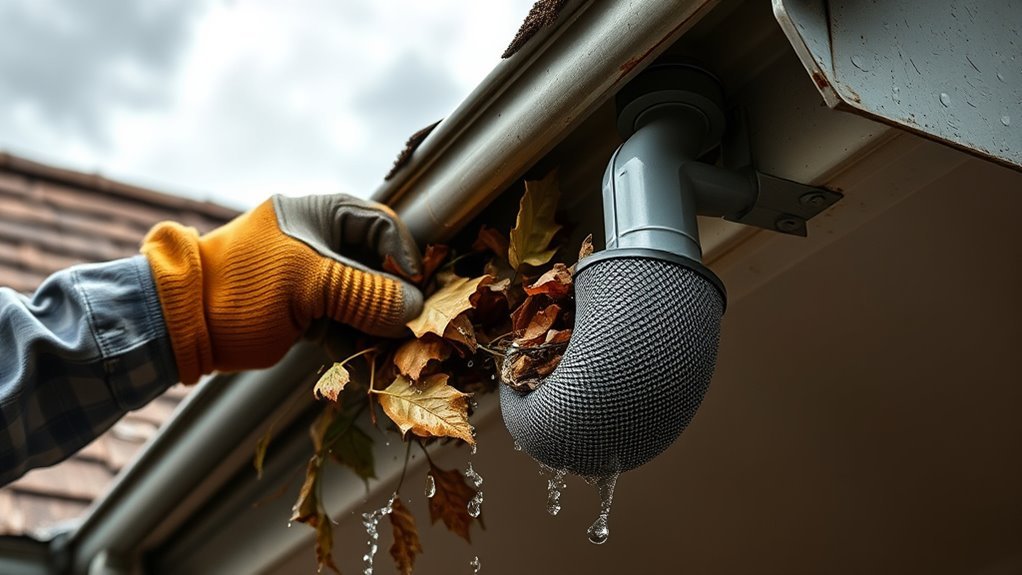
Since gutters and downspouts play a crucial role in directing water away from your home, keeping them clean and well-maintained is essential to prevent blockages and water damage.
Neglecting maintenance can lead to debris buildup, disrupting water flow and causing overflow that harms your foundation.
To keep gutters and downspouts functioning properly:
- Clean them at least twice a year, especially removing leaves and twigs in fall.
- Inspect attachments and brackets regularly, repairing or replacing damaged parts.
- Install gutter guards to reduce debris accumulation and ease maintenance.
- Ensure downspouts discharge water 3-4 feet away from your home to avoid structural damage.
Following these steps prevents water damage and extends your roof’s lifespan during harsh weather conditions.
Promptly Repairing Minor Roof Damage
You need to spot minor damage early to stop it from getting worse.
Use the right materials to fix cracks or leaks properly and prevent future problems.
Don’t wait—schedule repairs promptly to keep your roof strong and lasting longer.
Identify Minor Damage Early
Though minor roof damage might seem insignificant at first, catching issues like missing or cracked shingles early can save you from costly repairs down the line.
Regular roof inspection, especially after storm damage, is vital for identifying minor damage before it worsens. To stay ahead, follow these steps:
- Check for water leaks and damaged flashing frequently.
- Practice leak detection by inspecting your attic and ceilings.
- Document damage with photos to assist insurance claims and prioritize repairs.
- Schedule annual professional roofing inspections to uncover hidden problems early.
Use Proper Repair Materials
When you spot minor roof damage, acting quickly with the right repair materials can save you from bigger problems later.
Use weather-resistant sealants and matching shingles to guarantee your damage repair holds up against harsh weather.
Applying high-quality materials reinforces vulnerable spots and helps maintain water resistance, preventing leaks and mold growth.
Always follow manufacturer guidelines for proper techniques like sealing around flashing and replacing damaged shingles.
Using compatible repair materials keeps your roof’s integrity intact and extends its lifespan.
Avoid delay; even small cracks or missing shingles can lead to costly structural damage if left untreated.
Schedule Timely Repair Work
Since minor roof damage can quickly worsen, it’s essential to address issues like cracked shingles or small leaks as soon as possible. This helps you avoid costly repairs down the road.
To keep your roof in top shape, schedule timely repair work as part of your regular maintenance routine.
Here’s how you can prevent those pricey repairs:
- Inspect your roof regularly, especially after storm season. Catching minor issues early makes a big difference.
- Fix small problems immediately. This way, you maintain your roof’s waterproof barrier and prevent water intrusion.
- Use high-quality, compatible materials for roof repairs. This ensures durability and effectiveness.
- Don’t ignore minor damages. Delaying repairs can lead to structural deterioration and mold growth.
Stay proactive, and your roof will thank you!
Enhancing Roof Durability With Quality Materials
Choosing quality roofing materials plays a crucial role in enhancing your roof’s durability and protecting your home from harsh weather.
Using high-quality roofing materials like impact-resistant shingles and metal roofing strengthens your roofing system against storms, hail, and high winds.
Impact-resistant roofing undergoes strict testing to confirm it can withstand severe impacts and wind uplift without failing.
Weather-resistant materials, such as those with algae-resistant and weatherproof coatings, reduce leaks, cracks, and structural damage caused by moisture and temperature changes.
By selecting these durable options, you improve roof durability and extend your roof’s lifespan.
Investing in premium materials tailored for extreme climates not only enhances roof durability but also minimizes costly repairs, giving you peace of mind during harsh weather conditions.
Ensuring Proper Attic Ventilation and Insulation
Proper attic ventilation and insulation play a vital role in maintaining your roof’s health. They help prevent heat buildup and moisture accumulation.
Proper attic ventilation and insulation are essential for preventing heat buildup and moisture, ensuring roof longevity.
To protect your roof from damage caused by moisture buildup and ice dams, focus on these key steps:
- Confirm balanced attic ventilation with both intake and exhaust vents. This promotes consistent airflow.
- Keep soffit vents clear of debris. This is essential to maintain proper ventilation.
- Install adequate attic insulation rated for your climate zone. This helps reduce heat transfer and prevent condensation.
- Inspect attic ventilation and insulation regularly, especially after severe weather. Catching issues early can save you from bigger problems later on.
Preparing and Securing Your Roof for Severe Storms
After ensuring your attic is well-ventilated and insulated, you’ll want to focus on preparing your roof to withstand severe storms.
Start by installing impact-resistant shingles or metal roofing to boost durability against hail, high winds, and heavy rain.
Secure loose shingles and seal gaps to prevent leaks and damage from storm-force winds.
Reinforce vulnerable areas like flashing around chimneys and vents to block wind-driven rain.
Incorporate storm-resistant features such as hurricane straps and reinforced roof decking to strengthen your roof’s overall structure.
And don’t forget to trim overhanging branches and clear debris from your roof, minimizing risks from falling limbs and flying debris.
These steps are essential for effective storm damage prevention and will help keep your home safe during harsh weather conditions.
Frequently Asked Questions
How Often Should I Replace My Roof in Harsh Climates?
You should replace your roof every 15 to 25 years in harsh climates, depending on materials and damage.
Regular inspections help you spot issues early.
This way, you won’t wait too long and face costly repairs.
Can Roof Maintenance Help Reduce My Home Insurance Premiums?
You could almost see insurance agents throwing confetti when you maintain your roof!
Yes, keeping your roof in top shape often leads to lower premiums because you reduce risk,
making your home less of a claim target.
Are There Specific Roof Coatings for Extreme Weather Protection?
Yes, you can use specific roof coatings like silicone, acrylic, or elastomeric to protect against extreme weather.
These coatings seal, reflect UV rays, and prevent leaks.
This helps you extend your roof’s life in harsh conditions.
How Do Solar Panels Affect Roof Maintenance During Storms?
Solar panels add extra weight and can be vulnerable during storms, so you’ll need to inspect mounts and seals regularly.
They might complicate repairs, but proper installation helps protect both your roof and panels from storm damage.
What Emergency Tools Should I Keep for Roof Repairs?
You should keep a sturdy ladder, tarp, roofing nails, hammer, utility knife, gloves, and a cordless drill for emergency roof repairs.
These tools help you quickly patch leaks and secure damaged shingles during storms.
Having them on hand can make a big difference when you need to act fast!
Conclusion
You might think harsh weather will inevitably damage your roof, but with the right care, that doesn’t have to be true.
Regular inspections, timely repairs, and quality materials can actually strengthen your roof against storms.
By taking these steps, you’re not just protecting your home—you’re investing in peace of mind.
Remember, a well-maintained roof isn’t just surviving harsh weather; it’s thriving despite it.
Your effort makes all the difference.
—
In conclusion, maintaining your roof during harsh weather is crucial.
With regular inspections and prompt repairs, you can enhance its durability and longevity.
Using quality materials also plays a significant role in fortifying your roof against storms.
Ultimately, investing time and effort into roof maintenance is an investment in your home’s safety and your peace of mind.
Don’t let harsh weather intimidate you; instead, let your roof thrive!