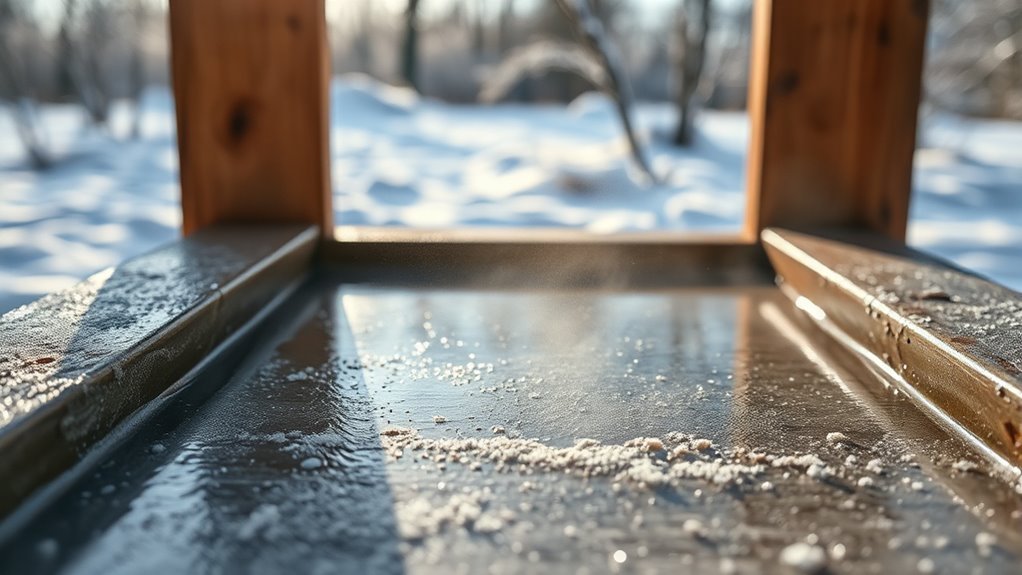
What Will Happen When Concrete Sets in Cold Weather?
What Will Happen When Concrete Sets in Cold Weather?
If you let concrete set in cold weather below 50°F, hydration slows considerably, delaying strength development.
When temperatures drop near or below freezing before the concrete gains about 500 psi, internal ice can cause cracking, scaling, and reduced durability.
This damage weakens your structure and prolongs curing times.
To avoid these issues, you’ll need precautions or specialized materials.
Understanding how cold affects your concrete can help you protect your project and ensure lasting results.
How Cold Weather Affects Concrete Hydration
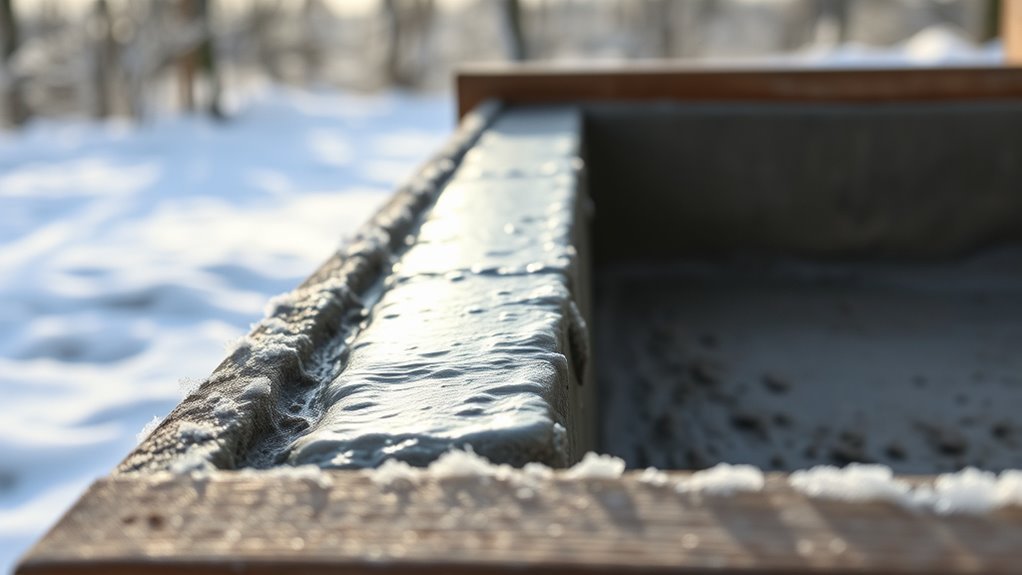
Although cold weather poses challenges, understanding how it affects concrete hydration is vital for successful setting.
Grasping cold weather’s impact on concrete hydration is key to ensuring proper setting and strength development.
When the temperature drops below 50°F, hydration reactions slow down considerably, delaying the curing process.
You’ll notice that concrete takes longer to gain strength because cold weather reduces the rate at which cementitious bonds form.
At freezing temperatures, around 32°F or lower, these hydration reactions can stop entirely, halting the curing process and preventing concrete from developing the necessary strength.
To guarantee proper concrete hydration, maintaining an adequate temperature during setting is essential.
If hydration is insufficient, the concrete’s durability and overall quality suffer.
Risks of Freezing During Early Concrete Curing
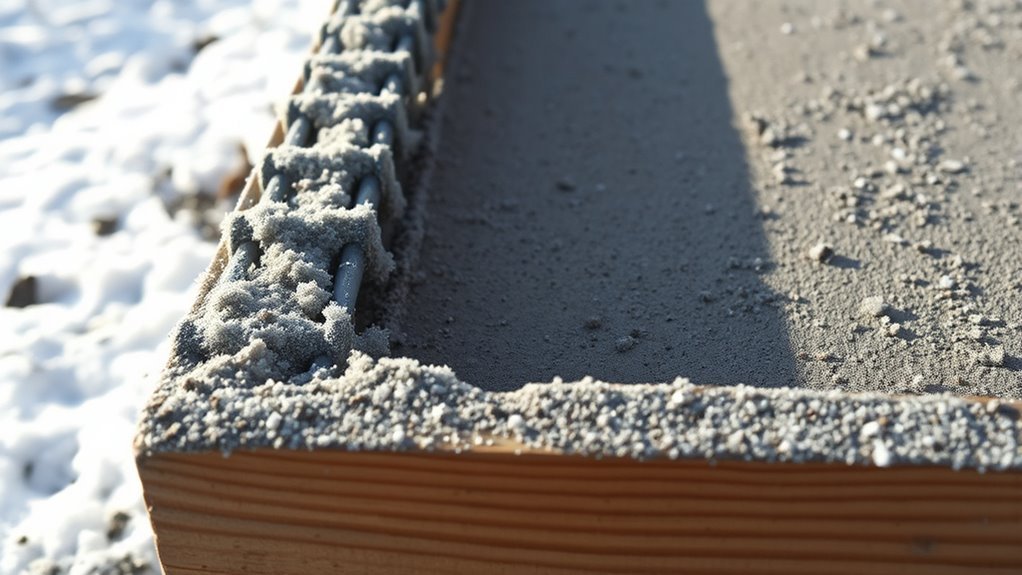
You’ve got to watch out for early freeze damage when curing concrete in cold weather.
If the mix freezes before it gains enough strength, you could lose up to half of its final durability.
This not only weakens the structure but also increases the risk of surface problems like scaling.
Early Freeze Damage
When concrete freezes during its early curing phase, the water inside expands and creates internal cracks that weaken the structure.
Early freeze damage is a major concern when dealing with concrete in cold weather. Freezing temperatures disrupt hydration, halting strength development and compromising durability.
You need to watch for ice formation on the surface, which signals premature freezing and can cause scaling or flaking.
To protect your concrete from early freeze damage, remember these key points:
- Freezing during initial curing can reduce strength by up to 50%.
- Internal cracks form as water expands into ice.
- Hydration stops, delaying strength gain and risking failure.
- Use insulating blankets or heated enclosures to prevent freezing.
Taking these steps helps ensure your concrete cures properly despite the cold.
Strength Loss Risks
If concrete freezes during its early curing phase, it can lose up to half of its potential strength. This happens because the hydration process stops and internal ice formation causes damaging cracks.
When freezing temperatures hit during early curing, the water inside the concrete expands as it freezes. This creates internal stresses that weaken the structure.
This interruption in the hydration process prevents the concrete from achieving its full compressive strength. In Cold Weather Concrete scenarios, this strength loss can lead to brittle, fragile concrete that fails under load.
You need to act fast to prevent freezing during the first 24 hours, as this period is critical for strength development.
Using proper insulation or heating measures ensures the hydration process continues uninterrupted. This helps safeguard your concrete’s durability and performance.
Impact of Low Temperatures on Strength Development
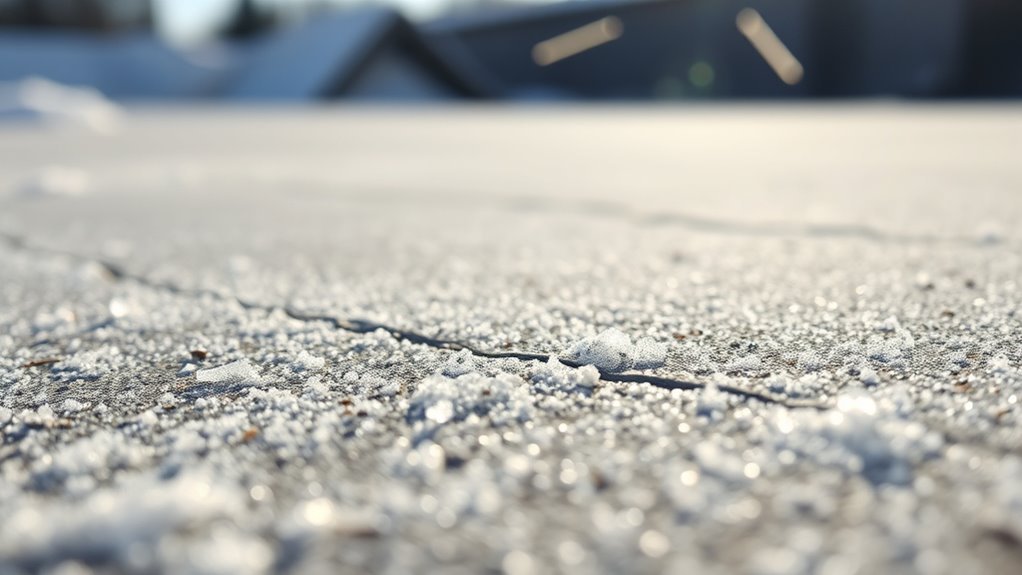
Although low temperatures can seem harmless, they drastically slow down concrete hydration once the temperature dips below 50°F.
At 40°F or lower, hydration can stop entirely. This delay in hydration directly impacts concrete strength development during cold weather concreting.
You need to understand how a temperature drop affects curing time and integrity:
- Hydration slows, extending curing time considerably.
- Freezing water inside the mix expands, causing internal cracks.
- Concrete frozen before reaching about 500 psi suffers irreversible damage.
- Maintaining temperatures above 50°F is essential for proper strength gain.
If you don’t control cold conditions, you risk compromised durability and reduced long-term performance.
Always guarantee concrete stays warm enough during early curing to safeguard its strength and quality.
Signs That Concrete Has Frozen
Understanding the effects of low temperatures on concrete strength helps you recognize the warning signs that indicate freezing has occurred during curing.
If you notice ice crystals forming on the concrete’s surface, it’s a clear sign the concrete has frozen prematurely.
Flaking or peeling after curing also suggests freeze damage.
Keep an eye out for visible cracks or honeycombing patterns, which often mean the concrete froze before gaining enough strength.
A dull, chalky surface appearance typically points to freeze damage during the curing process.
Additionally, if the concrete hardens suddenly or resists finishing work, it likely froze early in setting.
Recognizing these signs helps you identify when freeze damage has compromised the concrete’s quality and durability.
Temperature Thresholds for Safe Concrete Pouring
You shouldn’t pour concrete when temperatures drop below 50°F to guarantee it cures properly.
Keep a close eye on temperature readings during and after the pour, especially for the first 48 hours.
Monitoring helps prevent freezing and guarantees your concrete gains the strength it needs.
Minimum Pouring Temperatures
When temperatures drop below 50°F, you need to take extra care before pouring concrete to ensure it cures properly.
Cold weather brings challenges, especially since minimum pouring temperatures are vital to avoid freezing and damage.
Here’s what you should keep in mind:
- Always pour concrete when the ambient temperature is above 50°F for proper curing.
- If temperatures fall between 40°F and 50°F, use heated mixes or insulation to maintain the concrete temperature.
- Avoid pouring below 40°F unless you have special precautions; the risk of freezing increases considerably.
- Never pour concrete below 32°F without protection, as freezing will severely harm the structure.
Following these guidelines will help ensure your concrete sets correctly without any freeze-related damage.
Temperature Monitoring Guidelines
Although pouring concrete in cold weather presents challenges, carefully monitoring temperature thresholds guarantees your pour remains safe and effective.
You should always check ambient temperatures before pouring; concrete needs to be placed above 50°F to cure properly.
Use temperature sensors, like SmartRock®, to track the concrete temperature during curing and ensure it stays above 50°F for at least 48 hours.
If temperatures drop below this threshold, freezing can halt hydration and weaken your structure.
To prevent this, employ insulation methods such as insulating blankets or heaters to maintain stable concrete temperature.
Staying proactive with temperature monitoring helps you avoid freezing-related damage and ensures your concrete develops the strength and durability needed, even in cold conditions.
Techniques to Prevent Concrete Freezing
Since cold weather can severely delay concrete curing or even cause freezing, it’s crucial to have effective techniques in place to prevent this from happening.
Using insulating blankets is essential for retaining heat and protecting winter concrete from the harsh temperatures.
You might also want to consider chemical accelerators. They can help speed up hydration and reduce the risk of the concrete freezing before it gains strength.
Temperature control during mixing and placement is key to maintaining the right conditions.
Here are four key techniques to help you out:
- Preheat aggregates and water to about 65°F to keep the mix warm.
- Use insulated blankets, windbreaks, or enclosures to maintain the concrete temperature.
- Add chemical accelerators to speed curing in cold weather.
- Deliver concrete with heated trucks and monitor temperatures with sensors for timely adjustments.
Benefits of Using Rapid Set Cement in Cold Conditions
If you want to complete your concrete projects quickly in cold conditions, Rapid Set Cement offers a powerful solution.
This type of cement achieves 500 psi compressive strength in just a few hours, allowing you to expose it to cold weather without compromising durability.
Its fast strength development reduces curing time markedly compared to traditional Portland cement, letting you open areas to traffic or load-bearing sooner.
In winter conditions, this means fewer protective blankets and less risk of freeze-thaw damage.
Whether you’re working on micro-trenching or bridge repairs, Rapid Set Cement helps you avoid delays and ensures your project withstands harsh cold weather.
Frequently Asked Questions
How Cold Is Too Cold for New Concrete?
You shouldn’t pour new concrete below 50°F without precautions.
If it drops below 32°F during the first 24 hours, freezing can occur, weakening the concrete drastically.
Always use heating and insulation in cold weather.
Can You Pour Concrete if It Freezes at Night in Winter?
You can pour concrete if it experiences a frosty embrace at night, but you’ll need to shield it carefully with insulated blankets or heaters.
Otherwise, it might lose strength and develop cracks, compromising its future durability.
What Happens if Concrete Is Allowed to Freeze Within the First 24 Hours?
If you let concrete freeze within the first 24 hours, it’ll weaken, crack, and lose strength.
Hydration stops, causing surface damage.
This may make repairs necessary, or you might even need to replace the entire pour.
Will Concrete Cure at 32 Degrees?
Concrete won’t properly cure at 32 degrees because the hydration process slows or stops.
You’ll need to keep it warmer for at least 48 hours using insulation or heat to guarantee it gains strength and avoids damage.
Conclusion
When you pour concrete in cold weather, you’ve got to keep a close eye on the temperature to avoid it freezing before it sets.
If it does freeze, you risk weak, crumbly results that won’t stand the test of time.
Use proper techniques and consider rapid set cement to keep things moving.
Remember, a stitch in time saves nine—taking precautions now will save you from costly repairs later.
Stay proactive and protect your concrete’s strength!
In conclusion, pouring concrete in cold weather requires vigilance to prevent freezing.
Utilizing effective methods and materials like rapid set cement ensures your project remains durable.
By taking these precautions, you can avoid the pitfalls of weak concrete and costly repairs down the line.
So, keep an eye on the temperature and take action to maintain your concrete’s integrity!