Will Cold Weather Kill Fleas Effectively?
You might think cold weather will kill fleas, but the truth is, it won’t get rid of them completely.
Fleas can survive indoors where it’s warm, staying dormant in cocoons or in sheltered spots outside.
Their eggs, larvae, and pupae often resist freezing temperatures, making cold alone ineffective for flea control.
Plus, wildlife brings fleas back to your yard each year.
If you keep exploring, you’ll uncover why professional flea control and year-round prevention are essential for truly beating these pests.
Ignoring these facts can lead to an ongoing battle with fleas, even in colder months.
So, don’t rely solely on winter chill to eliminate them; consider a comprehensive strategy for effective pest management.
Flea Life Cycle and Winter Dormancy
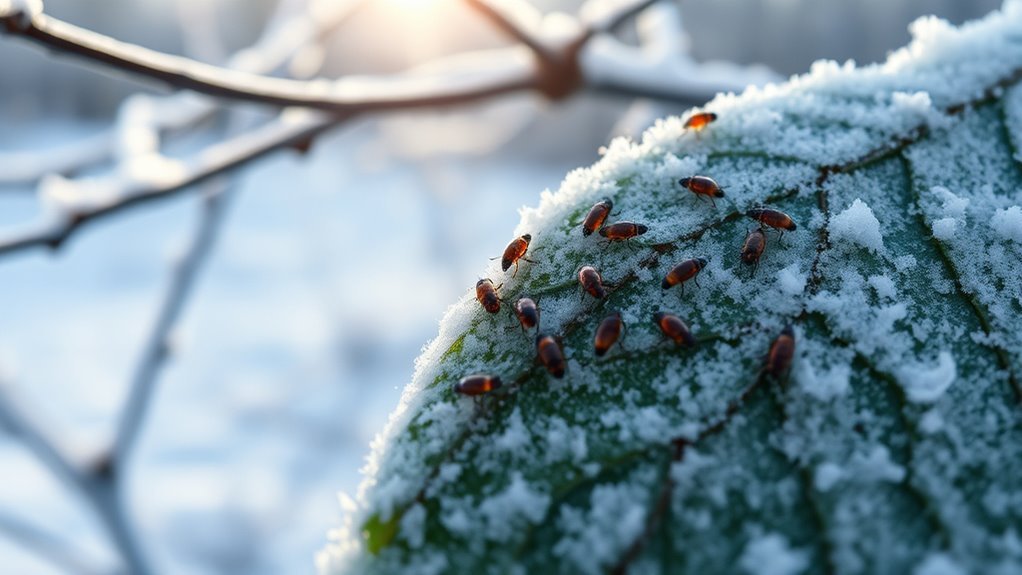
Although flea eggs and larvae can remain dormant for months, they’re ready to hatch or emerge once conditions improve.
Understanding the flea life cycle helps you see why winter dormancy is essential for their survival.
Grasping the flea life cycle reveals why winter dormancy is vital for their survival.
Flea eggs can stay inactive inside cocoons for up to five months, waiting for warmth and humidity.
Flea larvae don’t feed on blood but thrive in debris, hiding in dark, moist places like carpets or bedding.
You might not even notice most of the flea population since only 5-10% are visible adults.
Dormant fleas include unhatched larvae and adult fleas, which can survive up to 100 days without feeding.
This dormancy lets fleas endure harsh winters until they can become active again.
Temperature Thresholds for Flea Survival
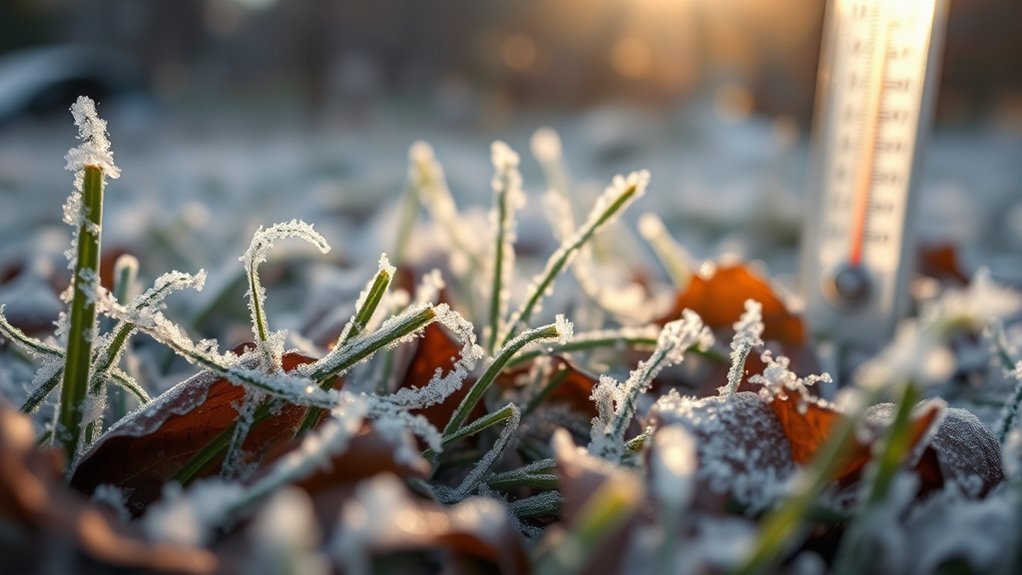
Understanding how fleas survive through winter means looking closely at the temperatures they can tolerate.
Adult fleas generally can’t withstand prolonged freezing temperatures outdoors; it takes around five days below 32°F to kill them.
However, flea eggs and larvae show more resilience, especially in insulated indoor environments.
Flea pupae can stay dormant inside cocoons for up to 30 weeks near 52°F, waiting for better conditions.
Here’s a quick temperature survival guide:
| Flea Stage | Survival Threshold |
|---|---|
| Adult Fleas | Die after 5 days below 32°F |
| Flea Eggs | Can survive short freezing, thrive indoors |
| Flea Larvae | Resist cold better indoors |
| Flea Pupae | Dormant up to 30 weeks near 52°F |
Cold weather alone rarely eradicates fleas completely.
How Fleas Survive in Indoor and Outdoor Environments
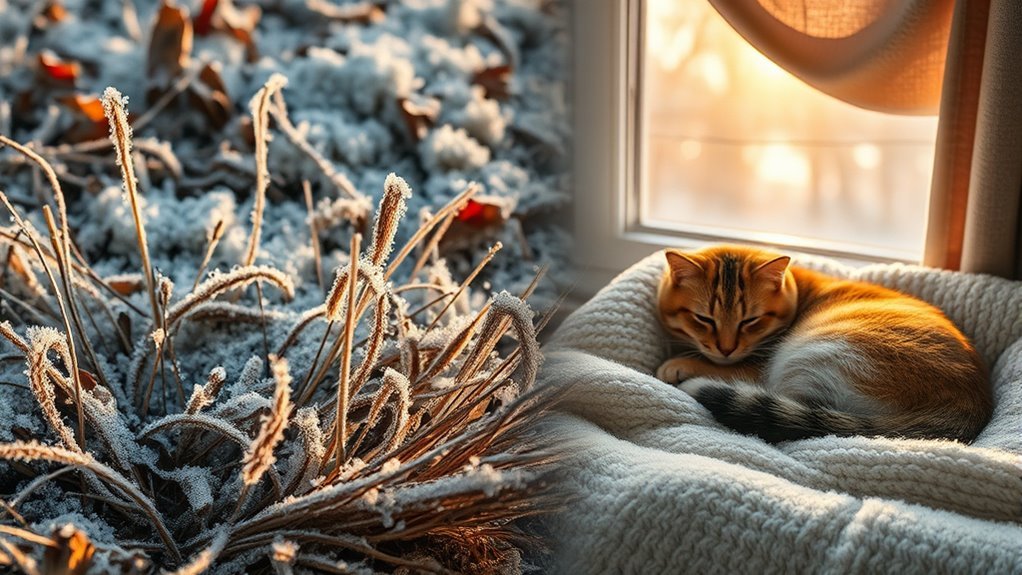
You’ll find fleas thriving indoors year-round thanks to warm temperatures and steady humidity.
Outdoors, they hide in sheltered spots like under leaves or animal burrows to avoid harsh weather.
Understanding where fleas prefer to shelter helps you target them more effectively.
Indoor Flea Survival
When temperatures drop outside, fleas find refuge indoors where warmth and shelter protect them from the cold.
Indoor flea survival depends on stable, warm environments that shield them from harsh winter temperatures.
Here’s how fleas manage to persist inside your home:
- Flea eggs and larvae thrive in dark, moist areas like pet bedding and carpets with minimal temperature changes.
- Warm indoor temperatures, usually above 46°F, support all flea lifecycle stages year-round.
- Adult fleas can survive up to 100 days without feeding if undisturbed indoors.
- Fleas hide in protected spots like under baseboards or inside furniture to avoid cold exposure.
Understanding these factors helps you see why cold weather alone won’t eliminate fleas inside your home.
Outdoor Flea Adaptations
While fleas find safety indoors during cold months, many have developed clever ways to survive outside as well.
Their outdoor flea adaptations let flea eggs, larvae, and dormant cocoons remain protected in shelter environments like under leaves, animal burrows, or beneath snow, where cold weather is less harsh.
These hidden spots shield them from freezing temperatures, allowing them to wait out winter.
Adult fleas often seek warmth by clinging to hosts or sneaking indoors temporarily.
Dormant cocoons can stay inactive for weeks or months until conditions improve, triggered by warmth or vibrations.
Plus, wildlife like raccoons and opossums carry fleas into your yard year-round, ensuring fleas persist despite the cold.
Understanding these outdoor survival tactics helps you better manage flea problems in any season.
Flea Shelter Preferences
Where do fleas choose to hide when temperatures drop?
Fleas seek flea shelter in both indoor and outdoor environments to protect themselves during the winter months. You’ll find them in warm spots that create a favorable microclimate, helping them survive despite the cold.
Here are common flea shelter preferences:
- Indoors: carpets, pet bedding, and furniture, where temperatures stay above 46°F.
- On hosts: pets and wildlife provide body heat, creating a protective microclimate.
- Outdoors: under leaves, in animal burrows, or beneath snow, which insulates against freezing.
- Dormant pupae: cocoons that remain inactive until warmth or vibrations signal a host’s presence.
Effects of Prolonged Freezing on Flea Populations
Even after several days of freezing temperatures, fleas can survive if they find shelter in protected environments like homes or animal dens.
Prolonged freezing outdoors, typically lasting at least five consecutive days below 32°F, can kill adult fleas.
But this cold weather isn’t always enough to eliminate flea populations.
Flea eggs and flea larvae are even more resilient; they can remain dormant in cocoons for weeks, surviving harsh conditions by staying insulated from direct exposure.
Since many flea life stages hide in warm, sheltered spots, you can’t rely solely on freezing temperatures to control them.
To effectively manage fleas, you need to address all stages of their lifecycle, especially those that cold weather alone won’t reach or kill.
The Role of Wildlife in Flea Persistence During Winter
Because wildlife like raccoons, opossums, and foxes carry fleas into your yard during winter, these pests can survive despite cold temperatures.
These animals harbor fleas in their nests and dens, creating warm microenvironments that protect fleas from freezing.
Even when outdoor temperatures drop, fleas stay active on these wildlife hosts and in sheltered areas.
You should understand how wildlife contributes to flea persistence:
- Wildlife transport fleas into outdoor spaces during winter.
- Animals harbor fleas in insulated nests and burrows.
- Body heat from wildlife maintains a warm microenvironment.
- Fleas remain active so long as temperatures stay above freezing.
Risks of Intestinal Parasites and Other Winter Parasites
While cold weather may reduce some pests, intestinal parasites like roundworms, whipworms, and tapeworms remain a year-round threat.
Their eggs can persist in soil contaminated by wildlife or outdoor pets.
Your pet can pick up these parasites simply by walking on contaminated ground or ingesting soil, without any direct contact with infected animals.
Winter parasites like mites also pose a risk since they don’t rely on seasonal temperatures to thrive.
Flea eggs may decrease in cold weather, but flea infestations can still flare up if you’re not careful.
Maintaining year-round parasite prevention is essential for protecting your pet’s health from intestinal parasites, fleas, and other pests.
Don’t let soil contamination and winter parasites compromise your furry friend’s well-being during the colder months.
Year-Round Flea Prevention Strategies
To keep fleas from taking hold in your home or on your pet, you need to maintain prevention efforts throughout the year.
Fleas can survive indoors and in sheltered outdoor areas, especially where a warm host is available. Year-round flea prevention stops eggs from being laid and breaks the flea life cycle.
Fleas thrive indoors and outdoors near warm hosts, so year-round prevention is key to breaking their life cycle.
First, use veterinarian-recommended treatments like spot-ons or collars consistently.
Also, vacuum carpets frequently to remove flea eggs and larvae.
Don’t forget to wash pet bedding regularly in hot water to kill hidden fleas.
Finally, keep your yard clean by removing debris and treating outdoor areas.
These steps will help you stay ahead of the flea problem!
Professional Flea Control and Treatment Options
How can you tackle a stubborn flea infestation that home remedies can’t handle?
Professional flea control offers effective solutions by targeting the entire flea life cycle.
Expert technicians use professional treatments like residual sprays and foggers that kill adult fleas and flea eggs, preventing re-infestation.
These treatments often include insect growth regulators (IGRs) to disrupt development stages, ensuring long-term control.
Licensed pest control pros apply safe products both indoors and outdoors, protecting your pets and family.
Combining these treatments with pet preventatives provides a thorough approach to flea management.
Regular follow-up visits help maintain a flea-free environment, especially in severe cases.
If cold weather isn’t enough to eliminate fleas, professional flea control is your best bet to regain comfort and safety at home.
Frequently Asked Questions
How Cold Is Cold Enough to Kill Fleas?
You need temperatures below 32°F (0°C) for at least five days, with two consecutive freezes to kill most fleas.
However, eggs and pupae can survive in protected spots, so cold alone won’t fully eliminate them.
Do Fleas Go Away When It Gets Cold Outside?
No, fleas don’t just go away when it gets cold outside.
They survive in protected areas and stay dormant in cocoons.
You’ll need ongoing pest control to keep them from coming back indoors and outdoors.
Conclusion
Don’t let cold weather fool you—fleas aren’t going down without a fight.
While freezing temperatures can slow them down, these tiny pests often hide in cozy spots, waiting for their chance to pounce.
Think of fleas as stubborn winter weeds; they survive against the odds.
So, stay proactive with year-round prevention and professional treatments to keep your home flea-free, no matter the season.
Remember, winter’s chill alone won’t seal the deal.
In conclusion, while cold weather may impact flea activity, it doesn’t eliminate them completely.
These resilient pests find shelter indoors and can remain a nuisance throughout winter.
To effectively manage fleas, focus on consistent prevention and consider professional treatments.
By doing so, you ensure that your home stays flea-free, regardless of the season.
Don’t underestimate the need for vigilance—winter won’t do the job for you!