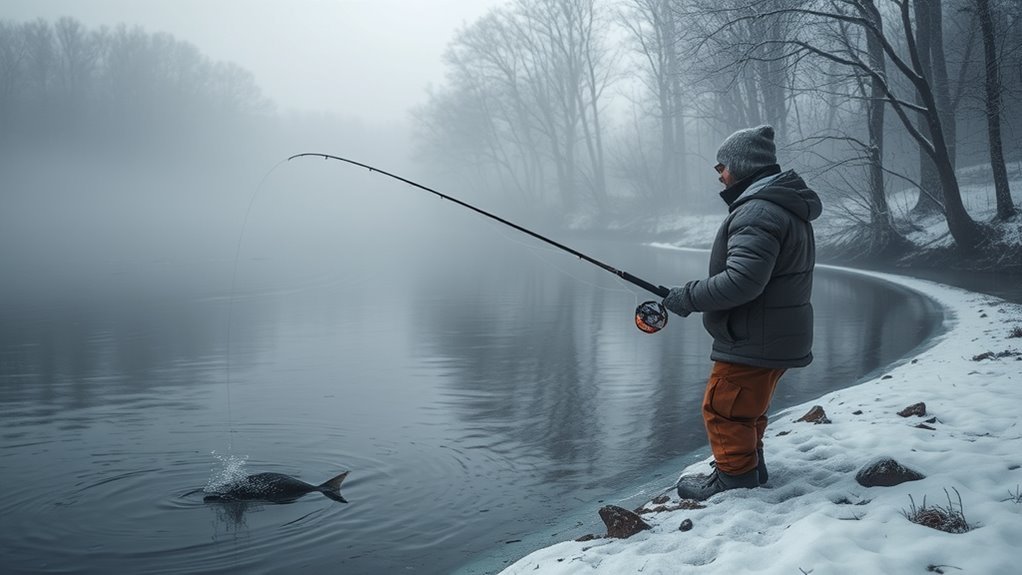
Will Catfish Bite in Cold Weather and How to Catch Them
Yes, catfish will bite in cold weather, but their activity slows down below 50°F.
You’ll have the best luck targeting deeper, warmer spots near structures or sun-exposed banks where they shelter.
Using fresh live bait like shad or crawfish can be very effective.
Fish with slow, subtle presentations or deadstick your bait to mimic natural movement.
Keep your rigs simple and sensitive to detect gentle bites.
Stick with these tips, and you’ll improve your winter catfishing success while uncovering more key tactics.
Understanding Catfish Behavior in Cold Water
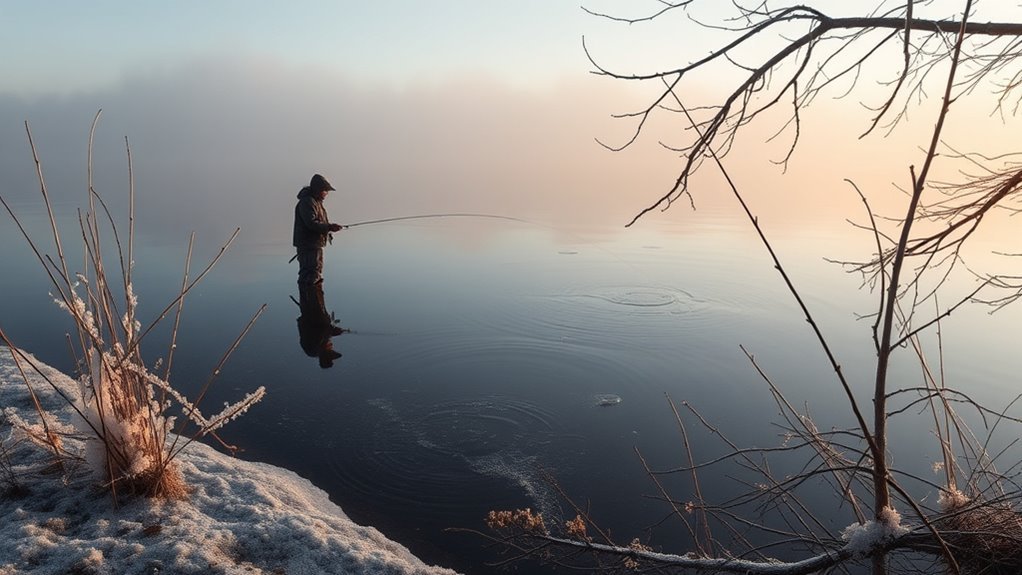
Although catfish slow down as water temperatures dip below 50°F, you can still find them active in colder months by focusing your efforts on deeper, warmer spots like holes and sun-warmed banks.
In cold water, catfish activity decreases because they’re cold-blooded, meaning their metabolism drops with the water temperature.
Most catfish stay low in the water column during winter, seeking warmth near the bottom or around cover like fallen trees.
While they become lethargic and less aggressive, flatheads and channels often feed in short, sluggish bursts.
Understanding these seasonal shifts helps you target where catfish gather and how they behave.
You’ll need patience since they bite less frequently, but knowing how water temperature affects catfish activity gives you an edge in cold weather fishing.
Essential Gear for Winter Catfishing
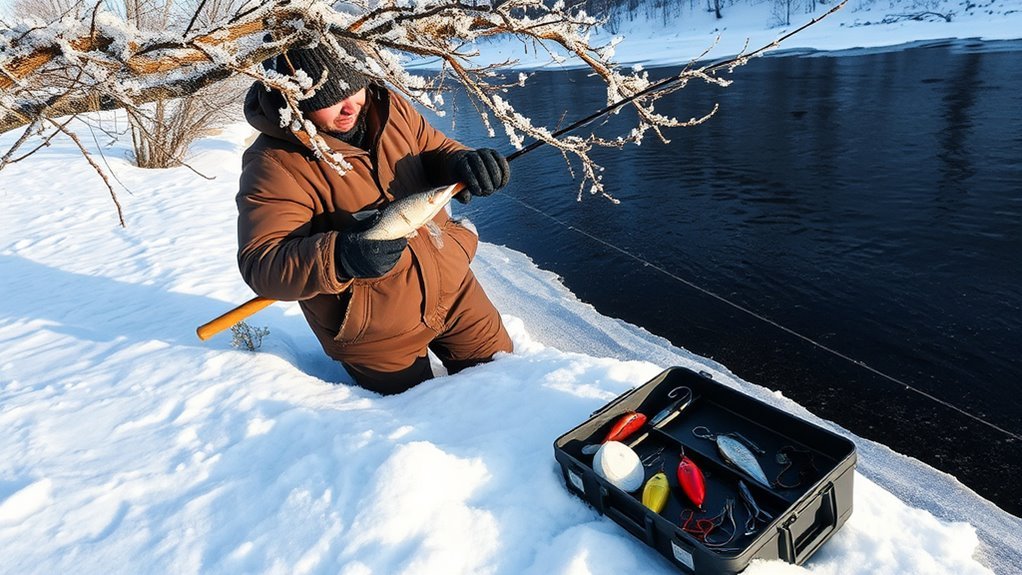
When catfish slow down in colder water, your gear needs to account for their subtle bites and sluggish behavior.
Start with sensitive rods like the B’n’M Silvercat to detect even the faintest nibble.
Begin with sensitive rods such as the B’n’M Silvercat to catch the slightest bites.
Pair these with high-capacity reels such as the Abu Garcia 6500C3, which offer smooth drag systems essential for managing heavy, slow-moving catfish.
Use durable, 20 lb test monofilament line that remains visible and resistant to cold temperatures. This ensures strength without sacrificing sensitivity.
Don’t overlook high-quality hooks like the Daiichi Circle Chunk Light or Team Catfish Double Action.
These are designed to secure firm hooksets in chilly conditions.
Together, these essentials ensure you stay prepared and effective when winter catfishing demands precision and reliability.
Effective Rigging Techniques for Cold Conditions
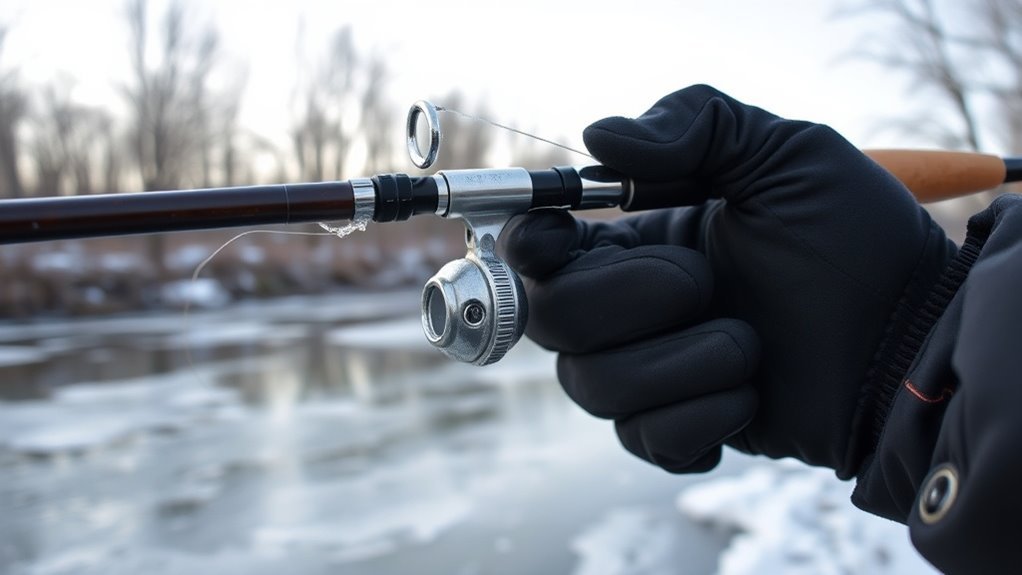
Since catfish become sluggish in cold water, you’ll need rigging techniques that maximize sensitivity and adaptability.
Use simple rigs like the Santee or Slip Sinker Rig paired with 20 lb test monofilament to maintain durability and flexibility.
Incorporate longer leader lines to help your bait move naturally and reach varying depths where catfish might linger.
Adjustable rigs let you fine-tune bait presentation, improving your chances of enticing bites.
Slow down your approach by employing deadsticking—keeping your bait still to attract lethargic catfish.
Using sensitive, medium-action rods enhances your ability to detect subtle strikes.
Selecting the Best Baits for Winter Catfish
You’ll want to focus on fresh native bait like crawfish or perch to attract winter catfish effectively.
Using live baitfish such as shad or herring can increase your chances because of their natural scent and movement.
Preparing large chunks of cut bait properly will help disperse scent and draw bigger catfish in cold water.
Fresh Native Bait
Although winter catfish tend to be sluggish, using fresh native bait like live shad or skipjack herring can dramatically boost your catch rates.
These baits attract fish with their natural scent and movement. Fresh bait outperforms frozen or store-bought options, especially at low water temperatures.
Catching your own bait, such as live shad, requires patience but pays off with more active bites. Other native baitfish like carp or perch work well if fresh and properly presented.
Here are key catfish tips for choosing fresh native bait:
| Bait Type | Effectiveness | Notes |
|---|---|---|
| Live Shad | High | Best for cold water |
| Skipjack Herring | High | Strong scent, active movement |
| Gizzard Shad | Moderate | Effective if fresh |
| Carp | Moderate | Good alternative |
| Perch | Moderate | Use fresh, cut pieces |
Effective Winter Baitfish
Building on the advantage of fresh native bait, choosing the right winter baitfish can make your catfishing trips much more productive.
Live baitfish like shad, gizzard shad, and skipjack herring naturally emit a strong scent that draws catfish even in cold water.
For winter catfishing, fresh, locally caught bait such as threadfin or river chubs often outperforms frozen or store-bought options.
Using cut bait or large chunks of baitfish helps disperse scent effectively, attracting bigger catfish lurking in chilly depths.
Native species like carp, drum, buffalo, and perch also work well when fresh or alive, mimicking the catfish’s natural prey.
Avoid artificial scents on frozen baits; fresh live baitfish provide the best scent and success during winter fishing.
Bait Preparation Tips
When selecting bait for winter catfish, focus on fresh, live native species like shad or threadfin to maximize scent and effectiveness.
Frozen or store-bought bait just won’t cut it in cold water.
To get the best results, try these bait preparation tips:
- Catch your own baitfish to ensure freshness and strong natural scents.
- Target baitfish in warmer, sunlit spots or near underwater structures.
- Use larger chunks of bait to spread scent farther and attract sluggish catfish.
- Skip artificial scents—they don’t work as well as fresh bait in winter.
Identifying Prime Winter Catfish Locations
Since catfish seek warmth during cold weather, you’ll find them in deep, slow-moving pools and under submerged structures like fallen trees or rocks where the water stays warmer.
Focus on channels with slower currents that create these pockets of warmer water.
Look for areas exposed to direct sunlight, as they help raise water temperature, making these spots more attractive to catfish.
Smaller, shallow backwaters connected to main channels often retain heat and shelter catfish from cold currents.
Use a thermometer to find water temperatures above 40°F, increasing your chances of success.
Also, target places where baitfish gather near submerged timber or snags—these structures concentrate prey, drawing catfish in for feeding.
Identifying these prime winter catfish locations boosts your catch potential considerably.
Strategies for Anchoring and Drifting in Winter
Although cold weather slows catfish activity, you can still maximize your catch by mastering anchoring and drifting techniques tailored for winter conditions.
When anchoring, use two strong anchors to keep your bait near structure like sun-warmed banks or deep holes.
For drifting, control your boat carefully with slow, steady movements and large drift socks to maintain a speed between 0.2 and 0.5 mph.
Use sonar to identify feeding zones and decide the best approach. Here’s how to optimize your strategy:
- Anchor over known structure to target lethargic catfish.
- Drift across open water to cover more ground.
- Adjust anchor position and drift speed based on water temperature.
- Maintain precise boat control for consistent bait presentation.
These tactics help you stay effective even when catfish slow down.
Adjusting Techniques Based on Temperature and Fish Activity
When water temperatures drop, catfish slow down and feed less often.
So, you’ll need to present your bait more slowly and carefully.
Pay attention to how they adjust their position in the water based on the season, especially on sunny versus cloudy days.
Temperature Effects on Activity
As water temperatures dip below 50°F, you’ll notice catfish slow down considerably, reducing their feeding and movement.
Cold weather impacts catfish activity, so you need to adapt your approach.
Here’s what to keep in mind:
- Between 40°F and 50°F, catfish get sluggish but still feed near structures and current seams.
- On sunny days, fish often feed higher in the water column, while shaded areas keep them deeper.
- Below 40°F, catfish enter a low-activity state, demanding slower bait presentation and more patience.
- Focus on warm, sunlit spots or protected zones where catfish feel comfortable and are more likely to bite.
Adjusting your tactics based on these temperature effects markedly boosts your chances of success in cold water fishing.
Slow Presentation Techniques
Cold temperatures slow catfish movement, so you’ll need to match your bait presentation to their lethargic behavior.
Focus on a slow presentation by reducing retrieval speed to under 0.5 mph.
Using deadsticking—letting your bait sit quietly near structure for 30-45 minutes—can also be very effective.
Adjust your rig setup with heavier sinkers or drift socks to control drift and keep the bait near the bottom.
Avoid rapid jigging; catfish prefer subtle, natural bait movement in water below 50°F.
Keep an eye out for gentle bites and ensure your rod tip is sensitive to detect them.
| Technique | Tip |
|---|---|
| Slow Presentation | Retrieve under 0.5 mph |
| Deadsticking | Let bait sit 30-45 minutes |
| Rig Setup | Use heavier sinkers or drift socks |
| Bait Movement | Minimal, avoid aggressive jigging |
| Bite Detection | Watch for subtle tugs, stay patient |
Seasonal Behavior Adjustments
Although catfish slow down considerably below 50°F, you can still catch them by adjusting your techniques to match their reduced activity.
Seasonal behavior adjustments are key during cold weather.
You need to pay close attention to water temperature and change your bait placement accordingly.
Here’s how to adapt:
- Target deeper, warmer water zones near structures like snags or deep holes.
- On sunny days, try raising your bait higher in the water column.
- During overcast or colder days, place bait closer to the bottom.
- Use slow drifting or deadsticking to mimic natural food movement.
Frequently Asked Questions
How to Catch Catfish in Cold Weather?
You’ll catch cold-weather catfish by targeting deep, warm spots near structure.
Use light tackle, slow presentations, and fresh bait like cut shad.
Be patient—anchor and wait 30-45 minutes for sluggish bites to register.
Do Catfish Still Bite When It’s Cold?
Yes, catfish still bite when it’s cold, but you’ll need to be patient and fish deeper, slower.
Use the right bait, target their preferred spots, and try nighttime fishing for better success in chilly conditions.
What Is the Best Bait for Catfish in the Winter?
You’ll want fresh live bait like shad or herring, plus strong-smelling options like chicken liver or cut baitfish chunks.
These scents attract catfish even in cold water, boosting your chances of a winter catch.
What Time of Day Do Catfish Bite in the Winter?
You might be surprised, but catfish bite best at night during winter, especially between midnight and 4 a.m.
Watch for brief daytime activity around 10 a.m. to 2 p.m.
That’s when the water warms slightly—then strike quickly!
Conclusion
Just like a slow-burning fire on a chilly night, catfish may seem inactive in cold weather.
But with the right spark—your gear, bait, and technique—they’ll come alive.
I once caught my biggest winter catfish after patiently drifting in icy waters.
This proves they definitely bite when you adapt.
Remember, cold doesn’t mean quit; it means you’ve got to work smarter, not harder, to reel in that winter catch.
In conclusion, catfish can indeed be caught in cold weather if you’re willing to adjust your strategies.
Focus on using appropriate gear and effective bait, and don’t shy away from trying different techniques.
With patience and perseverance, you can turn a chilly fishing trip into a successful one.
So bundle up, stay motivated, and get ready to enjoy the thrill of winter catfishing!