Why Does Tire Pressure Drop in Cold Weather?
You’ll notice your tire pressure drops in cold weather because cold air contracts, causing the air inside your tires to become denser and reduce pressure—typically about 1 psi for every 10°F drop.
This is a common issue many drivers face as temperatures plummet.
Your tires’ size doesn’t change, but the lower temperature means less air volume and pressure, triggering TPMS alerts more often.
It’s important to check and adjust your tires regularly to stay safe and efficient.
Keeping an eye on your tire pressure can significantly enhance your winter driving experience.
So, keep exploring how temperature and monitoring systems affect your tire pressure for better winter driving.
How Temperature Affects Tire Pressure
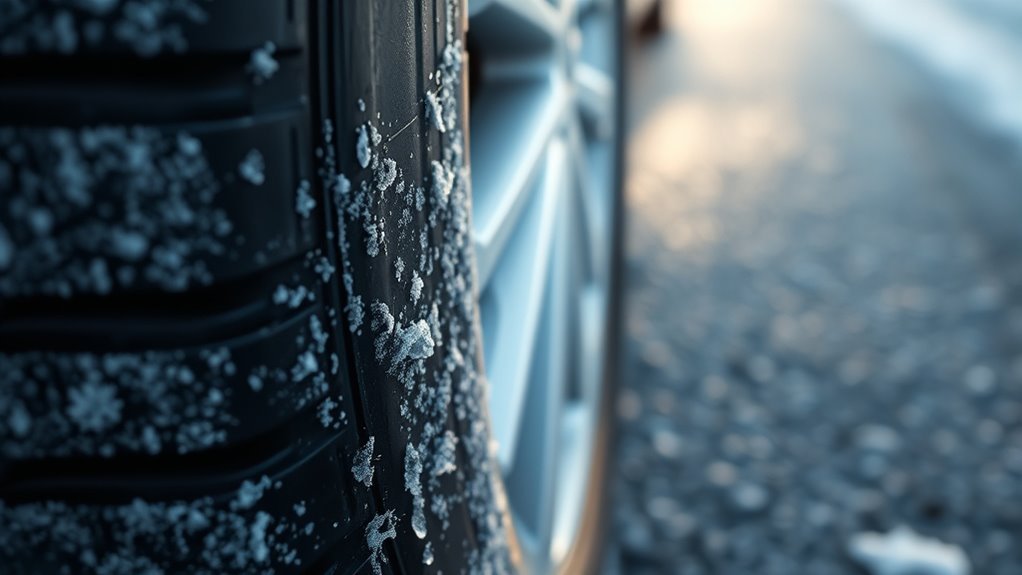
Although you might not notice it immediately, every 10°F drop in temperature causes your tire pressure to fall by about 1 psi because the cold air contracts.
Every 10°F temperature drop reduces tire pressure by about 1 psi due to air contraction.
This happens even though the tire’s size stays the same. When the air inside cools, it becomes denser and takes up less space, lowering your tire pressure.
If you rely on a pressure monitoring system, you might see warnings pop up more often in colder weather.
That’s because the system detects these drops and alerts you to potential underinflation, which can affect safety and tire wear.
To keep your vehicle performing well, it’s smart to check your tire pressure regularly during cold spells and adjust inflation as needed for ideal driving conditions.
The Science Behind Pressure Drops in Cold Weather
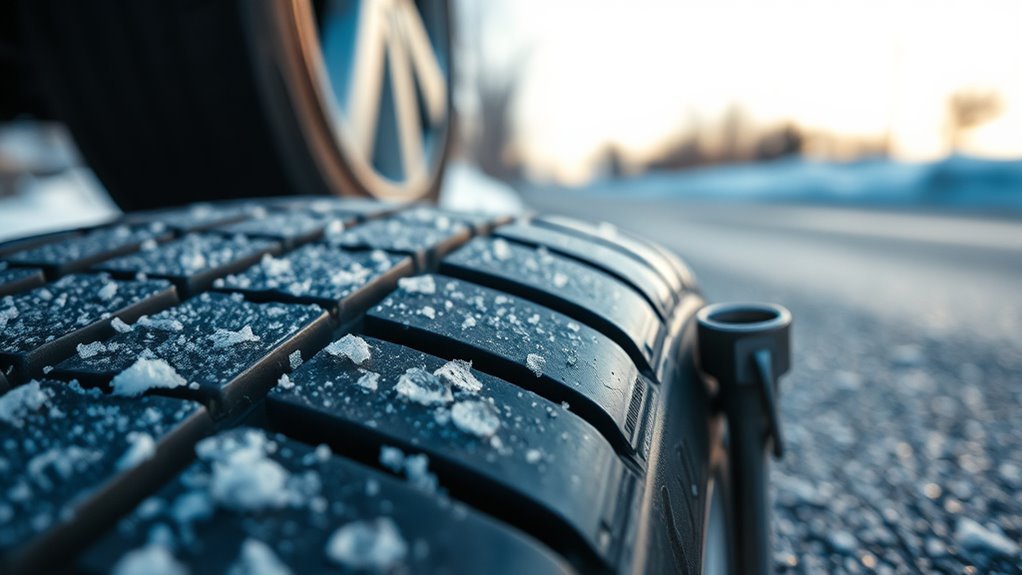
When temperatures drop, the air inside your tires contracts. This happens because cooler air molecules move less and pack closer together.
As a result, the pressure inside your tires decreases, even if the tire’s size stays the same.
According to the ideal gas law, lower temperatures reduce both volume and pressure of the air.
For every 10°F drop, expect about a 1 psi loss in tire pressure. You can check this change easily with a tire pressure gauge.
| Temperature Drop (°F) | Pressure Loss (psi) |
|---|---|
| 10 | 1 |
| 20 | 2 |
| 30 | 3 |
| 40 | 4 |
Keep an eye on your tire pressure, especially in cold weather.
Understanding Tire Pressure Monitoring Systems (TPMS) Alerts
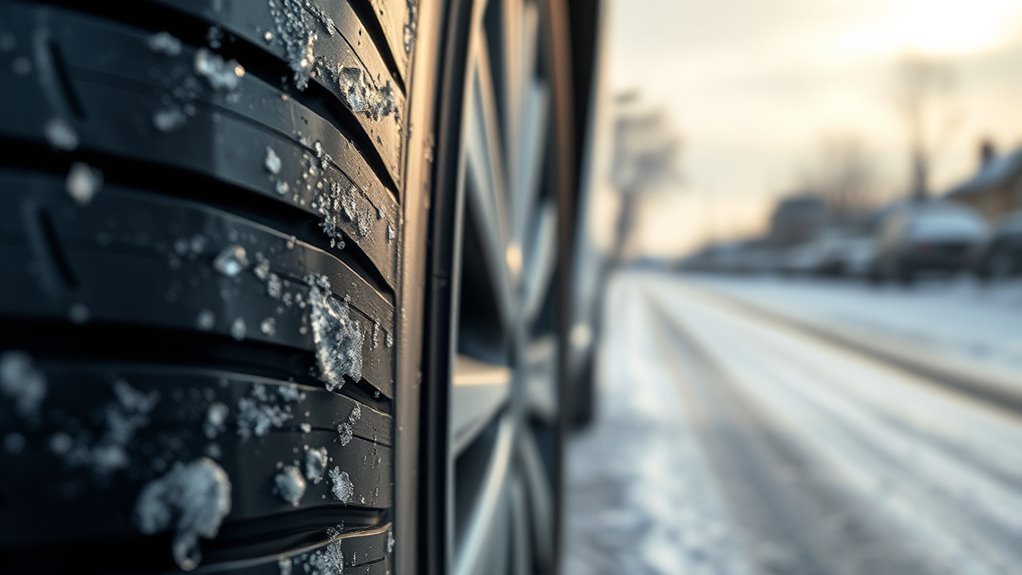
Since tire pressure naturally drops in cold weather, your Tire Pressure Monitoring System (TPMS) may alert you even if your tires are properly inflated.
The system activates warnings when tire pressure falls below a specific threshold, often triggered by temperature-induced pressure loss.
However, TPMS is designed to notify you of significant decreases, not minor fluctuations caused by cold temperatures.
After driving or when tires warm up, you might notice the TPMS warning light turns off as pressure rises.
Still, it’s important to perform regular manual pressure checks because TPMS may miss small pressure changes or early leaks.
Understanding how your tire pressure monitoring system works helps you respond appropriately to alerts without unnecessary concern during cold weather.
Tips for Maintaining Proper Tire Pressure in Winter
To keep your tires performing safely throughout winter, you need to check their pressure at least once a month using a reliable gauge.
Cold temperatures can cause your tire pressure to drop about 1 PSI for every 10°F decrease. So, topping off tires to the manufacturer’s recommended PSI is essential.
Don’t rely solely on your vehicle’s TPMS, as it may not always reflect real-time pressure changes in cold weather.
Make sure to inspect and adjust the pressure in all tires, including the spare, since cold affects them all.
Properly inflated tires improve safety, handling, and fuel efficiency during winter months.
When and How to Check Your Tire Pressure During Cold Months
Because tire pressure drops as temperatures fall, you should check your tires at least once a month during cold months.
Proper tire pressure is essential for safety and efficiency, so consistent temperature monitoring helps you stay ahead of seasonal changes.
Follow these steps to check your tire pressure effectively:
- Use a reliable tire pressure gauge to measure pressure when tires are cold, ideally before driving.
- Remember that a 10°F temperature drop can lower tire pressure by about 1 psi.
- Inflate your tires to the recommended pressure, then drive about a mile to help stabilize pressure and reset sensors if needed.
- Don’t forget to inspect all tires, including the spare, to avoid underinflation due to temperature shifts.
Regular checks keep your vehicle safe and reliable throughout winter.
Frequently Asked Questions
Is It Normal for Tire Pressure to Go Down in the Cold?
Yes, it’s normal for your tire pressure to drop in cold weather.
As temperatures fall, the air inside your tires contracts, lowering the pressure.
Always check and adjust it to keep your driving safe and smooth.
How Do I Keep My Tires From Deflating in the Cold?
You keep your tires from deflating in the cold by regularly checking pressure.
Inflating them to the recommended PSI is also important.
Additionally, parking in sheltered areas can help protect your tires from extreme temperatures.
Using a reliable gauge to adjust air levels as temperatures drop is a good practice too.
Can a Tire Lose Pressure but No Leak?
Absolutely, your tire can lose pressure without a leak—think of air like a shy ghost shrinking in the cold.
The cooler temps make air contract, dropping pressure even if your tire’s perfectly sealed and sound.
What Is the 4 PSI Rule?
The 4 PSI rule means tire pressure drops about 1 PSI for every 10°F temperature decrease.
You should check and adjust your tires regularly to keep them properly inflated.
This helps guarantee safe driving conditions.
Conclusion
Just like a balloon shrinks on a chilly day, your tire pressure drops when the temperature falls.
You need to keep an eye on it because low tire pressure can affect your safety and fuel efficiency.
Make it a habit to check your tires regularly during cold months, and adjust the pressure as needed.
Staying on top of this simple task helps you drive confidently, no matter how frosty it gets outside.
In conclusion, remember that cold weather can cause your tire pressure to decrease.
Regularly checking and adjusting your tire pressure is essential for safety and optimal fuel efficiency.
By making this a routine practice, you ensure a smoother and more secure driving experience, even in the coldest conditions.