Why Do Tires Lose Air in Cold Weather?
You’ll notice your tires lose air in cold weather because the air inside contracts as temperatures drop. This causes pressure to fall about 1-2 PSI for every 10°F.
Plus, the cold makes the tire rubber stiffen, which can let air escape more easily.
This combination means you need to check your tire pressure more often in winter to stay safe.
Keep exploring to understand how cold weather affects tire performance and what you can do about it.
How Temperature Affects Air Pressure in Tires
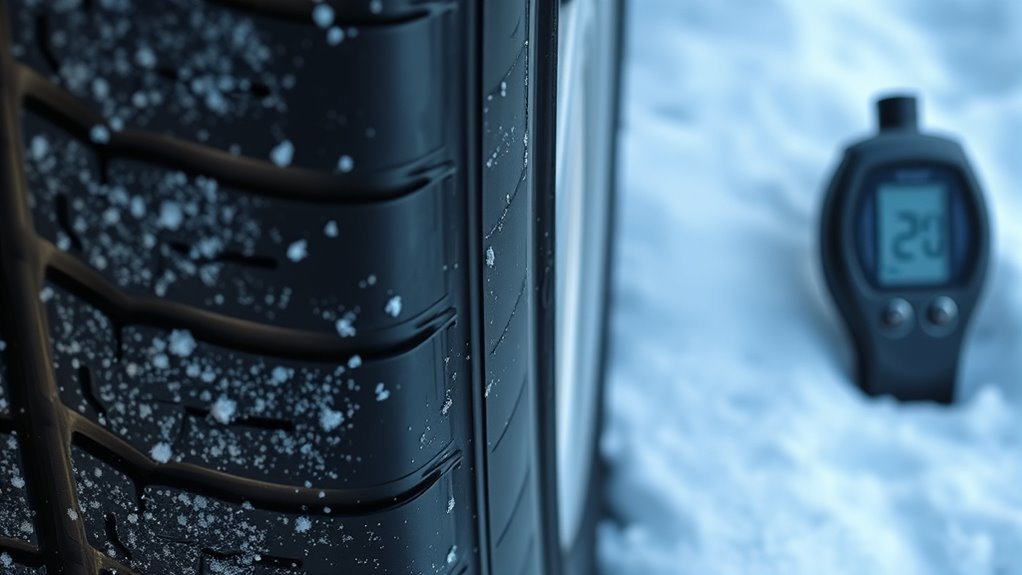
Although you might not notice it immediately, tire pressure drops by about 1-2 PSI for every 10°F drop in temperature because cold air contracts.
When the temperature falls, air molecules inside your tires move more slowly and take up less space, causing air pressure to decrease.
This effect means that in cold weather, your tire pressure drops even if there’s no leak.
For example, a temperature drop from 70°F to 30°F can reduce tire pressure by 4-5 PSI.
Pressure changes happen quickly during daily temperature swings, so regularly checking your tires with a tire pressure gauge or relying on a tire pressure monitoring system is essential.
Staying on top of these pressure shifts helps maintain safe driving conditions and tire longevity.
The Science Behind Air Contraction in Cold Weather
When temperatures drop, the air molecules inside your tires move more slowly and take up less space, causing the pressure to fall.
You can expect about a 1-2 PSI drop for every 10°F decrease.
This natural contraction happens because cooler air becomes denser, not because your tire is leaking.
Air Molecules Slow
Because air molecules slow down as temperatures fall, they take up less space inside your tires.
In cold weather, these molecules lose kinetic energy, moving more sluggishly and causing the air to contract.
This contraction means the molecules pack closer together, increasing their density but reducing the overall volume of air.
As a result, your tire pressure drops naturally without any leaks.
For every 10°F temperature drop, you can expect about a 1-2 PSI decrease in tire inflation.
This drop in PSI happens because the slower, denser air molecules exert less force on the tire walls.
Understanding this helps you realize why your tires feel less inflated in colder months, emphasizing the importance of checking tire pressure regularly during temperature changes.
Pressure Drops With Temperature
As temperatures drop, you’ll notice your tire pressure falls too. This happens because the air inside contracts.
When cold weather arrives, air molecules slow down and take up less space, causing a pressure loss.
Here’s what happens during a temperature drop:
- Air molecules move slower and contract.
- Tire pressure decreases by about 1-2 PSI for every 10°F drop.
- A shift from 70°F to 30°F can reduce tire inflation by 4-5 PSI.
- This contraction is a natural result of winter conditions, not a leak.
Understanding this helps you maintain proper tire pressure in cold weather.
It also helps avoid unsafe driving conditions caused by low PSI.
Impact of Cold Weather on Tire Rubber Flexibility
Although colder temperatures might seem harmless to your tires, they actually make the rubber stiffer and less flexible.
This change can compromise the seal at the wheel bead and valve stem.
Tire rubber loses flexibility in low temperatures, leading to hardening that reduces its ability to maintain an airtight seal.
This hardening can cause cracks or tiny fissures to develop, creating pathways for air leaks.
Over time, seasonal changes in flexibility accelerate existing leaks, especially in older tires or those with minor damage.
As the rubber stiffens, the seal weakens, increasing the likelihood of pressure loss.
Understanding how cold weather affects tire rubber flexibility helps you recognize why your tires may lose air more quickly during winter months.
It also prompts timely maintenance to prevent further issues.
Seasonal Temperature Fluctuations and Tire Pressure Variations
When temperatures swing by 20 to 30 degrees Fahrenheit within a single day, your tire pressure can shift by 2 to 3 PSI.
Seasonal changes bring ongoing pressure drops as cold temperatures settle in, causing tire pressure variations you might not expect.
As cold settles in, expect ongoing tire pressure drops and unexpected variations throughout the season.
To stay ahead, remember these key points:
- Cold weather cools the air inside tires, lowering pressure.
- Morning pressure is often lower, increasing as daytime warms.
- Temperature fluctuations trigger tire pressure warning light alerts.
- Regular pressure monitoring is essential during seasonal changes.
Safety Risks Associated With Low Tire Pressure in Winter
If you drive with low tire pressure in winter, you increase your risk of losing control on icy or snowy roads.
Low tire pressure diminishes traction and handling, which compromises your vehicle control when you need it most. This makes stopping distances longer on slick surfaces, heightening safety risks during winter driving.
Under-inflated tires flex excessively, generating heat that can cause tire blowouts or tire failure in cold weather.
Reduced pressure also lessens the tire’s ability to absorb shocks, making your ride less stable on uneven terrain.
Ignoring low tire pressure puts you at serious risk of accidents and tire damage.
To stay safe, regularly check and maintain proper tire pressure, especially during cold weather.
This will help guarantee optimal handling, traction, and overall vehicle control.
The Role of Tire Pressure Monitoring Systems (TPMS) in Cold Weather
Your TPMS will alert you if tire pressure drops considerably, but it might miss smaller decreases caused by cold weather.
That’s why you shouldn’t rely solely on the system and should perform manual pressure checks regularly.
Also, remember to reset your TPMS warnings after adjusting your tire pressure to keep the system accurate.
TPMS Alert Sensitivity
Although TPMS plays a crucial role in monitoring tire pressure, it doesn’t always alert you to small drops caused by cold weather.
TPMS sensors typically trigger alerts only after about a 25% pressure drop, so minor pressure fluctuations from temperature changes often go unnoticed.
Their temperature sensitivity varies, affecting sensor accuracy and alert timing.
Here’s what you should keep in mind:
- Cold weather causes gradual pressure drops that may not reach the TPMS alert threshold.
- TPMS measures relative pressure, so small fluctuations might not trigger alerts.
- Some systems are more sensitive and alert sooner; others require bigger pressure losses.
- Because of these limitations, combining pressure monitoring with regular manual checks is essential for safe tire maintenance.
Manual Pressure Checks
How often do you manually check your tire pressure during cold weather?
Relying solely on your vehicle’s TPMS can leave you unaware of small pressure drops caused by temperature drops. Manual checks with a reliable pressure gauge provide more accurate PSI readings, helping you spot underinflation early.
Since tire pressure can drop 1-2 PSI for every 10°F decrease, it’s vital to measure tire inflation when tires are cold—before driving or after three hours of rest.
Regular pressure monitoring through manual checks, including your spare tire, guarantees you maintain ideal tire pressure and avoid safety risks.
Resetting TPMS Warnings
Manual tire pressure checks help you catch early drops that your vehicle’s TPMS might not immediately detect.
When cold weather lowers tire pressure, your TPMS triggers a warning only after a 25% drop. After adding air, you’ll need to reset the system.
Here’s how:
- Inflate tires to the recommended pressure, compensating for cold temperature effects.
- Close all doors, then open the driver’s door to initiate TPMS calibration.
- Drive about a mile to allow sensors to register the corrected pressure.
- Confirm the warning light turns off, signaling a successful reset.
This process ensures your TPMS accurately reflects tire pressure despite cold weather fluctuations.
It really helps you maintain safe driving conditions!
How to Properly Check Tire Pressure During Cold Months
Since tire pressure drops in cold weather, you should check it when your tires are cold—ideally before driving or after at least three hours of inactivity.
Use a reliable tire gauge to measure the air pressure accurately on each cold tire.
Avoid relying on the number printed on the tire’s sidewall; instead, refer to your vehicle’s door placard for the manufacturer’s recommended PSI, usually between 30 and 35 PSI.
Attach the gauge firmly to the valve stem until you get a steady reading.
Record the PSI and adjust as needed by inflating or deflating to reach proper inflation.
After adjustment, recheck the tire pressure to confirm it’s at the correct level.
Regular tire pressure maintenance during cold weather helps guarantee safety and ideal tire performance.
Tips for Maintaining Optimal Tire Pressure in Winter
Keeping your tire pressure at the right level during winter means checking it regularly—at least once a month—and making adjustments as needed.
Cold weather causes pressure drops, leading to underinflated tires that affect safety and tire maintenance.
To keep ideal tire pressure:
- Use a reliable tire gauge to check all tires, including the spare, when they’re cold.
- Inflate tires to the manufacturer’s recommended PSI promptly if pressure drops.
- Inspect tires for leaks, cracks, or damaged valve stems that cause persistent air loss.
- Consider using winter tires designed to hold pressure better in low temperatures.
Staying on top of these tips can really help keep your tires in good shape this winter!
Choosing the Right Tires for Cold Weather Conditions
When temperatures drop, selecting tires designed for cold weather can make a big difference in your vehicle’s performance and safety.
Winter tires use specialized rubber compounds that stay flexible in cold temperatures, helping maintain proper tire pressure and improve air retention.
Specialized rubber in winter tires stays flexible in cold, aiding tire pressure and air retention.
While all-season tires offer some versatility, winter tires provide better traction and resist tire leaks common in freezing conditions.
Pay attention to tire construction—higher ply ratings and quality bead designs reduce the chance of air loss.
To guarantee ideal air retention, you should inspect your tires regularly and replace any that show signs of wear or damage.
Proper tire maintenance combined with choosing the right tires helps you avoid pressure drops and keeps you safe when the mercury falls.
Frequently Asked Questions
Should You Put Air in Your Tires When It’s Cold?
Yes, you should put air in your tires when it’s cold.
Checking and topping off tire pressure guarantees proper inflation, safety, and fuel efficiency.
Always do this before driving or after your car has been sitting several hours.
How Do I Keep My Tires From Deflating in the Cold?
You can prevent tire deflation in cold weather by checking pressure weekly.
Tires lose about 1 PSI for every 10°F drop, so it’s crucial to stay on top of that.
Make sure to inflate your tires to the recommended PSI.
Also, inspect for leaks regularly to catch any issues early.
If you’re looking for more stability, consider nitrogen inflation for your tires.
Is It Normal for Your Tires to Lose Air in the Cold?
Yes, it’s normal for your tires to lose air in the cold because air contracts as temperatures drop.
Just make sure you check and inflate them regularly to keep your tires safe and properly pressurized.
What Is the 7 7 Rule for Winter Tires?
You should check and adjust your winter tires’ pressure every 7 days, following the 7-7 rule.
This helps you prevent a typical 1-2 PSI loss per 10°F drop, keeping your tires safe and efficient.
Conclusion
As winter wraps your tires in a chilly embrace, remember that cold air squeezes the life from your tire pressure like a frosty breath stealing warmth.
You’ve got to stay vigilant—check your tires regularly and keep them properly inflated to avoid slipping into danger.
Think of your tires as the heartbeat of your ride; when they falter in the cold, so does your safety.
Keep them strong, and conquer winter’s icy grip with confidence.
In cold weather, tires can lose air pressure, which affects their performance and your safety on the road.
To combat this, make it a routine to check your tire pressure frequently and inflate them as needed.
Maintaining the right tire pressure is crucial for optimal traction and handling, especially in winter conditions.
Stay proactive and ensure your tires are ready for whatever winter throws your way!