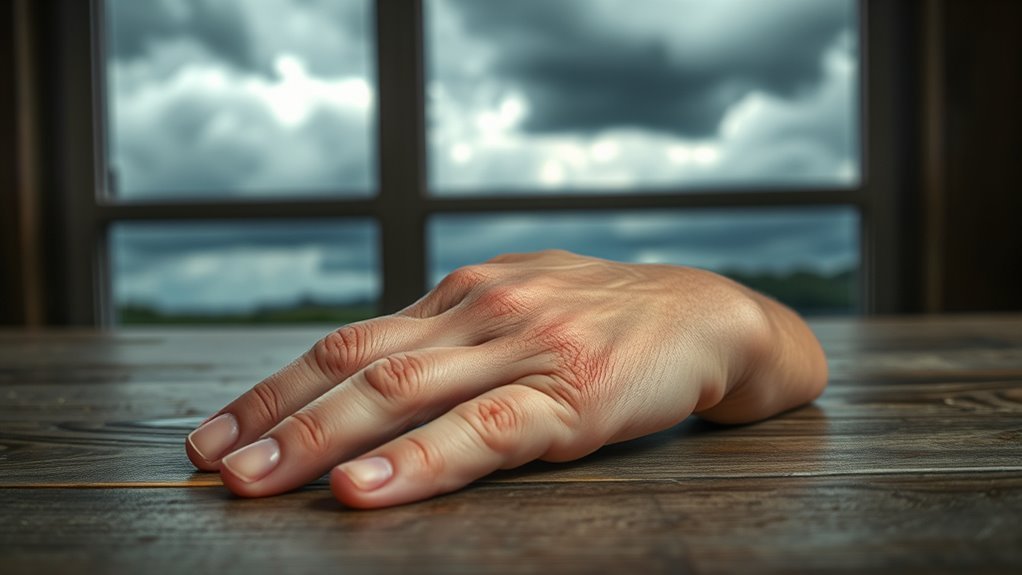
Why Do Old Broken Bones Hurt When Weather Changes?
You feel aches in old broken bones when the weather changes because drops in barometric pressure cause joint gases to expand, pressing on nerves near your injury.
Cold weather narrows blood vessels, reducing circulation and making tissues stiff.
Scar tissue and nerve endings become more sensitive to these shifts, and joint fluids thicken, causing discomfort.
These factors combine to increase pain and stiffness.
Understanding these reasons can help you manage and ease your symptoms effectively.
The Role of Barometric Pressure in Joint and Bone Pain

Have you ever noticed your old injuries acting up when the weather changes? That’s often due to shifts in barometric pressure.
When atmospheric pressure drops, gases trapped in your joint fluids expand, increasing pressure on nerves near old injuries. This expansion can trigger joint pain and discomfort.
Lower atmospheric pressure also decreases the external force on your body, allowing these trapped gases to create more noticeable sensations.
Additionally, the fluid dynamics inside your joints change, sometimes causing swelling and inflammation around previous fractures. This swelling intensifies the pain you feel.
So, when barometric pressure dips, your old injuries respond with increased soreness and stiffness, making you more aware of those past breaks or strains.
Understanding this helps explain why weather changes affect your joint pain.
How Cold Weather Affects Blood Flow and Tissue Stiffness
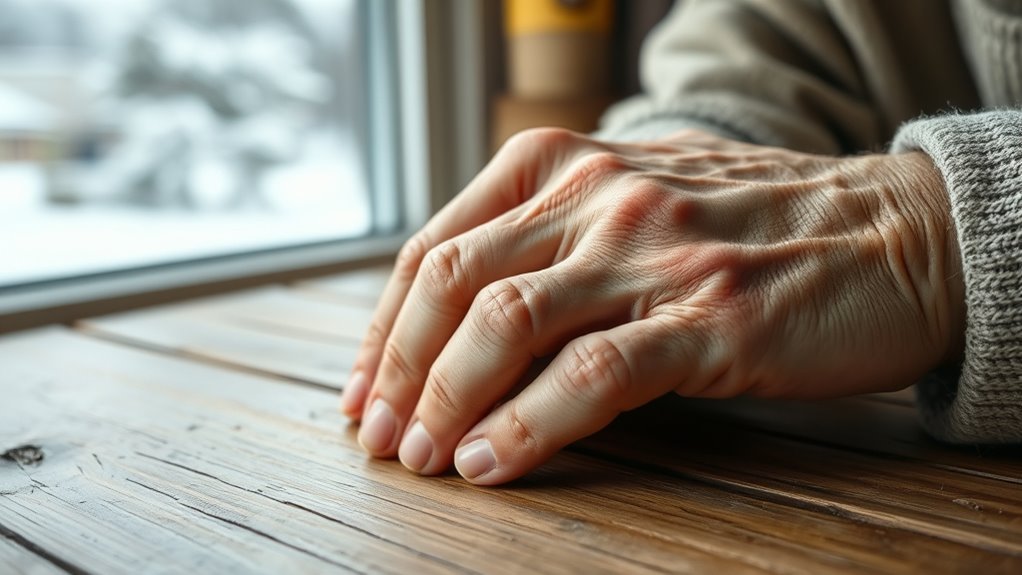
When cold weather sets in, your blood vessels near the skin constrict, reducing blood flow to muscles and tissues.
This decrease in circulation limits the delivery of oxygen and nutrients needed for tissue repair, causing muscle tension and increased tissue stiffness.
As a result, you may notice joint pain becoming more pronounced in areas with old injuries.
Cold weather also traps inflammatory substances due to constricted vessels, which can worsen inflammation and discomfort.
The combined effect of reduced blood flow and heightened muscle tension makes your joints feel stiffer and more painful.
Understanding how cold weather impacts circulation and tissue stiffness helps explain why previously broken bones might ache more when temperatures drop.
Increased Nerve Sensitivity in Previously Injured Areas
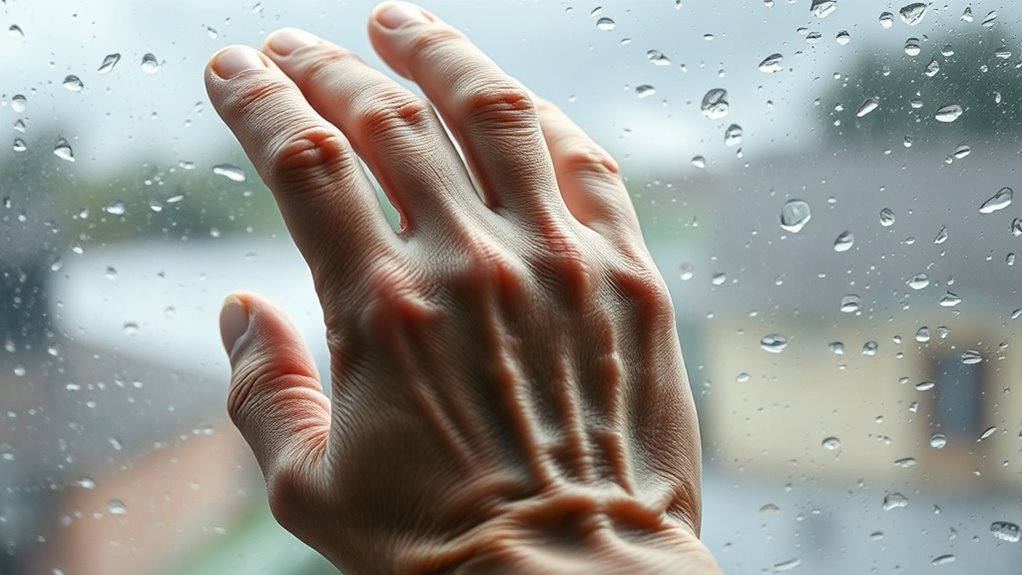
Beyond reduced blood flow and stiffness, you might also notice that nerves in previously injured areas become more sensitive.
Scar tissue and nerve remodeling after an old injury can alter nerve endings, increasing nerve sensitivity.
When weather changes, especially with drops in barometric pressure or cold temperatures, inflammation can heighten nerve response, causing sharper pain.
These altered nerve pathways respond more strongly to environmental shifts, making discomfort more noticeable.
| Factor | Effect on Nerve Sensitivity | Impact on Old Injury Pain |
|---|---|---|
| Scar Tissue | Alters nerve endings | Increases nerve excitability |
| Weather Changes | Lowers barometric pressure | Heightens nerve response |
| Inflammation | Stimulates nerve endings | Amplifies pain signals |
Understanding this helps explain why your old injury aches more during weather changes.
Changes in Joint Fluid Consistency and Its Impact on Pain
Although joint fluids normally help your joints move smoothly, cold weather thickens these fluids and reduces their lubricating ability.
When the viscosity of joint fluid increases, it flows less easily, causing stiffness that can make movement uncomfortable.
This reduced fluid mobility puts extra pressure on nerve endings, intensifying pain and sometimes leading to inflammation in areas of previous injury.
You might notice that old fractures feel more tender or stiff during colder months because thicker joint fluid can’t cushion or lubricate your joints effectively.
These changes in joint fluid consistency directly impact how your joints feel, often making pain from past injuries worse.
Understanding this can help explain why weather shifts bring discomfort to joints that have healed but remain sensitive.
Effective Strategies to Manage Weather-Related Pain in Old Injuries
Managing pain from old injuries during cold weather requires proactive steps to keep your joints warm and flexible.
Wearing layered clothing and compression garments helps retain heat, reducing joint pain and stiffness caused by weather changes.
Incorporate gentle indoor exercises and stretching to improve your range of motion and boost circulation in soft tissue.
Applying heat therapy like warm baths or hot packs increases blood flow and soothes inflammation linked to cold conditions.
Also, consider anti-inflammatory foods to naturally ease discomfort.
If pain flares up, use over-the-counter pain relievers as needed, but consult your doctor first.
Staying hydrated and managing stress further supports healing and minimizes weather-related joint pain.
Frequently Asked Questions
Why Do Old Broken Bones Hurt Sometimes?
Old broken bones hurt sometimes because scar tissue tightens, nerves get irritated, and blood flow decreases.
You’ll notice pain when your body reacts to changes in pressure, temperature, or inflammation around the injury site.
It’s interesting how the body works, isn’t it? These factors can really take a toll on those old injuries.
Why Do Weather Changes Make Old Injuries Hurt?
You might think old injuries shouldn’t hurt more with weather changes, but they do.
Shifting pressure and temperature affect joint fluids and nerves.
These changes cause stiffness and irritation, making your old pain flare up unexpectedly.
Can an Old Injury Cause Pain Years Later?
Yes, an old injury can cause pain years later because scar tissue may stiffen, nerves stay sensitive, and incomplete healing can create discomfort.
You might notice this especially during weather changes or physical stress on that area.
Why Do Old People’s Bones Hurt When It’s Cold?
Your bones hurt in the cold because blood vessels constrict, reducing blood flow and making tissues stiff.
Plus, nerves react strongly, and existing inflammation worsens.
Conclusion
When weather shifts, your old broken bones can ache like a creaky door reacting to humidity.
This happens because changes in barometric pressure, colder temperatures, and altered joint fluid all make your injured areas more sensitive.
But you don’t have to just endure the pain.
By staying warm, moving gently, and managing inflammation, you can keep discomfort at bay and move more comfortably, no matter what the weather brings.
In conclusion, understanding how weather changes affect your old injuries can help you manage pain more effectively.
Remember to keep warm and maintain gentle movement to ease discomfort.
With the right strategies, you can navigate the changing weather without letting it dictate your comfort.
Stay proactive about your joint health, and you’ll find it easier to enjoy life, rain or shine.