
What Is the Difference Between All-Weather and All-Season Tires?
You’ll find that all-season tires are designed for mild climates with light snow, offering balanced performance and comfort in both dry and wet conditions.
On the other hand, all-weather tires utilize special rubber compounds and aggressive treads. This design helps them stay flexible and grip better on snow and ice, making them a safer choice for colder, variable weather.
Additionally, all-weather tires carry winter certifications that all-season tires lack.
If you want to understand which option fits your needs best, there’s more important info ahead.
Understanding All-Season Tires

How do all-season tires manage to handle various weather conditions throughout the year?
They use a balanced tread pattern designed to offer reliable traction in dry, wet, and light snow conditions.
These tires feature rubber compounds tailored for moderate temperatures, ensuring consistent performance across most driving needs.
All-season tires use specialized rubber compounds designed for reliable performance in moderate temperatures year-round.
While all-season tires work well in mild winters, they don’t have the specialized siping or aggressive tread needed for severe winter conditions like deep snow or ice.
This makes them less suitable for harsh winter climates but perfect if your area experiences only occasional snow.
By combining versatility with convenience, all-season tires let you skip seasonal changes while providing steady grip and control through varying weather conditions.
This combination makes them a popular choice for many drivers.
Understanding All-Weather Tires
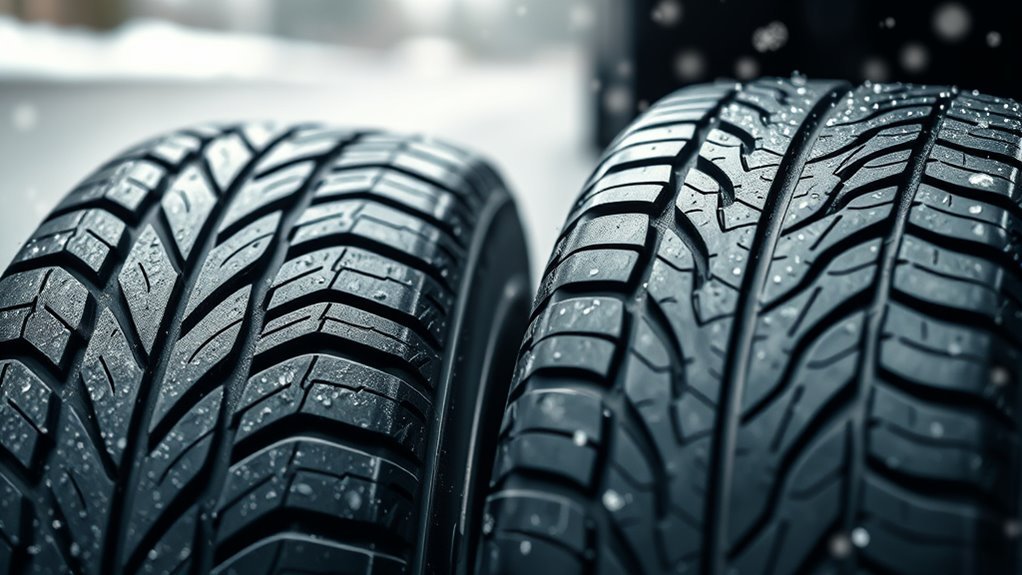
While all-season tires offer solid performance in mild conditions, they might not provide the grip you need when winter gets tougher.
That’s where all-weather tires come in. Designed for year-round use, all-weather tires feature advanced rubber compounds that stay flexible in cold temperatures, boosting traction on snow and ice.
Their tread patterns are more aggressive, with deeper grooves and siping, which enhances snow and ice performance compared to standard all-season tires.
Many all-weather tires carry the Three-Peak Mountain Snowflake symbol, certifying their winter capability for moderate winter weather.
This means you can rely on them without switching tires seasonally.
If you live in an area with variable climate and want reliable traction without sacrificing convenience, all-weather tires offer a versatile and safer alternative to traditional all-season tires.
Performance Differences in Various Weather Conditions
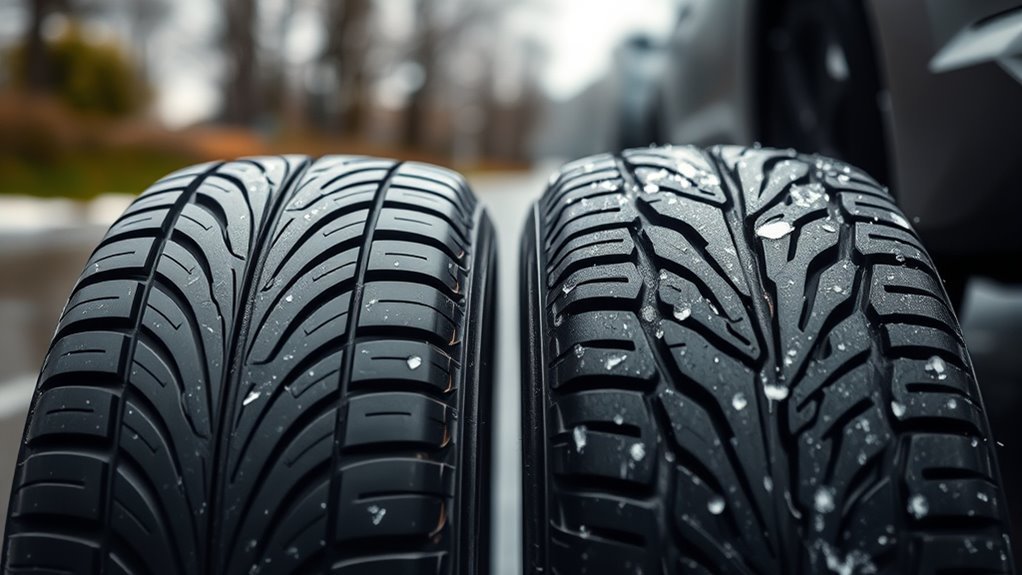
When it comes to traction in winter, you’ll notice all-weather tires hold the road better on snow and ice compared to all-season tires.
Both types handle rain well, but all-weather tires offer more confident grip in wet conditions.
Understanding these differences helps you choose the right tire for your driving needs.
Traction in Winter
Although all-season tires may seem versatile, they tend to harden and lose grip below 45°F. This makes them less effective in winter conditions.
On the other hand, all-weather tires, marked with the 3PMSF symbol, deliver better traction in winter. They maintain flexibility and feature deeper tread with siping for snow and ice.
These design elements enhance grip on icy conditions, improving your winter performance. While all-weather tires outperform all-season tires in winter, dedicated winter tires still offer the best traction in extreme cold.
| Tire Type | Tread Design | Winter Traction |
|---|---|---|
| All-Season | Shallow, less siping | Limited below 45°F |
| All-Weather | Deeper, aggressive, siped | Reliable in snow and ice |
| Winter | Specialized rubber, deep | Excellent in severe winter |
Handling in Rain
How well your tires handle rain can make a big difference in safety and control.
When it comes to handling in rain, all-weather tires excel with their deeper tread design and enhanced water-channeling. This boosts water evacuation and grip.
Their specialized rubber compounds improve wet traction and hydroplaning resistance, helping you maintain control even in heavy rain.
Compared to all-season tires, all-weather options offer shorter braking distances on wet roads. This is thanks to optimized tread patterns that reduce hydroplaning risk.
While both tire types manage wet conditions reasonably well, all-weather tires provide more confident handling and better grip at higher speeds.
Choosing tires with superior hydroplaning resistance and effective water-channeling features guarantees safer trips whenever the roads get slick from rain.
Tread Design and Rubber Compound Variations
You’ll notice that all-weather tires sport more aggressive tread patterns with deeper grooves and complex sipes compared to all-season tires.
Their rubber compounds stay flexible in colder temperatures, helping you maintain traction on snow and ice.
In contrast, all-season tires use harder rubber that performs best in mild conditions but can stiffen when it’s cold.
Tread Pattern Differences
When you compare all-weather and all-season tires, you’ll notice all-weather tires have more aggressive tread patterns with deeper grooves and larger voids designed to handle winter challenges.
This tread design enhances winter traction by efficiently channeling snow and slush away from the contact patch.
All-weather tires also feature extensive siping, which boosts grip on icy surfaces.
This is unlike the smoother, less aggressive tread pattern of all-season tires. These tread pattern differences make all-weather tires better suited for cold climates.
Their rubber compounds complement the tread design, but we’ll explore that later.
Meanwhile, all-season tires focus on comfort and fuel efficiency with less aggressive tread and fewer voids.
Understanding these tread pattern differences helps you choose the right tire for your driving needs and conditions.
Rubber Compound Flexibility
Although tread patterns play a crucial role in tire performance, the rubber compound’s flexibility is equally important for maintaining grip in varying temperatures.
All-weather tires use specialized rubber compounds that stay pliable even in cold temperatures around 45°F. This ensures consistent traction on snow and ice.
This flexibility enhances your handling and braking, giving you better control when roads get slippery.
In contrast, all-season tires have rubber compounds optimized for warmer weather. They tend to harden as temperatures drop, which reduces grip and increases braking distances.
Their tread design doesn’t compensate enough for the stiffening, so you may notice less reliable performance in winter conditions.
Choosing all-weather tires means you get advanced rubber formulations and tread design engineered to maintain flexibility.
This improvement enhances traction and safety across a wider temperature range.
Certifications and Legal Requirements
Since safety standards vary widely, understanding tire certifications can help you choose the right option for your driving conditions.
All-weather tires feature the 3PMSF (Three-Peak Mountain Snowflake) symbol, which guarantees winter traction by meeting strict tire standards for snow and ice performance.
This winter certification requires testing under harsh conditions, ensuring these tires comply with legal requirements in many regions with winter tire regulations.
In contrast, all-season tires usually carry the M+S rating, indicating mud and snow capability but lacking rigorous winter certification.
Because of this, all-weather tires often meet or exceed regional standards and safety certifications for winter driving, while all-season tires might not be legally recognized where winter traction is mandated.
Knowing these differences helps you select tires that align with both safety and legal demands.
Pros and Cons of All-Season and All-Weather Tires
Choosing between all-season and all-weather tires means weighing their distinct advantages and drawbacks based on your driving needs.
Selecting all-season versus all-weather tires involves balancing their unique benefits according to your driving requirements.
All-season tires offer balanced performance across dry, wet, and light snow conditions, making them cost-effective and comfortable for mild climates.
However, they may lack traction in severe winter weather due to their smoother tread pattern.
On the other hand, all-weather tires feature aggressive tread patterns and siping, providing better safety and traction in snow and icy conditions.
Although pricier, they excel in diverse driving conditions, especially in colder climates.
While all-season tires prioritize economy and comfort, all-weather tires focus on versatility and enhanced winter performance.
Understanding these pros and cons helps you pick the right tire for your safety and climate without compromising performance.
Choosing the Right Tire for Your Climate and Driving Needs
When you select tires, matching them to your local climate and driving habits makes all the difference in safety and performance.
If you live in an area with a mild winter and occasional wet roads, all-season tires offer reliable tire performance for dry and light snow conditions.
However, if your climate includes frequent snow and colder temperatures, all-weather tires provide better traction and handling thanks to their 3PMSF marking.
Assess your driving needs carefully—commuting on slick, snowy roads demands tires designed for winter conditions.
In harsher winters, even all-weather tires might not suffice, and dedicated winter tires could be necessary.
To ensure you pick the right option, consult local experts who understand how your region’s climate impacts tire performance and safety.
Frequently Asked Questions
What Are the Disadvantages of All-Weather Tires?
You’ll face higher costs, shorter lifespan, and less fuel efficiency with all-weather tires.
They also don’t perform as well as winter tires in extreme cold or heavy snow because their rubber hardens below 45°F, reducing traction.
Can I Use All-Weather Tires in Snow?
You can use all-weather tires in snow, especially if temperatures stay above 45°F.
They offer better traction than all-season tires.
But remember, in heavy snow or ice, dedicated winter tires still perform best.
Is All Season or All-Weather Better for Rain?
You’ll find all-weather tires better for rain since they have deeper treads and specialized compounds that boost grip and braking.
All-season tires work well too, but all-weather tires generally offer superior wet handling and safety.
How Long Do All-Weather Tires Last Compared to All Season Tires?
You know what they say: “You get what you pay for.”
All-weather tires usually last 50,000 to 65,000 miles, similar to all-season tires.
However, they might wear faster in warm weather due to softer rubber compounds.
Conclusion
When you choose between all-season and all-weather tires, you’re not just picking rubber—you’re deciding how prepared you want to be for whatever the road throws at you.
It’s no coincidence that all-weather tires handle winter’s worst better while all-season tires shine in milder conditions.
By matching your tire choice to your climate and driving style, you’re actually steering your safety and comfort in the right direction—every mile, every season.
In conclusion, selecting the right tires is crucial for your driving experience. All-weather tires provide enhanced performance in winter conditions, while all-season tires are great for moderate climates.
Understanding the differences can help you make an informed decision, ensuring you stay safe and comfortable on the road regardless of the season. Choose wisely, and enjoy every ride!