What Was the Weather Like in the Middle Colonies?
If you’re curious about the Middle Colonies’ weather, you’ll discover distinct seasons that shape life in this region. With moderate coastal temperatures and more extreme inland changes, the climate plays a vital role in daily activities and the economy.
Winters in the Middle Colonies can be cold and snowy, especially in the highlands.
On the other hand, summers tend to be hot and humid, making it ideal for growing crops.
Rainfall is steady year-round, thanks to the rivers and nearby oceans that help to moderate temperature swings along the coast.
These seasonal shifts greatly influenced how settlers farmed and lived.
By exploring further, you can see how the climate impacted their daily routines and economic practices.
Location and Geographic Context of the Middle Colonies
Although the Middle Colonies stretched between New England and the Southern colonies, they each had unique geographic features that shaped daily life.
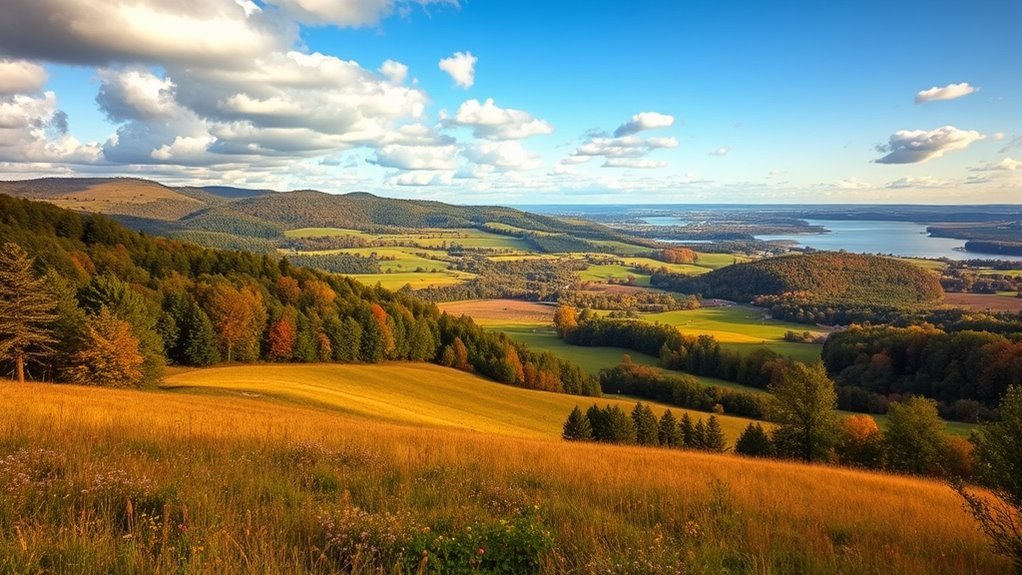
You’ll find New York, New Jersey, Pennsylvania, and Delaware along the Atlantic coast, where geography varies from fertile coastal plains to rolling hills and rugged mountainous areas.
Major rivers like the Hudson and Delaware run through the region, playing a pivotal role in trade and settlement.
This diverse geography influences the local climate, which falls within a temperate zone.
Because of this, you experience distinct seasons, with warm summers and cold winters.
But the terrain also affects how the land is used—fertile plains support farming, while forests and highlands shape other activities.
Understanding this geography helps you appreciate how climate and location intertwined to shape life in the Middle Colonies.
Seasonal Weather Patterns and Their Effects
You’ll notice that the Middle Colonies had cold winters with snow and warm summers perfect for growing crops like wheat and corn.
These seasonal changes shaped the farming cycles, determining when you’d plant and harvest.
Understanding how the weather shifted helps explain daily life and agricultural success in the region.
Winter Cold and Snow
How cold do winters get in the Middle Colonies?
Winter temperatures often drop between 10°F and 25°F, making the season genuinely cold.
Snow varies widely, with coastal areas receiving less than 30 inches while higher elevations can see over 50 inches.
From December through February, you’ll need to prepare for freezing weather.
Snow and ice can halt farming and slow transportation, affecting local economies.
Despite these challenges, winter plays a vital role in preserving food supplies and maintaining the region’s climate cycle.
When you live through a Middle Colonies winter, you quickly learn to adapt to the cold and snow.
You come to understand that these harsh conditions shape both daily life and the broader seasonal rhythm.
Warm Summers Growth
When summer arrives in the Middle Colonies, temperatures climb between 84°F and 99°F, creating ideal conditions for crops like wheat, corn, and rye to flourish.
You’ll notice that these warm summers extend the growing season, giving farmers plenty of time to nurture their fields.
The combination of heat and humidity supports robust plant growth, while frequent summer thunderstorms provide the necessary rainfall to keep crops healthy and soil moist.
This consistent weather pattern allows for a longer and more productive growing season, which boosts agricultural yields.
As you observe the landscape during these months, you’ll see lush fields thriving under the sun, thanks to the warm summers that drive growth and sustain the Middle Colonies’ farming success.
Seasonal Farming Cycles
Although the Middle Colonies experienced four distinct seasons, farmers adapted their planting and harvesting schedules to match the changing weather.
You’d rely on the long growing season, which stretched through warm summers with temperatures between 84°F and 99°F, perfect for crops like wheat, rye, and corn.
Winter’s cold sometimes dropped to 10°F with snow, pausing your farming efforts. This made it essential to plan around these seasonal breaks.
Seasonal farming cycles were vital; you’d plant in spring after the frost, nurture crops through summer, and harvest before the cold set in.
This balance between weather and agriculture helped you maximize yields and maintain soil health.
Temperature Ranges Throughout the Year
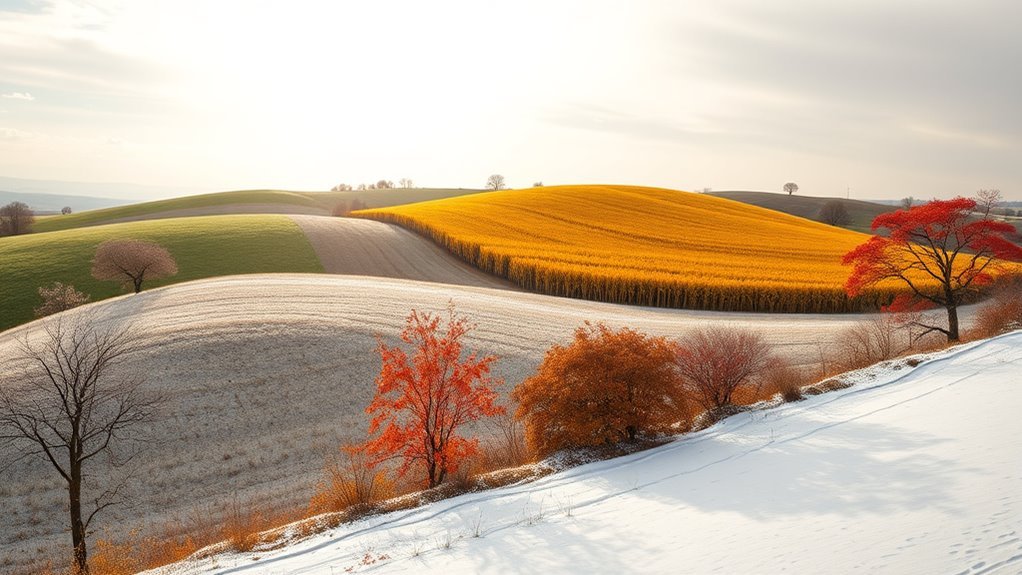
Because the Middle Colonies experience four distinct seasons, you’ll notice significant temperature changes throughout the year.
Winters bring cold temperatures, often dropping between 10°F and 25°F, with snow common.
Summers, on the other hand, can be warm and humid, ranging from 84°F to 99°F.
These temperature shifts influence daily life and farming schedules, but the variations are less extreme than in northern New England or the southern colonies.
| Season | Temperature Range (°F) | Typical Weather |
|---|---|---|
| Winter | 10 – 25 | Cold, snowy |
| Spring | 45 – 65 | Mild, gradually warming |
| Summer | 84 – 99 | Warm, humid |
| Fall | 50 – 70 | Cool, crisp |
You’ll see how temperature shapes life in every season.
Rainfall and Precipitation Trends
While the Middle Colonies experience varying temperatures, their rainfall stays fairly steady throughout the year. This consistency ensures crops and forests get the moisture they need.
You’ll find that precipitation here is evenly spread, avoiding extreme dry or wet seasons. This balance helps maintain ecological stability.
Summer thunderstorms frequently boost rainfall, which is great for local agriculture.
Here’s what you should know about rainfall and precipitation trends in the Middle Colonies:
- Rainfall is consistent year-round, aiding both farming and natural landscapes.
- Summer storms provide essential moisture, especially for crops like wheat and corn.
- Snowfall varies, with coastal areas seeing less than 30 inches and higher elevations over 50 inches annually.
This balanced precipitation pattern played a key role in sustaining the region’s environment and economy.
Impact of Climate on Agriculture and Crop Growth
When you consider the warm summers and cold winters of the Middle Colonies, you see how the climate shaped farming success.
The region’s climate offered a long growing season with temperatures ranging from 84 to 99°F in summer, perfect for cultivating crops like wheat, rye, and corn.
Though winters were harsh, with temperatures between 10 and 25°F, they only briefly paused agriculture.
This seasonal variation allowed farmers to plan diverse planting and harvesting cycles, maximizing output.
Consistent rainfall combined with moderate temperatures created ideal conditions for large-scale food crop production.
So, the climate directly influenced agriculture by supporting crop growth and multiple harvests, helping farmers thrive in the Middle Colonies.
You can clearly see how climate and agriculture were tightly linked in this region’s farming success.
Influence of Nearby Waterways on Local Weather
If you live near the Hudson or Delaware Rivers, you’ll notice how these waterways help moderate local temperatures, making winters milder and summers cooler compared to inland areas.
The Hudson Rivers and Delaware Rivers act as natural buffers, reducing extreme temperature swings and influencing humidity levels.
You’ll find that these waterways contribute to frequent summer thunderstorms and wetter conditions along the riverbanks.
Key effects include:
- Milder winters and cooler summers near the waterways
- Increased humidity and summer thunderstorms
- Seasonal flooding and wetter soil conditions along riverbanks
These factors shape the local weather patterns, making the areas around the Hudson Rivers and Delaware Rivers distinct from farther inland.
You’ll experience a more temperate and moist climate that impacts daily life and agriculture.
Microclimates Within the Middle Colonies
You’ll notice that coastal areas enjoy milder winters and cooler summers thanks to the ocean’s influence.
Meanwhile, inland regions face more extreme temperature swings.
Elevation changes and dense forests add another layer of complexity. This creates cooler, more humid microclimates in certain spots.
Understanding these variations helps explain why farmers adjusted their crops and planting schedules across the Middle Colonies.
Coastal Temperature Moderation
The Atlantic Ocean plays a crucial role in shaping the climate along the Middle Colonies’ coast by keeping temperatures moderate throughout the year.
When you’re near the coast, you’ll notice less extreme temperature swings compared to inland areas.
Coastal temperatures stay fairly steady, creating a unique environment that’s perfect for farming and living.
Here’s what you can expect along the coast:
- Summers are warm and humid, with temperatures ranging from 84 to 90°F.
- Winters remain mild, rarely dropping below 25°F.
- The ocean’s influence forms microclimates that support agriculture and settlements.
This moderation means you won’t face harsh winters or scorching summers.
It makes the Middle Colonies’ coastal regions comfortable and productive places to live.
Inland Climate Variability
Although coastal areas enjoy mild and steady temperatures, inland regions of the Middle Colonies experience greater climate variability due to elevation and distance from the Atlantic Ocean.
You’ll notice that inland climate fluctuates more dramatically, with temperature swings often exceeding 30°F between summer highs and winter lows.
This means harsher winters with more snowfall and shorter growing seasons compared to the coast.
Rainfall and snow accumulation also vary across these inland microclimates, influencing local ecosystems and farming practices.
Because of this climate variability, settlers had to adapt their agriculture and daily life to unpredictable weather patterns.
Understanding these inland climate differences helps you appreciate the challenges people faced away from the moderating effects of the Atlantic coastline.
Elevation and Forest Influence
When you explore the Middle Colonies, you’ll find that elevation and dense forests create distinct microclimates that shape local weather patterns.
The Appalachian Mountains and highlands in northwest New Jersey and eastern Pennsylvania offer cooler temperatures and increased precipitation due to their elevation.
Meanwhile, forests like the New Jersey Pine Barrens influence humidity and moderate temperatures, acting as natural insulation during winter.
These microclimates impacted farming and settlement decisions.
Key influences include:
- Higher elevations bring colder winters with more snowfall.
- Forests regulate local temperature and humidity levels.
- Microclimates supported diverse agricultural practices and settlements.
Understanding how elevation and forests interact helps you grasp the variety of weather experiences within the Middle Colonies.
It reveals how geography shaped everyday life.
Comparison of Middle Colonies’ Climate to Neighboring Regions
If you compare the Middle Colonies’ climate to nearby regions, you’ll notice it strikes a balance between extremes.
It boasts a temperate climate with mild winters, unlike the harsh cold in New England and the hotter weather in the Southern Colonies.
This middle ground created favorable conditions for agriculture and daily life.
| Region | Winter Temperature (°F) | Climate Characteristics |
|---|---|---|
| New England | 5 to 20 | Harsh winters, snowy |
| Middle Colonies | 10 to 25 | Mild winters, temperate |
| Southern Colonies | 40 to 60 | Mild winters, hotter summers |
This table shows how the Middle Colonies’ climate offered a moderate environment, blending the cold north and warm south climates.
Adaptations of Settlers to Weather Conditions
Settlers in the Middle Colonies adapted quickly to the region’s four distinct seasons by timing their farming activities carefully.
Settlers thrived by carefully timing farming activities to match the Middle Colonies’ distinct four seasons.
They planted crops in spring and harvested before winter’s arrival.
You’d notice they built sturdy, insulated homes to combat cold winters, preparing well for snow and freezing temperatures.
Their farming relied heavily on understanding the climate and using seasonal methods to maximize yields.
Key adaptations included:
- Practicing crop rotation and seasonal planting to make the most of the short growing season.
- Constructing durable homes designed to withstand harsh winter weather.
- Adjusting trade and transportation schedules to fit summer shipping and winter travel limits.
Role of Climate in Economic and Social Development
You’ll see how the Middle Colonies’ temperate climate boosted agriculture by supporting crops like wheat and corn.
Seasonal weather patterns shaped trade schedules and influenced when settlers planted and harvested their fields.
These factors also affected where communities settled, showing how climate guided economic and social growth.
Climate Impact on Agriculture
Because the Middle Colonies enjoyed a temperate climate with warm summers and cold winters, you could count on a long growing season that supported crops like wheat, rye, and corn.
This favorable climate made agriculture the backbone of the region’s economy. You’d find fertile, well-drained soil that allowed for large-scale grain farming, earning the area the nickname “breadbasket” of the colonies.
The climate impacted agriculture by providing consistent conditions for planting and harvesting.
It also supported diverse crops and timber resources, enabling reliable food production for local use and export.
With balanced weather patterns, you’d experience fewer disruptions in farming.
This reliability helped the colonies thrive economically and socially, as strong agriculture sustained communities and trade opportunities throughout the year.
Seasonal Effects on Trade
How did the changing seasons shape trade in the Middle Colonies?
The region’s climate, marked by four distinct seasons, directly influenced trade patterns. You’d notice that warm summers and a long growing season allowed farmers to cultivate and export grain, fueling the economy.
However, winter’s cold temperatures and snowfall often paused shipping and farming, forcing you to adjust trade schedules seasonally.
Despite these challenges, moderate climate conditions kept rivers like the Hudson and Delaware navigable most of the year, enabling year-round trade.
These seasonal weather patterns dictated when goods moved and when activities slowed, making the Middle Colonies an essential center for commerce.
Weather Influencing Settlement Patterns
Although the Middle Colonies faced cold winters, their milder climate and longer growing season compared to New England made them attractive for settlers focused on farming.
The seasonal weather played a key role in shaping settlement patterns, influencing when and where communities developed.
You’ll notice settlers often chose locations near rivers and ports to maximize transportation and trade opportunities, which thrived year-round thanks to the temperate climate.
Key factors that influenced settlement patterns include:
- A longer growing season supporting crops like wheat, rye, and corn.
- Access to waterways such as the Hudson and Delaware Rivers for commerce.
- Predictable seasonal weather enabling diverse economic activities like shipbuilding and milling.
Frequently Asked Questions
Which Colonies Had Cold Winters?
You’ll find cold winters in colonies like New York, Pennsylvania, and New Jersey.
Inland and higher elevation areas get harsher freezes and snow,
while coastal spots stay milder but still face chilly, icy conditions.
What Was the Weather Like in the Middle Ages?
In the Middle Ages, you’d experience unpredictable weather with cold winters, hot summers, and frequent rain.
Seasons varied regionally, impacting farming and daily life.
Often, this made survival challenging due to harsh winters and wet conditions.
Which Colonies Had the Best Climate?
You’ll find the Middle Colonies had the best climate—so perfect, it felt like summer lasted forever!
You’ll enjoy mild winters, warm summers, and steady rainfall, making farming and living comfortable compared to harsher colonial climates.
What Was the Geography in the Middle Colonies?
You’ll find the Middle Colonies’ geography diverse, with flat coastal plains perfect for ports,
fertile rolling hills in the Piedmont, and rocky, mountainous regions that limit farming.
Rivers like the Hudson and Delaware boost trade.
Conclusion
You’d find the Middle Colonies’ weather a mix of surprises, with seasons that dance between hot summers and chilly winters.
It’s like riding a rollercoaster through the year. The rain nourished the land, turning it into a farming paradise, while settlers adapted like weather-savvy chameleons.
Compared to their neighbors, this climate provided endless opportunities. It shaped a vibrant economy and society that thrived under the ever-changing skies.
Truly, the weather here was a wild symphony you couldn’t ignore.
In conclusion, the Middle Colonies experienced a diverse climate that influenced their agricultural practices and economic prosperity. With warm summers and cold winters, settlers learned to adapt to the whims of nature. The abundant rainfall helped create fertile land for farming, which in turn supported a thriving community. Overall, the weather played a crucial role in shaping the lifestyle and success of the Middle Colonies.