3 Essential Tips on What to Wear Hiking in Hot Weather
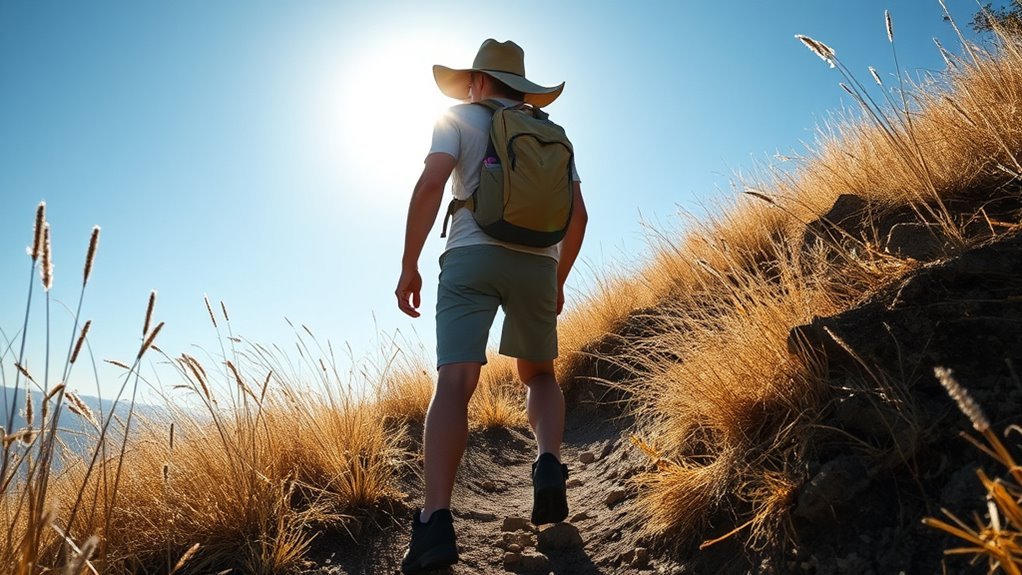
When hiking in hot weather, it’s essential to choose the right clothing to stay comfortable and safe. Lightweight, breathable fabrics like nylon or merino wool are ideal as they wick moisture and reflect sunlight. Opt for light colors to help keep you cool.
Always wear sun protection. This means opting for UPF-rated clothing, a wide-brimmed hat, sunscreen, and UV-blocking sunglasses to shield your skin and eyes from harmful rays.
Using loose-fitting clothes with ventilation features, like mesh panels or zip vents, can enhance airflow and help you stay cool during your hike.
By following these tips, you’ll be well-equipped to tackle hot-weather hikes with ease. Keep exploring to discover even more ways to enjoy your outdoor adventures in the heat!
Choosing the Right Fabrics and Colors
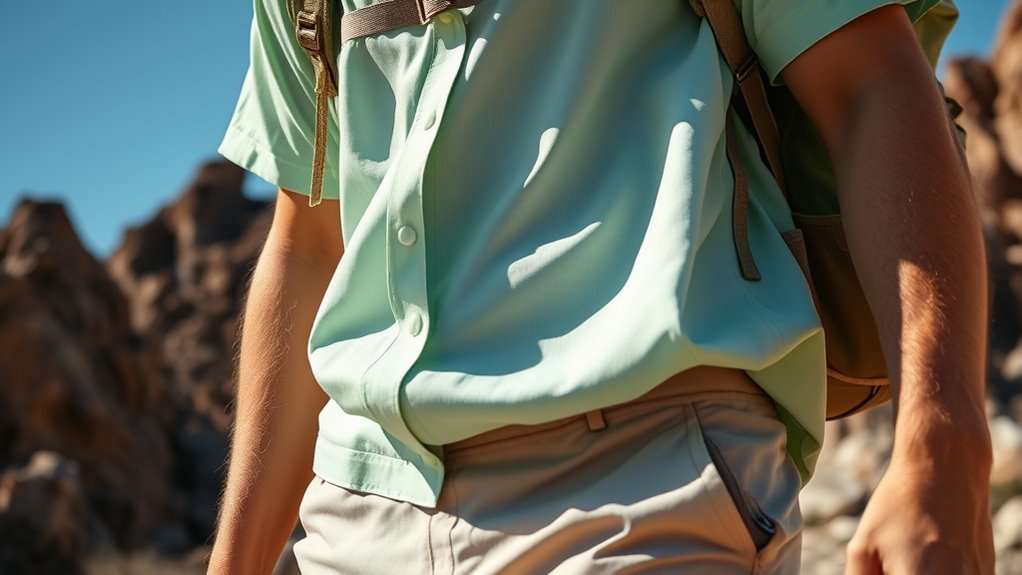
When hiking in hot weather, choosing the right fabrics and colors can make a big difference in your comfort.
Opt for lightweight clothing made from breathable fabrics like nylon, polyester, or merino wool that offer moisture-wicking properties to keep sweat off your skin and dry quickly.
Choose lightweight, breathable fabrics like nylon, polyester, or merino wool that wick moisture and dry fast.
Light-colored clothing such as white, tan, or khaki is ideal for hot weather hiking because it reflects sunlight, aiding thermal regulation and reducing heat absorption.
Look for garments with UPF protection to shield your skin from harmful UV rays without the need for extra sunscreen layers.
Clothing with ventilation features like mesh panels or vents enhances airflow, helping you stay cool.
Avoid dark colors since they absorb heat, increasing your body temperature.
Prioritizing these choices guarantees effective UV protection and comfort on the trail.
Essential Sun Protection Gear
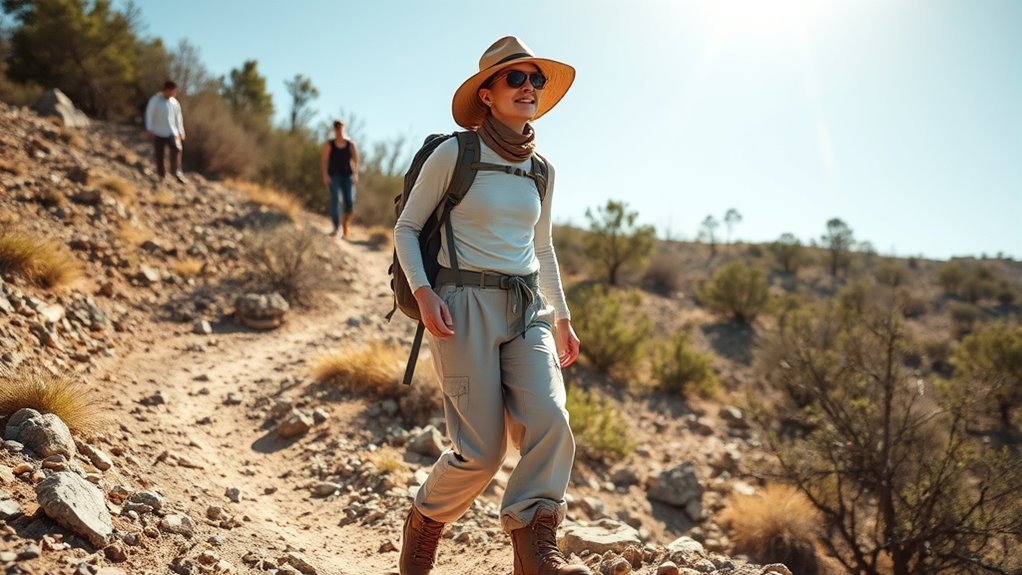
Although choosing the right clothing helps, you also need essential sun protection gear to stay safe in hot weather.
Shield yourself from harmful UV rays with these key items:
- Wear UPF clothing rated 30 or higher, like long-sleeve shirts and pants, for effective UV protection.
- Use a wide-brimmed hat or legionnaire cap to provide shade for your face, neck, and ears.
- Apply broad-spectrum sunscreen with SPF 30+ on all exposed skin at least 15 minutes before hiking; reapply every two hours.
- Don UV-protective sunglasses with 100% UV coverage and consider a neck gaiter or bandana to protect your neck and keep cool.
This protective gear ensures you stay safe from intense sun exposure while enjoying your hike.
Layering and Ventilation Strategies
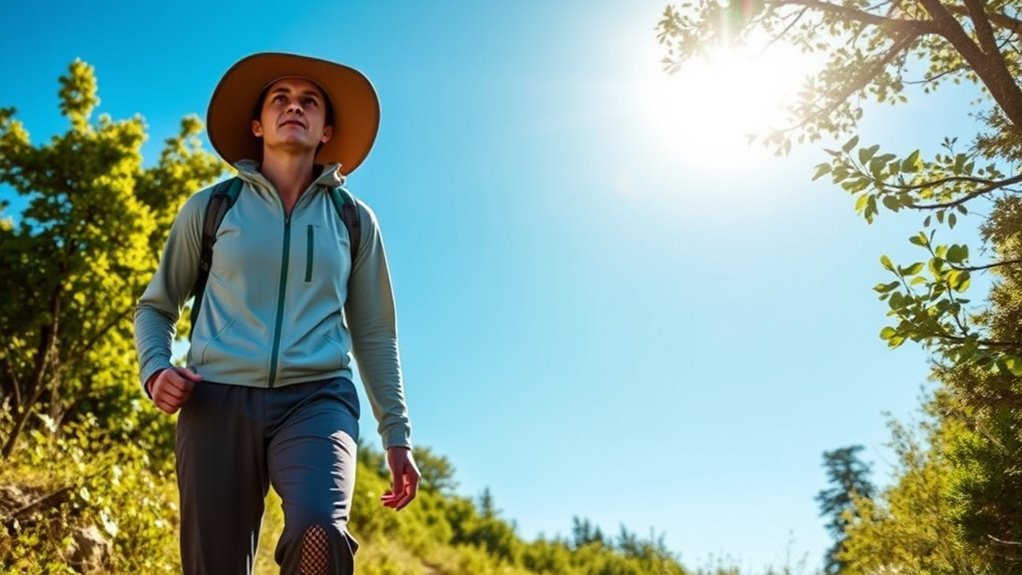
Since staying cool is essential during hot hikes, you should focus on layering and ventilation strategies that maximize airflow and moisture management.
Start with breathable fabrics like nylon or polyester that wick moisture and dry fast.
Choose loose-fitting clothing to create micro-air gaps that help with temperature regulation.
Look for clothing with vented features such as mesh panels, back vents, or zip vents to boost ventilation.
Opt for long-sleeve UPF shirts designed with adjustable layers so you can unzip vents or roll up sleeves for better airflow.
Using modular layering lets you make quick layer adjustments as heat levels change, keeping you comfortable and dry.
Prioritizing moisture-wicking fabrics combined with smart ventilation will keep your body cool and prevent overheating on the trail.
Frequently Asked Questions
Can I Wear Sandals Instead of Hiking Boots in Hot Weather?
You can wear sandals, but they might not protect your feet from rough terrain, sharp rocks, or insects.
If you choose sandals, pick sturdy hiking ones with good grip and support to stay safe and comfortable.
How Do I Prevent Blisters When Hiking in the Heat?
You prevent blisters by wearing moisture-wicking socks, keeping your feet dry, and choosing well-fitted shoes.
Apply blister prevention tape or balm on hotspots, and take breaks to let your feet breathe during your hike in the heat.
Are Insect-Repellent Clothing Options Effective for Hot Weather Hikes?
Yes, insect-repellent clothing works well for hot weather hikes.
You’ll stay protected without applying extra sprays.
Many options use lightweight, breathable fabrics that keep you cool while keeping bugs away effectively.
Should I Wear Compression Socks for Hiking in High Temperatures?
About 40% of hikers report less fatigue wearing compression socks.
You should wear them in high heat to improve circulation and reduce swelling.
But pick lightweight, breathable pairs to stay cool and comfortable on your hike.
Is It Okay to Wear a Bandana Instead of a Hat for Sun Protection?
Yes, you can wear a bandana instead of a hat for sun protection,
but it won’t shield your face and neck as well.
Make sure to choose a light, breathable fabric
and reapply sunscreen regularly for extra safety.
Conclusion
Remember, over 90% of your body heat escapes through your head, so wearing a breathable hat is a game-changer on hot hikes.
By choosing lightweight, moisture-wicking fabrics and light colors, you’ll stay cooler and more comfortable.
Don’t forget essential sun protection gear like sunscreen and UV-blocking sunglasses.
Use smart layering and ventilation strategies to regulate your body temperature effectively.
With these tips, you’ll enjoy every step of your hot-weather adventure safely and comfortably.
In conclusion, staying cool on hot hikes is all about the right gear.
A breathable hat, moisture-wicking fabrics, and light colors are essential for comfort.
Remember to protect yourself from the sun with sunscreen and UV-blocking sunglasses, while smart layering helps regulate your temperature.
By following these guidelines, you can make the most of your outdoor experiences, ensuring safety and comfort on your sunny adventures!