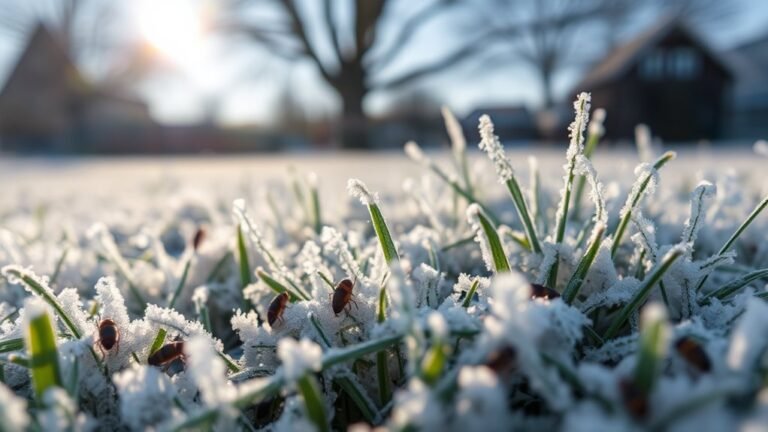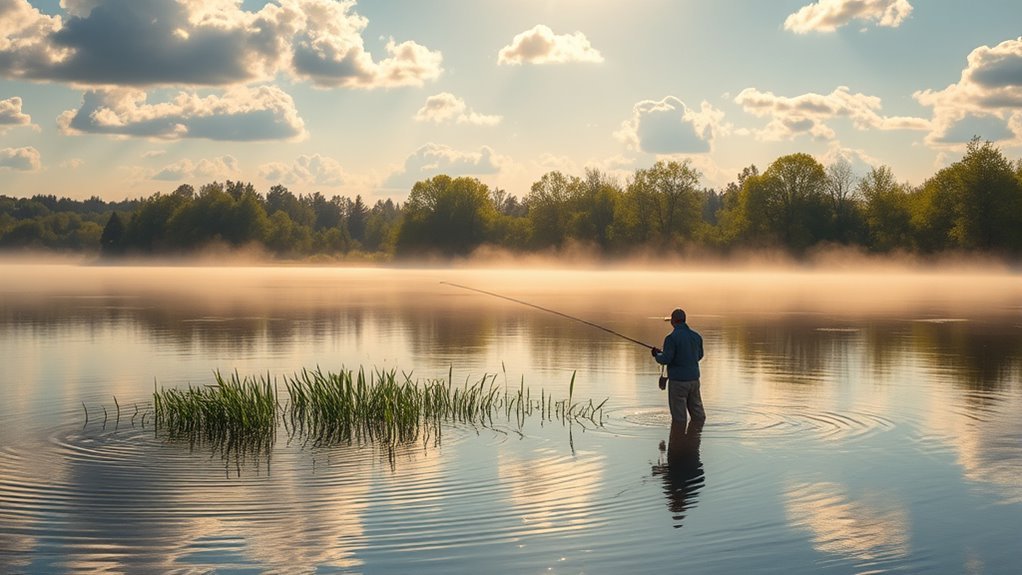
What Is the Best Weather for Fishing?
Fishing success often hinges on understanding the best weather conditions. When it comes to barometric pressure, you’ll catch more fish when it’s steady or falling. This indicates that fish are actively feeding.
Overcast skies and light rain can also boost your chances. The reduced light makes fish feel safer and more enthusiastic to bite.
Mild temperatures and gentle winds are ideal as they help keep the water stable and oxygen-rich. This attracts more fish to the surface, making your fishing experience more fruitful.
Early morning and late evening are prime times to fish during these favorable conditions.
Keep experimenting, and you’ll uncover how seasonal patterns and weather shifts can further enhance your fishing success!
Factors That Influence Fish Activity
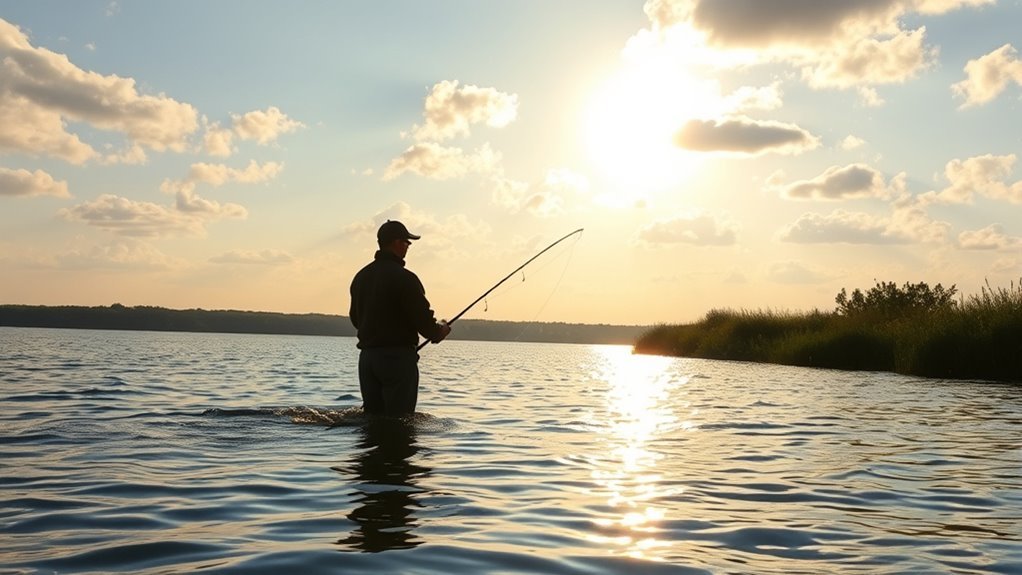
When barometric pressure rises or stays steady, you’ll find fish more active and feeding enthusiastically.
This stable pressure signals favorable weather patterns, prompting fish to venture from deeper waters.
You’ll notice wind plays a key role too; it stirs the water surface, attracting baitfish and predators.
This boosts fish activity near structures.
Cloud cover and light rain also influence fish behavior by reducing light penetration.
This makes fish feel secure and increases their feeding.
Water temperature affects their metabolism, so changes can either energize or slow them down.
On bright, sunny days, fish often retreat to shaded or deeper areas, lowering activity.
Ideal Weather Conditions for Fishing
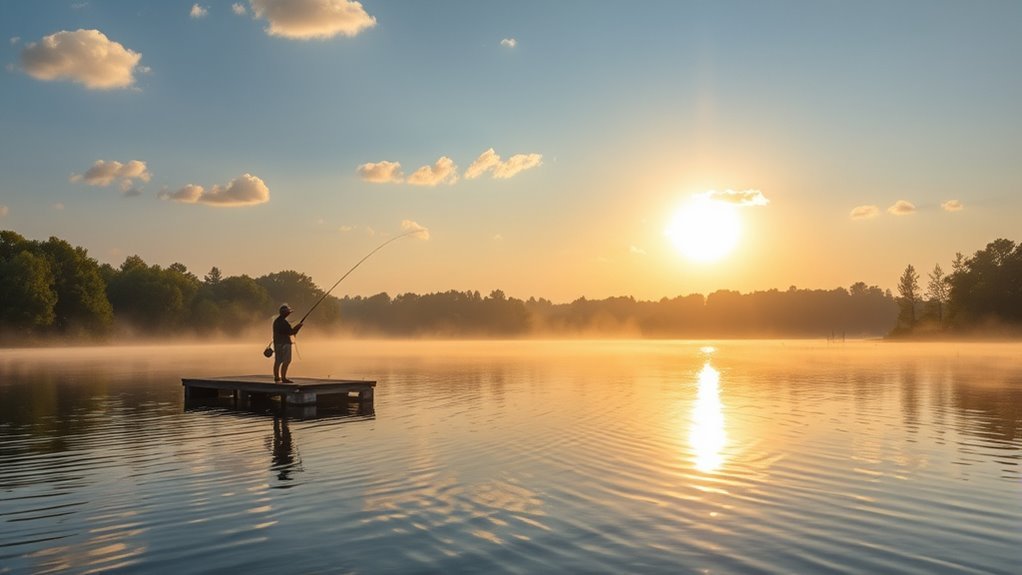
Although many factors affect fish behavior, mild temperatures paired with overcast skies and light winds offer some of the best conditions for active feeding.
Overcast days reduce light penetration, making fish feel safer in shallow waters and increasing fish activity.
Stable weather with consistent water temperature and oxygen levels keeps fish comfortable and more likely to feed.
Keep these ideal conditions in mind:
- Falling or steady barometric pressure often signals increased fish activity.
- Overcast skies minimize light penetration, encouraging fish to approach bait.
- Light winds create stable water surfaces, maintaining oxygen levels and steady temperatures.
Seasonal Weather Patterns and Their Effects
You’ll notice that fish behavior changes with the seasons, as temperature trends affect where and when they feed.
Spring and fall often bring more active fish due to moderate temperatures.
Meanwhile, summer and winter shift their habits to deeper or warmer waters.
Understanding these seasonal patterns helps you pick the best times and spots for a successful catch.
Seasonal Temperature Trends
As water temperatures shift throughout the year, fish behavior changes in predictable ways that you can use to your advantage.
Understanding seasonal temperature trends helps you anticipate fish activity and adapt your approach based on water conditions and temperature changes. Here’s what to watch for:
1. In spring, rising water temperatures boost fish activity and trigger spawning.
This makes fish more active near the surface.
2. Summer heat drives fish to cooler, deeper waters or shaded spots.
This reduces surface bites during the hottest hours.
3. Fall’s cooling waters lead fish to feed aggressively,
increasing your chances of success as they prepare for winter.
Weather Impact by Season
When seasonal weather patterns shift, they directly influence fish behavior and your fishing success.
In spring, stable weather with rising barometric pressure and moderate water temperature boosts fish activity. This makes it a prime time to fish in shallow water.
Fall brings fluctuating barometric pressure and cooling temperatures, often triggering feeding bursts as fish respond to changing water conditions.
During summer, heat forces fish into deeper, cooler areas, so focus on early morning or evening trips.
Winter’s cold front and high pressure lower fish activity, but species like pike thrive in cool inflows.
Understanding these seasonal shifts helps you adapt your strategy, choosing the right times and spots to maximize your catch throughout the year.
Best Times of Day and Year for Fishing Success
Although fish can bite at any time, your best chances come early in the morning and late in the evening when low light stirs their activity.
Fish are most active and likely to bite during early morning and late evening low light periods.
These times align with cooler water temperatures and calmer light conditions, boosting fish activity.
Seasonal changes also play a key role, with spring and fall offering ideal weather conditions for fishing success.
Here’s what to focus on for better results:
- Early morning and dusk provide low light that triggers feeding behavior.
- Moderate water temperature during spring and fall enhances fish activity.
- Avoid midday heat in summer and extreme cold in winter when fish are less active.
How Different Weather Conditions Affect Fish Behavior
Understanding how different weather conditions influence fish behavior can greatly improve your fishing success.
When skies are overcast or during light rain, fish feel safer from predators and become more active, boosting fish activity.
Keep an eye on barometric pressure: stable or high pressure often makes fish retreat to deeper water, reducing feeding.
However, falling barometric pressure before storms usually triggers aggressive bites.
Wind stirs the water surface, attracting baitfish and predators like bass, improving fishing conditions in shallow areas.
Rapid shifts in water temperature or weather can push fish deeper or halt feeding temporarily.
Also, water clarity affected by weather influences how fish hunt.
Tools to Monitor and Predict Fishing Weather
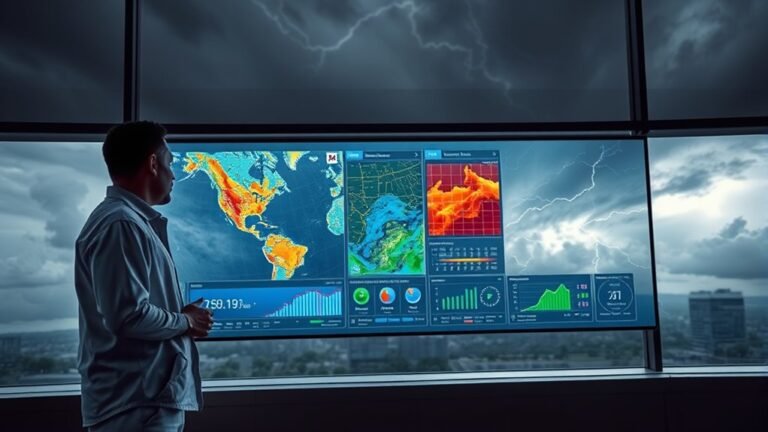
You can use weather tracking apps like FishWeather to get real-time wind reports and hyperlocal forecasts tailored to your fishing spot.
These tools provide live data on factors like wind speed, cloud cover, and barometric pressure to help you spot the best conditions.
Weather Tracking Apps
When you track weather conditions with apps like FishWeather, you get real-time updates on wind speed, direction, barometric pressure, and sea surface temperature.
These weather tracking apps pull data from thousands of stations, giving you hyperlocal, accurate info to predict fish behavior.
By monitoring key factors, you can better understand fish activity and plan your trips around suitable conditions.
Here’s why you should use weather tracking apps:
- Real-time forecasts help you avoid poor wind conditions and spot the best fishing windows.
- Tracking barometric pressure reveals shifts that influence fish feeding and movement.
- Monitoring water temperature guides you to locations where fish are most active.
Using these tools sharpens your strategy and boosts your chances of success on the water.
Real-Time Environmental Data
Building on the benefits of weather tracking apps, real-time environmental data offers even deeper insights to sharpen your fishing strategy.
Apps like FishWeather pull real-time data from thousands of stations, giving you hyperlocal updates on wind, water temperature, and barometric pressure—key factors influencing fish activity.
Monitoring shifts in barometric pressure and changing weather conditions helps you spot the best fishing weather windows.
Real-time alerts on gusty winds or falling pressure ensure you adapt quickly, improving your chances of success.
This precise, up-to-date environmental data not only boosts your catch rate but also enhances safety on the water.
Frequently Asked Questions
What Temperature Is Best for Fishing?
You’ll find the best fishing when water temperatures stay between 65°F and 75°F.
Fish are active then, so you’ll get more bites.
Avoid temps below 55°F or above 80°F—they make fish less willing to bite.
What Weather Are Fish Most Active In?
You’ll find fish most active during stable or rising barometric pressure, especially with overcast skies or light rain.
Mild temperatures and light winds boost bait movement, making early mornings and evenings prime feeding times.
What Is the 80/20 Rule in Fishing?
The 80/20 rule reveals that roughly 80% of your catches come from just 20% of your efforts or spots.
This means you should zero in on these productive places to maximize your fishing success efficiently.
What Weather Is Better for Fishing?
You’ll fish best when skies are overcast with moderate winds, as fish feed actively near the surface.
Mild temperatures and light rain also help.
However, hot, calm weather usually pushes fish deeper, making them harder to catch.
Conclusion
So, you might think the perfect fishing weather is all about bright sunshine and clear skies, right?
Ironically, those are often the worst conditions to catch anything. Fish tend to hide when it’s too calm or too hot.
Instead, you’ll have more luck when the weather’s a bit unpredictable—cloudy skies, light rain, or just after a storm.
So next time you hope for perfect weather, remember: the fish probably hope you don’t.
In conclusion, while sunny and clear days seem ideal for fishing, the opposite is often true. Unpredictable weather like clouds and light rain can lead to more successful fishing trips.
Keep this in mind as you plan your next outing. The best conditions for fishing aren’t always what you expect; they often favor a little chaos in the skies!