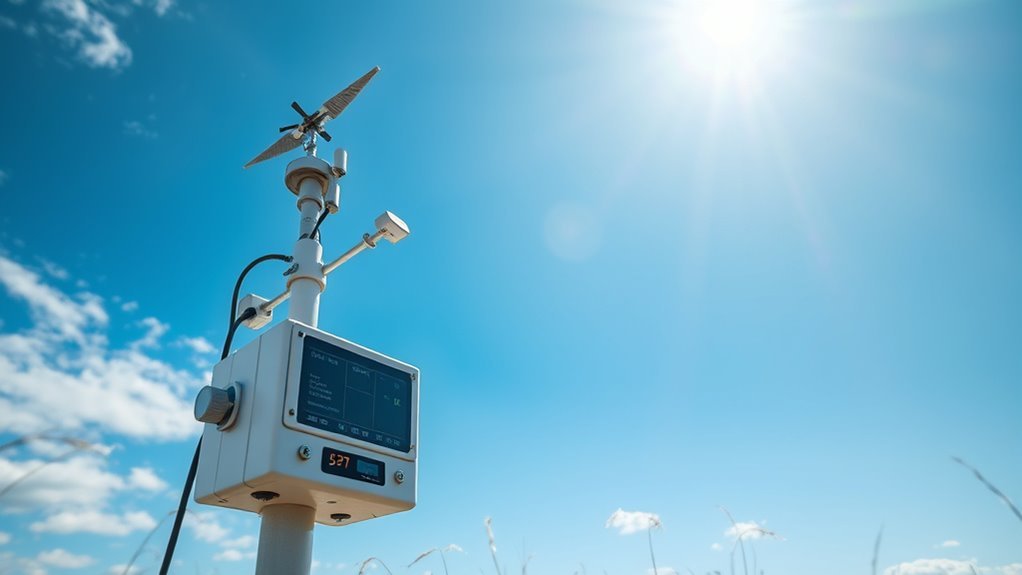
How Does an Automatic Weather Station Work?
An automatic weather station is a fascinating tool that provides accurate weather data. It operates by using various sensors to measure essential elements like temperature, humidity, wind speed, and rainfall.
These measurements are then converted into electrical signals.
A data logger processes this information and timestamps it, ensuring that the data is stored for quick and easy access.
To keep running continuously, the station is typically powered by solar panels, batteries, or sometimes even wind turbines.
One of the coolest features is that wireless modules transmit the data in real-time to remote servers, allowing you to receive instant weather updates.
It’s impressive how these stations not only guarantee accuracy but also promote sustainability in weather monitoring.
Keep exploring to learn more about their essential role in our understanding of weather patterns!
Components of an Automatic Weather Station
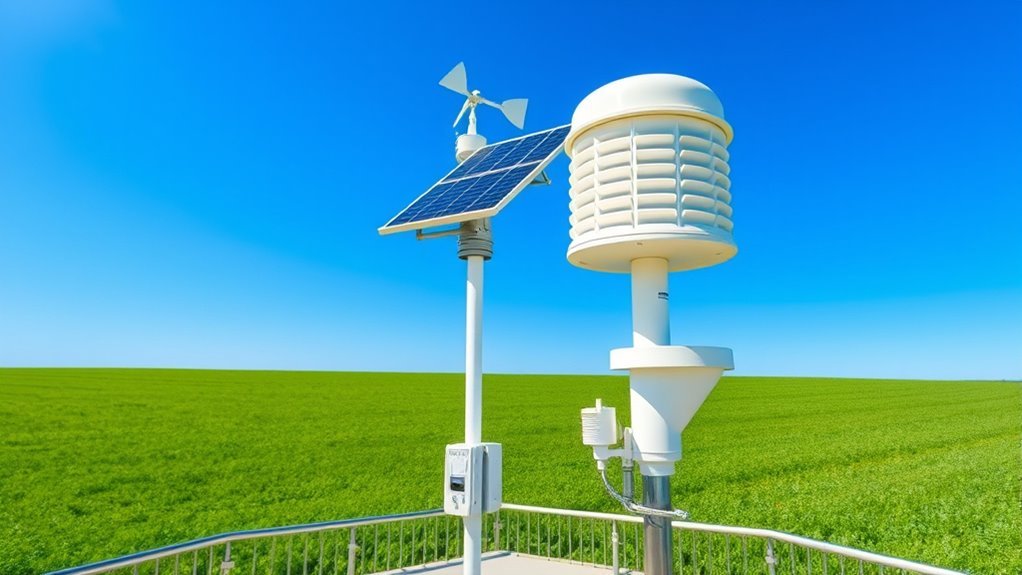
Although an automatic weather station relies on several components, its core consists of sensors that measure temperature, humidity, wind speed, and rainfall.
The heart of an automatic weather station lies in its sensors measuring temperature, humidity, wind speed, and rainfall.
You’ll find temperature sensors, wind speed sensors, and rainfall sensors working together for accurate environmental monitoring.
These sensors convert weather conditions into electrical signals.
The Data Logger collects and timestamps this data, serving as the central hub for data collection.
A reliable Power Supply, often solar panels or batteries, ensures the station runs continuously, even in remote locations.
Wireless Communication modules transmit the gathered data to remote servers or display units, allowing you to access real-time weather updates.
Understanding these components helps you see how an automatic weather station efficiently records and transmits essential weather information with minimal human intervention.
Data Collection and Processing
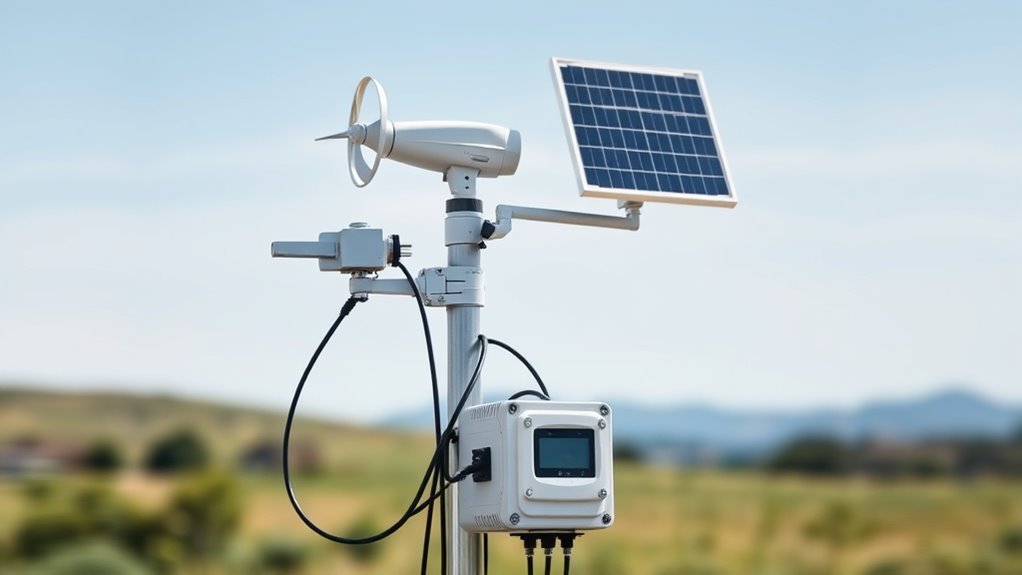
When sensors detect changes in temperature, humidity, wind speed, and rainfall, they convert these environmental parameters into electrical signals that the data logger can handle.
You’ll find the data logger receives these signals and performs data processing to calculate measurements like averages and extremes. It also applies time-stamping for accurate records.
The processed data is stored either locally or on external devices.
Communication modules then transmit this information for real-time monitoring.
Here’s a quick overview of the steps involved:
| Step | Function | Purpose |
|---|---|---|
| Sensors | Convert parameters to signals | Capture environmental changes |
| Data Logger | Process and time-stamp data | Generate accurate measurements |
| Storage | Save processed data | Ensure future access |
| Communication | Transmit data remotely | Enable real-time monitoring |
| Data Processing | Calculate averages, extremes | Provide meaningful insights |
Power Supply and Sustainability
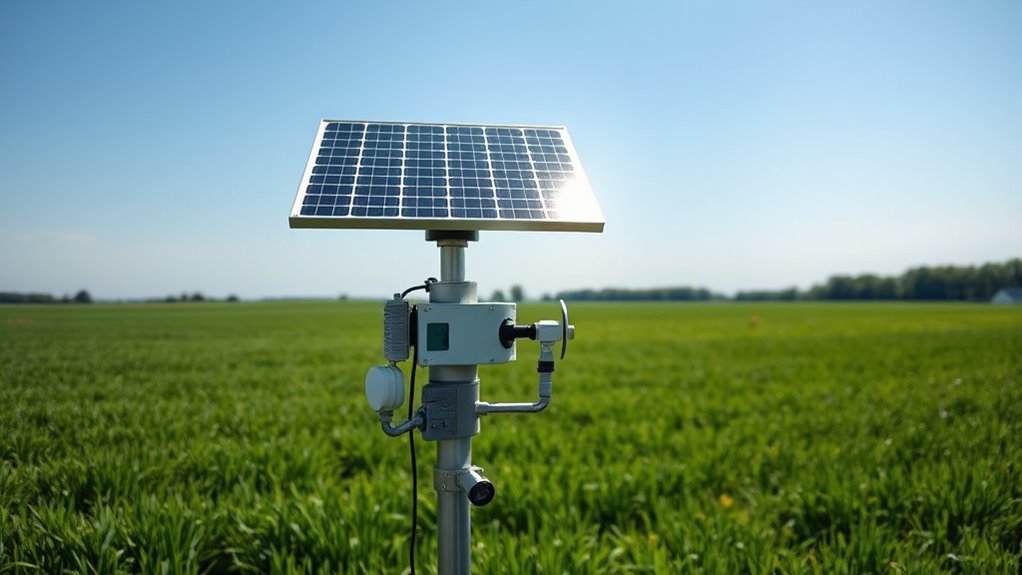
After collecting and processing data, an automatic weather station needs a reliable power source to keep running continuously, especially in remote areas.
A dependable power source is essential for continuous operation of automatic weather stations, particularly in remote locations.
You’ll find that solar panels are the primary power supply, mounted at ideal angles to capture maximum sunlight—south-facing in the Northern Hemisphere and north-facing in the Southern Hemisphere.
These panels charge batteries, storing energy to keep the station operational during the night or cloudy days.
Wind turbines often supplement solar power, enhancing sustainability by tapping into renewable energy when solar radiation sensors detect low sunlight.
In some locations with stable electrical grids, the stations connect directly to AC power.
Communication and Data Transmission
How does an automatic weather station send its valuable data to users?
It uses communication modules like GSM, Wi-Fi, LoRa, or satellite to guarantee reliable data transmission. Depending on your station’s location and needs, data can be sent in real-time or at scheduled intervals.
To keep data flowing during network outages, backup systems are often in place. Cellular protocols such as GPRS and LTE provide wide coverage and stable connectivity.
You’ll find these key features helpful:
- Multiple communication options for flexibility
- Real-time data updates for timely decisions
- Backup communication paths during network outages
- Centralized servers or cloud platforms for data reception and analysis
This approach guarantees you receive accurate weather information whenever you need it.
Applications and Benefits of Automated Weather Stations
Because automated weather stations provide real-time, accurate data on temperature, humidity, wind, and more, they play a crucial role in fields like agriculture, aviation, and disaster management.
You rely on these systems for precise weather monitoring and severe weather detection. This capability significantly improves weather forecasting and enhances public safety.
Their remote monitoring allows you to gather meteorological data in hard-to-reach areas without risking human life.
Additionally, automated weather stations support climate research and urban planning by delivering consistent, reliable weather sensor data.
| Application | Benefit | Example Use Case |
|---|---|---|
| Agriculture | Optimized irrigation | Crop yield improvement |
| Aviation | Flight safety | Real-time wind data |
| Disaster Management | Early warning systems | Flood and storm alerts |
Frequently Asked Questions
How Does an Automated Weather Station Work?
You rely on sensors that measure weather data, which they convert into electrical signals.
Your data logger records and processes these signals, then sends the info automatically to servers.
This lets you access real-time weather updates anytime.
What Is the Difference Between a Weather Station and an Automated Weather Station?
You might think all weather stations work the same, but they don’t.
A weather station needs you to collect data manually, while an automated weather station gathers and sends info on its own, saving you time and effort.
Do You Need Wi-Fi for a Weather Station?
You don’t need Wi-Fi for a weather station.
Many use cellular, satellite, or radio to send data.
You can also store info locally and retrieve it later, especially in remote areas without internet access.
What Are the Advantages of Using an Automated Weather Station?
You’ll get real-time, accurate data with minimal effort, even in remote areas.
Automated stations run continuously, transmit data instantly, and help you make informed decisions in agriculture, aviation, and emergency management.
You won’t have to rely on manual readings anymore.
Conclusion
So, now that you know how an automatic weather station tirelessly braves storms and sun just to tell you if it’s raining or not, you can appreciate its heroic effort.
These gadgets collect, process, and beam data like weather superheroes—without coffee breaks or complaining.
Next time you check the forecast, remember: behind that simple report is a high-tech sentinel working 24/7.
It’s pretty impressive how these machines gather accurate weather information, proving that they might just outweather us all.
Who needs human weather wisdom anyway?
In conclusion, automatic weather stations are essential tools that provide reliable data around the clock.
They operate efficiently, gathering crucial information that helps us understand weather patterns.
Next time you glance at the forecast, consider the technology that makes it possible.
These weather stations are true marvels, showcasing how machines can enhance our understanding of the world around us.