How Does a Weather Station Work?
You use a weather station’s specialized sensors to measure key elements like temperature, humidity, wind, and more.
These sensors convert physical data into electronic signals, which a data logger then collects and stores.
The information is transmitted wirelessly or via satellite to servers for analysis.
This process allows you to receive accurate, real-time weather updates and forecasts.
Weather stations play crucial roles in various fields, including agriculture, aviation, and environmental monitoring.
Keep exploring to discover exactly how each part works together!
Core Components of a Weather Station
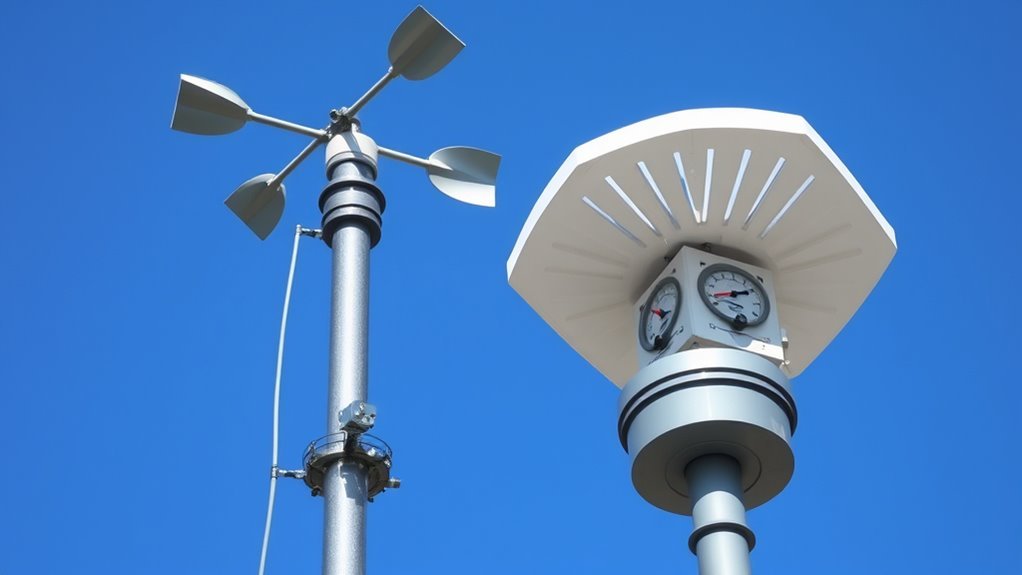
Although you might not see them at first glance, the core components of a weather station work together to measure key atmospheric conditions like temperature, humidity, pressure, wind speed and direction, and precipitation.
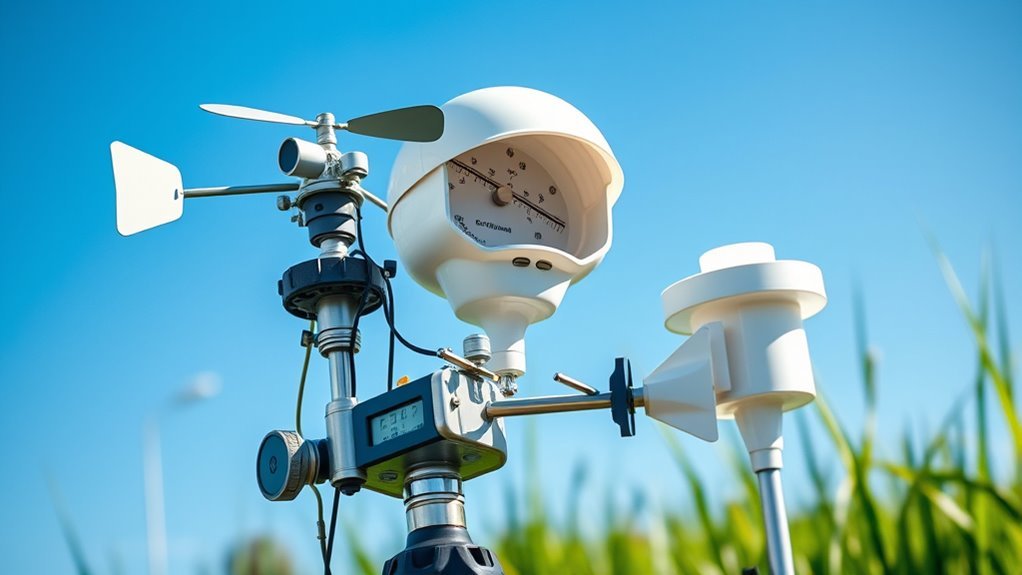
You’ll find specialized sensors for each parameter: thermometers for temperature, hygrometers for humidity, barometers for pressure, anemometers for wind speed, wind vanes for direction, and rain gauges for precipitation.
These instruments convert physical measurements into electronic signals, allowing precise monitoring.
Data loggers play an essential role by collecting and storing this information for real-time use or future analysis.
The instrumentation guarantees continuous operation, often supported by power supplies and communication modules.
Though these focus more on station functionality than measurement itself, understanding these components helps you appreciate how weather stations capture atmospheric data accurately and consistently.
Data Collection and Processing
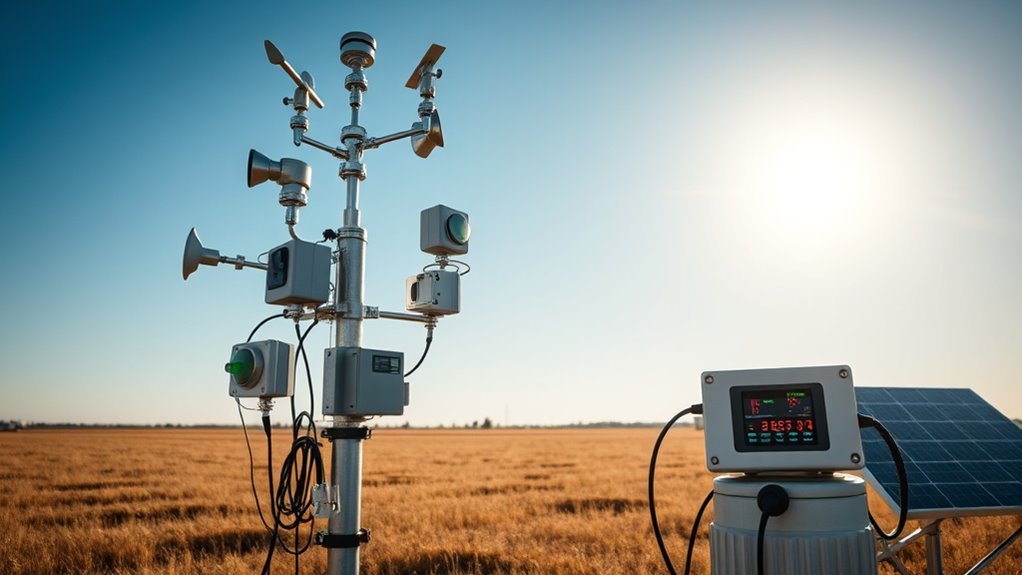
When you rely on a weather station, its sensors regularly measure conditions like temperature, humidity, and pressure, turning these physical readings into electronic data.
Measurement instruments collect atmospheric conditions continuously.
Data loggers then convert these into electronic signals, handling data collection and data processing.
Automated stations organize data in standardized formats for easy analysis.
| Sensor Type | Atmospheric Condition | Data Logger Function |
|---|---|---|
| Thermometer | Temperature | Converts signals |
| Hygrometer | Humidity | Processes data |
| Barometer | Pressure | Formats for use |
This system ensures accurate, real-time monitoring without manual input, which is pretty neat.
It also improves weather forecasting through seamless data transmission and reliable data processing.
Data Storage and Transmission
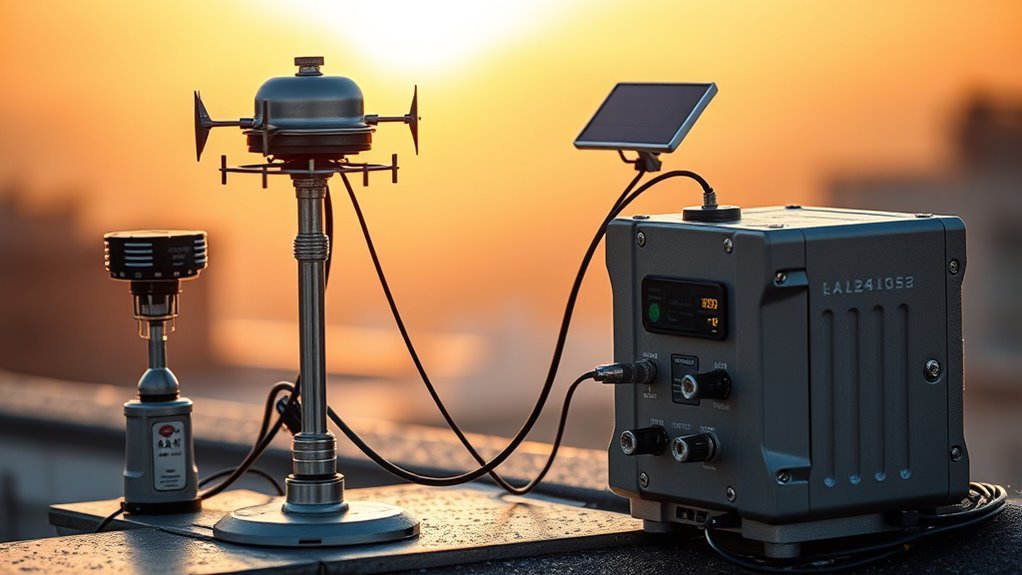
Since weather stations gather numerous sensor measurements, they rely on data loggers to store this information digitally, often in formats like CSV files.
These data loggers handle data storage efficiently, ensuring nothing gets lost before transmission.
You’ll find data transmission happens via various methods, tailored to the station’s location and purpose.
Wireless communication is common for real-time data, sending updates continuously to central servers or cloud platforms.
Remote stations, especially maritime ones, use satellite links to maintain connectivity.
Key points to note:
- Data loggers convert sensor measurements into digital formats for easy handling.
- Wireless communication (Wi-Fi, cellular) enables real-time data updates.
- Satellite links support long-distance data transmission from remote sites.
- Central servers and cloud platforms store and distribute weather data securely.
Analysis and Interpretation of Weather Data
Once the weather data reaches central servers or cloud platforms, it’s processed using computer models to create forecasts and spot patterns.
You rely on weather data interpretation to analyze sensor data from various weather measurement instruments.
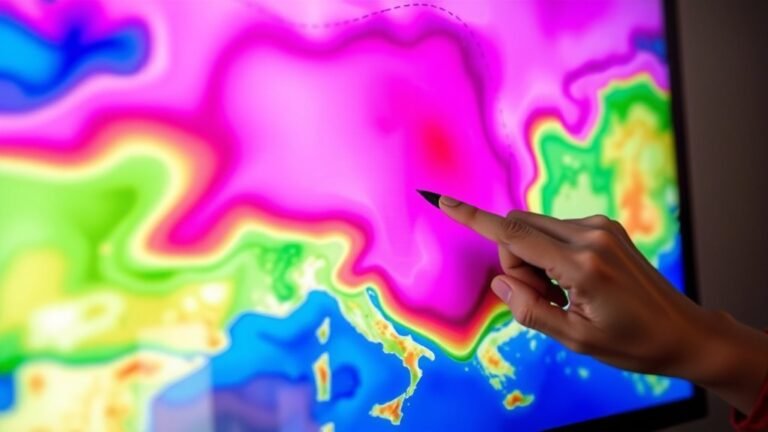
Visualization tools like graphs and maps help you recognize weather patterns and anomalies effectively.
Comparing real-time data with historical weather records allows for accurate climate analysis and improved forecast models.
This data analysis sharpens your understanding of both short-term weather changes and long-term trends.
| Data Type | Purpose | Tools Used |
|---|---|---|
| Sensor Data | Measure conditions | Weather measurement instruments |
| Real-time Data | Immediate forecasts | Forecast models, visualization tools |
| Historical Records | Climate trends | Climate analysis software |
| Weather Patterns | Predict events | Data analysis techniques |
Practical Applications of Weather Stations
Although weather stations gather data constantly, you benefit most from how that information supports practical decisions across various fields.
These stations use sensors and instruments to measure atmospheric variables, collect data on weather conditions, and provide real-time data vital for weather monitoring and forecasting.
Weather stations employ sensors to gather real-time atmospheric data essential for accurate monitoring and forecasting.
You can see their impact in:
- Agriculture: optimizing irrigation and pest control to boost crop yields.
- Aviation: ensuring flight safety by monitoring wind speed and visibility.
- Marine navigation: planning routes using data on wind, wave height, and ocean temperatures.
- Environmental agencies: tracking climate patterns and supporting disaster preparedness.
Frequently Asked Questions
What Does 80% Chance of Rain Actually Mean?
An 80% chance of rain means you have a very high likelihood of rain occurring in your area during that time.
It’s based on historical data and models, but it doesn’t guarantee rain everywhere or all day.
Do You Need Wi-Fi for a Weather Station?
You don’t need Wi-Fi for a weather station; it’s like a little cloud capturing data.
Some send info directly to your device via Bluetooth or store it locally, so you can check weather details without an internet connection.
Is It Worth Getting a Weather Station?
Yes, it’s worth getting a weather station if you want accurate, real-time weather data tailored to your location.
It helps you stay safe and plan better, which is always a plus.
Plus, you can enjoy hobbies like gardening or farming more effectively with the right information at your fingertips.
Where Do Weather Stations Get Their Information From?
You get the full picture by drawing from many wells:
weather stations pull info from sensors measuring temperature, wind, and more, plus satellites and buoys.
While sometimes relying on human observers to fill in the gaps.
Conclusion
Just like a skilled orchestra conductor brings harmony to diverse instruments, your weather station synchronizes various sensors to create a clear picture of the atmosphere. By collecting, processing, and transmitting data efficiently, it empowers you to understand and predict weather patterns accurately.
With this knowledge at your fingertips, you can make informed decisions. Whether planning daily activities or preparing for storms, your weather station turns raw data into valuable insight.
This helps you navigate the ever-changing skies. From temperature and humidity to wind speed and precipitation, every sensor plays a role in delivering comprehensive weather information.
In conclusion, your weather station is an essential tool for understanding weather dynamics. It transforms complex data into actionable insights, allowing you to plan effectively and stay safe during inclement weather. Stay informed and ready to take on whatever Mother Nature throws your way!