
3 Essential Clothes to Wear for Running in Cold Weather
When you’re gearing up for a run in cold weather, it’s crucial to have the right clothing. The three essential layers you need are a moisture-wicking base layer, an insulating mid-layer, and a wind- and water-resistant outer shell.
Starting with the base layer, opt for materials like merino wool. This fabric effectively keeps sweat off your skin, helping you stay comfortable throughout your run.
Next, add an insulating mid-layer, such as fleece. This layer traps heat without adding bulk, ensuring you stay warm as you move.
Finally, don’t forget about the outer shell. A wind- and water-resistant jacket will provide the protection you need from the elements.
Remember, each layer should fit snugly to balance warmth and breathability.
Keep experimenting with these layers to find the perfect combination for your cold runs!
Base Layers for Moisture Management and Warmth

When you layer up for cold weather running, choosing the right base layer is essential to staying warm and dry.
Base layers made from merino wool or synthetic fabrics excel at moisture management by wicking sweat away from your skin.
Merino wool and synthetic base layers effectively wick sweat, keeping you dry and comfortable during cold runs.
This keeps you dry and prevents chills that can occur when sweat cools on your body.
Merino wool base layers naturally balance temperature and provide insulation even when wet, plus they resist odors so you can wear them longer.
Opt for thin, breathable, quick-drying base layers that fit snugly; they offer warmth without bulk and allow easy movement during layering.
Prioritizing these qualities guarantees your core remains comfortable and well-regulated, so you can focus on your run instead of battling dampness or cold.
Insulating Mid-Layers to Retain Body Heat
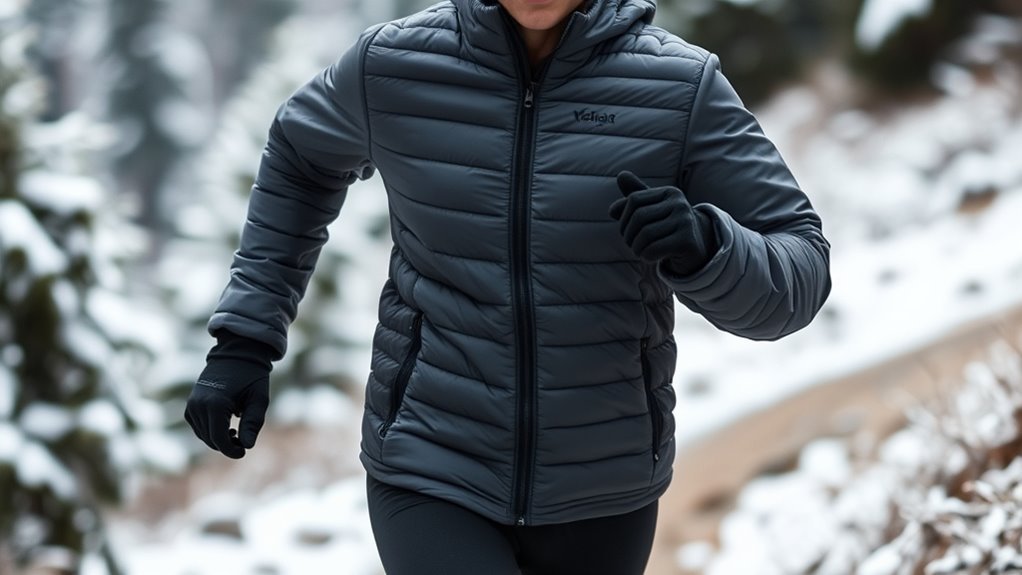
Although base layers manage moisture and warmth, insulating mid-layers trap heat close to your body to keep you comfortable during cold runs.
These layers are essential for maintaining your core temperature by retaining body heat without adding bulk.
When layering, choose thermal or fleece mid-layers made from materials like Polartec Power Wool or PrimaLoft.
These fabrics offer lightweight, breathable insulation that’s perfect for staying cozy.
Look for mid-layers that fit snugly and feature wind-resistant or water-repellent properties.
These features enhance warmth and protection, making your run much more enjoyable.
Combining moisture-wicking base layers with insulating mid-layers ensures you stay dry and warm throughout your run.
- Snug fit without restricting movement
- Lightweight, breathable fabrics
- Thermal insulation for consistent warmth
- Wind-resistant and water-repellent options
- Effective layering over moisture-wicking base layers
Protective Outer Layers for Wind and Water Resistance

Building on the warmth provided by your insulating mid-layers, you’ll want outer layers that shield you from wind and water without overheating.
Waterproof jackets with windproof, sealed seams and a Durable Water Repellent (DWR) coating keep rain, sleet, and snow out while ensuring breathability through advanced fabrics like Gore-Tex or Futurelight.
Waterproof, windproof jackets with sealed seams and DWR coatings keep moisture out while maintaining breathability.
These materials allow moisture vapor transfer, preventing sweat buildup. Look for water-resistant insulated jackets that add warmth without restricting movement.
Adjustable hoods and ventilation zippers help you adapt to changing conditions, optimizing airflow and protection.
Reflective details on your outer layer boost visibility during low-light runs, enhancing safety.
Frequently Asked Questions
What Types of Socks Are Best for Cold Weather Running?
You’ll want moisture-wicking wool or synthetic socks for cold weather running.
They keep your feet warm and dry, prevent blisters, and provide cushioning.
Avoid cotton since it traps moisture and makes your feet cold and uncomfortable.
Should I Wear a Hat or Headband to Keep Warm?
You absolutely should wear a hat or headband to keep warm!
Losing heat through your head feels like the Arctic itself is biting you.
Hats trap warmth, while headbands protect ears without overheating—choose based on your comfort.
How Can I Prevent My Gloves From Getting Wet and Cold?
You can prevent your gloves from getting wet and cold by choosing waterproof or water-resistant gloves.
Wearing glove liners is also a great option, and it’s smart to avoid touching wet surfaces.
Also, consider carrying an extra pair in case your first gets soaked.
Is It Necessary to Wear Reflective Gear in Winter Runs?
Yes, you should wear reflective gear during winter runs since daylight is limited.
It helps drivers and others see you clearly, keeping you safe.
Don’t skip it, especially in low-light or foggy conditions.
How Do I Avoid Overheating While Running With Multiple Layers?
You avoid overheating by choosing moisture-wicking, breathable layers and adjusting them as you run.
Start with a lightweight base, add insulating layers, and remove or unzip outer layers if you feel too warm during your run.
It’s all about finding the right balance for your comfort!
Conclusion
Think of your cold-weather run like preparing for a journey through a dense forest.
Your base layer is the sturdy ground beneath your feet, keeping you steady and dry.
The insulating mid-layer acts as the thick canopy, trapping warmth around you.
Finally, your outer layer is the protective shelter, shielding you from harsh winds and rain.
By layering smartly, you create your own fortress against the cold.
This allows you to run freely and confidently, no matter the weather.
So remember, for a comfortable run in chilly conditions, invest in a good base layer, an insulating mid-layer, and a durable outer layer.
With the right combination, you’ll be ready to tackle any cold-weather challenge that comes your way.
Stay warm, stay dry, and enjoy your winter runs!