
What Are All Weather Tires and How to Choose Them
All-weather tires are designed to provide the best of both worlds by combining features of all-season and winter tires. They deliver reliable traction in rain, snow, and moderate winter conditions, all while sporting the mountain/snowflake (3PMSF) certification.
When choosing the right pair of all-weather tires, it’s essential to look for that certification symbol.
Consider your local climate and how often you encounter rain or snow.
Also, compare performance tests for important metrics like braking and snow grip.
While all-weather tires tend to be pricier than all-season options, they save you from the hassle of seasonal tire swaps.
If you’re curious about which models excel in specific conditions or want to learn about other key factors, keep exploring your options!
Understanding All-Weather Tires

Although all-weather tires combine features of both all-season and winter tires, they stand out by offering year-round traction certified with the mountain/snowflake symbol (3PMSF).
You’ll find that these tires use specialized rubber compounds and tread design to maintain flexibility in cold temperatures, improving snow performance beyond what typical all-season tires offer.
They meet industry standards for winter traction, so you can trust them in moderate winter conditions.
However, keep in mind they don’t provide the same grip as dedicated winter tires on ice or deep snow.
Designed for drivers who want reliable year-round traction without switching tires seasonally, all-weather tires have gained recognition for balancing performance and convenience in climates with milder winters.
Key Features of All-Weather Tires

You’ll notice all-weather tires have a unique tread design with deeper grooves to handle snow and wet roads.
They carry the mountain/snowflake symbol, proving they meet winter traction standards.
Plus, they balance performance well enough for year-round use in moderate climates.
Tread Design and Composition
When you choose all-weather tires, their tread design and composition play a crucial role in delivering reliable traction across changing conditions.
The tread pattern features deeper, more aggressive grooves that effectively displace water, snow, and slush. This enhances safety on wet and snowy roads.
These tires use specialized rubber compounds that maintain flexibility in low temperatures. This ensures consistent traction and snow grip when you need it most.
Sipes—small biting edges in the tread—improve grip on ice and packed snow.
Meanwhile, the rubber composition balances wear resistance and flexibility to prevent hardening in cold or softening in heat.
Winter Traction Certification
How can you be sure your all-weather tires will perform well in winter?
Look for the three-peak mountain snowflake (3PMSF) certification. This snowflake symbol proves tires meet strict winter traction requirements, especially for snow performance in moderate winter conditions.
The 3PMSF certification involves passing ASTM F1805 spin tests, ensuring reliable acceleration traction on medium-packed snow.
Not all all-weather tires have this certification, so it’s a key factor to check.
Keep in mind, 3PMSF tires handle snow well but may not excel on ice like dedicated winter tires.
| Feature | Explanation |
|---|---|
| Three-Peak Mountain Snowflake | Official symbol for winter traction |
| 3PMSF Certification | Passed ASTM F1805 snow traction tests |
| Snowflake Symbol | Indicates suitability for winter use |
| Snow Performance | Reliable on medium-packed snow |
| Winter Conditions | Suitable for moderate winter challenges |
Year-Round Performance Balance
Recognizing the three-peak mountain snowflake symbol helps you confirm a tire’s winter capabilities.
But understanding how all-weather tires perform throughout the year gives a fuller picture.
These tires combine specialized tread design and advanced rubber compounds to deliver reliable year-round performance.
The 3PMSF symbol ensures they meet winter traction standards, so you can trust them on snow and slush.
Their tread patterns feature deeper grooves and biting edges that handle wet and icy roads effectively.
Meanwhile, enhanced rubber compounds maintain flexibility across a wide temperature range, from hot summers to cold winters.
While all-weather tires offer balanced performance in varying conditions, they don’t match the extreme grip of dedicated winter or summer tires.
Still, they’re a smart choice if you want versatility without switching tires seasonally.
How All-Weather Tires Compare to All-Season and Winter Tires
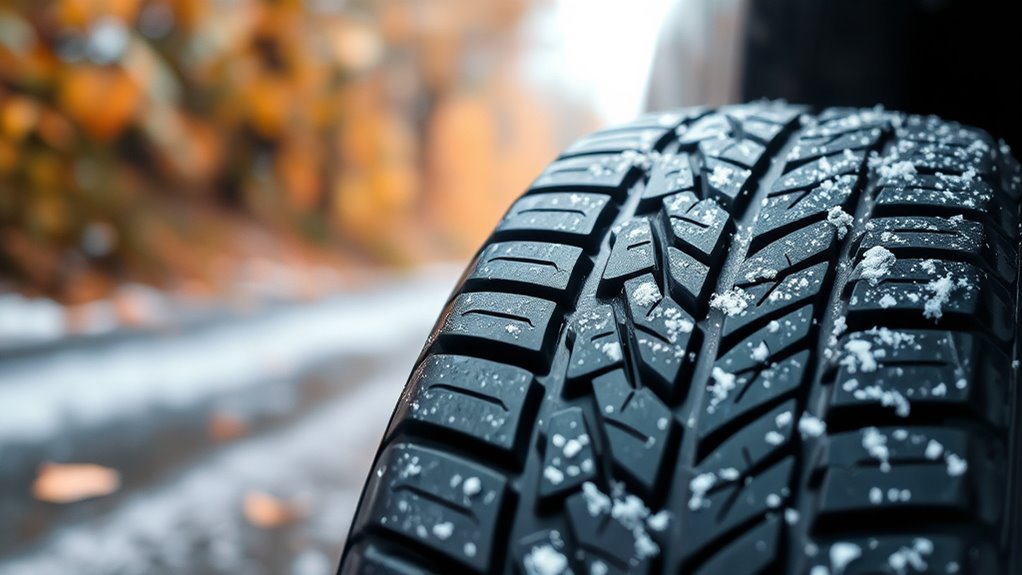
Although all-season tires are popular for their versatility, all-weather tires offer a noticeable advantage if you face winter conditions regularly.
Here’s a seasonal tire comparison to help you understand their differences:
- All-weather tires carry the 3PMSF symbol, proving they meet winter traction standards, unlike all-season tires.
- Their tread design and flexible rubber improve snow and ice performance compared to all-season tires.
- Winter tires still outperform all-weather tires in severe snow and ice conditions, offering superior braking and handling.
- All-weather tires provide reliable year-round performance without seasonal swaps, bridging the gap between all-season and winter tires.
If you want better winter traction without switching tires, all-weather tires offer balanced performance across seasons.
Performance Testing and Industry Ratings
Wondering how all-weather tires perform across different conditions?
Performance testing plays a vital role in showing you what to expect. Industry ratings, like those from Consumer Reports, evaluate all-weather tires on braking, handling, and snow traction in dry, wet, snow, and ice scenarios.
Look for the 3PMSF symbol, which indicates the tire meets snow traction standards, though performance varies by model.
Testing combines controlled track tests with real-world snow trials to give you accurate ratings on safety, tread life, and noise.
Keep in mind that even top all-weather tires can’t fully match dedicated winter tires in severe conditions.
Trusted models like the Michelin CrossClimate2 and Nokian Remedy WRG5 earn high marks for balanced performance, helping you make informed choices.
Pros and Cons of Using All-Weather Tires Year-Round
When you choose all-weather tires for year-round use, you gain the convenience of skipping seasonal tire swaps, especially if you live in a moderate climate.
However, there are pros and cons to contemplate:
Consider both advantages and disadvantages before choosing all-weather tires for year-round use
- Convenience & Cost-Effectiveness: All-weather tires eliminate the hassle and expense of seasonal swaps, saving money over time.
- Tire Wear & Lifespan: Continuous use can lead to faster tire wear and a shorter tire lifespan compared to dedicated seasonal tires.
- Winter Performance: While better than all-season tires, all-weather tires may not match the winter performance of specialized tires in heavy snow and ice.
- Tire Longevity & Safety: Using all-weather tires year-round, especially in extreme conditions, can compromise tire longevity and safety.
Weigh these factors to decide if all-weather tires fit your driving needs.
Top Recommended All-Weather Tire Models
You’ll want to focus on top-performing all-weather tires like the Michelin CrossClimate2 and Bridgestone WeatherPeak, known for their excellent traction and handling.
Comparing prices and warranties can help you find the best value for your needs.
Let’s look at what makes these models stand out and how they protect your investment.
Best Performing Models
Which all-weather tires deliver the best performance across varied conditions?
When choosing all-weather tires, you want models that balance wet traction, snow performance, and durability.
Here are top performers to contemplate:
- Michelin CrossClimate2 – Offers exceptional wet traction and balanced handling, making it the best overall choice for all-weather tires.
- Bridgestone WeatherPeak – Known for a quiet ride and reliable dry and wet handling, it excels in comfort and durability.
- Nokian Remedy WRG5 – Excels in winter with superior snow and ice braking, though it may have more wheelspin on snow.
- Falken Aklimate – Provides solid all-around performance with good traction in diverse conditions.
These models all deliver strong performance, but remember, none fully match dedicated winter or summer tires in extreme weather.
Price and Warranty
Although all-weather tires vary in price, you’ll find top models like the Nokian Remedy WRG5 and Goodyear Assurance WeatherReady priced around $220.
Each offers solid warranties of up to 60,000 miles and six years. When choosing all-weather tires, consider the price, warranty coverage, tread depth, and brand reputation to guarantee long-lasting performance.
| Brand | Price | Warranty & Tread Depth |
|---|---|---|
| Nokian Remedy WRG5 | $220 | 60,000 miles, no age limit, 10/32″ |
| Goodyear WeatherReady | $221 | 6 years/60,000 miles, 10/32″ |
| Michelin CrossClimate2 | $232 | 6 years/60,000 miles, 10/32″ |
| Pirelli WeatherActive | $219 | 6 years/60,000 miles, 11/32″ |
| Bridgestone WeatherPeak | Varies | 6 years, noise 65 dBA |
This table helps you weigh cost against warranty and tread depth for your ideal tire choice.
Cost, Noise, and Warranty Considerations
When choosing all-weather tires, you’ll want to weigh cost, noise, and warranty carefully since they directly impact your overall satisfaction and value.
Here are key factors to consider:
- Cost and Price: Tires like Nokian Remedy WRG5 and Goodyear Assurance WeatherReady cost around $220, while Michelin CrossClimate2 is slightly higher at $232.
- Warranty and Tire Durability: Most offer a 60,000-mile warranty, with Goodyear and Michelin providing a 6-year limit and Nokian having no age restriction.
- Tread Depth: Goodyear and Michelin feature 10/32 inches, supporting longer tire life.
- Noise and Ride Comfort: Noise levels range narrowly between 65-67 decibels; Bridgestone WeatherPeak is the quietest, boosting ride comfort during highway drives.
Balancing these aspects ensures you pick all-weather tires that fit your budget and driving experience.
Tips for Choosing the Right All-Weather Tires for Your Needs
Understanding the cost, noise, and warranty aspects helps narrow down your options. But choosing the right all-weather tires also means matching them to your specific driving conditions and needs.
First, consider your climate. If you face moderate snow, all-weather tires with the 3PMSF snowflake symbol provide reliable winter traction. In harsher winters, dedicated snow tires may offer better traction in snow.
Compare tire performance tests focusing on braking, handling, and snow grip to find the best fit.
Check tread life and rubber compounds to ensure durability through seasonal changes.
Finally, balance your budget and vehicle type within tire categories. Remember that all-weather tires cost more, but they save you from seasonal swaps.
This approach guarantees you pick tires tailored for safety and performance year-round.
Frequently Asked Questions
What Is the 3% Tire Rule?
The 3% tire rule means your all-weather tires must demonstrate at least 3% snow traction in tests to qualify for winter use.
Look for the 3PMSF symbol to guarantee your tires meet this safety standard.
What Are the Top 5 All-Weather Tires?
You’ll want the Pirelli Cinturato WeatherActive, Michelin CrossClimate2, Bridgestone WeatherPeak, Goodyear Assurance WeatherReady, or Nokian Remedy WRG5 for top all-weather tire performance.
Each offers unique strengths in snow, wet, and dry conditions.
Is All-Season or All Weather Better for Rain?
All-weather tires are better for rain because they have deeper treads and flexible rubber compounds that improve traction and reduce hydroplaning.
You’ll stop shorter and drive safer in wet conditions compared to all-season tires.
What Is Better, H or V Rating on Tires?
You’ll want V-rated tires if you prioritize higher speed and sharper handling.
But H-rated tires suit daily driving with a smoother ride and better tread life.
Conclusion
Choosing all-weather tires is like finding a trusty sidekick that adapts to every twist and turn of the road, no matter the season.
They offer a balanced blend of safety, performance, and convenience, saving you the hassle of switching tires twice a year.
By weighing factors like cost, noise, and tread life, you can pick the perfect pair to keep you steady through rain, snow, or shine.
Your journey just got a lot smoother.
In conclusion, when selecting all-weather tires, it’s essential to consider your driving habits and the typical weather conditions in your area.
Look for options that prioritize safety and performance while being mindful of cost and durability.
With the right all-weather tires, you can enjoy a reliable ride throughout the year, making every journey a little easier and safer.