How to Choose Good Polyester Clothing for Hot Weather
When choosing polyester clothing for hot weather, it’s essential to focus on lightweight and moisture-wicking fabrics. These materials pull sweat away from your skin and dry quickly, ensuring you stay comfortable even in the heat.
Look for blends that incorporate natural fibers like cotton. This combination not only enhances breathability but also adds softness to the fabric.
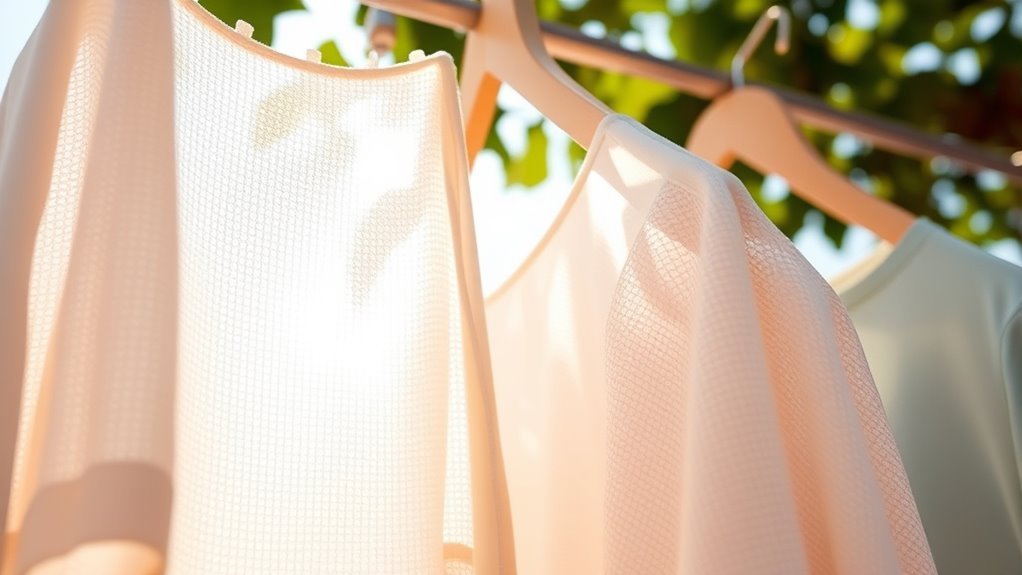
Garments with mesh panels or open weaves can significantly boost airflow and reduce heat retention.
On the flip side, avoid tightly woven polyester, as it tends to trap moisture and become uncomfortable.
Don’t forget that proper care for your clothes can help maintain these benefits for a longer time.
With these tips, you’ll find more ways to stay cool and comfortable when the temperatures rise!
Understanding Polyester Fabric Characteristics
Although polyester is a synthetic fiber known for its durability and wrinkle resistance, it doesn’t naturally breathe.
This can trap heat and moisture against your skin in hot weather.
When choosing polyester fabric, you want to contemplate breathability and moisture management to stay comfortable.
Some polyester fabrics use microfiber or mesh treatment to enhance airflow, reducing heat retention.
Moisture-wicking polyester fibers actively pull sweat away from your skin, speeding evaporation and keeping you dry.
Blended fabrics, like polyester-cotton mixes, balance durability with improved breathability.
So, look at the composition ratio carefully.
Understanding these polyester fabric characteristics helps you pick clothing that manages moisture and airflow effectively.
This way, you can ensure you stay cool even when the temperature rises.
Breathability Challenges of Polyester in Warm Weather

You’ll notice that polyester’s tight weave limits airflow, making it less breathable in hot weather.
Since it traps sweat and heat close to your skin, discomfort can quickly build up.
However, certain treatments and fabric designs can help improve airflow and keep you cooler.
Breathability Limitations Explained
When you wear polyester in hot weather, you might notice it doesn’t breathe well because its fibers are tightly woven, restricting airflow.
This tight weave limits breathability, trapping heat and moisture close to your skin.
Unlike natural fibers, polyester’s fabric structure hinders moisture evaporation, reducing comfort and increasing heat retention.
You might find that polyester feels sticky and clingy as sweat lingers without effective moisture-wicking.
Here’s why polyester struggles in the heat:
- The tight weave blocks airflow, preventing cooling.
- Its non-porous fibers trap sweat, reducing moisture evaporation.
- Lack of natural fiber properties means less breathability and more heat retention.
Understanding these limitations helps you choose polyester clothing wisely for hot weather.
Improving Airflow Techniques
Since polyester naturally restricts airflow, you can improve its breathability by choosing garments with open weaves or mesh designs that enhance ventilation.
Look for polyester clothing featuring mesh construction or open weave patterns to promote better airflow and reduce heat retention.
Opting for lightweight polyester blends with natural fibers like cotton or linen also boosts breathability by allowing more air circulation.
Additionally, moisture-wicking treatments on synthetic fabrics help evaporate sweat quickly, making you feel cooler.
Clothing with strategically placed ventilation panels further improves airflow, preventing overheating during hot weather.
By focusing on these airflow and ventilation techniques, you can enjoy the durability of polyester while minimizing discomfort from heat and trapped moisture.
This approach ensures your polyester wear stays breathable and comfortable in warm conditions.
Advantages of Polyester Clothing for Hot Conditions

Although many fabrics struggle in hot weather, polyester excels by offering lightweight, quick-drying comfort that suits active lifestyles perfectly.
You’ll appreciate how moisture-wicking polyester draws sweat away from your skin, keeping you dry and comfortable.
Its advanced breathability and enhanced airflow reduce heat retention, making it ideal for warm conditions.
Plus, polyester’s durability means it resists shrinking and stretching, so your clothes last longer even with frequent wear.
- Quick-drying and moisture management keep you cool and dry.
- Lightweight and stretch-resistant fabric supports active movement.
- Breathability and airflow minimize heat retention for all-day comfort.
Choosing polyester means embracing clothing designed to handle heat while maintaining comfort and performance.
Selecting Polyester Blends for Enhanced Comfort
If you want both durability and breathability in hot weather, choosing polyester blends is a smart move.
Opt for blends like 65/35 or 50/50 polyester-cotton ratios to balance durability with breathability and sweat absorption.
Choose 65/35 or 50/50 polyester-cotton blends for the perfect mix of durability and breathability.
Higher cotton content enhances airflow and moisture-wicking, boosting summer comfort.
Look for lightweight fabrics with an open-weave design to maximize ventilation.
Blends containing at least 60% polyester offer excellent shape retention and wrinkle resistance, so your clothes stay fresh without extra ironing.
The moisture-wicking properties of polyester fibers actively draw sweat away from your skin, keeping you dry and cool throughout the day.
Features to Look for in Summer-Ready Polyester Apparel
When choosing polyester for hot weather, focus on breathability enhancements that keep air flowing through the fabric.
You’ll want moisture-wicking properties to pull sweat away and keep you dry.
Also, lightweight construction makes a big difference in staying comfortable during warm days.
Breathability Enhancements
Since staying cool is a priority in hot weather, you should look for polyester clothing designed with breathability in mind.
Breathability enhancements make a big difference in comfort, so focus on features that promote airflow and reduce heat retention.
Choose lightweight fabrics with a loose weave to improve air circulation.
Look for mesh panels or vents that actively increase breathability.
Also, check for fabric finishes or treatments that boost breathability without sacrificing durability.
Many technical fibers blend moisture-wicking and quick-drying properties, which further support airflow and comfort.
Key breathability enhancements to seek include:
- Mesh panels or vents for enhanced airflow
- Lightweight polyester with a loose weave
- Fabric finishes that facilitate air exchange
These features help ensure your polyester clothes stay breathable and comfortable in the heat.
Moisture-Wicking Properties
Although polyester is known for durability, its moisture-wicking properties make it especially suited for summer wear.
When choosing polyester clothing, look for performance fabric that features specialized fibers designed to pull sweat away from your skin, promoting fast evaporation.
This keeps you dry and comfortable even in intense heat. Many garments incorporate advanced technology like Dri-FIT or Coolmax, which enhance moisture transport and quick-drying capabilities.
These fabrics not only help keep dry but also create a cooling effect by efficiently dispersing sweat across the fabric’s surface.
With tight yet breathable weaves combined with moisture-wicking features, polyester apparel helps regulate your body temperature.
This makes it an excellent choice for hot, humid conditions where staying cool and dry matters most.
Lightweight Fabric Construction
Moisture-wicking capabilities keep you dry, but the fabric’s weight and construction play a big role in how comfortable polyester clothing feels in hot weather.
To stay cool, aim for lightweight fabric with a fabric weight under 150 GSM, which enhances breathability. Look for these features to boost airflow and comfort:
- Open weaves and mesh panels that improve ventilation and keep air circulating.
- Polyester blends, like 65/35 or 50/50 polyester-cotton, which balance durability with lighter fabric weight for better heat dissipation.
- Thin fibers and finer yarns that reduce weight and speed up moisture evaporation for quick-drying benefits.
Choosing summer-ready polyester with these elements guarantees you get effective moisture-wicking, quick-drying performance, and superior breathability when the heat ramps up.
Maintenance Tips to Maximize Polyester Performance in Heat
To keep your polyester clothing performing well in hot weather, you’ll want to handle it with care during washing and drying.
Always wash polyester in cold water using a gentle cycle to protect its moisture-wicking abilities and prevent fabric damage.
Avoid bleach and fabric softeners, as they can weaken fibers and reduce breathability.
After washing, hang dry or lay flat to dry to prevent shrinkage and maintain fabric elasticity.
Regular cleaning helps prevent odor buildup, especially since moisture-wicking polyester draws sweat away from your skin.
To preserve color vibrancy and fabric integrity, store your garments in a cool, dry place, avoiding prolonged sunlight exposure.
Following these maintenance tips ensures your polyester clothing stays comfortable, durable, and effective in hot weather.
Frequently Asked Questions
Is 65 Polyester 35% Cotton Good for Summer?
Yes, 65% polyester and 35% cotton blends work well for summer.
You’ll stay comfortable because cotton breathes and absorbs moisture.
Plus, polyester adds durability and quick drying, making your clothes easier to wear and care for in heat.
Is 100% Polyester Good for Hot Weather?
You might think 100% polyester works in hot weather, but it actually traps heat and moisture, making you sweat more.
Instead, you’ll want breathable fabrics or blends to stay cool and comfortable under the sun.
What Is the Downside of 100% Polyester?
The downside of 100% polyester is that it traps heat and moisture, making you feel sticky and uncomfortable.
It doesn’t absorb sweat, which can cause odor and skin irritation, especially during extended wear in hot weather.
What Fabrics Should You Avoid in Hot Weather?
Avoid fabrics like polyester, nylon, and acrylic in hot weather—they trap heat like a sauna.
Also skip heavy wool, dense denim, and silk blends since they block airflow.
This can make you sweat and feel uncomfortable quickly.
Conclusion
Choosing cool, comfortable polyester for scorching summer days can seem tricky, but it’s totally doable.
By picking polyester blends that boost breathability and focusing on features designed for warmth, you’ll find fabrics that fight the heat rather than trap it.
Remember, maintaining your materials properly maximizes moisture-wicking and minimizes discomfort.
So, stay smart, select stylish summer-ready styles, and savor the season without sacrificing your favorite synthetic fabrics’ fantastic function.
In conclusion, opting for the right polyester clothing can make all the difference during hot weather.
Look for lightweight, breathable blends to keep you cool, and take care of your fabrics for optimal performance.
With a little attention to detail, you can enjoy the best of polyester while staying comfortable and fashionable all summer long.