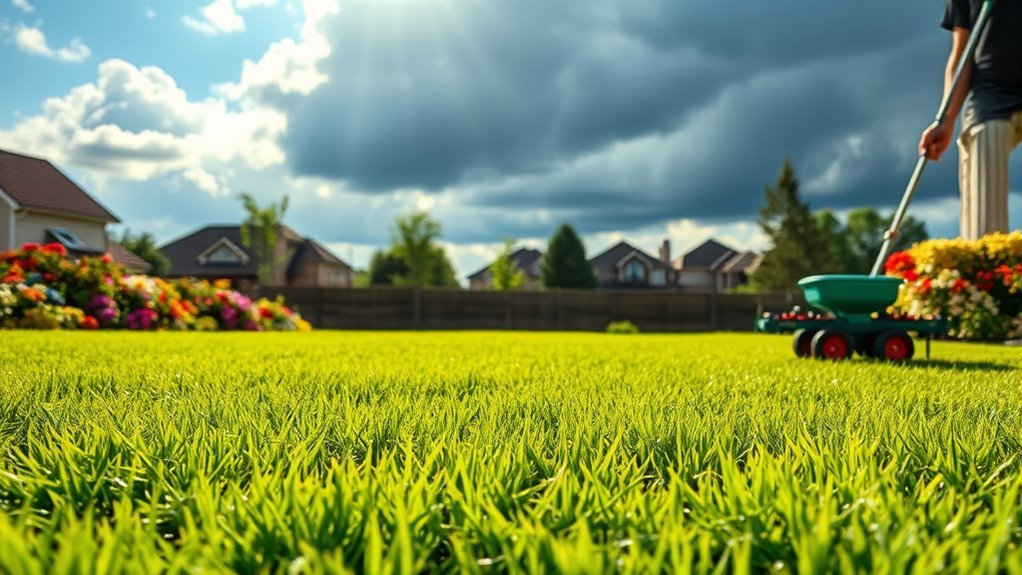
3 Tips to Use Weather Patterns for Lawn Fertilization
To get the most from your lawn fertilization, timing is everything! Using weather patterns can significantly enhance the effectiveness of your fertilizer application.
For starters, apply your fertilizer just before a light rain. This helps the nutrients soak into the soil without washing away.
Also, it’s best to avoid fertilizing during the hottest parts of the day, as this can lead to burning your grass. Aim for early morning or late evening for optimal results.
Keep an eye on soil temperatures too! The ideal range is between 50°F and 70°F to ensure your lawn absorbs nutrients efficiently.
By keeping these weather-smart tips in mind, you’ll discover even better ways to boost your lawn’s health ahead. Happy fertilizing!
Timing Fertilizer Applications Around Rainfall

When you time fertilizer applications around rainfall, you boost nutrient absorption and reduce waste.
Check the rain forecast before any fertilizer application to align fertilization timing with light rainfall within 24 to 48 hours.
Always check the rain forecast to schedule fertilizer application with light rainfall in the next 24 to 48 hours.
This helps dissolve granules and increases nutrient absorption by the soil.
Avoid applying fertilizer before heavy storms or significant rain. Storm prediction indicates a high risk of runoff, which leads to nutrient loss and environmental harm.
Also, consider soil moisture levels. Applying fertilizer during dry weather with no rain expected for at least a day prevents leaching and ensures nutrients stay put.
By monitoring weather patterns closely, you can schedule fertilization to maximize uptake while practicing runoff prevention.
This balance is essential for healthy lawns and sustainable fertilization.
Avoiding Heat Stress and Fertilizer Burn
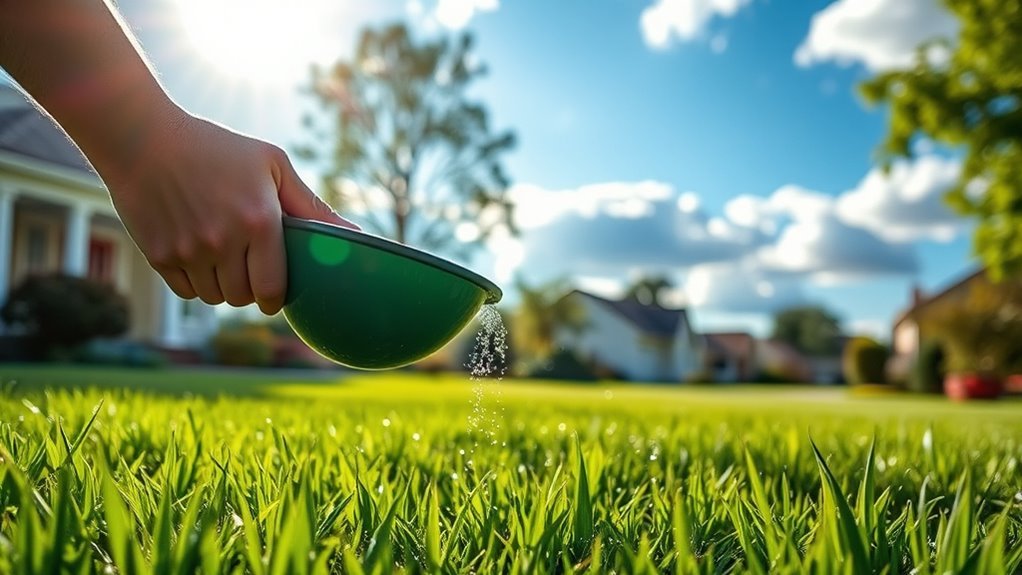
Timing fertilizer applications around weather conditions doesn’t just prevent nutrient runoff—it also helps you avoid heat stress and fertilizer burn on your lawn.
To protect your grass, apply fertilizer in the early morning or late evening when temperatures are cooler.
Avoid fertilizing during peak heat hours, typically between 10 a.m. and 4 p.m., as hot weather can cause harmful chemical reactions.
Always water your lawn immediately after fertilizing to reduce heat buildup and prevent fertilizer salts from damaging grass blades.
Choose slow-release fertilizers during hotter periods since they release nutrients gradually, minimizing burn risk.
Keep an eye on weather forecasts and postpone fertilization if extreme temperatures or heatwaves are expected.
Monitoring Seasonal Temperature Trends for Optimal Nutrient Uptake
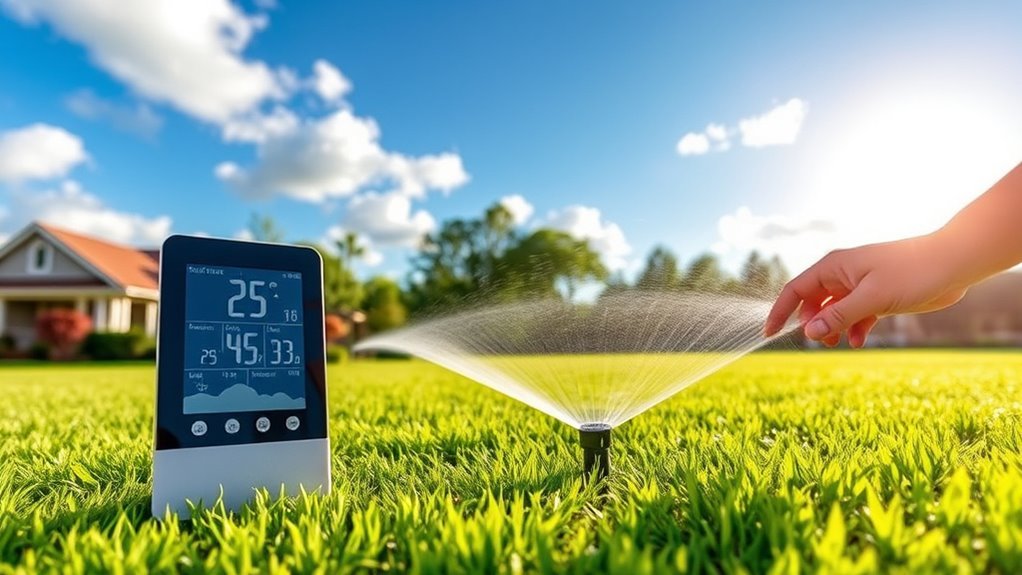
Although seasonal temperature shifts can be subtle, monitoring soil temperatures between 50°F and 70°F is crucial for maximizing nutrient uptake in your lawn.
This range supports ideal fertilization by enhancing nutrient absorption and promoting healthy grass growth.
Use temperature monitoring to track seasonal temperature trends and avoid fertilization during extreme heat or cold, which can impair soil health and nutrient uptake.
Timing your fertilizer applications during stable temperature fluctuations ensures efficient nutrient absorption and reduces waste.
| Soil Temperature Range | Fertilization Impact |
|---|---|
| Below 50°F | Low nutrient absorption |
| 50°F – 70°F | Perfect nutrient uptake |
| Above 70°F | Reduced absorption risk |
Stay consistent with temperature monitoring for precise fertilization timing and stronger, healthier lawns.
Frequently Asked Questions
What Weather Is Best for Fertilizing a Lawn?
You want mild, steady weather with temperatures between 55°F and 75°F.
Fertilize before light rain or gentle watering. It’s best to do this during overcast skies or early morning and evening to avoid heat stress.
This timing helps maximize nutrient absorption for your lawn.
At What Temperature Should You Not Fertilize Grass?
Don’t fertilize your grass when soil temperatures soar above 85°F or air temperatures climb past 75°F—that’s when fertilizer burn risks spike.
Also, avoid fertilizing below 50°F soil temps since roots won’t absorb nutrients effectively.
It’s essential to keep these temperature guidelines in mind to ensure your grass stays healthy.
Fertilizing at the right time can make all the difference!
Is October Too Late to Fertilize a Lawn?
October isn’t too late to fertilize your lawn if soil temperatures stay above 50°F.
Just finish applying fertilizer 4-6 weeks before the first hard freeze.
Also, watch for heavy rains to avoid nutrient runoff.
How Many Days Before Rain Should I Fertilize?
You should fertilize your lawn 1 to 2 days before light to moderate rain to guarantee nutrients absorb properly.
Avoid fertilizing over 3 days before rain to prevent runoff and never right before heavy storms.
Conclusion
You might think fertilizing right before rain always helps, but it’s not that simple.
Too much water can wash away nutrients, while too little won’t activate them properly.
By timing your applications around weather patterns—avoiding heat stress and watching seasonal temps—you’ll give your lawn the best chance to soak up nutrients efficiently.
So, next time you plan fertilizing, don’t just guess the weather—use it to your advantage and watch your lawn thrive.
In conclusion, understanding weather patterns is key to effective lawn fertilization.
Avoiding heavy rain and extreme heat will ensure that your lawn absorbs nutrients properly.
By being strategic with your fertilization schedule, you can foster a healthier, more vibrant lawn.
So, take note of the weather and make it work for you!